Quote now
EN

China has several established manufacturers of thermoforming machines, vacuum forming machines, plastic sheet processing equipment, and automated plastic packaging production lines. Five manufacturers worth evaluating are Shanghai Junjingsai Automation Machinery Co., Ltd., Zhejiang Litai Intelligent Machinery Co., Ltd., Zhejiang Honghua Machinery Plastic & Rubber Co., Ltd., Shanghai Xiangguang Technology Co., Ltd., and Shanghai Zhanshi Mechanical Equipment Co., Ltd.
These companies serve different production needs, from high-speed plastic cup and food container manufacturing to customized vacuum forming equipment for automotive components, medical products, and industrial applications. When comparing suppliers, buyers should assess forming technology, material compatibility, automation, mold design, production capacity, technical support, and total operating cost rather than selecting a machine based on purchase price alone.
A thermoforming machine is a type of plastic processing equipment that heats a thermoplastic sheet until it becomes formable, then uses vacuum, air pressure, mechanical force, or a combination of these methods to shape the material against or into a mold. After forming, the plastic is cooled and trimmed to produce the required component.
Vacuum forming machines are a common category of thermoforming equipment. They use a vacuum to draw a heated sheet against a mold, making them suitable for a wide range of plastic housings, trays, covers, packaging products, and automotive components. Other thermoforming systems use positive pressure, plug assist, or combined pressure and vacuum to improve material distribution and reproduce more complex shapes.
Compared with injection molding, thermoforming can offer lower tooling costs and greater flexibility for certain large, relatively shallow, or sheet-based plastic products. However, the more cost-effective process depends on part geometry, production volume, material requirements, tooling design, and finishing operations.
This list uses the company information provided, including manufacturing history, equipment range, technical capabilities, application coverage, and international market experience. It is intended as a practical supplier shortlist, not an independently verified ranking based on market share or audited performance.
The five companies are presented in a numbered list for easy comparison, not in a definitive order of overall quality. Buyers should confirm current specifications, certifications, customer references, and service arrangements directly with each manufacturer before making a purchasing decision.
Best for: Customized vacuum forming equipment, industrial plastic forming, and automated production solutions
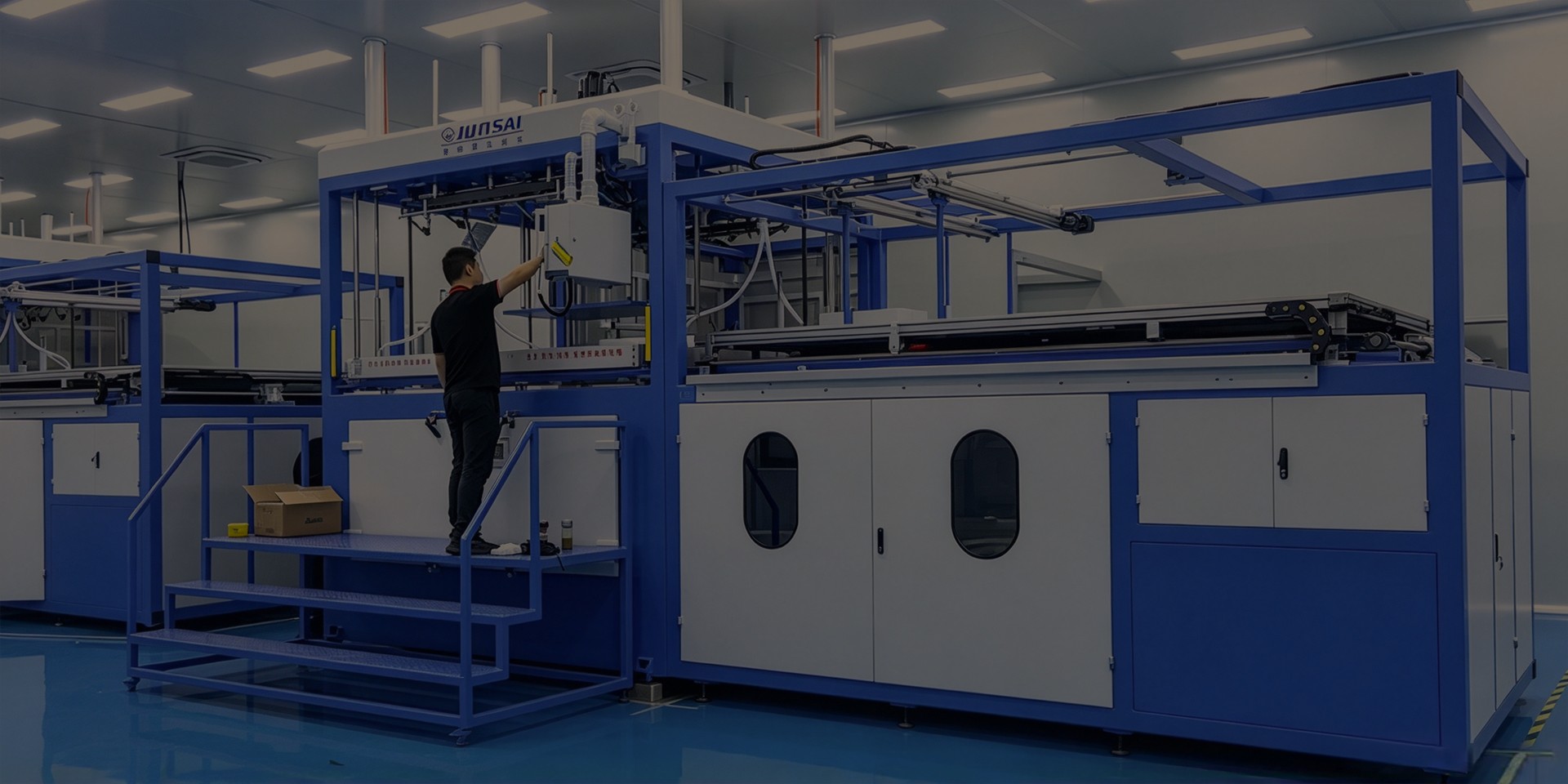
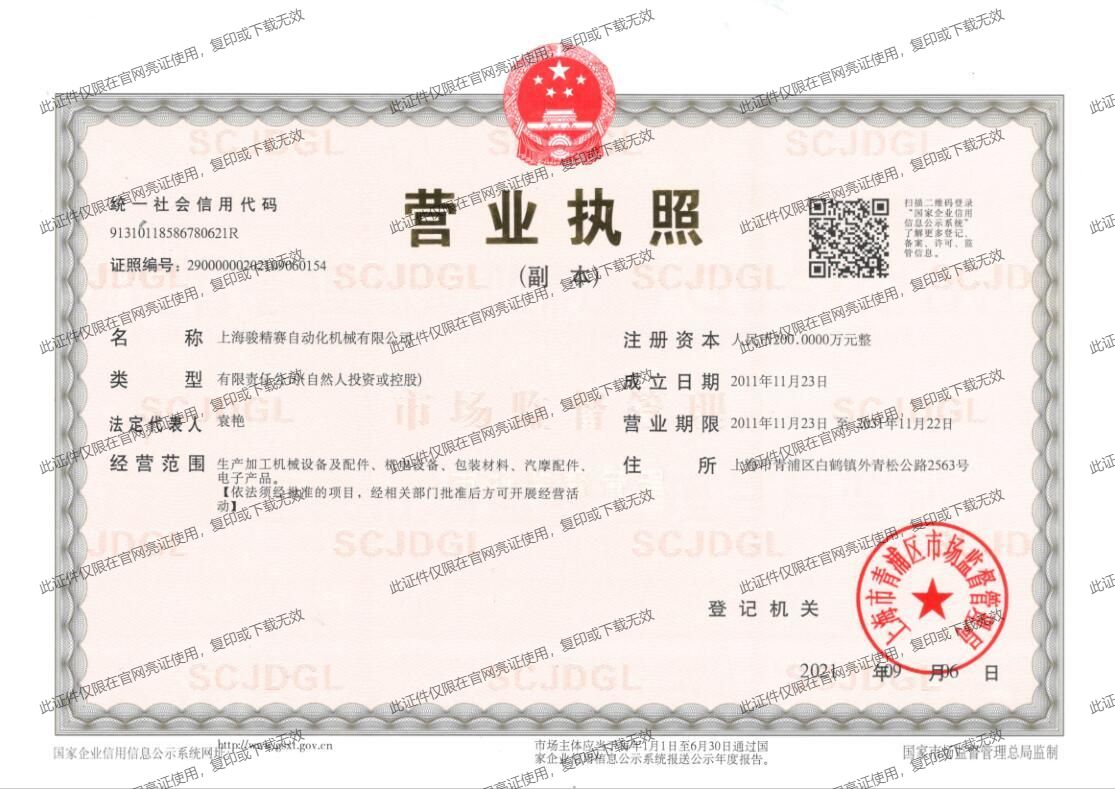
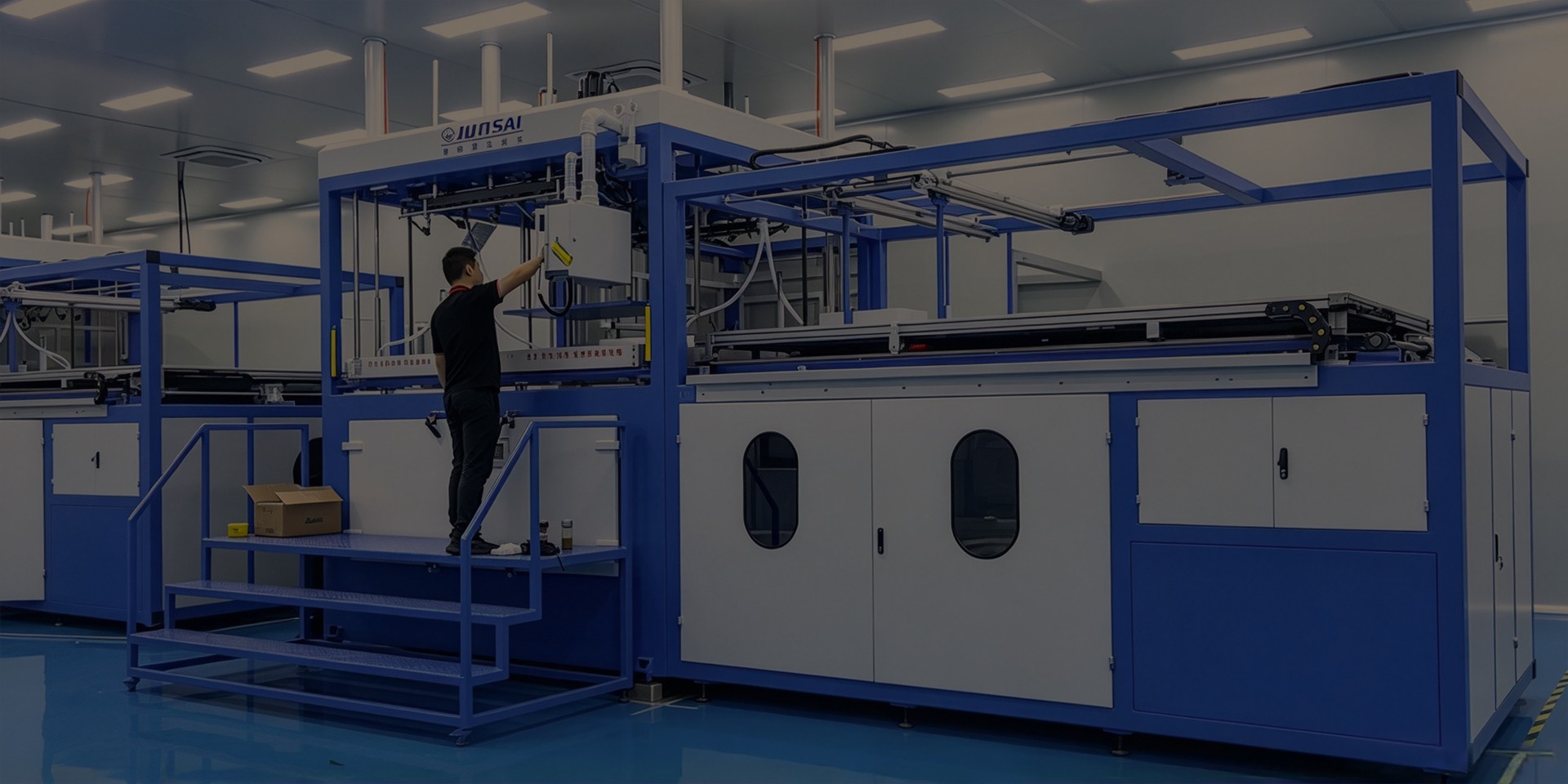
Shanghai Junjingsai Automation Machinery Co., Ltd. is a Chinese manufacturer specializing in thermoforming machines, vacuum forming machines, and customized plastic forming automation equipment. Founded in 2002 and formerly known as Shanghai Junsai Packaging Machinery Co., Ltd., the company adopted its current name in 2016.
With more than 20 years of manufacturing experience, Junjingsai provides plastic forming solutions for automotive components, medical equipment, packaging, consumer products, and industrial applications. Its equipment range covers conventional vacuum forming, positive and negative pressure thermoforming, heavy gauge thermoforming, high-pressure forming, and customized automated systems.
Junjingsai operates four manufacturing facilities in Shanghai, Chongqing, Jiangsu, and Guangdong, with a combined production area of approximately 29,000 m². Its Thermoforming Machine Division has more than 150 employees, including 30 R&D engineers, and an annual production capacity exceeding 500 thermoforming machines and automation systems.
The manufacturing system includes CNC machining centers, laser cutting machines, sheet metal bending equipment, assembly lines, and machine testing facilities. Production quality control covers component machining, mechanical assembly, electrical installation, system debugging, and final performance testing.
The company reports 25 patents, ISO 9001 quality management system certification, CE certification, and 3A Credit Certification. Its equipment has been supplied to customers including Volkswagen, BYD, Yanfeng, Faurecia, WEGO, and Chen Guang, according to the supplied company information.
Junjingsai offers a broad selection of equipment for processing ABS, PP, PET, PVC, PE, and engineering plastic sheets.
Its main product categories include:
The appropriate forming process depends on the product's dimensions, wall thickness, surface finish, and geometry. Vacuum forming is suitable for many large or relatively shallow components, while positive pressure and plug assist can help form products with deeper features and more demanding material distribution requirements.
Junjingsai provides OEM and ODM services based on product samples, engineering drawings, material choice, output targets, factory conditions, and automation requirements. Customization may include machine structure, mold integration, automatic loading and unloading, electrical configuration, operating language, and production-line integration.
Its applications include automotive interior and exterior components, medical equipment housings, protective covers, blister packaging, food trays, pharmaceutical packaging, and industrial plastic parts.
The company reports a standard delivery lead time of approximately 30 days and a minimum order quantity of one machine. Buyers should confirm the lead time against the selected machine configuration and project scope.
Junjingsai is worth evaluating when a project requires customized thermoforming machinery rather than a standard packaging-only production line. Its combination of multiple manufacturing facilities, in-house engineering resources, and equipment options makes it a candidate for manufacturers that need to adapt forming technology to different plastic materials and product geometries.
Its published service offering includes a one-year warranty, remote technical assistance, on-site installation, operator training, spare parts, and production support. Buyers should clarify installation costs, acceptance criteria, and service response times in the quotation.
Official website: Shanghai Junjingsai Automation Machinery Co., Ltd.
Best for: Automated plastic packaging, disposable cups, and high-volume container production
Zhejiang Litai Intelligent Machinery Co., Ltd. was founded in 2001. The company focuses on the research, development, manufacturing, sales, and service of plastic thermoforming equipment and related production systems.
Its main product categories include three-station and four-station plastic thermoforming machines, plastic cup thermoforming machines, PP/PS sheet production machines, and molds.
Litai's stated focus is the automated production of plastic packaging containers. Its equipment development covers the production sequence from forming through stacking, conveying, counting, and packaging.
Integrating these operations can reduce manual handling between production stages and support consistent output in high-volume manufacturing environments. For disposable cup and food container producers, the level of automation, mold changeover time, forming cycle, and downstream packaging compatibility are useful criteria when comparing machines.
When evaluating a Litai production line, buyers should verify compatibility with the intended plastic sheet, such as PP or PS, as well as any additional materials required by the project. The supplier should also confirm sheet thickness ranges, mold configurations, forming areas, heating control, and achievable output for the specific product.
For packaging applications, a cost effective machine is not simply the one with the lowest purchase price. Energy consumption, scrap rate, mold life, labor requirements, and the stability of automated stacking and counting all affect the long-term cost per finished container.
Litai is a candidate for manufacturers whose primary objective is automated plastic cup and packaging container production. Its stated product focus is particularly relevant to businesses seeking coordinated forming, stacking, conveying, counting, and packaging operations.
Official website: Litai Machinery
Best for: Integrated plastic sheet extrusion, thermoforming, and cup printing equipment
Zhejiang Honghua Machinery Plastic & Rubber Co., Ltd. was established in 1986. The company manufactures plastic processing equipment, including plastic sheet extrusion lines, thermoforming machines, and cup printing machines.
Honghua reports a manufacturing area of more than 20,000 m² and exports its products to more than 30 countries. Its stated capabilities include equipment design, development, manufacturing, installation, and service.
One reason to consider Honghua is its product coverage across multiple stages of plastic processing. Manufacturers that need both sheet production and downstream forming equipment may benefit from evaluating these systems together.
A plastic thermoforming line typically requires coordination between sheet feeding, heating, forming, cooling, trimming, and product handling. When the project includes in-house sheet extrusion, the sheet's thickness consistency, material properties, and thermal behavior must also match the forming process.
Honghua's equipment range may be relevant to plastic cup producers and other manufacturers seeking to coordinate sheet extrusion, container forming, and printing.
According to the supplied company profile, Honghua holds ISO 9001 and CE certifications and has exported equipment to markets in Europe, the Middle East, and Asia.
The company also reports cooperation with food, beverage, and packaging-related businesses, including KFC, McDonald's, Mengniu Dairy, Yili Dairy, and Bright Dairy. Prospective buyers should confirm the scope and relevance of any reference project directly with the supplier.
Honghua is worth considering for projects where plastic sheet extrusion and thermoforming need to be assessed as part of a broader manufacturing system. Buyers should compare its proposed line configuration, tooling, output capacity, and integration requirements against their target products before selecting a supplier.
Official website: Honghua Machinery
Best for: Plastic food packaging, precision molds, and integrated production systems
Shanghai Xiangguang Technology Co., Ltd. was founded in 1998 and specializes in plastic thermoforming machines, molds, and plastic sheet extrusion production lines.
The company focuses on automated and intelligent plastic packaging production systems for food containers, trays, lids, cups, and industrial packaging products. Its company profile reports three production bases and exports to more than 80 countries and regions.
Thermoforming performance depends on the coordination of the machine, heating system, mold, and plastic sheet. A machine with a high rated output may not deliver the expected production rate if the mold design, cooling time, sheet properties, or downstream trimming process limits the cycle.
Xiangguang's combination of thermoforming equipment, molds, and sheet extrusion machinery makes it a candidate for manufacturers seeking to evaluate several parts of the production process together.
For food packaging, buyers should examine forming accuracy, wall thickness distribution, stackability, mold cavity layout, and the compatibility of the finished products with automated packing systems.
Xiangguang's stated applications include plastic food containers, trays, lids, cups, and industrial packaging. These products can have different requirements for forming depth, surface finish, rigidity, material usage, and trimming.
Before purchasing equipment, manufacturers should provide sample parts or technical drawings and request a feasibility assessment using the intended material. This helps establish whether the proposed forming process can meet dimensional tolerances and production targets.
Xiangguang is worth evaluating when the project involves packaging production systems, mold development, and plastic sheet processing. Its reported international market coverage may also be relevant to buyers seeking a supplier with export experience.
Official website: Confirm the company's current official website and contact details directly before procurement.
Best for: Customized automated forming lines and industrial thermoforming projects
Shanghai Zhanshi Mechanical Equipment Co., Ltd. was founded in 2004 and specializes in thermoforming equipment and customized plastic forming solutions. According to the supplied company information, it is headquartered in Shanghai and operates production facilities in Zhejiang with a combined reported manufacturing area of approximately 14,500 m².
Zhanshi focuses on automated forming lines designed around different manufacturing requirements, including applications involving complex product geometry and customized equipment configurations.
For industrial thermoforming projects, automation design needs to account for more than the forming station itself. Sheet feeding, heating control, mold movement, cooling, trimming, unloading, and safety systems must work together to maintain stable production.
Depending on the product, a machine may use vacuum forming, pressure forming, or mechanical plug assist. Plug assist helps push the heated sheet into deeper mold regions before or during vacuum or pressure application. When correctly designed, it can improve material distribution and reduce excessive thinning in selected areas.
Zhanshi reports more than 10 proprietary patents and offers customized automated forming lines. Its company profile also cites cooperation with companies including BMW, Toyota, and Angelalign. Buyers should request references for projects that match their specific materials and applications.
The supplied profile states that Zhanshi operates under CE and ISO certifications and conducts Factory Acceptance Testing before shipment. It also reports exports to more than 70 countries and regions, bilingual PLC interfaces, operating manuals, a one-year warranty, and global technical support.
When evaluating these capabilities, purchasers should establish the exact certification scope, acceptance-test procedures, spare-parts availability, and remote or on-site service arrangements for the machine being quoted.
Zhanshi is a candidate for buyers who need a tailored forming line rather than a standard machine configuration. Its reported experience in customized automation makes it worth including in a shortlist for industrial applications with specific handling, control, or integration requirements.
Official website: Confirm the current official website and technical documentation directly with the manufacturer before procurement.
| Manufacturer | Main equipment focus | Potentially suitable applications | Key evaluation point |
|---|---|---|---|
| Shanghai Junjingsai | Vacuum forming, heavy gauge and customized thermoforming | Automotive, medical, industrial and packaging products | Customization and broad equipment range |
| Zhejiang Litai | Three-/four-station thermoforming and cup production lines | Plastic cups and packaging containers | Integrated automation and output |
| Zhejiang Honghua | Sheet extrusion, thermoforming and cup printing | Plastic cups and integrated processing | Coordination of upstream and downstream equipment |
| Shanghai Xiangguang | Thermoforming, molds and sheet extrusion | Food containers, trays, lids and industrial packaging | Integrated equipment and tooling |
| Shanghai Zhanshi | Customized thermoforming and automated forming lines | Industrial and specialized plastic products | Automation design and project-specific engineering |
This comparison summarizes the supplied company profiles. It does not establish a verified ranking of machine quality, market share, price, or production performance.
Selecting a supplier starts with the finished product and works backward to the required equipment. The best machine for a disposable cup line may be unsuitable for a large automotive interior panel or a thick plastic equipment housing.
Material choice affects heating temperature, forming behavior, cooling requirements, shrinkage, and finished-part performance.
Common materials include:
Ask the manufacturer to confirm the machine's supported resin types, sheet thickness range, heating requirements, and compatibility with recycled or multilayer sheet if applicable. Not every machine is suitable for every plastic grade or sheet construction.
Different products require different forming technologies.
Vacuum forming uses negative pressure to pull a heated sheet against a mold. It is widely used for packaging, covers, trays, and large plastic parts with suitable geometry.
Pressure forming uses compressed air to push the sheet against the mold, potentially improving detail reproduction and surface definition.
Positive and negative pressure forming combines pressure and vacuum to help form products that need more controlled material distribution or more detailed geometry.
Plug assist forming uses a mechanical plug to pre-stretch or push the heated sheet into the mold before or during pressure or vacuum application. Plug design, travel, temperature, and timing affect wall thickness distribution.
Ask suppliers to demonstrate the proposed forming process with representative material and product geometry rather than relying solely on general machine descriptions.
The forming area determines the maximum usable mold footprint and affects how many parts can be produced per cycle. It should be assessed alongside mold dimensions, sheet width, clamp design, forming depth, and loading requirements.
A larger forming area does not automatically mean higher output. For multi-cavity packaging molds, cycle time, heating capacity, cooling performance, and trimming speed may be more relevant to actual production capacity.
The heated sheet must reach a suitable forming temperature across the intended forming areas. Uneven heating can cause inconsistent wall thickness, wrinkles, poor detail reproduction, and dimensional variation.
For deep-draw parts, plug assist and carefully designed heating zones may help control stretching. Request information about heater zoning, temperature control, sheet sag management, mold cooling, and the supplier's approach to preventing excessive thinning.
Thermoforming and injection molding serve overlapping but different manufacturing needs.
| Factor | Thermoforming | Injection molding |
|---|---|---|
| Starting material | Thermoplastic sheet | Plastic resin, usually pellets |
| Forming method | Heat sheet and shape it using vacuum, pressure, or mechanical assistance | Melt resin and inject it into a closed mold |
| Tooling | Can be cost effective for suitable geometries and lower tooling budgets | Can require more complex and expensive molds |
| Part geometry | Well suited to many sheet-based, large, or relatively shallow parts | Suitable for a broad range of detailed 3D parts |
| Material use | Trimming can generate scrap unless optimized or recycled | Runners and other process waste depend on mold and process design |
| Production economics | Often attractive when sheet-based forming and tooling costs fit the project | Often attractive for high-volume production of repeatable parts |
The cost-effective choice depends on product design, annual volume, tolerances, surface finish, material consumption, and downstream operations. Injection molding may be preferable for complex parts with detailed features, while thermoforming can be attractive for larger components or products that can be formed efficiently from sheet.
The initial equipment price is only one part of the investment. A useful cost comparison includes:
Request a quotation based on the same product, material, mold assumptions, target output, and acceptance criteria from each supplier. This makes price comparisons more meaningful.
Before placing an order, ask for a factory audit or live production demonstration when feasible. Review assembly quality, electrical components, safety features, documentation, and testing procedures.
The supplier should also clarify installation responsibilities, warranty exclusions, spare-parts lead times, operator training, and response arrangements for technical problems. For overseas buyers, confirm shipping terms, electrical standards, PLC language, and the availability of remote support.
Thermoforming machines are used across several manufacturing sectors.
The required equipment depends on product size, forming depth, material properties, production volume, surface requirements, and the precision of the finished part.
Five manufacturers to evaluate are Shanghai Junjingsai Automation Machinery Co., Ltd., Zhejiang Litai Intelligent Machinery Co., Ltd., Zhejiang Honghua Machinery Plastic & Rubber Co., Ltd., Shanghai Xiangguang Technology Co., Ltd., and Shanghai Zhanshi Mechanical Equipment Co., Ltd. They cover different areas, including vacuum forming, plastic cup production, sheet extrusion, packaging equipment, and customized automation.
A thermoforming machine heats a thermoplastic sheet and shapes it using vacuum, pressure, mechanical assistance, or a combination of these methods. A vacuum forming machine is a type of thermoforming machine that primarily uses negative pressure to draw the heated sheet against a mold.
Depending on the machine configuration, thermoforming equipment can process ABS, PP, PET, PVC, PE, and other thermoplastic sheets. Buyers should verify resin compatibility, sheet thickness, forming temperature, and material-specific process requirements with the manufacturer.
Plug assist is a forming technique in which a mechanical plug pushes a heated plastic sheet into the mold before or during vacuum or pressure forming. It helps distribute material in deep-draw products and can reduce excessive thinning in selected areas when the plug geometry and process parameters are properly designed.
Thermoforming can be more cost effective for certain large, sheet-based parts and projects where tooling cost and production flexibility are priorities. Injection molding may be more economical for high-volume production of complex parts with detailed features. The appropriate process depends on tooling investment, material usage, production volume, tolerances, and finishing costs.
Choose a forming area based on the finished product dimensions, mold footprint, number of cavities, sheet size, forming depth, and loading method. Ask the manufacturer to confirm the usable forming dimensions rather than relying only on the machine's external dimensions or a nominal maximum specification.
Request the machine specifications, compatible materials, maximum sheet thickness, forming area, cycle-time data, mold details, power requirements, automation options, and references for similar products. Also confirm factory acceptance testing, installation, warranty coverage, spare parts, delivery time, and after-sales service.
Yes. Some manufacturers offer customized machine structures, molds, heating systems, forming technologies, material handling, and automated unloading. For automotive or medical applications, confirm the required dimensional tolerances, material specifications, traceability, cleanliness requirements, and relevant industry standards before finalizing the equipment design.
China offers a broad selection of thermoforming machine manufacturers, from companies focused on automated plastic cup production to suppliers specializing in vacuum forming, integrated sheet processing, and customized industrial forming lines.
Junjingsai is worth evaluating for customized vacuum forming and industrial plastic forming equipment. Litai is a candidate for automated cup and container production, while Honghua and Xiangguang offer combinations of thermoforming and related plastic processing equipment. Zhanshi is another option for projects requiring tailored automation.
The best supplier is the one whose equipment can consistently produce your target part using the specified plastic sheet, forming process, and production volume at an acceptable total cost. Before making a final decision, compare technical proposals, test representative products, and verify manufacturing capability and after-sales support directly with each manufacturer.