Quote now
EN

Automatic thermoforming machines are generally suitable for manufacturers with high production volumes, repeatable product designs, and a need to reduce manual handling. Semi-automatic thermoforming machines are often a better fit for small to medium production runs, frequent product changes, prototype development, and operations that require more operator control.
The right choice depends on production volume, plastic sheet specifications, product dimensions, forming cycle time, labor costs, available factory space, and the budget for equipment and automation. Manufacturers should compare the total operating cost and expected output rather than choosing a machine based on its purchase price alone.
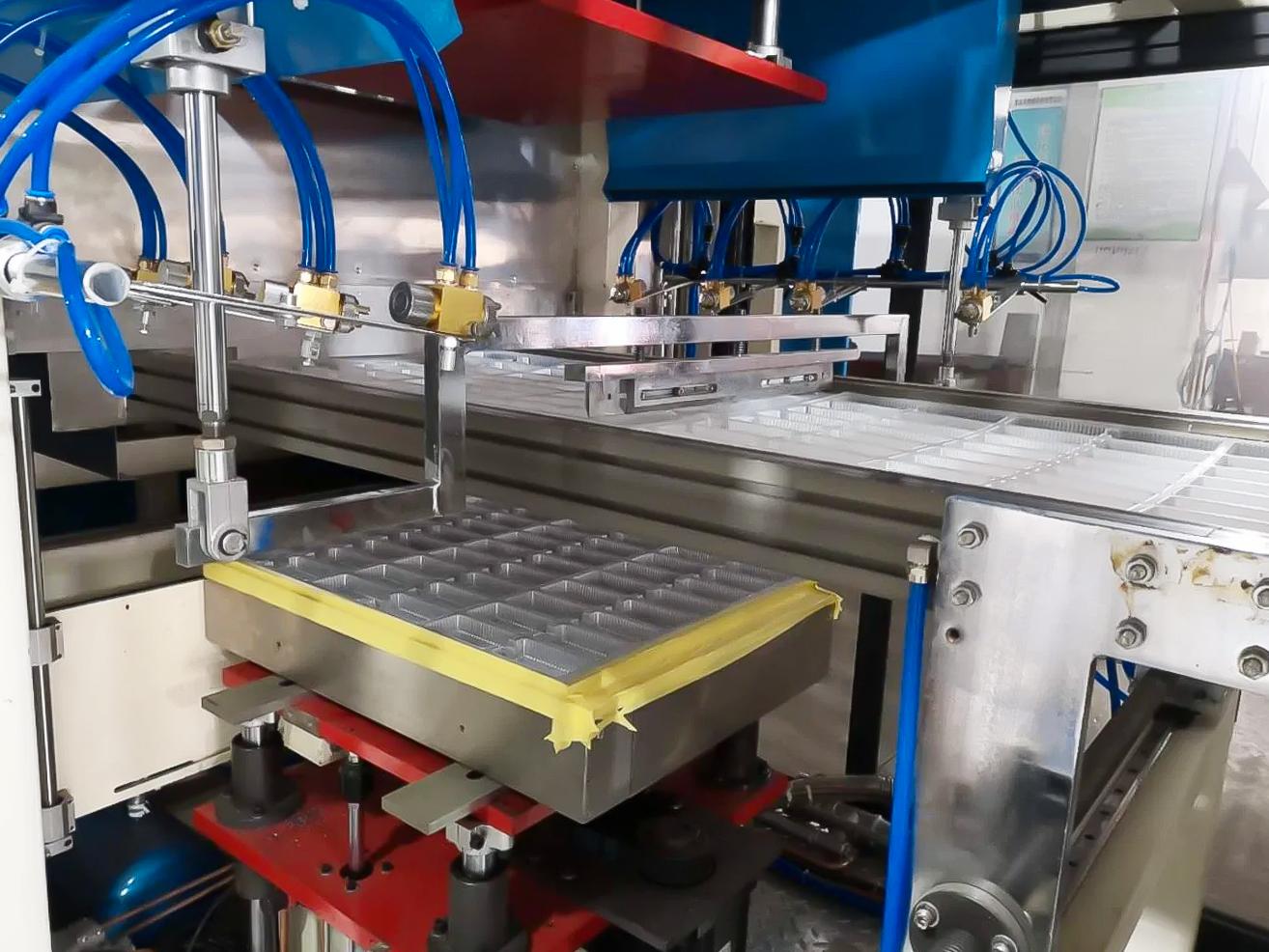
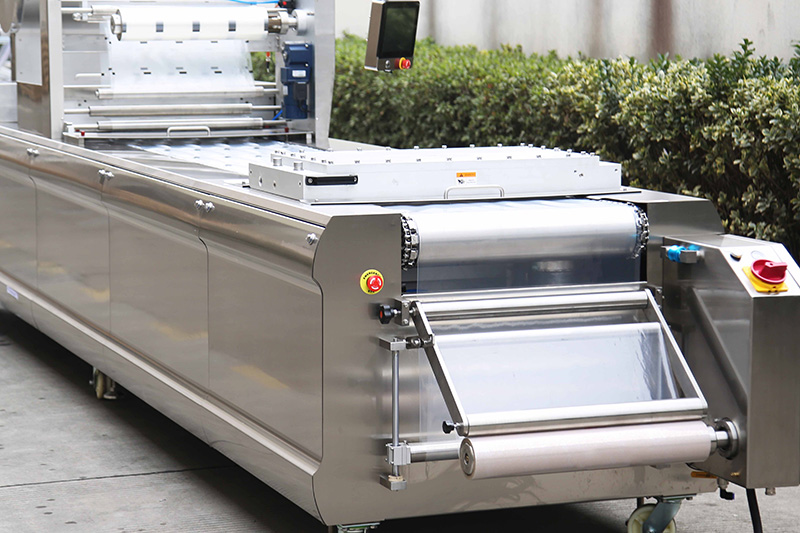
An automatic thermoforming machine is a plastic processing system that automates multiple stages of production, such as sheet feeding, heating, forming, and, depending on the configuration, product transfer, trimming, stacking, and unloading. It reduces the amount of manual intervention required during normal production and can be integrated into automated production lines.
A semi-automatic thermoforming machine combines automated forming functions with operator-controlled tasks. Depending on the machine design, operators may need to load plastic sheets, position materials, transfer formed products, or perform unloading and other handling operations manually.
Both types of thermoforming machines heat a thermoplastic sheet until it becomes sufficiently pliable, form it over or into a mold, and allow it to cool before the finished component is removed. Vacuum forming machines use negative pressure to draw the heated sheet against a mold, while other thermoforming systems may use positive pressure, mechanical assistance, or a combination of forming methods.
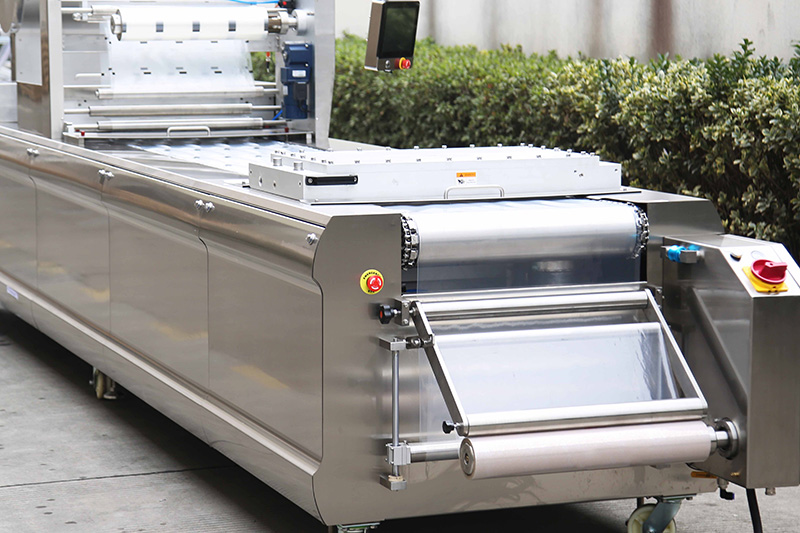
The main difference is the level of automation across the production cycle. An automatic system handles more operations through programmed controls and integrated mechanisms, while a semi-automatic system relies more heavily on operators for material handling and production coordination.
| Comparison factor | Automatic thermoforming machine | Semi-automatic thermoforming machine |
|---|---|---|
| Material handling | Automated or integrated feeding options | Often requires manual loading or positioning |
| Heating and forming | Program-controlled processes | May use automated controls with manual handling |
| Product transfer | Can be automated | Often involves operator intervention |
| Production output | Better suited to sustained, repetitive production | Suitable for smaller or variable production runs |
| Labor requirements | Lower direct handling requirements per unit | More operator involvement per production cycle |
| Product changeovers | May require coordinated setup across integrated stations | Can be simpler on less complex configurations |
| Equipment investment | Generally higher for comparable integrated functions | Generally lower for comparable basic functions |
| Production line integration | Well suited to connected operations | Can operate as a standalone machine |
| Best application | Repetitive production with consistent demand | Flexible production and lower-volume manufacturing |
These differences are general rather than universal. A semi-automatic machine with advanced controls may offer more process consistency than a basic automatic machine, and automation levels vary by manufacturer and equipment configuration.
An automatic thermoforming machine is designed to process plastic sheets through a coordinated sequence of operations with limited routine manual handling. Its configuration may include automatic feeding, controlled heating, forming stations, cooling, transfer mechanisms, and automatic loading or unloading equipment.
For manufacturers producing the same component over extended periods, automation can help maintain consistent cycle sequences and reduce delays caused by manual material handling.
Higher production efficiency
Automatic systems can coordinate multiple stages of the forming process. When heating, forming, cooling, and transfer operations are properly synchronized, the machine can reduce idle time between cycles and support higher sustained output.
More consistent production
Programmable temperature settings, forming parameters, and movement sequences help operators reproduce established production conditions. Consistency still depends on material quality, mold design, machine maintenance, and process validation.
Reduced manual handling
Automatic feeding and unloading options can reduce repetitive handling tasks. This can help manufacturers manage larger orders without increasing direct labor at the same rate as production volume.
Integration with production lines
Automatic thermoforming machines can be connected with trimming systems, conveyors, stacking equipment, inspection stations, and other downstream processes. The appropriate level of integration depends on the product and factory layout.
Better suitability for long production runs
When demand is stable and product designs change infrequently, the time saved through automation can accumulate across thousands of production cycles.
Automatic thermoforming machines usually require a larger initial investment, more detailed installation planning, and suitable operator training. Integrated systems may also involve more complex troubleshooting and maintenance.
Changeovers can take longer when multiple stations, tooling arrangements, and automated handling systems must be adjusted together. Manufacturers should therefore evaluate not only the machine's rated production capacity but also the time required for setup, mold changes, cleaning, and maintenance.
A semi-automatic thermoforming machine automates selected forming operations while leaving some tasks under operator control. Depending on the design, an operator may load a plastic sheet, position the mold or material, initiate a forming cycle, and remove the finished part.
This arrangement offers a practical option for manufacturers that need controlled forming processes without investing in a fully integrated production line.
Lower initial investment
A semi-automatic machine may have a lower purchase price than a comparable automatic system because it requires fewer automated handling mechanisms and less integration equipment. Actual costs depend on machine size, forming technology, heating capacity, tooling, and optional features.
Flexibility for different products
When production involves several product designs, smaller batches, or frequent mold changes, a semi-automatic machine can offer useful operational flexibility. Operators can manage material positioning and coordinate handling tasks according to the production requirements.
Suitable for prototypes and smaller batches
Manufacturers developing new plastic components can use semi-automatic equipment to evaluate mold designs, sheet materials, forming temperatures, and product geometry before committing to higher-capacity production equipment.
Simpler integration requirements
A standalone machine may be easier to accommodate in an existing workshop than a complete automated production line. This can be useful when factory space, material flow, or available investment limits the scale of automation.
Manual handling can increase labor requirements and make total output more dependent on operator experience. Differences in loading, positioning, unloading, and work pace may also affect production consistency.
For high-volume orders, the cumulative cost of labor and manual handling time may outweigh the initial savings from purchasing a less automated machine. Manufacturers should also consider operator safety, repetitive movements, and the need for clearly defined operating procedures.
The purchase price is only one part of the equipment investment. A useful comparison includes labor, energy consumption, tooling, maintenance, scrap, changeover time, and the cost of producing each acceptable part.
| Cost factor | Automatic system | Semi-automatic system |
|---|---|---|
| Initial equipment cost | Usually higher | Usually lower |
| Direct labor per unit | May be lower at higher output | Often higher because of manual tasks |
| Energy consumption | Depends on heating capacity and cycle design | Depends on heating capacity and cycle design |
| Tooling cost | Depends on mold complexity and product design | Depends on mold complexity and product design |
| Maintenance | May require support for integrated mechanisms and controls | Depends on machine complexity and operating conditions |
| Cost of changeovers | May increase with complex line integration | May be lower for simpler setups |
| Cost per acceptable part | Can improve with sustained utilization | Can be competitive for small or variable batches |
Automatic equipment does not always produce a lower cost per part. If demand is insufficient to keep the machine productively occupied, the additional investment may take longer to recover.
Manufacturers can estimate the payback period by comparing the additional investment in automation with the annual operating savings it generates.
Payback period = Additional investment in automation / Annual net operating savings
For example, suppose an automatic system costs $60,000 more than a semi-automatic alternative and is expected to save $20,000 per year in net operating costs. The simple payback period would be:
$60,000 / $20,000 = 3 years
This is an illustrative calculation, not a machine quotation or a guaranteed financial return. A real assessment should include installation, training, financing, maintenance, utilization, and any changes in production capacity or product quality.
Production volume is one of the most useful starting points when selecting thermoforming machines. However, there is no universal number of parts per day or per year that separates the two categories. The appropriate threshold depends on the product, cycle time, sheet size, number of cavities, labor availability, and required operating hours.
For prototypes, custom components, and occasional orders, a semi-automatic machine may be sufficient. It allows manufacturers to produce parts without committing to extensive automation before demand is established.
Examples include custom equipment covers, specialized housings, and trial production of new plastic components.
Manufacturers with moderate demand should compare both options using actual production data. A semi-automatic machine may remain economical when product changes are frequent, while an automatic machine may become more attractive when demand is stable and labor costs are high.
A machine with partial automation can also provide a middle ground by automating selected handling tasks without requiring a fully integrated line.
Automatic thermoforming machines are often a strong option for large, repetitive orders. Automated feeding, forming, transfer, and unloading can reduce manual handling and help maintain a predictable production rhythm.
Applications may include automotive components, large plastic housings, packaging products, and other parts manufactured to recurring specifications.
The final decision should be based on expected good-part output per shift rather than theoretical cycle speed alone.
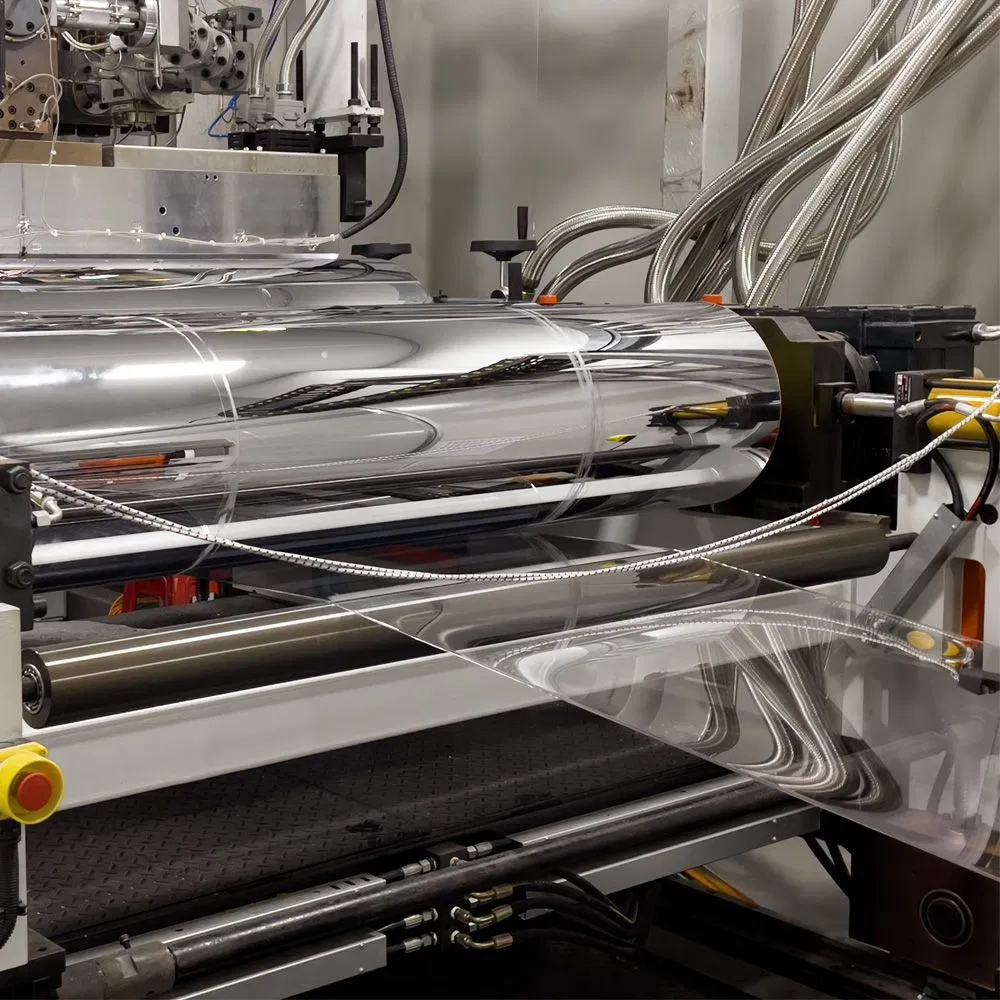
The plastic sheet material affects heating behavior, forming temperature, cooling requirements, and the finished product's mechanical properties. A machine should be selected according to the material and the required part geometry, not solely according to its automation level.
Common thermoforming materials include ABS, PP, PET, PVC, PE, and various engineering plastic sheets. Each material has its own processing window and may require specific heating controls, mold arrangements, and cooling conditions.
When comparing machines, manufacturers should evaluate:
For thick plastic sheets or large components, the forming force, mold support, heating capacity, and cooling arrangement deserve particular attention. Automation can improve handling efficiency, but it does not compensate for unsuitable tooling or inadequate process control.
The available forming area determines the maximum practical mold footprint and influences the size of the products that can be manufactured. Buyers should distinguish between the machine's overall dimensions, usable sheet area, mold area, and actual forming dimensions.
A machine with a large forming area may accommodate larger parts or multiple components per cycle, depending on the mold design. However, a larger machine is not automatically more productive. Heating time, forming depth, cooling requirements, material utilization, and downstream handling all affect output.
Factory layout is equally important. Automatic thermoforming machines may require additional space for sheet loading, product unloading, trimming, conveyors, safety guarding, and maintenance access. Fully integrated production lines need sufficient room for material movement and coordination between stations.
Semi-automatic equipment may fit more easily into a smaller workshop, but the layout must still allow operators to load sheets, remove formed products, and work safely around hot surfaces and moving components.
Before ordering equipment, confirm the usable forming area, maximum mold dimensions, machine footprint, service access, and space needed for any auxiliary equipment.
Vacuum forming and thermoforming are related terms, but they do not describe exactly the same thing.
Thermoforming is the broader process of heating a thermoplastic sheet and shaping it with a mold. Vacuum forming is one method within that process: a vacuum draws the heated sheet against the mold surface.
Vacuum forming machines can be manual, semi-automatic, or fully automatic. Similarly, automatic thermoforming equipment may use vacuum forming, pressure forming, mechanical assistance, or combined forming methods, depending on its design.
When comparing vacuum forming machines, buyers should ask how the machine controls heating, vacuum generation, mold movement, cooling, and product release. They should also confirm whether the machine supports the required plastic sheet dimensions and product geometry.
The right choice depends on the forming method required by the finished part. A highly automated vacuum forming machine may be appropriate for repetitive production, while a semi-automatic vacuum forming machine may suit smaller batches or more flexible manufacturing schedules.
A fully automatic production line may be appropriate when the manufacturing process involves several repetitive operations and sufficient production demand exists to justify their integration.
For example, a line for automotive plastic components may combine sheet loading, heating, forming, part transfer, trimming, and unloading. Packaging applications may use different combinations of forming, cutting, stacking, and conveying equipment.
The value of integration depends on how well the stations work together. A fast forming machine can still become a production bottleneck if trimming, cooling, inspection, or packaging cannot keep pace.
Before investing in a complete line, assess the following engineering factors:
Production balance: Compare the cycle times and capacities of the forming machine and downstream equipment.
Changeover requirements: Determine how often molds, sheet materials, or product specifications will change and how these changes affect the entire line.
Control and communication: Confirm how the equipment coordinates movements, handles faults, and resumes production after a stoppage.
Quality inspection: Decide which dimensions, surface conditions, and other product characteristics need to be inspected during production.
Maintenance and service: Check component availability, maintenance access, troubleshooting support, and the skills required to maintain the system.
Future capacity: Consider whether the system can accommodate additional shifts, higher demand, or new product variants without major reconstruction.
An integrated line should be designed around the complete manufacturing process rather than around the specifications of one machine.
A structured evaluation helps buyers compare equipment based on production requirements instead of marketing descriptions.
Prepare product drawings or samples and identify the required dimensions, forming depth, wall thickness, surface finish, and dimensional tolerances. These details help determine the suitable forming method, mold design, and machine configuration.
Specify the plastic type, sheet thickness, sheet dimensions, and expected material variations. Ask the manufacturer to confirm compatibility and explain how heating and forming parameters will be controlled.
Calculate the required number of acceptable parts per shift or year. Include setup time, changeovers, maintenance, cooling, trimming, and expected downtime when estimating production capacity.
List the operations that must be automated and those that can remain manual. Options may include automatic sheet feeding, mold movement, product transfer, unloading, trimming, and stacking.
The best configuration is the one that meets the required output and labor targets without adding unnecessary complexity.
Compare equipment cost, labor, energy, tooling, maintenance, scrap, and expected utilization. Estimate the cost per acceptable part under realistic production conditions.
Assess the supplier's experience with similar products, machine testing procedures, customization capabilities, installation support, operator training, warranty, and spare parts availability.
For customized equipment, provide drawings, samples, material specifications, and production targets so that the proposed machine can be evaluated against the actual application.
Where possible, ask the manufacturer to test the intended material and mold configuration. Review sample quality, cycle time, material distribution, trimming requirements, and repeatability before making a final decision.
A forming trial provides more useful evidence than a comparison based only on catalogue specifications.
A reliable equipment supplier should be able to explain how the proposed machine meets the production requirements and what support is available after installation.
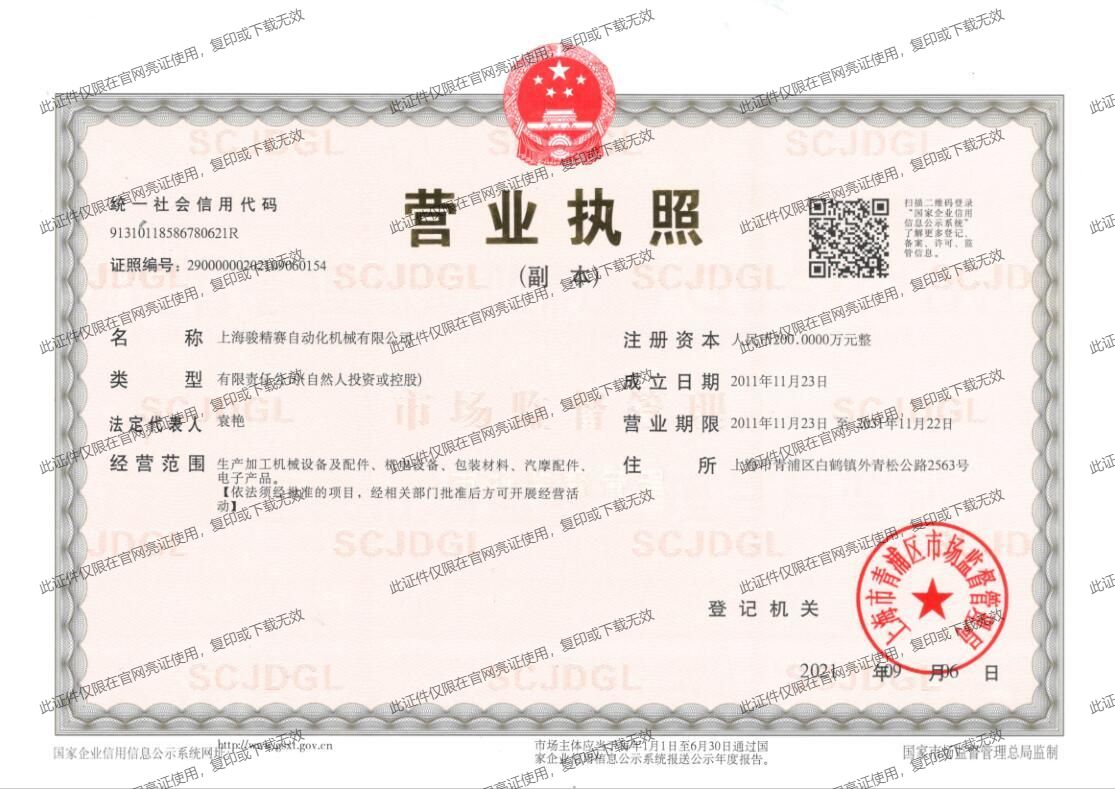
Shanghai Junjingsai Automation Machinery Co., Ltd. specializes in thermoforming machines, vacuum forming machines, and customized plastic forming automation equipment. According to its company information, the business was founded in 2002 and provides solutions for automotive, medical, packaging, consumer product, and industrial applications.
Its product range includes automatic thermoforming machines, vacuum forming machines, heavy-gauge and thin-gauge equipment, oven-type thermoforming machines, and thermoforming laminating machines. Customized equipment and production line integration are also available for applications with specific material handling and automation requirements.
When evaluating Junjingsai or another manufacturer, buyers should provide the intended product, plastic sheet specifications, forming area, expected production volume, and preferred automation level. These details help establish whether a semi-automatic machine, an automatic machine, or an integrated production line is the most appropriate option.
For further information, visit the thermoforming machines product page, the vacuum forming machines product page, or the contact page.
The main difference is the amount of manual intervention required. Automatic thermoforming machines automate more stages of production, while semi-automatic machines rely on operators for selected tasks such as loading, positioning, transferring, or unloading plastic sheets and formed parts.
No. They can deliver higher sustained output when production demand is stable and the process is well integrated. Actual productivity depends on heating time, forming and cooling cycles, mold design, changeovers, downtime, and downstream processing capacity.
Yes. They can suit manufacturers with limited production volumes, restricted capital budgets, or frequent product changes. The machine must still meet the required sheet dimensions, forming area, material specifications, and finished-part quality requirements.
Automatic thermoforming machines are generally better suited to high-volume production with repetitive product designs. Automated material handling and coordinated production stages can reduce manual work and support consistent output when the machine is properly configured.
Yes. Vacuum forming machines can be designed with automatic sheet feeding, heating, forming, product transfer, and unloading functions. The exact automation level depends on the equipment configuration and the complexity of the production process.
Depending on the machine and process configuration, common materials include ABS, PP, PET, PVC, PE, and engineering plastic sheets. Buyers should confirm the material's processing requirements and the machine's supported sheet thickness and dimensions before purchasing.
Start with the product dimensions and mold layout. Consider the number of parts formed per cycle, the mold's external dimensions, sheet clamping requirements, and the machine's usable forming dimensions. Confirm these specifications with the equipment manufacturer before ordering.
They can reduce the number of workers needed for repetitive material handling, particularly when feeding, transfer, and unloading are automated. However, staffing requirements still depend on quality inspection, mold changes, material preparation, trimming, maintenance, and the degree of line integration.
It may be worthwhile when production volume is sufficient to use the equipment effectively and the savings from labor, handling, and improved production flow justify the additional investment. A cost comparison should include installation, maintenance, utilization, changeovers, and the expected cost per acceptable part.
Provide product drawings or samples, plastic material type, sheet thickness and dimensions, required forming area, expected output, forming method, automation requirements, factory conditions, and any downstream processing needs. This information helps the manufacturer recommend a suitable machine configuration.
Choosing between automatic and semi-automatic thermoforming machines requires a clear understanding of production demand, material requirements, forming area, labor costs, and future manufacturing plans.
A semi-automatic machine can be a practical choice for flexible production, smaller batches, and businesses seeking a lower initial investment. An automatic machine is generally more suitable for repetitive orders, higher production volumes, and operations that benefit from integrated material handling. Fully automatic production lines may offer further benefits when forming and downstream operations need to run as a coordinated process.
The most suitable machine is the one that meets the required product quality and output at an acceptable total operating cost. By evaluating real production conditions and testing the intended materials and molds, manufacturers can make a more informed equipment investment.