Quote now
EN

To improve thermoforming production efficiency, manufacturers should reduce unnecessary cycle time, identify production bottlenecks, optimize heating and cooling parameters, minimize material waste, and reduce machine downtime. Standardizing machine settings, improving mold design, maintaining equipment, training operators, and monitoring production data can help shorten lead time, increase output, and meet customer demand without compromising product quality.
The most effective approach is to measure the current production cycle, identify where time and materials are being lost, and make targeted improvements. Regular performance reviews and continuous improvement help manufacturers maintain stable production rates as order volumes and product requirements change.
Thermoforming production efficiency affects manufacturing costs, delivery schedules, product quality, and a company's ability to respond to customer orders. Whether a facility produces plastic trays, packaging containers, automotive components, medical equipment housings, or large industrial plastic parts, every stage of the production process influences overall performance.
Improving efficiency involves more than increasing machine speed. Excessive heating, slow cooling, frequent mold changes, material handling delays, trimming defects, and unplanned maintenance can all reduce output. Increasing production speed without addressing these issues may lead to inconsistent wall thickness, product deformation, higher scrap rates, or additional rework.
A practical improvement strategy focuses on reducing wasted time, stabilizing production cycles, optimizing raw materials, and coordinating equipment, operators, and downstream processes. By measuring cycle time and identifying bottlenecks, manufacturers can make informed decisions that improve productivity while maintaining consistent product quality.
Thermoforming production efficiency refers to how effectively a manufacturer uses machine capacity, labor, raw materials, energy, and production time to produce conforming plastic parts.
A more efficient thermoforming operation produces the required quantity of acceptable products with less downtime, fewer defects, and lower resource consumption. Efficiency can be evaluated through several indicators, including cycle time, output per hour, scrap rate, equipment availability, changeover time, and on-time delivery.
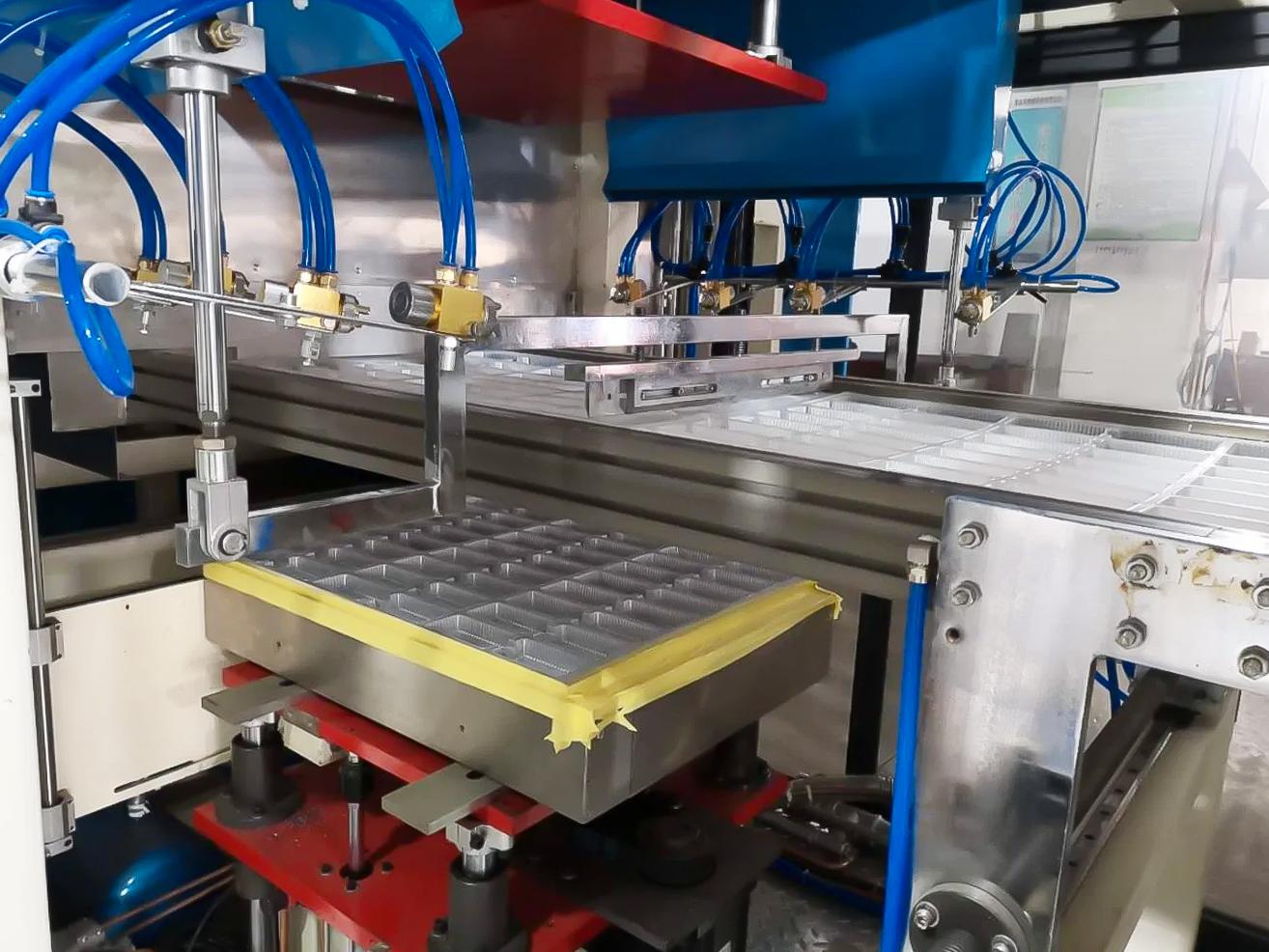
Cycle time refers to the amount of time required to complete one production cycle. In thermoforming, this generally means the time needed to complete the defined sequence of operations for a forming cycle, from the start of a cycle to the start of the next cycle.
Depending on the machine configuration, a production cycle may include plastic sheet loading or feeding, heating, forming, cooling, part release, and associated handling operations. Trimming, stacking, and packaging may take place within an integrated automated line or as separate downstream processes.
Manufacturers should define exactly which operations are included when measuring cycle time. This makes performance comparisons more meaningful and helps teams determine whether an improvement in machine speed also improves total production output.
For example, a shorter forming cycle may not increase finished-part output if the trimming station cannot process parts at the same rate. Measuring the complete production process helps reveal these limitations.
Reducing cycle time starts with understanding how production currently performs. Without reliable measurements, manufacturers may focus on visible delays while overlooking the stages responsible for most of the lost time.
Record the time required for each major operation, including sheet feeding, heating, forming, cooling, demolding, trimming, and part handling. For automated thermoforming equipment, production data may be available through the machine control system. For semi-automatic equipment, operators can record cycle times and downtime using standardized production logs.
Collect data across multiple production cycles rather than relying on a single observation. Cycle times can vary because of material thickness, mold temperature, heating conditions, operator actions, product geometry, and production interruptions.
Useful measurements include:
These indicators help distinguish machine-level improvements from broader manufacturing improvements.
For instance, a machine may have a relatively short cycle time but still deliver poor daily output because of frequent stoppages, mold changes, material shortages, or downstream delays. Measuring cycle time alongside downtime and scrap rate provides a more accurate picture of production efficiency.
Identifying bottlenecks is one of the most direct ways to improve cycle time and increase throughput. A bottleneck is a process, machine, or activity that limits the output of the entire production line.
In thermoforming, bottlenecks may occur at the heating station, forming station, cooling station, trimming equipment, stacking system, or packaging area. Material loading and manual part removal can also restrict production when they cannot keep pace with the forming machine.
A common mistake is to optimize the fastest or most visible operation rather than the stage that limits total output. If a trimming machine processes parts more slowly than the thermoforming machine produces them, increasing forming speed may simply create a growing queue of unfinished parts.
A practical bottleneck analysis should examine:
Once the limiting stage is identified, improvements should focus on that stage first. Depending on the situation, this may involve increasing equipment capacity, adjusting process parameters, improving material supply, balancing workloads, or reducing changeover time.
After an improvement, measure the line again. Removing one bottleneck may reveal another, so production optimization should be treated as an ongoing process.
Heating and cooling often account for a substantial portion of the total time required to form a plastic part. Improving these stages can help manufacturers improve cycle time while maintaining dimensional accuracy and surface quality.
The plastic sheet must reach a suitable forming temperature before it can be shaped against a mold. If heating is too slow, production output falls. If heating is uneven or excessive, the finished part may develop thin areas, surface defects, sagging, or inconsistent dimensions.
Manufacturers can improve heating performance by:
Different plastics respond differently to radiant heat. A heating profile that works well for ABS may not deliver the same results with PETG, polycarbonate, polypropylene, or other thermoplastics. Process settings should therefore be developed for the actual material and product rather than copied from another production run.
Cooling is another major factor in optimizing cycle time. The formed part must become sufficiently stable before it can be released from the mold without distortion.
Manufacturers can review mold temperature, cooling-channel design, cooling-water flow, and the contact between the formed plastic and the mold. Uneven cooling may cause warping, dimensional changes, or longer holding times.
Improving cooling performance does not mean releasing parts before they are ready. Instead, the objective is to remove heat efficiently and consistently so that parts reach the required condition in less time.
Technical guidance from Plastic Components and the Focus on Energy plastics-industry best-practice guide also identifies heating control and cooling performance as important areas for cycle-time improvement.
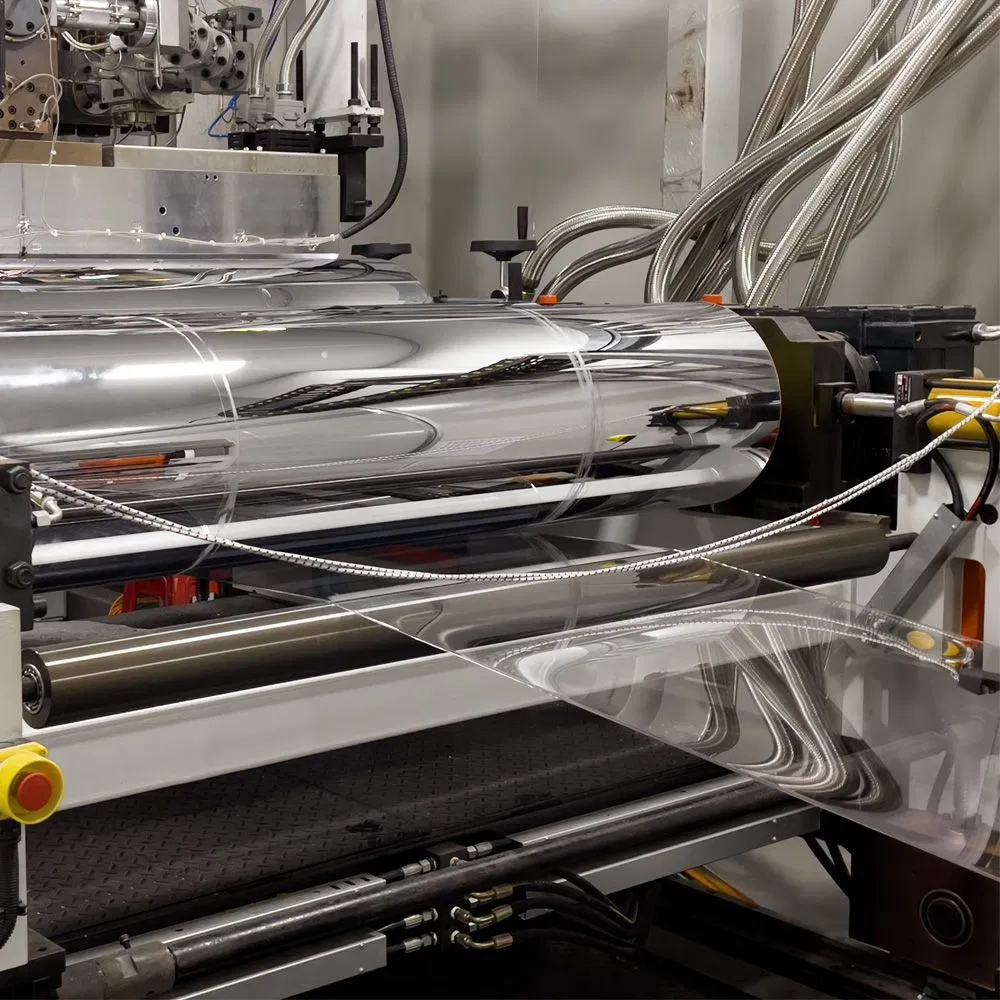
Raw materials influence heating time, forming behavior, cooling requirements, finished-part quality, and production cost. Material selection should account for both product performance and the capabilities of the thermoforming equipment.
When selecting a thermoplastic sheet, consider its thickness, forming temperature, impact resistance, stiffness, thermal behavior, surface requirements, and intended operating environment.
Inconsistent sheet thickness can cause uneven heating and variation between parts. Differences in material composition or incoming sheet quality may also require adjustments to machine settings.
To improve material-related production efficiency, manufacturers should establish approved material specifications, inspect incoming sheets, and keep material batches traceable. Operators should use documented processing parameters for each material and product combination.
Material utilization is another area for improvement. Nesting multiple parts efficiently within a sheet, reducing unnecessary trim margins, and reviewing product geometry can increase the number of usable parts obtained from each sheet.
However, minimizing waste must not compromise part strength, wall thickness, or dimensional requirements. Material savings should be assessed alongside quality results and the cost of rejected products.
Mold design influences forming quality, cooling performance, demolding, trimming requirements, and the amount of time needed to complete each cycle.
A poorly designed mold may create uneven material distribution, difficult part release, unnecessary cooling delays, or excessive trimming work. These problems can reduce output even when the thermoforming machine itself operates reliably.
When developing a new mold or improving an existing one, manufacturers should evaluate:
Mold changes can also create substantial waiting time between production runs. Standardized mounting interfaces, organized tooling storage, prepared connections, and documented setup parameters can shorten changeovers.
For manufacturers producing many product variants, it may be helpful to prepare the next mold and required materials before the current production run finishes. This reduces the amount of machine time spent waiting for tools, settings, or operator preparation.
Improving mold design and changeover procedures can therefore reduce both machine cycle time and the broader lead time associated with completing customer orders.
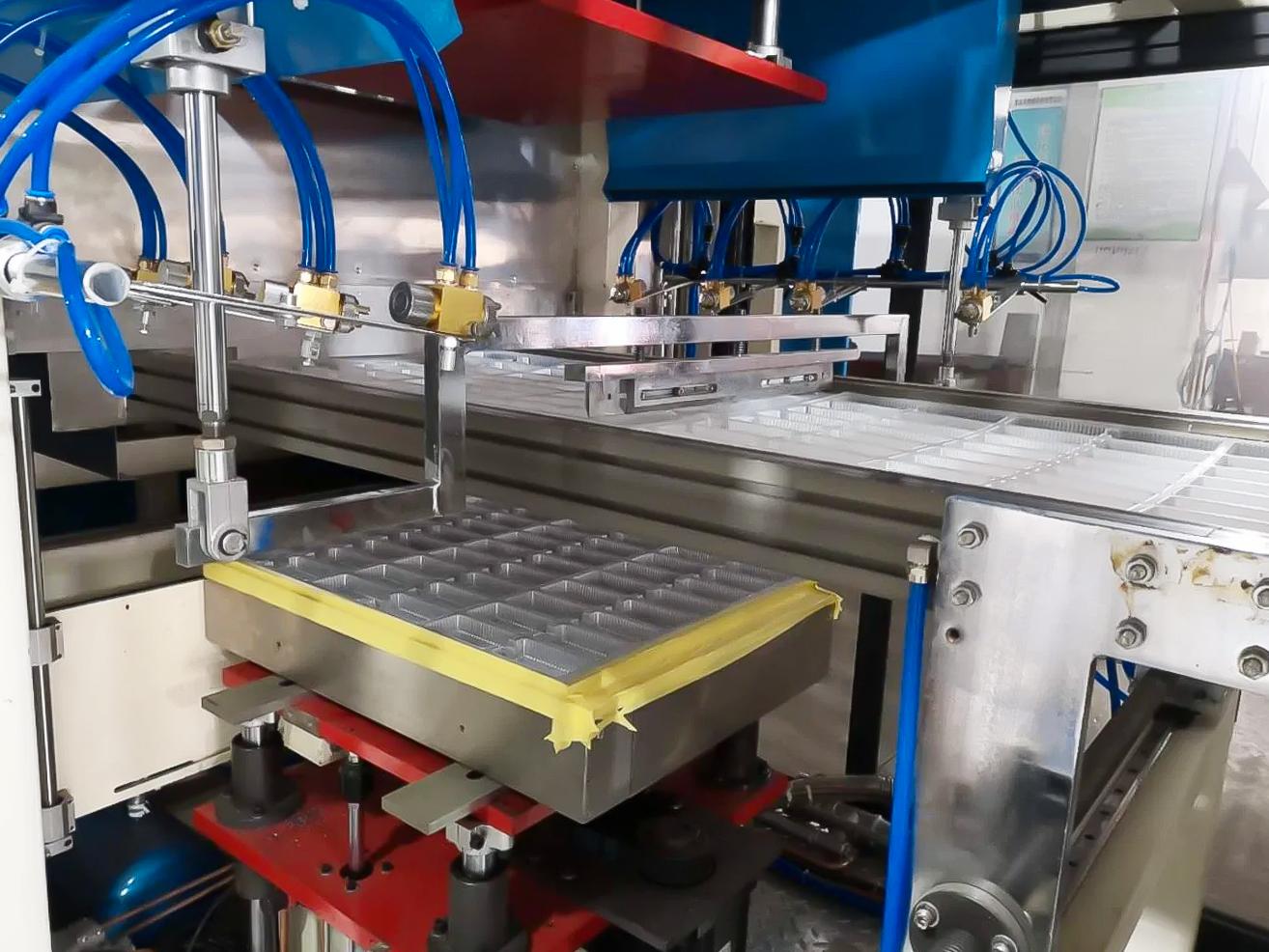
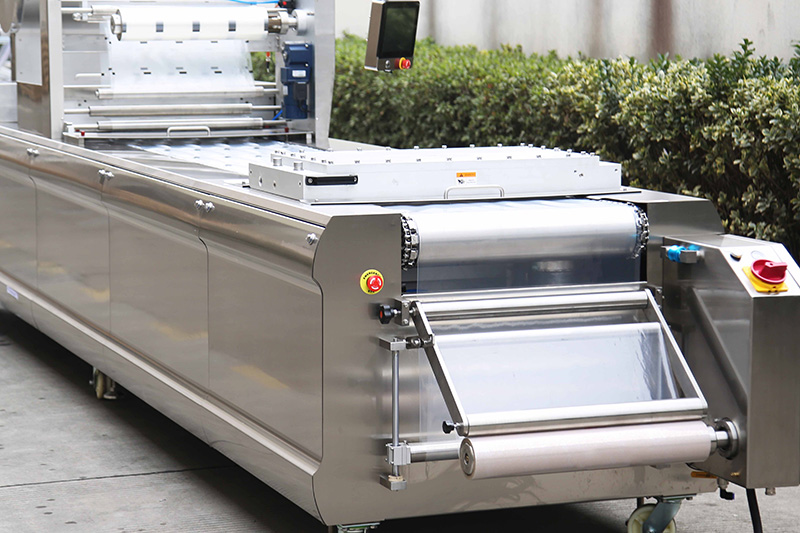
Automation can improve consistency and reduce the time required for repetitive production tasks. Depending on the thermoforming line, suitable applications include automatic sheet feeding, mold movement, part ejection, trimming, stacking, conveying, and product counting.
Semi-automatic machines may depend on operators for loading, unloading, or other handling tasks. If these activities take longer than the machine's forming cycle, the machine may remain idle while waiting for the next operation.
Automatic equipment can coordinate several activities and reduce delays between stages. Sensors, programmable controls, and repeatable operating sequences can also help maintain consistent process settings.
The appropriate automation level depends on production volume, product complexity, labor availability, changeover frequency, and investment budget.
| Production requirement | Potential improvement |
|---|---|
| High-volume, repeatable orders | Automatic feeding, ejection, stacking, and integrated downstream handling |
| Frequent product changes | Quick-change tooling and stored machine recipes |
| Labor-intensive handling | Mechanical loading, unloading, or robotic part transfer |
| Variable production demand | Flexible equipment and adjustable automation |
| Repeated manual setting errors | Standardized recipes, sensors, and process controls |
Automation should be assessed against the whole production process, not just the forming machine. If downstream trimming, inspection, or packaging remains a bottleneck, adding automation at the forming station alone may not deliver the expected increase in finished output.
Unplanned equipment failures interrupt production, extend delivery schedules, and increase operating costs. Even short stoppages can accumulate into significant losses over a full shift.
A preventive maintenance program helps identify wear and operating problems before they cause a production interruption. Maintenance tasks should reflect the machine manufacturer's instructions, equipment design, operating hours, and production conditions.
Common maintenance activities include inspecting heating elements, checking pneumatic and vacuum systems, cleaning filters, reviewing cooling circuits, lubricating specified moving components, and inspecting mold alignment and clamping mechanisms.
Manufacturers should also record recurring faults and their causes. If a machine repeatedly stops because of vacuum instability or material-feed errors, the team should investigate the underlying cause rather than simply restarting production each time.
Maintenance planning can be coordinated with mold changes, product transitions, or scheduled production breaks. Keeping commonly required spare parts available can further reduce repair-related waiting time.
The objective is to improve equipment availability and keep production cycles predictable, rather than waiting for a failure to force corrective action.
Improving individual machine performance does not automatically ensure that a factory can meet customer demand. Production scheduling must align available capacity with order requirements, material availability, labor, and downstream processing.
Takt time provides a useful reference for production planning.
Takt time = Available production time / Customer demand during that time
For example, if a factory has 420 minutes of planned production time available per shift and must produce 210 acceptable units during that shift:
Takt time = 420 minutes / 210 units = 2 minutes per unit.
This means the factory needs to complete one acceptable unit every two minutes, on average, to meet the stated demand.
Takt time is not the same as machine cycle time. Cycle time measures how long a defined operation takes, while takt time expresses the production pace required by customer demand.
In thermoforming, the comparison also depends on how many parts a machine produces per cycle. A machine that forms multiple parts at once may have a cycle time longer than the takt time per individual unit while still meeting the required output.
Manufacturers should therefore compare takt time with actual production capacity, parts per cycle, scrap rates, and downstream processing speed.
When production cannot meet takt time, possible responses include reducing downtime, balancing workloads, adding suitable shifts, improving tooling, or reviewing equipment capacity. When capacity greatly exceeds demand, production scheduling may offer opportunities to reduce unnecessary machine running time and energy consumption.
Waste in manufacturing includes more than discarded plastic. It also includes unnecessary movement, excessive work-in-progress, waiting for materials, repeated handling, avoidable adjustments, and production that does not meet specifications.
A structured review of manufacturing processes can reveal where these losses occur.
For example, operators may spend time searching for tools, waiting for material deliveries, moving parts between distant workstations, or correcting defects caused by inconsistent settings. Each activity adds time or cost without necessarily improving the product.
Manufacturers can minimize waste through better workstation organization, clearly defined material locations, reliable replenishment procedures, standardized work instructions, and coordinated production scheduling.
Waiting time deserves particular attention. A thermoforming machine may be ready to run but unable to continue because the correct plastic sheet, mold, operator, or downstream equipment is unavailable.
To reduce these delays, production teams should coordinate material preparation, tooling readiness, operator assignments, and maintenance schedules before a job starts.
Reducing waste also involves examining the full production flow. Lower scrap rates, fewer unnecessary movements, and less work-in-progress can shorten order lead time and help manufacturers respond more consistently to customer requirements.
Continuous improvement turns isolated production changes into a repeatable method for raising performance over time.
Instead of changing several machine settings simultaneously, teams should identify a specific problem, establish a baseline, test a controlled adjustment, and compare the results. This makes it easier to determine which changes produce measurable benefits.
A practical improvement cycle follows four stages:
Plan: Review production data, identify a bottleneck, and define a measurable improvement target.
Do: Test a change, such as adjusting the heating profile, improving cooling flow, or reorganizing material handling.
Check: Compare cycle time, output, scrap rate, downtime, and product quality before and after the change.
Act: Standardize the change if it delivers the intended result, or revise the approach if the results are unsatisfactory.
This method is commonly associated with the Plan-Do-Check-Act approach. It helps production teams improve performance without relying on assumptions or one-time observations.
Improvement targets should be realistic and specific. For example, a manufacturer might aim to reduce average changeover time by 10% over a defined period while maintaining the existing product acceptance rate.
Results should be reviewed across multiple production runs and, where relevant, different shifts and material batches. A setting that works for one product may not be suitable for another.
Over time, a consistent improvement process helps manufacturers stabilize production cycles, improve resource utilization, and make better use of existing equipment.
Measuring the right indicators allows manufacturers to determine whether production changes are delivering useful results.
The following metrics can be reviewed together to evaluate overall thermoforming production efficiency.
| Metric | What it measures | How it supports improvement |
|---|---|---|
| Cycle time | Time required for a defined production cycle | Identifies opportunities to shorten processing time |
| Throughput | Number of acceptable units produced per hour or shift | Shows actual production output |
| Scrap rate | Percentage of parts rejected | Reveals material loss and quality problems |
| Machine downtime | Time equipment is unavailable | Highlights maintenance and operational losses |
| Changeover time | Time required to switch products or molds | Helps improve production flexibility |
| Lead time | Elapsed time across a defined order or production process | Reveals delays beyond the machine cycle |
| OEE | Overall equipment effectiveness based on availability, performance, and quality | Combines several equipment-performance factors |
These metrics should be interpreted together. Reducing cycle time is beneficial only when the change supports the required output and does not create unacceptable quality problems or additional downstream delays.
For example, a shorter cycle that increases scrap may result in fewer acceptable parts per hour. A more reliable cycle with slightly longer processing time may deliver better overall output if it significantly reduces stoppages and rejects.
Measuring cycle-time changes helps manufacturers estimate the potential effect on production capacity.
For a simple operation that produces one part per cycle, theoretical output per hour can be calculated as:
Theoretical output per hour = 3,600 seconds / Cycle time in seconds
Consider a thermoforming operation with an average cycle time of 60 seconds.
Theoretical output = 3,600 / 60 = 60 parts per hour.
If the cycle time is reduced to 50 seconds:
Theoretical output = 3,600 / 50 = 72 parts per hour.
The theoretical increase is 12 parts per hour, or 20%.
In actual production, the final output may be lower because of downtime, scrap, changeovers, and other interruptions. If each cycle produces multiple parts, the number of parts per cycle must also be included in the calculation.
This example illustrates why measuring cycle time is useful, but it should not be treated as a guaranteed production result. Actual output must be verified using production records after the improvement has been implemented.
The performance of a thermoforming production line depends partly on whether the machine configuration matches the product and manufacturing requirements.
Factors such as forming area, material thickness, heating capacity, cooling design, mold configuration, trimming method, and automation level affect achievable output and operating consistency.
When evaluating new equipment, manufacturers should consider more than the maximum advertised cycle rate. It is useful to review the machine's performance with the intended material, part geometry, mold, and downstream process.
Questions to consider include:
A machine designed around the actual production requirements can help reduce process variation, improve material utilization, and avoid capacity limitations that emerge as demand increases.
For manufacturers planning an equipment upgrade, a review of current cycle times, bottlenecks, product specifications, and expected production volumes provides a stronger basis for selecting the appropriate configuration.
Manufacturers can improve efficiency by measuring cycle time, identifying bottlenecks, optimizing heating and cooling, improving mold design, reducing machine downtime, automating repetitive tasks, and minimizing material waste. Improvements should be evaluated against actual output and product quality.
The fastest practical approach is to identify the stage that limits production and investigate its underlying cause. Depending on the machine and product, this may involve improving cooling performance, adjusting heater zones, reducing handling delays, or improving material feeding. Changes should be tested to confirm that they maintain acceptable product quality.
Cooling allows the formed plastic to become stable enough for release from the mold. Insufficient cooling can cause distortion, while unnecessarily long cooling periods reduce production throughput. Improving heat removal and cooling consistency can help shorten the cycle without compromising the finished part.
Cycle time measures the duration of a defined production operation or cycle. Lead time measures the total elapsed time between specified starting and ending points, such as receiving an order and delivering the finished product. Lead time may include scheduling delays, material procurement, queue time, production, inspection, and shipping.
Cycle time is the time required to complete a production cycle. Takt time is the available production time divided by customer demand for the same period. Cycle time describes how quickly a process operates, while takt time indicates the production pace needed to meet demand.
Material waste can be reduced through efficient sheet nesting, suitable mold design, consistent heating, accurate process settings, incoming material inspection, and effective quality control. Manufacturers should also investigate recurring defects and ensure that material savings do not compromise part strength or dimensions.
No. Automation can reduce manual handling, improve repeatability, and coordinate production stages, but the benefits depend on product volume, process requirements, and equipment integration. If the real bottleneck is cooling, material supply, or downstream trimming, automation elsewhere may have limited impact.
Cycle time should be measured during process setup, after significant equipment or material changes, and as part of routine production monitoring. Frequent monitoring helps identify variation and detect problems before they affect large production batches. The measurement frequency should reflect production volume, process stability, and quality requirements.
Preventive maintenance reduces the likelihood of unplanned breakdowns and recurring operating problems. Regular inspection and servicing can improve equipment availability, maintain process consistency, and reduce the time lost to repairs.
Compare production data before and after the change. Review average cycle time, acceptable parts per hour, scrap rate, downtime, and energy or material use where relevant. A successful improvement should deliver a measurable operational benefit without creating new quality or reliability problems.
Improving thermoforming production efficiency requires attention to the entire manufacturing process, from raw material preparation and sheet heating to forming, cooling, trimming, and finished-part handling.
The most effective improvements begin with accurate measurement. By measuring cycle time, identifying bottlenecks, reducing waiting time, maintaining equipment, and coordinating production stages, manufacturers can increase throughput and shorten lead time.
Continuous improvement helps sustain these gains. Regularly reviewing production data and validating process changes allows manufacturers to eliminate waste, use resources more effectively, and meet customer demand with greater consistency.
The goal is not simply to run the thermoforming machine faster. It is to produce more acceptable parts with predictable cycle times, less waste, and reliable delivery performance.