Quote now
EN

The most common plastics used in thermoforming include ABS (acrylonitrile butadiene styrene), PP (polypropylene), PET (polyethylene terephthalate), PVC (polyvinyl chloride), and PE (polyethylene). Each material offers different combinations of formability, impact resistance, chemical resistance, transparency, heat resistance, and cost effectiveness.
The best material depends on the final product's intended use, operating environment, required wall thickness, forming depth, production volume, and budget. Manufacturers should evaluate the properties of the actual sheet grade, not just the general characteristics of the polymer.
Thermoforming plastic is a thermoplastic sheet or film that can be heated until it becomes pliable, shaped using a mold, and cooled to retain a desired form. The manufacturing process typically involves heating a sheet of plastic, applying vacuum, air pressure, or mechanical assistance to form the shape, cooling the material, and trimming excess plastic to produce the final product.
Thermoforming is used to manufacture packaging trays, food containers, medical equipment housings, automotive panels, industrial covers, and many other plastic components. Unlike injection molding, which forms parts by injecting molten plastic into a closed mold, thermoforming starts with a pre-manufactured sheet.
Choosing the right raw materials affects forming performance, finished-part quality, production speed, material consumption, and long-term durability. ABS, PP, PET, PVC, and PE are among the widely used options, but they are not interchangeable. Each has distinct materials properties that determine where it performs best.
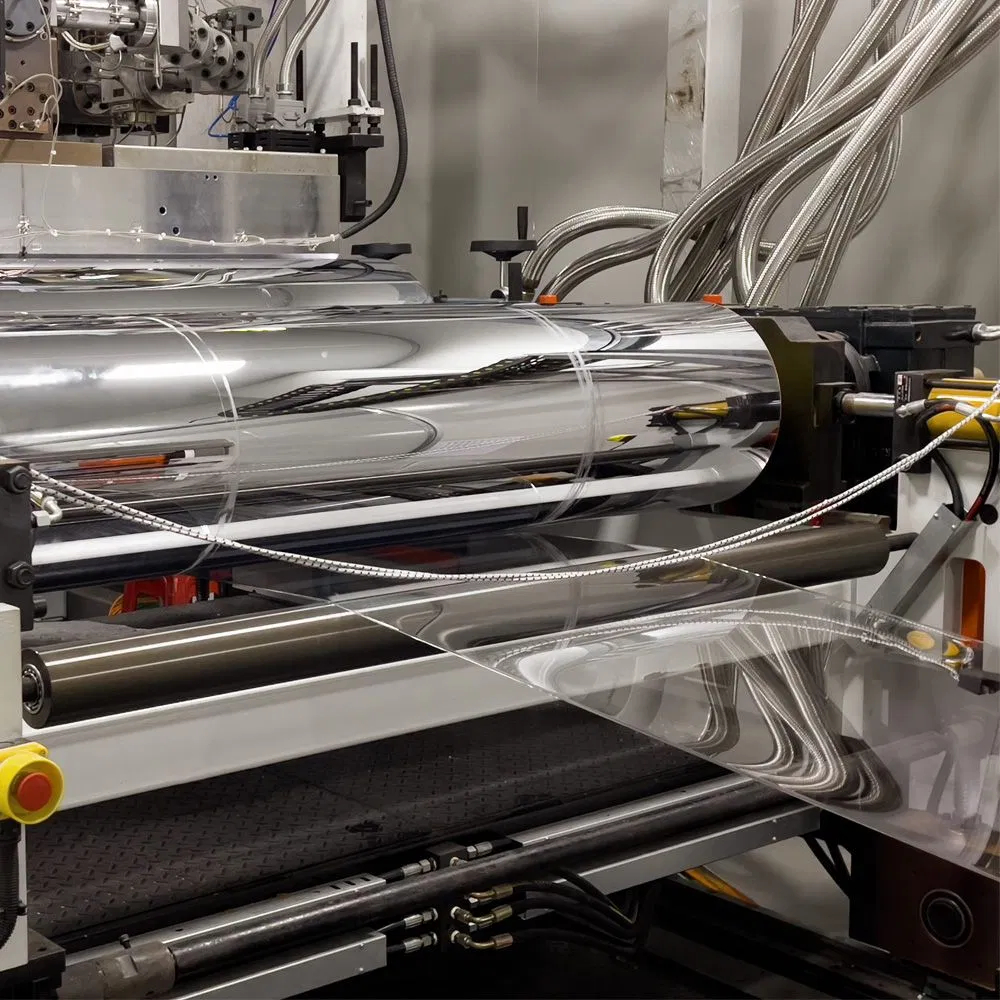
The five major plastic families differ in mechanical performance, appearance, processing requirements, and typical applications. The following table provides a practical starting point for material selection.
| Plastic material | Main properties | Common thermoforming applications | Main consideration |
|---|---|---|---|
| ABS | Good impact resistance, rigidity, surface finish | Equipment housings, automotive panels, enclosures | Not ideal for every chemical or high-temperature environment |
| PP | Low density, chemical resistance, fatigue resistance | Food containers, packaging trays, industrial parts | Shrinkage and warpage require process control |
| PET | Clarity, stiffness, packaging performance | Clear trays, lids, retail packaging | Grade and temperature requirements affect forming |
| PVC | Available in rigid and flexible formulations | Blister packaging, selected protective components | Additives, heat stability, and regulatory requirements need review |
| PE | Toughness, moisture resistance, chemical resistance | Industrial liners, containers, trays | Lower stiffness and higher thermal expansion can affect design |
The actual performance of a thermoformed part depends on the polymer grade, sheet thickness, additives, heating conditions, mold design, draw ratio, cooling, and trimming process. Material data sheets should be reviewed before production, and finished components should be tested against their intended requirements.
ABS, or acrylonitrile butadiene styrene, is widely used for thermoformed components that require a balance of rigidity, toughness, surface appearance, and manufacturing flexibility. It is available in different grades, colors, textures, and sheet thicknesses.
ABS combines the stiffness and processing characteristics of its styrene-based structure with improved toughness from its rubber component. Its main advantages include:
Actual impact strength depends on the specific ABS grade, operating temperature, formed wall thickness, and part geometry. Standard ABS may also require UV protection for prolonged outdoor exposure.
ABS sheets are commonly used for:
ABS is particularly useful when the final product needs an opaque, rigid appearance and good resistance to everyday impacts. For applications involving elevated temperatures, aggressive chemicals, or long-term sunlight exposure, manufacturers should evaluate alternative grades or materials.
ABS sheets must be heated evenly to avoid inconsistent forming, surface defects, and localized thinning. Sheet thickness, mold geometry, and the required draw depth determine the appropriate heating and forming settings.
Some ABS sheet grades may require drying or other material conditioning before processing. The manufacturer's technical data sheet should guide preparation and processing requirements.
For equipment housings, designers should also consider draft angles, mounting points, trim allowances, and the minimum acceptable wall thickness. These factors influence dimensional accuracy and the durability of the finished component.
Polypropylene (PP) is a lightweight thermoplastic used in packaging, containers, industrial components, and selected automotive applications. It offers good resistance to many chemicals and has useful fatigue performance in applications involving repeated flexing.
PP is a semi-crystalline polymer, which means its forming and cooling behavior differs from that of amorphous plastics such as ABS. Manufacturers need to account for this difference when selecting thermoforming equipment and processing parameters.
Its main characteristics include:
PP is not equally suitable for every application. Its stiffness, low-temperature impact performance, heat behavior, and resistance to oxidation vary by grade and formulation.
PP is used in:
For food packaging, the selected sheet must meet the required food-contact specifications and perform under the intended filling, storage, sealing, and distribution conditions.
PP can be more challenging to thermoform than some amorphous materials because its semi-crystalline structure affects its softening behavior, shrinkage, and dimensional stability.
Manufacturers should pay particular attention to:
Pressure forming or mechanical assistance may be useful for selected PP parts where the geometry and equipment support these methods. Process trials help establish settings that produce repeatable results.
PET stands for polyethylene terephthalate. It is widely used in packaging because it can offer transparency, stiffness, and good visual presentation. PET sheets are available in different formulations designed for particular forming, recycling, and temperature requirements.
PET is often selected when a product needs a clear appearance and a relatively rigid structure. Depending on the grade, its advantages include:
PET should not be treated as a single, uniform material. APET, CPET, PETG, and recycled PET sheets have different properties and processing requirements. PETG, for example, is a glycol-modified copolyester, not simply identical to standard PET.
| Material | Main characteristics | Common applications |
|---|---|---|
| APET | Amorphous PET with good clarity and stiffness | Clear trays, lids, clamshell packaging |
| CPET | Crystallized PET designed for selected higher-temperature applications | Ovenable food trays and heat-resistant packaging |
| PETG | Modified copolyester with good clarity and formability | Display packaging, transparent covers, selected medical trays |
| rPET | Recycled-content PET with properties dependent on source and formulation | Packaging trays and selected consumer packaging |
These materials are not interchangeable. For example, a standard APET tray should not be assumed to withstand oven temperatures simply because CPET is used in certain ovenable packaging applications.
Recycled-content sheets may also differ in color, clarity, mechanical properties, and processing behavior. Manufacturers should validate the selected grade against the requirements of the final product.
PET sheets are frequently used for:
Food packaging: Clear bakery trays, produce containers, confectionery trays, lids, and other packaging that benefits from product visibility.
Retail packaging: Clamshells, blister packs, and protective inserts that hold products securely while allowing customers to see them.
Industrial packaging: Trays that organize components during transport, storage, and assembly.
Medical and pharmaceutical packaging: Selected trays and inserts, subject to material compatibility, packaging validation, and applicable regulatory requirements.
PET forming requires appropriate temperature control and material preparation. Moisture management may be necessary for particular PET grades, especially when the sheet supplier specifies drying requirements.
Excessive heating, uneven temperature distribution, or unsuitable forming conditions can result in haze, deformation, inconsistent wall thickness, or other defects. Manufacturers should establish process parameters for the exact PET formulation rather than relying on settings used for another plastic.
For food packaging, the material's clarity is only one consideration. Sealability, stiffness, drop performance, food-contact compliance, and compatibility with filling and distribution systems must also be evaluated.
PVC, or polyvinyl chloride, is available in rigid and flexible formulations. Its properties can be adjusted using additives and other formulation choices, allowing it to serve different packaging and industrial requirements.
Depending on the grade, PVC can offer:
PVC performance varies considerably between rigid PVC and plasticized PVC. Plasticizers and other additives influence flexibility, temperature behavior, chemical compatibility, and regulatory suitability.
PVC sheets may be used for:
The suitability of PVC for food, medical, or pharmaceutical use depends on the exact formulation, intended contact, relevant regulations, and customer specifications.
PVC requires careful control of heating conditions because excessive temperatures or unsuitable processing conditions can cause material degradation and release hazardous decomposition products. Appropriate ventilation, temperature controls, and manufacturer-recommended processing practices are necessary.
PVC also requires a product-specific assessment of recyclability, end-of-life handling, additive content, and customer or market restrictions.
For projects where transparency is needed, PET may be a suitable alternative. For applications that need impact resistance or repeated flexing, ABS or PP may be worth evaluating. The decision should be based on actual performance requirements rather than material cost alone.
PE, or polyethylene, is a family of thermoplastics that includes low-density polyethylene (LDPE), high-density polyethylene (HDPE), and other grades. It is commonly used where toughness, moisture resistance, and chemical compatibility are more important than optical clarity or a high-gloss surface.
Polyethylene offers several useful characteristics:
Different PE grades have different stiffness, density, impact behavior, and forming characteristics. HDPE generally offers greater stiffness than LDPE, while LDPE is more flexible.
PE sheets are used in applications such as:
HDPE may be appropriate for applications that require a tougher, more rigid component, while LDPE may be considered for products that benefit from flexibility. The specific sheet grade and thickness determine whether the material meets the required load and impact performance.
Polyethylene is semi-crystalline and can shrink significantly during cooling. Its relatively low stiffness compared with some other thermoplastics can also affect part design.
To ensure consistent quality, manufacturers should consider sheet temperature, material sag, mold temperature, cooling time, and dimensional compensation. Deep-draw designs may require geometry adjustments to reduce uneven stretching.
PE can be a good choice for industrial products that need chemical resistance and toughness, but it is generally less suitable than clear PET for applications where transparency and a premium optical finish are required.
Choosing a plastic requires more than comparing material prices. Manufacturers need to consider how the raw materials will behave during forming and whether the finished component will meet its performance requirements throughout its service life.
Impact strength describes a material's ability to withstand sudden loading without breaking. It is especially important for equipment housings, protective covers, transport trays, and parts exposed to repeated handling.
ABS is often a practical choice for rigid housings, while selected PE and PP grades offer toughness for industrial and packaging applications. PET is commonly selected for rigid packaging, but its impact behavior depends on the grade, temperature, and part geometry.
The final impact resistance of thermoformed parts depends on more than the original sheet's data sheet. Heating and stretching change the local wall thickness, and thin areas can become weak points. Testing representative formed parts is therefore more useful than relying exclusively on raw-material specifications.
The operating environment can narrow the choice considerably.
PP and PE are often suitable for applications involving moisture and many chemicals. ABS may be preferable for rigid housings, depending on the temperature and chemical exposure. PET and PVC grades can serve selected packaging applications, but their performance depends on formulation and operating conditions.
Manufacturers should identify the expected operating temperature, cleaning agents, chemical concentrations, outdoor exposure, and contact duration before selecting a material.
For products that need clear packaging or visibility of the contents, PET and suitable PETG grades are common choices. Rigid PVC can also provide transparency in appropriate formulations.
ABS is more suitable for many opaque housings and decorative panels, while PP and PE are commonly used where functional performance matters more than optical clarity.
Surface finish, gloss, texture, color consistency, and resistance to scratches should be specified early, particularly for products with visible exterior surfaces.
The required thickness of a sheet of plastic depends on the part's size, depth, loading conditions, and expected service life.
Increasing sheet thickness can improve stiffness and provide more material for forming, but it also raises material consumption and may increase heating and cooling time. Excessive thickness can make production less economical without delivering a meaningful improvement in performance.
Designers should establish the nominal sheet thickness, minimum formed wall thickness, dimensional tolerances, and permitted deformation. Deep recesses, sharp corners, and complex contours should be reviewed for their effect on material distribution.
For food packaging, selecting a polymer commonly used in food applications does not automatically establish compliance. The exact resin grade, additives, recycled content, processing conditions, and intended food-contact conditions must satisfy the applicable regulations.
Medical and pharmaceutical products may require additional testing, traceability, clean manufacturing controls, or validated packaging performance. These requirements should be defined before material approval.
Vacuum forming and pressure forming are two widely used thermoforming methods. Both heat a thermoplastic sheet and shape it using a mold, but they differ in how pressure is applied.
Vacuum forming uses vacuum pressure to draw a heated sheet against a mold. It is suitable for a wide range of parts with relatively straightforward geometries.
Common applications include:
Vacuum forming can offer an economical tooling approach for many applications. However, fine surface detail and difficult geometries may require additional design features, mold adjustments, or an alternative forming method.
Pressure forming uses vacuum together with positive air pressure to push the heated sheet more firmly against the mold surface. This can improve detail reproduction and surface definition for suitable parts.
Pressure forming may be useful for ABS housings, selected PP components, and other thermoplastics where the required geometry and grade are compatible with the process.
The additional pressure and equipment requirements can increase manufacturing complexity. Whether pressure forming is worthwhile depends on the desired finish, dimensional requirements, part geometry, and production economics.
| Factor | Vacuum forming | Pressure forming |
|---|---|---|
| Forming method | Vacuum draws the sheet against the mold | Vacuum and positive air pressure shape the sheet |
| Surface detail | Suitable for many general-purpose shapes | Can reproduce finer detail on suitable designs |
| Tooling | Often economical for simpler applications | May require tooling and equipment designed for pressure forming |
| Material compatibility | Depends on grade and forming conditions | Depends on grade, forming conditions, and pressure requirements |
| Typical applications | Trays, covers, enclosures, packaging | Detailed housings, cosmetic panels, selected technical parts |
| Cost effectiveness | Often attractive for simpler parts | May justify added costs when surface definition is important |
Neither method is inherently superior for every plastic. Material grade, sheet thickness, draw depth, mold design, and required production output should guide the selection.
Injection molding is another common method for manufacturing plastic parts, but it uses a different production approach. The choice between thermoforming and injection molding affects tooling investment, design flexibility, material utilization, cycle time, and the cost of the final product.
| Factor | Thermoforming | Injection molding |
|---|---|---|
| Starting material | Thermoplastic sheet or film | Plastic resin, typically pellets |
| Manufacturing process | Heat, form, cool, and trim | Melt, inject, pack, cool, and eject |
| Tooling investment | Often lower for suitable large or simpler parts | Often higher for complex molds |
| Part geometry | Well suited to shells, trays, covers, and large surfaces | Well suited to intricate parts and integrated features |
| Material distribution | Sheet stretches during forming | Molten resin fills the mold cavity |
| Secondary operations | Trimming is commonly required | Gate removal or other finishing may be required |
| Production volumes | Low to high, depending on equipment and design | Often attractive for high-volume production |
| Cost effectiveness | Depends on tooling, material use, and finishing | Depends on tooling amortization, cycle time, and part complexity |
Thermoforming may be more economical for large plastic parts, relatively simple geometries, customized designs, and production runs that do not justify expensive injection molds.
It is also useful when a manufacturer needs to change the product design without making extensive modifications to complex tooling.
Injection molding is often a strong option for high-volume parts that require intricate details, integrated ribs, snap-fits, mounting bosses, or highly repeatable three-dimensional features.
Although the initial tooling investment can be substantial, the cost per part may become attractive when production quantities are sufficiently large.
A fair comparison should include tooling, raw materials, machine time, labor, scrap, finishing, quality inspection, packaging, and expected production volume. The lowest tooling quote does not necessarily translate into the lowest total manufacturing cost.
Different plastics respond differently to heating, stretching, and cooling. The thermoforming equipment must therefore be compatible with the chosen material and the required production rate.
The heating system must deliver a suitable temperature profile across the sheet. Inconsistent heating can produce incomplete forming, excessive thinning, surface defects, or warpage.
ABS, PET, PP, PVC, and PE have different processing windows. Semi-crystalline materials such as PP and PE often require particular attention to temperature distribution, sag, shrinkage, and cooling.
Processing temperatures should be established from the specific sheet manufacturer's recommendations and verified through production trials rather than taken from generic polymer ranges.
The forming station must accommodate the sheet size, mold geometry, draw depth, and forming method.
Vacuum forming may be sufficient for many trays and covers. Pressure forming can be considered when finer surface detail is required. Plug assistance, matched tooling, or other forming aids may be appropriate for challenging geometries.
The equipment should also provide enough mold support and cooling capacity to maintain the desired part dimensions.
After forming, the component is trimmed to its final dimensions. Depending on the product, trimming may be performed using CNC routers, dies, punches, or integrated cutting stations.
Automated material feeding, part handling, trimming, and stacking can improve throughput and reduce labor requirements. The most appropriate level of automation depends on annual demand, part complexity, and the desired production cycle.
A repeatable manufacturing process requires control over material quality, heating, forming pressure, cooling, and trimming.
Manufacturers should establish documented process settings, inspect samples from production batches, and monitor recurring defects. Where tolerances are demanding, dimensional checks and formed-wall-thickness measurements can help identify issues before they affect large quantities of parts.
Material selection affects both the initial project budget and ongoing production costs. A material with a low purchase price may not be the most economical if it produces excessive scrap, requires longer cycle times, or fails to meet the performance requirements.
A practical cost assessment should include:
For example, a transparent PET tray may be economical because it uses relatively little material and can be manufactured on a high-speed line. An industrial enclosure may be better suited to ABS or HDPE if the required durability and geometry justify a thicker sheet.
Lead times depend on more than the forming cycle. They also include material procurement, tooling production, machine availability, testing, and production scheduling.
Common grades may be readily available from sheet suppliers, while specialized colors, modified polymers, recycled-content formulations, or application-specific materials may require additional sourcing time.
Design changes made after tooling production can also extend delivery schedules. Providing complete drawings, target quantities, material requirements, and quality specifications at the quotation stage helps manufacturers plan the project more accurately.
Manufacturers can improve cost effectiveness by selecting an appropriate starting sheet thickness, optimizing part layout, reducing unnecessary deep draws, and designing components that are easy to trim.
Stable heating and cooling conditions help reduce defects, while appropriate nesting and scrap management can improve material utilization. Recycled material may be an option where the grade meets the finished product's mechanical, visual, and regulatory requirements.
The goal is not simply to minimize material usage or cycle time. It is to manufacture acceptable parts consistently at a competitive total cost.
Common thermoforming plastics include ABS, PP, PET, PVC, PE, HIPS, PETG, polycarbonate, and acrylic. The appropriate material depends on the required mechanical performance, transparency, chemical resistance, operating temperature, part geometry, and production volume.
There is no single best plastic for every application. ABS is often suitable for durable equipment housings, PP for lightweight and chemically resistant components, PET for transparent packaging, PVC for selected packaging applications, and PE for tough, moisture-resistant industrial products.
Yes. ABS is widely used in vacuum forming because it offers good formability, impact resistance, and surface finish. It is commonly selected for equipment covers, automotive panels, and plastic enclosures.
Yes. PP can be thermoformed into packaging trays, containers, and industrial components. Because it is semi-crystalline, manufacturers need to manage sheet temperature, sag, shrinkage, and cooling carefully.
PET is polyethylene terephthalate, while PETG is a glycol-modified copolyester. Both can provide transparency, but their forming behavior and mechanical properties differ. PETG is commonly chosen for its good formability and clarity, while PET and APET are widely used in packaging. The correct choice depends on the application and the specific sheet grade.
Yes. Appropriate PET grades are widely used for food trays, lids, and clear containers. The exact grade and manufacturing process must meet the applicable food-contact requirements, and the package must withstand its intended filling, storage, and distribution conditions.
Yes. PVC remains an option for blister packaging and selected industrial products. Its suitability depends on the formulation, processing conditions, chemical compatibility, and regulatory requirements. Manufacturers should also consider ventilation, material handling, and end-of-life requirements.
HDPE generally offers greater stiffness, while LDPE is more flexible. HDPE may be suitable for rigid industrial trays, liners, and protective components. LDPE may be considered where flexibility is desirable. Both require process settings suited to their grade and geometry.
Impact strength varies by grade, temperature, thickness, and test method, so a universal ranking is misleading. ABS is commonly used for impact-resistant housings, while selected PC grades offer very high impact performance. Tough PE and modified PP grades may also be suitable for particular applications. Testing the actual formed component is the most reliable way to compare performance.
Thermoforming often offers lower initial tooling costs for suitable large or relatively simple parts. Injection molding can offer lower unit costs for high-volume parts with complex integrated features. Total cost depends on tooling, material consumption, production volume, cycle time, scrap, and finishing.
Yes. Recycled-content PET and other suitable recycled thermoplastics can be thermoformed when the selected grade meets the product's performance and regulatory requirements. Manufacturers should verify material consistency, appearance, processing behavior, and any restrictions associated with the intended application.
Consistency depends on controlled material specifications, uniform heating, suitable forming conditions, stable cooling, accurate trimming, and routine inspection. Monitoring wall thickness and critical dimensions helps detect issues such as excessive thinning, shrinkage, and warpage.
Start by defining the product's function, operating environment, impact requirements, required appearance, wall thickness, annual volume, and target budget. Compare the technical data sheets of suitable grades, then conduct forming trials and performance tests before approving the final material.
Provide the product drawing or 3D CAD file, preferred material, sheet thickness, part dimensions, expected annual quantity, surface finish, color, tolerances, and relevant performance requirements. Include food-contact, medical, chemical-resistance, or temperature requirements where applicable. This information helps the manufacturer assess tooling, equipment, cost effectiveness, and lead times.
ABS, PP, PET, PVC, and PE each offer a different balance of formability, mechanical performance, appearance, and manufacturing cost.
ABS is a common choice for durable housings and panels. PP is suitable for many lightweight, chemical-resistant components. PET is widely used for transparent packaging and trays. PVC serves selected packaging and industrial applications, while PE is useful for tough, moisture-resistant parts.
The right choice depends on the finished product rather than the polymer name alone. Manufacturers should consider the actual sheet grade, impact resistance, material thickness, forming depth, production process, equipment capability, and regulatory requirements.
Vacuum forming and pressure forming can both produce high-quality thermoformed parts when the material, tooling, and process settings are properly matched. Comparing thermoforming with injection molding also helps establish the most cost-effective manufacturing route for the expected production volume.
For a reliable result, work with a thermoforming manufacturer to review the design, validate material properties, assess tooling and equipment requirements, and confirm the process through representative production trials. This approach helps control waste, manage lead times, and deliver a final product that meets its functional and commercial objectives.