Quote now
EN

Automated loading and unloading helps thermoforming manufacturers increase production consistency, reduce manual handling, and improve material flow between forming, trimming, and downstream operations. For manufacturers producing food packaging, food trays, and other plastic products at scale, integrating automated systems can reduce repetitive labor, improve workplace safety, and support high-speed production when the equipment is properly matched to the forming process.
The benefits depend on more than adding a robot or conveyor. Effective automation requires coordinated machine timing, suitable material handling, accurate sheet positioning, compatible tooling, and a clear plan for loading and unloading finished parts.
Automated loading and unloading improves thermoforming production by reducing manual handling, maintaining consistent sheet and part positioning, shortening non-forming delays, and coordinating material movement between the forming station and downstream equipment. In high-volume applications, fully automated systems can combine automatic loading, forming, part removal, stacking, and conveyor transfer to support high speed production with more consistent output. Actual gains depend on cycle time, sheet thickness, product geometry, material compatibility, and the level of automation.
Automated loading and unloading in thermoforming is the use of mechanical handling equipment, robots, vacuum pick-and-place devices, conveyors, or integrated transfer mechanisms to move raw material into the forming machine and remove formed parts without requiring an operator to perform every handling step manually.
During a typical thermoforming process, a plastic sheet is heated until it becomes formable, positioned over or against a mold, and shaped using vacuum, pressure, or a combination of forming methods. After cooling, the formed sheet or individual parts are transferred for trimming, stacking, inspection, or packaging.
An automated handling system coordinates these movements with the machine cycle. Depending on the production line, it may handle incoming plastic sheets, transfer formed products, separate parts from scrap, stack food trays, or deliver finished components to a conveyor system.
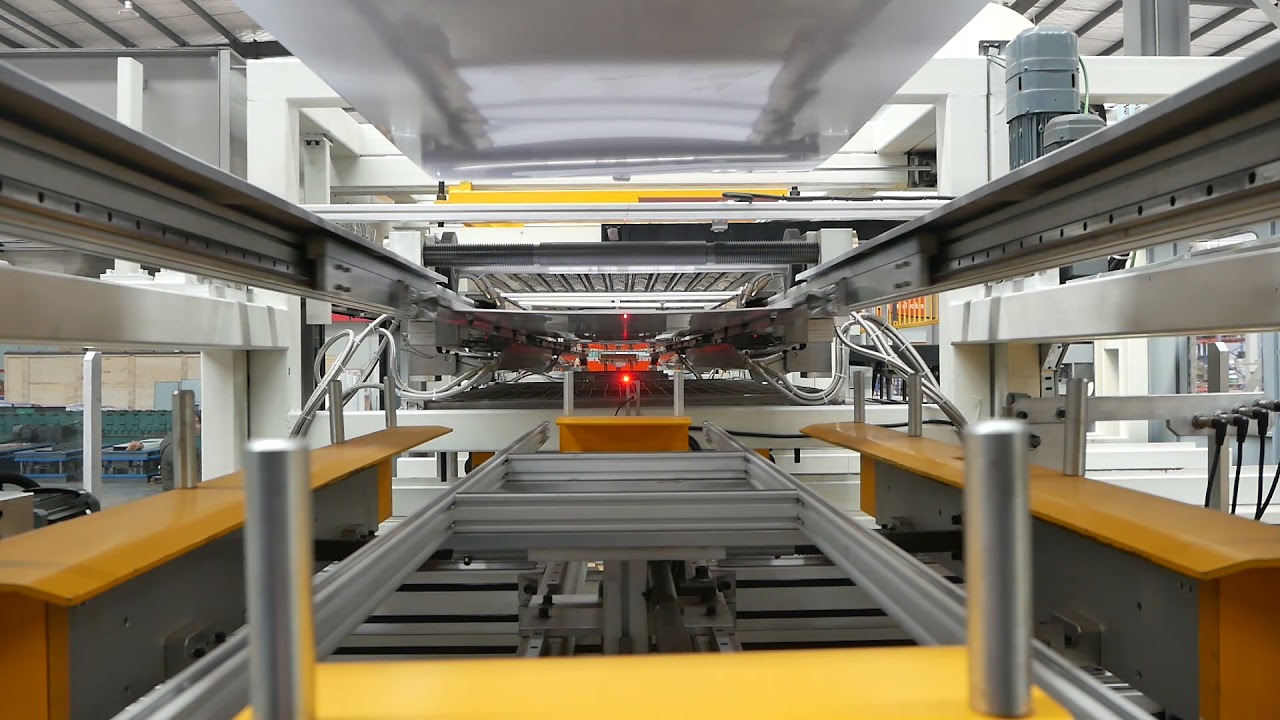
In manual or semi-automatic production, operators may need to position sheets, remove formed products, transfer parts, and arrange finished items between machine cycles. These tasks can become a production constraint when forming equipment operates at a high rate or when products are large, heavy, or difficult to handle.
Automated loading and unloading reduces the number of manual movements required for each cycle. It also helps synchronize the thermoforming machine with equipment before and after the forming process.
A thermoforming machine may spend only part of each cycle heating, forming, and cooling the material. Other time is used for opening the machine, positioning the next sheet, removing the formed product, and preparing for the next cycle.
Automation can reduce these handling delays by preparing the next sheet while another part of the process is being completed, where the machine design allows it. A robotic transfer system or dedicated loading mechanism may also move parts more consistently than manual handling.
However, automation cannot eliminate the time required to heat and cool the plastic. The actual improvement depends on which tasks can safely overlap with the forming cycle and whether material handling is currently limiting output.
Manual loading can introduce variation in sheet alignment, gripping position, part orientation, and stacking. Automated equipment follows programmed movement paths and repeatable transfer positions, helping reduce these differences.
Consistency is especially useful when parts must fit into downstream trimming fixtures, inspection systems, or packaging equipment.
Repeated lifting and handling can increase operator fatigue, particularly during long production runs. Automated loading and unloading can reduce these tasks and allow operators to focus on monitoring, quality checks, replenishment, and exception handling.
Automation should still include suitable guarding, interlocks, emergency stops, and safe procedures for clearing jams or performing maintenance.
An automated thermoforming line typically combines sheet handling, the forming machine, product removal, and downstream transfer. The exact layout depends on whether the machine processes individual sheets or continuous rolls, whether trimming takes place in the same machine, and how the finished products are collected.
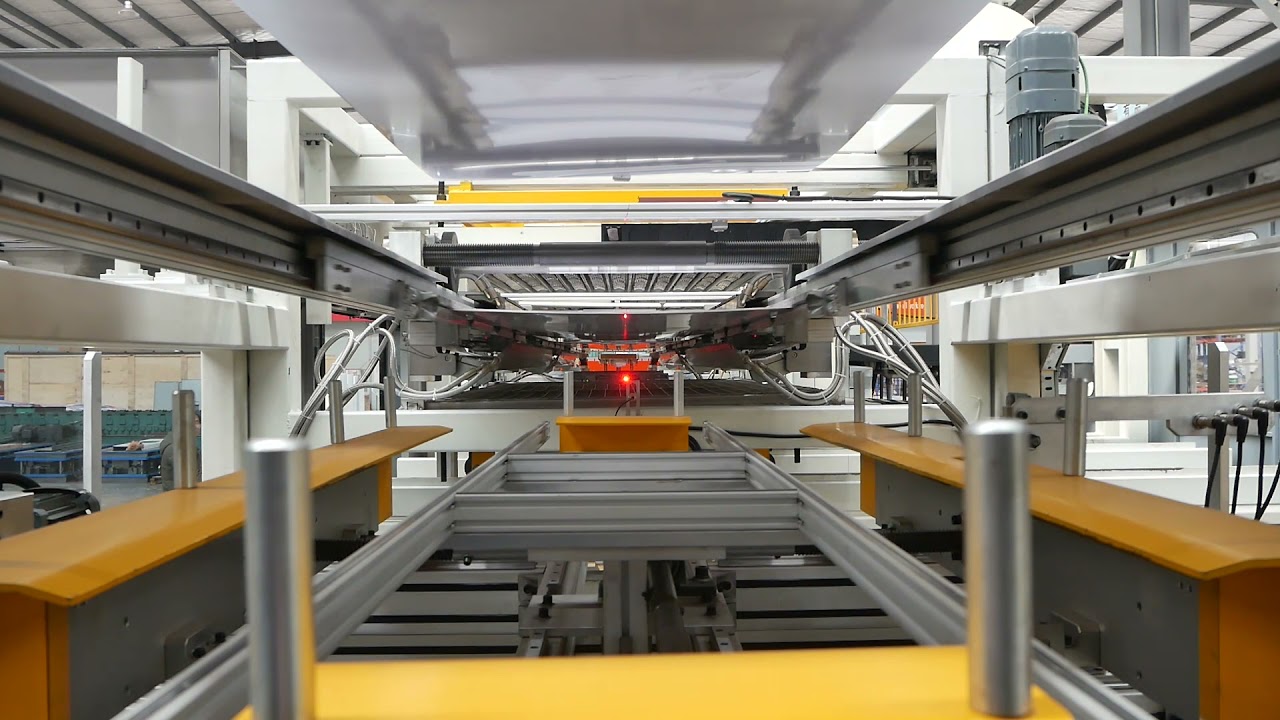
The system takes raw material from a sheet stack, pallet, magazine, or roll supply. For sheet-fed equipment, a loader may use vacuum suction cups or another suitable gripping device to pick up one sheet, separate it from the stack, align it, and transfer it to the clamping frame.
Accurate positioning matters because the sheet must be held securely and aligned with the mold. Misalignment can affect the formed part, create uneven material distribution, or interfere with trimming.
A suitable loader should account for sheet dimensions, surface condition, stiffness, weight, and material thickness. Static electricity, curled edges, protective films, and sheets sticking together may also affect reliable feeding.
Once the sheet is positioned, the thermoforming process heats it to the required forming temperature. The machine then shapes the softened plastic using vacuum forming, pressure forming, or a combination of the two.
The forming station must coordinate with the loading mechanism so that the next sheet enters only when the machine is ready. Interlocks and position sensors help prevent loading during an unsafe or incomplete cycle.
After the part has been formed and cooled sufficiently for handling, an unloading mechanism removes the formed sheet or finished components from the machine.
Depending on the equipment, this may involve a transfer carriage, mechanical gripper, vacuum end effector, robot arm, or automated ejection system. The handling device must support the part without distorting thin walls, damaging edges, or leaving unacceptable marks on visible surfaces.
Large or deep-formed products may require multiple gripping points to prevent flexing during transfer.
After removal, parts can move to trimming, inspection, stacking, labeling, packaging, or storage. A conveyor system connects these operations and helps maintain a predictable flow of material.
For example, a line producing plastic food trays may unload formed sheets, trim the trays, count the finished pieces, stack them, and transfer the stacks to packaging. Depending on the machine layout, these operations may run in-line or as separate processes.
Integrated loading, unloading, and stacking equipment is available in commercial thermoforming systems, but the exact functions and cycle rates vary by machine configuration.
Different applications require different handling methods. The best choice depends on the product, raw material, cycle time, and layout of the production line.
| Equipment type | Main function | Suitable applications |
|---|---|---|
| Automatic sheet loader | Picks, separates, aligns, and feeds plastic sheets | Sheet-fed thermoforming and large formed parts |
| Roll-feed system | Advances plastic sheet from a roll into the machine | Continuous production of thin-gauge packaging |
| Transfer carriage | Moves sheets or formed products between positions | Single-station and multi-station machines |
| Robotic handling system | Picks and places parts with programmed movements | Complex shapes, mixed orientations, and flexible production |
| Vacuum or mechanical gripper | Holds and transfers sheets or parts | Products compatible with suction cups, clamps, or dedicated tooling |
| Stacker | Organizes finished parts into counted stacks | Food trays, containers, lids, and packaging components |
| Conveyor system | Transfers products between operations | Trimming, inspection, packing, and other downstream processes |
Sheet-fed machines often require careful alignment because the sheet must fit the clamping frame and cover the intended forming area. Automated loaders can reduce positioning variation and make it easier to handle large or awkward sheets.
For high-volume production, manufacturers may combine loading with preheating or sheet preparation. This can reduce idle time when the equipment is designed to perform preparation tasks in parallel with forming.
Robots are useful when parts need to be removed in a specific orientation, placed into nested stacks, or transferred to several downstream locations. The end effector must match the product's shape and stiffness.
For food trays, the robot may need to separate individual trays, align them, and stack them without deforming rims or corners. A dedicated stacker can be a simpler and more economical option when products follow a consistent format.
An integrated system coordinates machine and robot movements through a common control architecture. A standalone loader or unloader may be easier to retrofit, but its timing and safety interfaces must be compatible with the existing machine.
The decision should consider not only the initial installation but also changeover time, maintenance access, available floor space, and the effort required to troubleshoot the complete line.
Automated systems can improve throughput, consistency, and labor utilization, particularly when the handling steps between forming cycles restrict production.
Automatic loading can position the next sheet with repeatable timing, while automatic unloading removes completed parts without waiting for an operator to perform each movement. When loading and unloading tasks overlap with other safe machine operations, the line may achieve a shorter overall cycle.
The actual improvement should be measured on the complete production line. A faster loader will not increase output if heating, cooling, forming, trimming, or stacking remains the bottleneck.
Repeatable sheet positioning and controlled part removal help reduce variation caused by manual handling. This is useful when products must fit accurately into trimming tools, sealing equipment, or stacking fixtures.
Automation does not automatically correct defects caused by uneven heating, unsuitable forming temperatures, incorrect mold design, or inconsistent sheet quality. These process variables still need to be controlled.
A fully automated line may reduce the number of repetitive manual interventions required during normal operation. Operators can concentrate on replenishing raw material, monitoring alarms, checking finished products, and managing changeovers.
The staffing requirement depends on the degree of automation and the number of machines supervised by each operator. Material replenishment, quality inspection, cleaning, and maintenance still require appropriate personnel.
Large plastic covers, deep-drawn housings, and thin-walled trays can be difficult to move consistently by hand. Automated transfer equipment can support the part at designated locations and reduce accidental bending or contact damage.
Gripper design should be tested using actual production parts, especially when the product has flexible walls, narrow rims, textured surfaces, or a high cosmetic standard.
When the machine controller, robot, and inspection system share production data, the line can record cycle counts, alarms, stoppages, and selected quality measurements. This information helps identify recurring delays and compare performance between product formats.
Traceability depends on the control system and software installed; it is not an automatic feature of every loading or unloading device.
Food packaging is a common application for automated thermoforming because manufacturers often produce large quantities of containers with repeated dimensions and consistent stacking requirements.
Examples include:
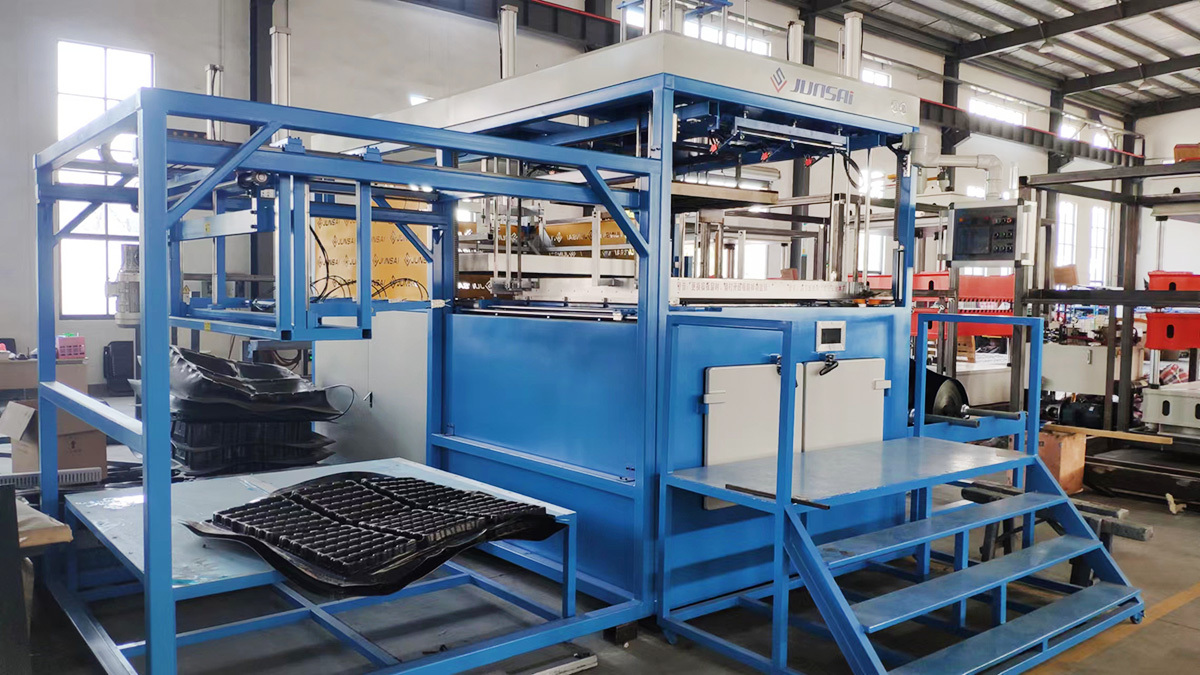
A production line for food trays may combine roll feeding, heating, forming, trimming, stacking, and conveyor transfer. After forming, trays may be separated from the surrounding web and stacked in a defined count before packaging.
The unloading and stacking equipment must account for tray depth, rim geometry, nesting behavior, and surface finish. If the trays are designed to nest tightly, the stacker must avoid excessive force that could lock the parts together or deform their edges.
For different tray sizes, the system may need adjustable guides, interchangeable grippers, programmable stacking patterns, or quick-change tooling.
Automation used in food packaging environments should be designed for the conditions of the production area. Where equipment is exposed to food-contact surfaces or must operate in a controlled hygiene environment, materials, cleaning access, lubrication practices, and equipment design should be assessed against the applicable requirements.
The fact that a product is used for food packaging does not mean every machine component is itself food-contact equipment. Requirements depend on the process layout, the product, and which surfaces can contact the food or packaging.
The forming machine may produce parts faster than a manual stacking or packing station can process them. In this case, the downstream equipment becomes the bottleneck.
A properly sized conveyor, stacker, and packing station should handle the expected output without allowing trays to accumulate uncontrollably or forcing the thermoforming machine to stop frequently. The complete line should be evaluated at the intended production rate, not only at the forming machine's maximum speed.
When choosing a thermoforming machine, buyers should evaluate the forming equipment and the loading and unloading arrangement as one production system.
Start with the required number of acceptable parts per hour or per shift. Account for the number of cavities per mold, the expected cycle time, changeovers, planned maintenance, and normal production losses.
The machine's advertised maximum cycle rate is not the same as sustained production output. Ask the supplier to explain the assumptions behind its rated speed and whether the quoted figure includes unloading, trimming, and stacking.
The right system for shallow food trays may not be appropriate for large industrial covers or deep-drawn plastic housings. Consider:
These factors determine whether a dedicated loader, transfer carriage, robotic arm, or integrated handling system is most suitable.
A manual machine with a simple unloading aid may suit small production runs or frequently changing products. A semi-automatic configuration can automate the most repetitive steps while retaining operator control over other activities.
A fully automated system may be more appropriate for stable, high-volume production with predictable product formats. It can include automatic loading, part removal, trimming, stacking, and conveyor transfer.
The investment should match expected utilization. Adding complex automation to a low-volume line can increase capital cost and changeover complexity without delivering enough additional output to justify it.
Ask whether the machine stores recipes for sheet temperature, heating zones, forming settings, robot paths, and stacking patterns. Recipe storage can make repeat production easier, but settings should still be verified when material, mold, or product dimensions change.
Also confirm whether operators can adjust loading positions and stacking patterns without extensive reprogramming, and whether the machine provides clear alarms when a sheet is missing, a part is not released, or a transfer position is incorrect.
Automation must work with the actual plastic material and sheet thickness used in production. These variables affect how sheets are picked up, how they behave during heating, and how formed parts respond to gripping and transfer.
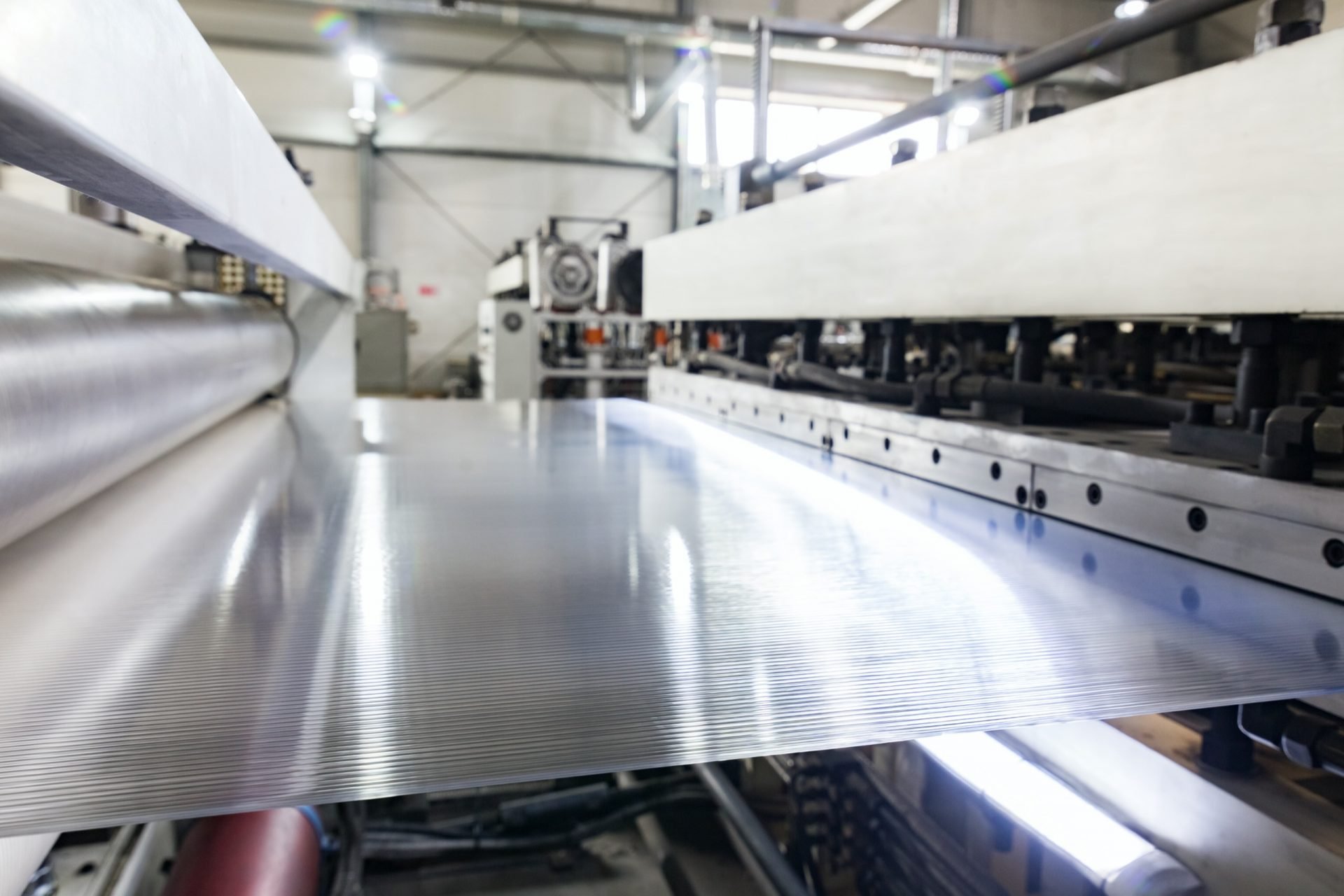
Thin sheets can flex, curl, cling together, or deform under excessive suction. Thicker sheets may require stronger handling equipment because of their greater weight and stiffness. Large sheets can also sag or shift if they are not supported at suitable points.
The loader should reliably separate individual sheets, keep them aligned, and avoid scratching or marking the surface. Unloading equipment should support the formed part without applying excessive pressure to thin walls or delicate edges.
Different thermoplastics have different forming temperatures, stiffness, surface characteristics, and cooling behavior. These properties influence the choice of suction cups, grippers, contact materials, and handling sequence.
Material compatibility should be tested under real operating conditions, especially when processing printed, coated, static-sensitive, or high-gloss sheets.
Double-sheet feeding, skewed sheets, incorrect orientation, and failed vacuum pickup can interrupt production. Depending on the line, sensors may detect sheet presence, confirm pickup, monitor position, or verify that a formed part has been removed.
Detection equipment should be selected according to the actual failure modes. Sensors are useful only when the machine responds correctly to their signals and stops or recovers safely when an error occurs.
Pressure forming and plug assistance can change the shape and material distribution of the formed part, which in turn affects how automation should handle it.
Pressure forming uses air pressure in addition to the mold and, depending on the machine design, vacuum to shape heated plastic against the mold surface. It can be used where detailed surface features or specific dimensional requirements are needed.
Automation must be coordinated with the pressure forming cycle. The loader must position the sheet correctly, the forming area must be clear before the cycle begins, and the unloading device must wait until the part is sufficiently cooled and released.
Plug assistance uses a plug to help stretch and distribute heated plastic before or during forming. It is often used for deeper shapes or applications where wall thickness distribution needs additional control.
The plug movement, mold movement, and sheet handling sequence must be coordinated. If the formed part remains attached to the mold or is difficult to release, the unloading system may need a different gripping position, an additional release step, or a revised transfer path.
The loader, forming station, plug movement, cooling, and unloading sequence should be tested together. Faster handling is not beneficial if it causes the next sheet to arrive before the machine is ready or if the formed part is removed before it can maintain its shape.
For a new application, trial runs should use the intended material, mold, and product geometry. The supplier should demonstrate repeatable loading, forming, part release, and stacking across enough cycles to identify recurring issues.
To understand whether automation improves output, measure the performance of the entire production line before and after installation. A single machine-speed figure does not show whether loading, unloading, trimming, or stacking is limiting production.
For a machine that completes one forming cycle at a time:
Theoretical cycles per hour = 3,600 ÷ Cycle time in seconds
Theoretical parts per hour = Cycles per hour × Parts per cycle
For example, if a machine completes one cycle every 20 seconds and produces four parts per cycle:
This is a theoretical figure, not a guaranteed production rate. Actual output will be lower when the line experiences downtime, changeovers, rejected parts, material shortages, or downstream delays.
| Performance indicator | What it tells you |
|---|---|
| Actual cycles per hour | Whether the machine maintains its planned operating rate |
| Good parts per hour | How many acceptable parts reach the next operation |
| Handling time per cycle | How much time loading and unloading consume |
| Unplanned downtime | How often faults or interruptions stop production |
| Scrap and rejection rate | Whether process or handling issues affect quality |
| Changeover time | How quickly the line switches products or molds |
| Labor hours per accepted part | How efficiently labor is used |
| Energy per accepted part | How energy consumption relates to saleable output |
When comparing manual and automated production, use the same product, material, mold, quality requirements, and measurement period wherever possible. Include setup and changeover time if the production schedule involves frequent product changes.
A line may produce more parts per hour but also consume more energy or require more maintenance. The best configuration is the one that meets the required output and quality at a sustainable operating cost.
Automation can introduce new failure points if the handling system is not designed around the actual production conditions.
Sheets may shift during pickup, stick together, or enter the machine in the wrong orientation. Appropriate sheet separation, centering, vacuum monitoring, and presence detection can reduce these problems.
The system should also have a defined recovery procedure for missing or misaligned sheets rather than repeatedly attempting to feed them.
A formed part may not release as expected because of mold design, cooling conditions, material behavior, or the part geometry. An unloading robot cannot compensate reliably for every release problem.
Resolve the forming and release issue first, then confirm that the gripper can remove the part without damage.
If a conveyor, counting system, or stacker cannot keep up with the forming machine, products will accumulate and the line may stop. Calculate the expected flow rate at each downstream stage and provide suitable buffer capacity where necessary.
A dedicated gripper or stacking fixture may work well for one tray format but require extensive adjustment for another. For frequent changes, consider quick-change tooling, stored recipes, adjustable guides, and grippers designed for a family of products.
Sensors, vacuum cups, grippers, belts, and robot components require inspection and replacement. Ask the supplier for recommended maintenance intervals, spare-part availability, diagnostic functions, and service response arrangements.
A system that is fast when running but difficult to maintain may deliver less useful production capacity than a simpler and more reliable configuration.
The cost effectiveness of automated loading and unloading depends on the value of additional accepted output, labor savings, scrap reduction, and reduced handling delays relative to the equipment and operating costs.
Include more than the purchase price of the automation equipment. Consider:
A simplified calculation is:
Annual net benefit = Annual operating savings + Additional contribution from accepted output − Additional annual operating costs
Estimated payback period in years = Initial investment ÷ Annual net benefit
Use realistic production data rather than assuming that every additional theoretical part can be sold. Additional output creates financial value only when it meets quality requirements and there is demand for it. Labor savings should also reflect the actual change in staffing or the productive work operators can take on elsewhere.
Automation is more likely to justify its cost when a line has sustained demand, high utilization, repetitive handling tasks, and a clear constraint that the proposed equipment can resolve.
Before purchasing an automated system, ask the supplier to demonstrate how the complete production line will perform with your actual product.
A documented trial should record actual output, product quality, handling errors, changeover time, and downtime. This provides a stronger basis for choosing a thermoforming machine than comparing specification sheets alone.
It is the use of mechanical handling equipment, robots, transfer carriages, or other automated devices to feed raw plastic sheets into a thermoforming machine and remove formed products with less manual intervention.
Automatic loading can improve sheet alignment, reduce manual handling time, and make feeding more repeatable. Its effect on total output depends on whether loading is a production bottleneck and whether other process steps can keep pace.
Yes. Depending on the machine design, automation may include raw material feeding, sheet positioning, forming, product removal, trimming, stacking, and conveyor transfer. The available functions vary by machine and application.
Yes. Automated handling is widely applicable to repetitive production of food trays, containers, lids, and other packaging components. The grippers, stacker, and conveyor should match the product geometry, production rate, and hygiene requirements of the application.
Automatic loading feeds and positions raw plastic sheets or other material at the machine's input. Automatic unloading removes formed parts from the forming or trimming area and transfers them to stacking, inspection, or downstream processing.
It can reduce handling delays and non-forming time. However, it cannot automatically shorten the heating, forming, or cooling time required by the material and product. The complete cycle must be measured to establish the actual improvement.
The suitable materials depend on the thermoforming machine, material thickness, sheet dimensions, surface properties, and handling equipment. The loader and gripper should be tested with the intended material to confirm reliable pickup and transfer.
Sheet thickness influences sheet stiffness, weight, flexibility, and how the material behaves during pickup and transfer. Thin sheets may need careful separation and gentle gripping, while thick or large sheets may require stronger support and handling mechanisms.
Yes, provided the handling equipment and control system are compatible with the machine's forming sequence. The sheet loader, plug movement, forming station, cooling process, and unloading device must operate in the correct order.
Not in every configuration. A conveyor is useful when products must move between forming, trimming, inspection, stacking, or packaging stations. The layout should match the production rate and prevent downstream equipment from restricting output.
No. Fully automated systems can suit stable, high-volume production, while semi-automatic equipment may be more economical for smaller batches or frequent product changes. The right level of automation depends on utilization, labor requirements, product mix, and operating costs.
Compare the initial investment and additional operating costs with realistic annual savings and the contribution from additional accepted products. Include downtime, maintenance, scrap, changeovers, and downstream capacity rather than relying solely on the machine's rated speed.
Common causes include sheets sticking together, poor alignment, failed vacuum pickup, incorrect gripper positioning, parts sticking to the mold, sensor faults, and downstream congestion. Proper detection, tooling design, maintenance, and process trials help reduce these interruptions.
Check the required production rate, forming area, sheet thickness, material compatibility, handling method, machine cycle, mold-change requirements, safety features, maintenance support, and total cost of ownership. A production trial using the intended material and tooling is a practical way to verify performance.
Automated loading and unloading can improve thermoforming production by reducing repetitive manual handling, maintaining more consistent sheet positioning, coordinating part removal, and keeping downstream operations supplied. These advantages are particularly relevant to food packaging, food trays, and other products manufactured in high volumes.
The best results come from treating automation as part of the complete forming process. Sheet thickness, material compatibility, forming technology, plug assistance, cooling time, gripping method, conveyor capacity, and stacking requirements all influence performance.
Before investing in fully automated equipment, define the required output, identify the current production bottleneck, and evaluate the complete line using actual production trials. This approach helps manufacturers select a practical system that balances output, product quality, flexibility, and cost effectiveness.