Quote now
EN

Vacuum forming and pressure forming are two widely used methods in plastic manufacturing. Both belong to the thermoforming process, in which a thermoplastic sheet is heated until it becomes formable and then shaped over or into a mold. The main difference is how the sheet is pushed against the mold: vacuum forming uses vacuum to draw the softened plastic into contact with the mold, while pressure forming uses compressed air to push the sheet against the mold with greater force.
This difference affects surface detail, tooling requirements, equipment configuration, production costs, and the types of plastic parts each process can produce. Vacuum forming is often a practical choice for large covers, trays, housings, and protective equipment where relatively simple geometry and cost-effective tooling are priorities. Pressure forming is often selected for parts that need finer surface details, sharper features, or a more refined appearance.
For manufacturers choosing between forming machines, the right process depends on part geometry, material selection, cosmetic requirements, production runs, and total manufacturing cost. Understanding the differences between the vacuum forming process and the pressure forming process helps buyers select equipment that matches their application rather than paying for capabilities they do not need.
Vacuum forming uses a vacuum to pull a heated plastic sheet against a mold, while pressure forming uses compressed air to push the sheet against the mold. Pressure forming can reproduce finer surface details and sharper features because it applies additional pressure, but it may require more complex equipment and tooling. Vacuum forming is often more cost-effective for large parts, simpler geometries, and applications where moderate detail is sufficient.
Both processes can manufacture durable plastic parts from a wide range of thermoplastic materials. The best option depends on the required appearance, geometry, material, production volume, and budget.
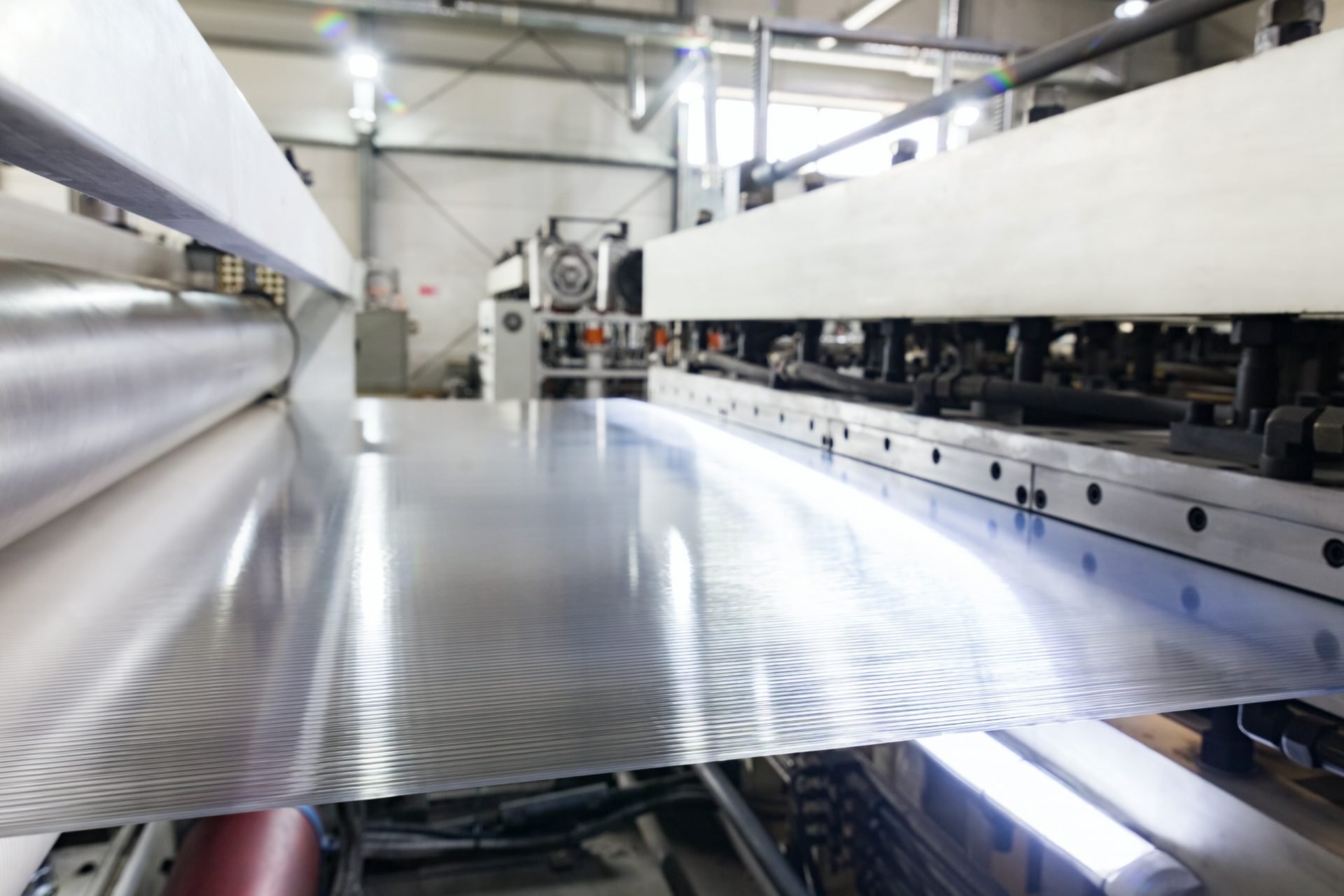
Vacuum forming is a thermoforming method in which a heated plastic sheet is drawn against a mold by removing air between the sheet and the mold surface. The pressure difference helps the sheet conform to the mold's shape.
Pressure forming is a thermoforming method in which compressed air applies positive pressure to a heated plastic sheet, forcing it against the mold surface. Depending on the machine design, vacuum may also be used to remove trapped air and improve mold contact.
Both methods soften a thermoplastic sheet before forming and allow it to cool into a defined shape. They differ mainly in the pressure applied, the equipment needed to generate that pressure, and the level of detail that can be reproduced under suitable processing conditions.
The vacuum forming process uses a heated plastic sheet and a mold connected to a vacuum system. Once the sheet reaches its forming temperature, the machine brings it into contact with the mold and removes air from the space between them. The pressure difference draws the sheet toward the mold surface.
The machine clamps a plastic sheet in a frame and moves it into the heating station. Depending on the equipment, heating may use ceramic infrared heaters, quartz heaters, or other heating technologies.
The objective is to heat the sheet evenly enough to make it formable without causing excessive sagging, surface damage, or material degradation. Heating settings depend on the type of plastic, sheet thickness, color, and product geometry.
After heating, the machine moves the softened sheet over or onto the mold. Mold arrangements can vary according to the product design. A male mold projects into the sheet, while a female mold provides a cavity into which the sheet is drawn.
The mold design affects how the plastic stretches, how deeply it can be drawn, and how evenly the material is distributed across the finished part.
The vacuum system removes air between the plastic sheet and the mold. Atmospheric pressure then pushes the sheet toward the lower-pressure region, allowing it to conform to the mold surface.
Vacuum forming equipment commonly includes a vacuum pump or other vacuum source, valves, air passages, and a mold designed to allow air to escape. Vent locations and vacuum performance affect how completely the sheet reproduces the mold geometry.
The formed sheet cools until it retains its shape. The machine then releases the part from the mold. Depending on the application, the part may undergo trimming, drilling, CNC machining, assembly, or other finishing operations.
Vacuum forming is widely used for packaging trays, equipment covers, interior panels, machine guards, and large plastic housings. It is especially useful when manufacturers need relatively large parts without the expense of a high-pressure molding system.
The pressure forming process follows many of the same stages as vacuum forming, but it adds positive air pressure to force the heated sheet more firmly against the mold. Many industrial pressure forming machines use both vacuum and compressed air to achieve better mold contact and reproduce fine details.
The machine clamps and heats the plastic sheet until it reaches a suitable forming condition. Heating must be controlled according to the material and sheet thickness. Uneven heating can still cause poor detail, excessive thinning, or dimensional variation, even when higher air pressure is available.
The softened sheet is positioned between the mold and the pressure chamber. The machine closes or seals the relevant areas so compressed air can be applied in a controlled manner.
Compared with a basic vacuum forming machine, pressure forming equipment needs additional components to contain and control the positive air pressure. These may include a pressure chamber, compressed-air supply, valves, seals, pressure regulation, and safety interlocks.
The machine may remove air from the mold side while applying compressed air to the opposite side of the sheet. This creates a greater pressure difference across the plastic, pushing it into small features, tighter radii, textures, and defined edges.
The actual forming pressure depends on the machine design, material, tooling, and part geometry. Higher pressure does not automatically guarantee better results; the sheet must be at the correct forming temperature, and the mold and process settings must be suitable for the application.
After the plastic conforms to the mold, it cools sufficiently to retain the required shape. The machine releases the part, which may then be trimmed and finished.
Pressure forming is often selected for visible housings, control panels, equipment enclosures, and other products where surface texture, lettering, sharp features, or an appearance similar to injection-molded parts is required.
Although both processes use heated plastic sheet, their equipment and forming capabilities differ. The following table summarizes the main differences for manufacturers comparing forming machines.
| Comparison factor | Vacuum forming | Pressure forming |
|---|---|---|
| Forming force | Vacuum draws the sheet against the mold using atmospheric pressure | Vacuum may be combined with positive compressed-air pressure |
| Surface detail | Suitable for many functional shapes and moderate detail | Better suited to fine texture, lettering, sharp edges, and small features |
| Mold contact | Depends on vacuum performance, vents, material temperature, and geometry | Additional pressure can improve contact with detailed mold surfaces |
| Equipment | Vacuum source, heating system, mold station, and controls | Adds pressure-generation and pressure-containment components |
| Tooling | Often allows simpler, lower-cost tooling | May require tooling designed for higher pressure and tighter detail |
| Part geometry | Good for many large covers, trays, panels, and housings | Useful for complex visible surfaces and detailed enclosures |
| Production costs | Often attractive when detail requirements are moderate | Can justify additional costs when appearance or feature definition matters |
| Production runs | Suitable for prototypes and a wide range of production quantities, depending on tooling and automation | Also suitable for different production quantities when detailed parts justify the equipment and tooling |
| Typical applications | Packaging trays, equipment covers, liners, machine guards | Detailed housings, control panels, textured covers, and visible equipment components |
These are general tendencies, not absolute rules. Tool design, sheet material, machine configuration, part size, and production volume can change the result. Pressure forming can also produce large parts, while vacuum forming can reproduce useful detail when the mold and process are properly designed.
The use of air pressure is the main process distinction between vacuum forming and pressure forming. Vacuum forming relies on the pressure difference created by removing air between the sheet and the mold. Pressure forming adds compressed air on the other side of the sheet, increasing the force that pushes the material into the mold.
This additional force can help the sheet reproduce details that may be harder to form with vacuum alone. Examples include textured surfaces, small lettering, sharper corners, narrow grooves, and defined decorative features.
However, the pressure requirement is application-specific. If the sheet is too cold, it may not conform properly even with increased pressure. If it is too hot, it may sag excessively or develop uneven thickness. A mold with poorly placed vents can also trap air and prevent the sheet from contacting certain areas.
For consistent results, manufacturers should evaluate air-pressure capability alongside heating control, mold venting, cooling, and material behavior. Pressure should be treated as one part of the complete forming process rather than the sole measure of machine quality.
Selecting the right forming machines requires more than checking whether a model supports vacuum or pressure. Buyers should compare the heating system, pressure and vacuum capacity, mold compatibility, control functions, forming area, and finishing requirements.
Both processes require the plastic sheet to reach a suitable forming temperature. A machine should heat the sheet evenly across the forming area and provide enough adjustment for the intended type of plastic and thickness range.
Ask about heater zoning, temperature control, warm-up time, and recipe storage. If your production includes multiple materials or frequent product changes, flexible heating settings can reduce setup time and help maintain repeatable results.
Vacuum forming depends on effective air removal from between the sheet and mold. The vacuum pump or source, piping, valves, mold passages, and vent locations all affect performance.
When comparing equipment, ask how vacuum is generated and controlled, how quickly the system reaches the required vacuum level, and how the machine handles molds with different sizes or geometries. The supplier should be able to demonstrate forming results with a mold that represents your application.
Pressure forming equipment needs a compressed-air system and a pressure chamber or equivalent arrangement capable of safely containing the intended forming pressure.
Evaluate the available pressure range, pressure regulation, sealing arrangement, air consumption, and safety controls. Confirm that the machine's rated capability matches the process requirements and that the mold is designed for the relevant pressure conditions.
Mold design affects detail reproduction, draft angles, material distribution, cooling, and part release. Both male molds and female molds can be used in thermoforming, depending on the product and the surface that needs the best definition.
A female mold, also called a negative mold, has a cavity into which the heated sheet is drawn. A male mold, or positive mold, projects outward so the sheet forms over its surface. The appropriate choice depends on part geometry, appearance requirements, fit, and which surface needs to reproduce the mold details.
Pressure forming may require a more robust mold and pressure-sealing arrangement than a comparable vacuum forming application. However, the tooling difference depends on part dimensions, mold material, required life, and the machine's design.
For repeated production runs, compare how the machine controls heating, forming, cooling, and part release. Automated sequencing can help reduce operator variation and make cycle times more consistent.
Useful functions may include programmable recipes, pressure and vacuum monitoring, fault alarms, temperature-zone control, and data logging. The best configuration depends on the complexity of the products and the level of process repeatability required.
The type of plastic affects forming temperature, stretch behavior, surface finish, impact resistance, and the final part's service conditions. Many thermoplastics supplied in sheet form can be vacuum formed or pressure formed, but the best material and process combination depends on the grade and the product design.
| Material | Typical applications | Selection considerations |
|---|---|---|
| ABS | Equipment housings, automotive trim, protective covers | Impact resistance, surface finish, and forming behavior |
| HIPS | Packaging, trays, internal covers | Cost, rigidity, and the requirements of the finished part |
| PETG | Displays, covers, packaging, transparent components | Clarity, forming behavior, and surface quality |
| Polycarbonate | Impact-resistant covers, machine guards, protective components | Impact performance, forming temperature, and dimensional requirements |
| Acrylic (PMMA) | Displays, covers, decorative panels | Optical appearance, surface finish, and temperature control |
| PVC | Selected enclosures, covers, and industrial components | Grade-specific processing requirements and end-use conditions |
| Polyethylene (PE) | Liners, containers, and selected protective components | Flexibility, shrinkage, and dimensional stability |
| Polypropylene (PP) | Containers, liners, and industrial parts | Material-specific heating behavior and process control |
The materials listed are examples, not a guarantee that every grade is suitable for every application. Check the sheet supplier's technical data and confirm compatibility with the intended forming machine.
Pressure forming does not automatically support a wider range of polymers than vacuum forming. Both processes depend on the material's thermal and mechanical behavior. The additional pressure can improve mold contact for certain shapes, but it does not eliminate material limitations or the need for correct temperature control.
When selecting a material, consider the required stiffness, impact resistance, transparency, chemical resistance, operating temperature, and regulatory requirements. For protective equipment or machine guards, the finished product must also meet the relevant safety and performance standards; the forming method alone does not establish compliance.
Injection molding is another common manufacturing process for plastic parts, but it works differently from sheet thermoforming. In injection molding, plastic is melted and injected into a closed mold cavity. In vacuum forming and pressure forming, an existing plastic sheet is heated and shaped over or into a mold.
The choice among these processes depends on geometry, required features, tooling investment, material use, and expected production volume.
| Factor | Vacuum forming | Pressure forming | Injection molding |
|---|---|---|---|
| Starting material | Thermoplastic sheet | Thermoplastic sheet | Plastic resin, commonly pellets |
| Forming method | Vacuum draws sheet onto mold | Vacuum and positive pressure shape sheet | Molten plastic is injected into a closed mold |
| Tooling approach | Often simpler tooling for suitable parts | Tooling may need pressure-resistant features and detailed surfaces | Typically requires a precision injection mold |
| Part size | Particularly useful for large, thin-walled components | Can produce large parts with detailed surfaces, subject to machine capacity | Suitable for a wide range of sizes, depending on the machine and mold |
| Fine details | Depends on mold and vacuum performance | Better suited to fine surface definition in many applications | Can reproduce complex features, depending on mold design and process |
| Wall thickness | Sheet thickness changes as material stretches | Sheet thickness also changes during forming | Wall thickness is defined largely by the mold cavity |
| Secondary operations | Trimming is commonly required | Trimming is commonly required | May need gate removal or other finishing, depending on the part |
| Cost considerations | Often attractive for large parts and lower tooling investment | Useful when added detail justifies additional cost | Can be economical for high-volume production when tooling cost is spread over many parts |
Thermoforming often has an advantage when a product requires large dimensions, relatively low tooling investment, or flexible design changes. Injection molding may be more suitable for high-volume production of smaller parts with complex three-dimensional features, molded-in bosses, ribs, or other details that are difficult to achieve with sheet forming. The best choice should be based on a cost comparison for the actual part rather than a fixed production-volume rule.
Production runs influence the economics of vacuum forming, pressure forming, and injection molding. However, the number of parts alone should not determine the process. Part size, tooling costs, cycle time, material waste, trimming, and required surface detail all affect the total cost.
Vacuum forming is often attractive for prototypes and short production runs because suitable tooling can be relatively simple and inexpensive. It allows manufacturers to evaluate part dimensions, fit, and function before investing in more complex tooling.
Pressure forming can also suit prototypes and smaller production runs when the product requires detailed textures, sharp edges, or a high-quality visible surface. Its additional tooling and equipment costs may be justified when appearance requirements are difficult to meet through vacuum forming alone.
Both processes can be suitable for medium-volume manufacturing. Vacuum forming may be preferable for large functional covers, trays, and housings, while pressure forming can be a better match for detailed enclosures and visible components.
Automation, mold life, trimming efficiency, and scrap rate become increasingly important as production runs grow. Buyers should compare the cost per accepted part, not only the time needed to form each sheet.
For high-volume production, compare all three options: vacuum forming, pressure forming, and injection molding. Injection molding can offer a low unit cost when production volume is sufficient to offset the mold investment. Thermoforming may remain competitive for large parts, lower tooling budgets, or products that need frequent design updates.
A reliable decision requires quotations and cycle-time estimates based on the same part specifications, annual demand, material grade, and quality requirements.
Both processes support a wide range of plastic manufacturing applications, but their strengths differ according to product design.
Vacuum formed products often include:
These applications can benefit from the ability to form large components from sheet material while keeping tooling requirements manageable.
Pressure formed parts often include:
Pressure forming is particularly useful when a product needs features that are difficult to reproduce consistently with vacuum alone. The final design must still account for draft, material stretching, wall thickness, and mold release.
Vacuum forming and pressure forming can both be used to manufacture protective equipment covers, machine guards, equipment enclosures, and other protective plastic components.
The process should be selected according to the part's geometry, visibility, required impact resistance, and service conditions. For products intended to protect people from mechanical, electrical, chemical, or other hazards, material selection and design validation must meet the applicable safety requirements. A formed cover should not be considered certified protective equipment simply because it uses a particular manufacturing process.
Before purchasing forming machines, define the product requirements and assess the machine's ability to meet them consistently.
Review the overall dimensions, depth, wall angles, corner radii, surface texture, holes, ribs, and assembly features. Identify which surfaces will be visible and which dimensions must fit with other components.
If the part has large, relatively simple surfaces, vacuum forming may be sufficient. If it includes fine texture, small lettering, sharper edges, or visible styling features, request a pressure-forming trial.
The machine's usable forming area must accommodate the sheet and mold while allowing for clamping and process movement. Confirm the supported sheet thickness range, heater configuration, and compatibility with your chosen materials.
For large components, also consider mold handling, machine layout, trimming access, and the space needed for downstream operations.
A machine demonstration should use the intended plastic sheet, mold geometry, and product requirements. Inspect the formed part for surface definition, dimensional accuracy, wall-thickness distribution, and any signs of incomplete forming.
If both processes appear suitable, ask the supplier to compare vacuum forming and pressure forming using the same part design. Where possible, record cycle time, scrap rate, energy consumption, tooling requirements, and finishing labor.
A useful cost comparison includes sheet material, tooling amortization, machine operating costs, labor, trimming, finishing, scrap, and maintenance.
A lower initial equipment cost does not always lead to a lower long-term manufacturing cost. Likewise, the more detailed process is not automatically the better investment if the product does not need the added detail.
The preferred solution is the one that meets the product specification and production target at an acceptable total cost.
Vacuum forming draws a heated plastic sheet against a mold by removing air between the sheet and the mold. Pressure forming uses vacuum and adds positive air pressure to push the sheet more firmly against the mold. This can improve the reproduction of fine details, textures, and sharper features.
Pressure forming is often better for parts that need detailed textures, crisp edges, or a refined surface appearance. Vacuum forming is often more economical for large parts and simpler shapes. Neither process is universally better; the correct choice depends on the part's specifications, tooling budget, and production requirements.
In this context, forming refers broadly to shaping a heated plastic sheet. Pressure forming is a specific thermoforming method that applies positive air pressure to the sheet, usually in combination with vacuum, to improve mold contact and detail reproduction.
Common sheet materials include ABS, HIPS, PETG, polycarbonate, acrylic, PVC, polyethylene, and polypropylene. Not every grade is suitable for every application, and processing conditions vary. Material selection should consider forming behavior, impact resistance, chemical exposure, temperature requirements, and the finished part's intended use.
Yes. Pressure forming can reproduce many complex surface details, including textures, lettering, narrow features, and defined corners. However, achievable geometry still depends on the mold design, sheet material, heating conditions, draft angles, and material distribution. Deep draws and undercuts may require additional design measures or different tooling approaches.
Vacuum forming machines may have a lower equipment cost because they do not require the same positive-pressure system. Tooling can also be simpler for suitable parts. Pressure forming may involve additional equipment and mold costs, but those costs can be justified when finer detail reduces finishing requirements or improves the product's appearance.
Vacuum forming is often a practical option for large covers, liners, panels, and housings because it can offer relatively economical tooling. Pressure forming can also produce large parts if the machine and tooling are designed for the required dimensions and pressure. The usable forming area and mold design should be confirmed with the manufacturer.
Both processes can produce plastic parts with detailed surfaces, but they use different manufacturing methods. Pressure forming shapes a heated sheet using vacuum and compressed air. Injection molding injects molten plastic into a closed mold. Injection molding may be preferable for certain high-volume products with complex features, while pressure forming can offer lower tooling investment for many large sheet-based components.
Vacuum forming is often suitable for short production runs because tooling can be relatively inexpensive. Pressure forming can also be economical for short runs when the part requires detailed surface features. The decision depends on tooling cost, material usage, production time, and finishing requirements.
Vacuum forming can manufacture protective covers, equipment housings, machine guards, and other protective plastic components. Whether a finished product provides the required level of protection depends on its material, design, thickness, testing, and applicable safety standards—not simply on whether it is vacuum formed.
Additional forming pressure can improve contact with the mold, but it does not guarantee uniform wall thickness. Sheet thickness, heating uniformity, draw depth, mold geometry, and material stretching all affect the final thickness distribution. Plug assistance, pre-stretching, or other process adjustments may be needed for demanding geometries.
Start with the part drawing, plastic sheet material, thickness, surface requirements, and expected production volume. Then compare the machine's forming area, heating control, vacuum capacity, compressed-air system, tooling requirements, and automation features. A production trial using your actual material and mold is the best way to verify performance before purchase.
The answer depends on the product and production quantity. Vacuum forming may offer a lower total cost for large parts with moderate detail requirements. Pressure forming may be more economical when its improved surface definition reduces finishing or rejection costs. Injection molding may become more competitive at higher volumes if its tooling investment can be spread across enough parts.
Provide the product drawing or 3D model, dimensions, plastic material and grade, sheet thickness, surface finish requirements, annual production volume, and required cycle time. Include any requirements for textures, lettering, vents, tight assembly tolerances, or protective performance. These details help the manufacturer recommend a suitable process and machine configuration.
Vacuum forming and pressure forming share the same basic thermoforming process, but they use different levels of forming pressure and can produce different levels of surface detail.
Vacuum forming is often a cost-effective choice for large plastic parts, functional housings, trays, liners, and protective covers where moderate detail is sufficient. Pressure forming adds compressed air to improve contact between the heated sheet and the mold, making it well suited to products that require sharper features, detailed textures, or a refined visible surface.
Injection molding should also be considered when complex features, high production volumes, or specific dimensional requirements justify its tooling investment.
For manufacturers comparing forming machines, the most reliable approach is to evaluate part geometry, type of plastic, tooling design, production runs, and total cost per accepted part. Testing the intended material and mold before purchase helps establish which process offers the best balance of quality, flexibility, and manufacturing cost.