Quote now
EN

Buying a heavy gauge thermoforming machine is a major investment for manufacturers producing large, thick, durable plastic components. These machines heat thermoplastic sheets and form them into three-dimensional parts used in automotive interiors, industrial equipment, agricultural machinery, medical equipment housings, transportation products, and protective enclosures.
Unlike thin gauge thermoforming systems designed primarily for lightweight packaging, heavy gauge thermoforming machines are built to handle thicker sheets, larger molds, demanding part geometries, and more substantial forming requirements. Choosing the right equipment involves more than comparing machine prices or advertised production speeds. Buyers need to evaluate sheet thickness capacity, heating performance, forming area, mold compatibility, automation, trimming requirements, maintenance, and long-term operating costs.
A well-selected machine can improve product consistency, reduce material waste, and support future production requirements. Poor equipment selection, by contrast, may result in long heating cycles, uneven wall thickness, excessive manual work, or expensive modifications after installation.
This guide explains the main factors to consider when purchasing a heavy gauge thermoforming machine, including how to evaluate its technical capabilities, compare suppliers, and determine whether the investment offers long-term cost effectiveness.
When buying a heavy gauge thermoforming machine, evaluate its sheet thickness range, maximum forming dimensions, heating uniformity, forming method, mold compatibility, cycle time, automation, trimming capabilities, energy consumption, and after-sales support. The machine should be tested with your actual plastic material, product design, and required production conditions before purchase.
For a reliable investment decision, compare the total cost of ownership rather than the initial machine price alone. Include tooling, energy, labor, maintenance, scrap, finishing operations, installation, and expected production output.
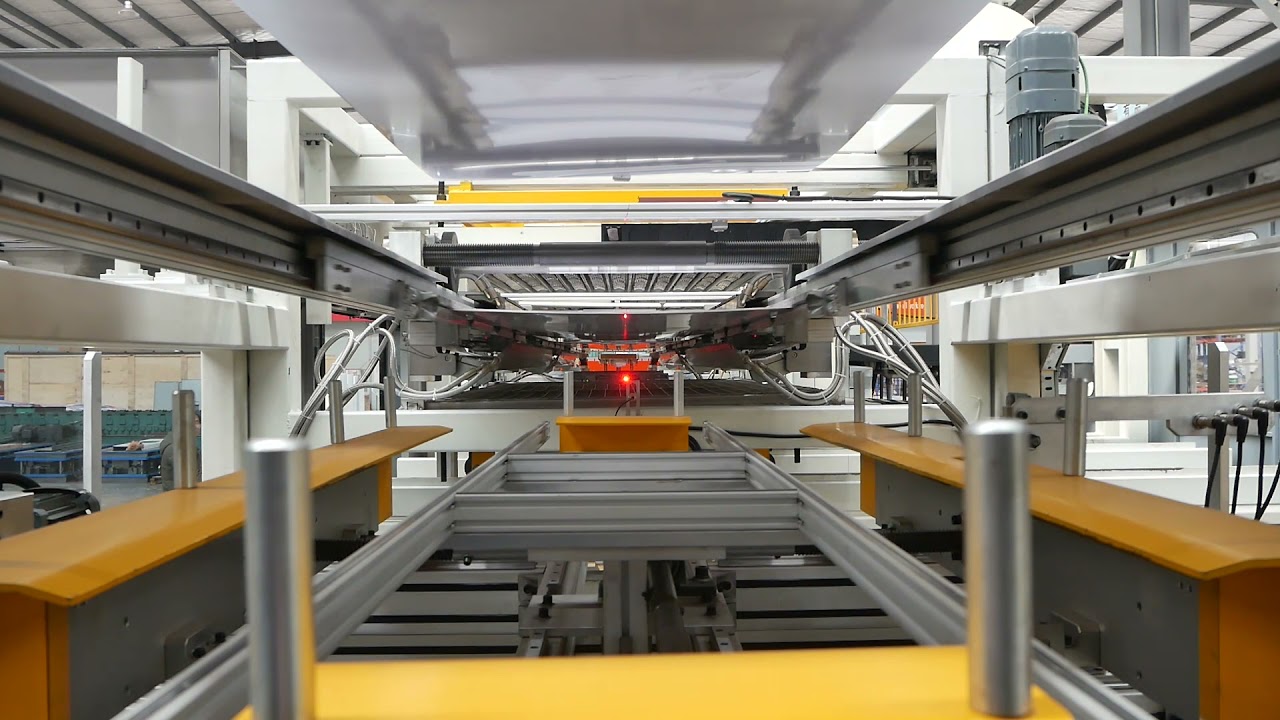
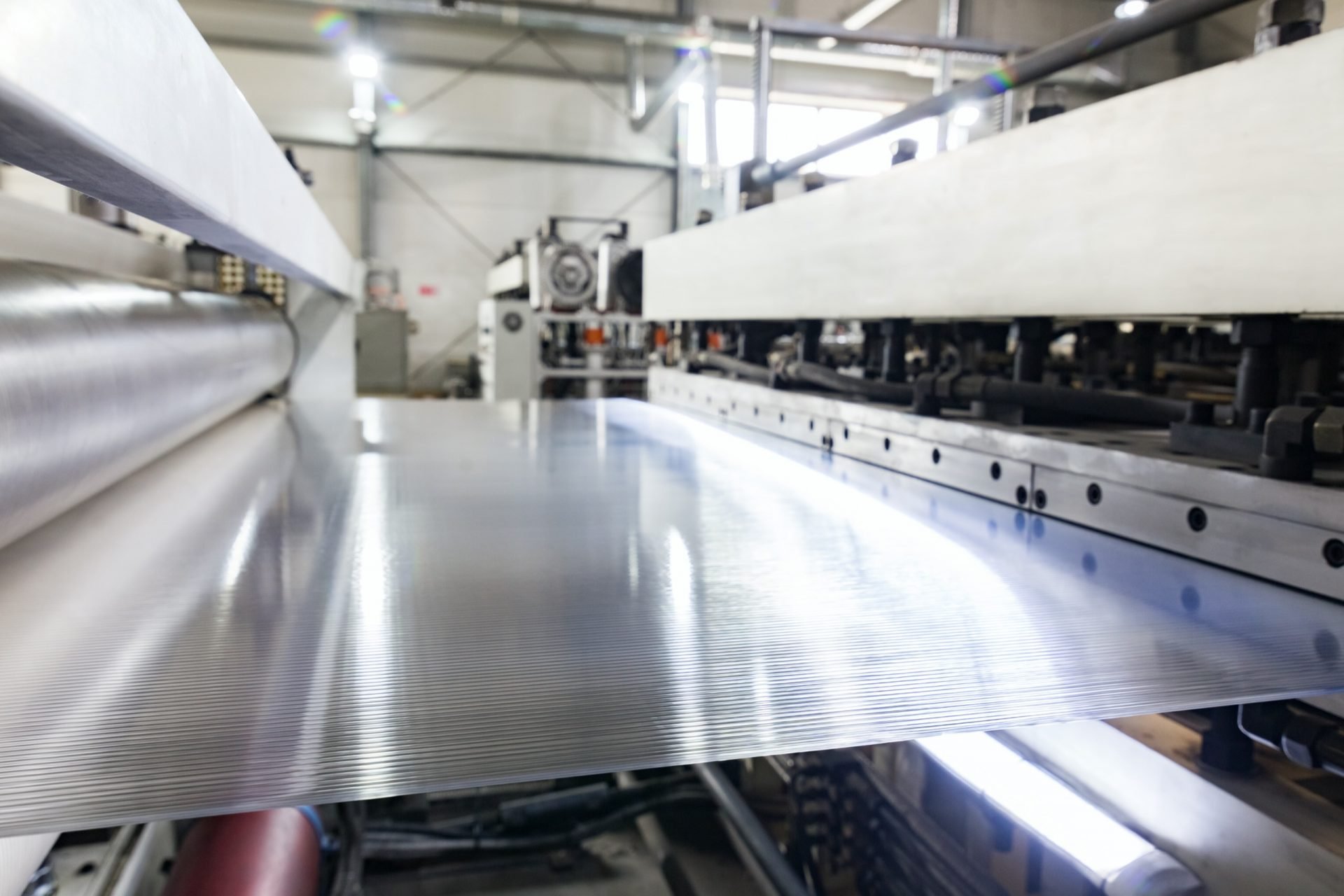
A heavy gauge thermoforming machine is an industrial forming system that heats relatively thick thermoplastic sheets until they become formable, then shapes them over or into a mold using vacuum, compressed air, mechanical assistance, or a combination of these methods.
Heavy gauge thermoforming is commonly used to manufacture large, rigid, or durable plastic components rather than lightweight packaging. Typical products include equipment housings, vehicle panels, machine covers, industrial liners, seating shells, and protective enclosures.
The exact definition of heavy gauge varies across manufacturers and applications. It is therefore better to compare the machine's supported sheet thickness range, heating capacity, forming area, mold dimensions, and demonstrated processing results than to rely on the term alone.
Before comparing machine models, establish what you need to manufacture. The machine should be selected around the finished part and production plan, not just a general category of thermoforming equipment.
Start with the maximum length, width, depth, and overall shape of the plastic part. Large panels and deep housings may require a larger forming area, additional sheet support, carefully designed heating zones, and suitable mold handling arrangements.
Also consider draft angles, corner radii, ribs, openings, textured surfaces, mounting features, and undercuts. These details affect mold design, material stretching, part release, and downstream finishing.
If the product has deep draws or large differences in surface height, ask the supplier to review the geometry before recommending a machine. A forming trial can help identify potential thinning, bridging, incomplete forming, or demolding problems.
Identify the exact thermoplastic material and grade you plan to process. Common heavy gauge materials include ABS, high-impact polystyrene (HIPS), HDPE, polypropylene (PP), acrylic (PMMA), and polycarbonate, although suitability depends on the application and sheet specification.
The machine must be capable of heating your material throughout the intended thickness range. A system designed for thinner sheets may not provide the heating capacity, temperature control, or cycle time required for thicker material.
Provide the supplier with the minimum and maximum sheet thickness, sheet dimensions, material grade, and any recycled-content or surface-finish requirements.
Estimate annual demand, expected daily output, operating shifts, and the number of different products the machine will produce. These details influence the level of automation, mold-change arrangements, recipe storage, and the number of operators required.
For a factory producing several large components in moderate quantities, flexible tooling and quick changeovers may offer more value than maximum output on a single product. For repetitive production, automated handling and consistent cycle times may justify a higher initial investment.
The forming area determines the maximum sheet and mold dimensions the machine can accommodate. It also influences how much room is available for clamping, material stretching, and mold installation.
Choose a machine that accommodates your largest planned product, including the necessary sheet margins and clamping space. Do not base the decision on finished-part dimensions alone.
A machine with a larger forming area may offer flexibility for future products, but it can also require more factory space, larger molds, and greater heating capacity. Evaluate the usable forming area alongside the overall machine footprint, access for mold changes, and space for loading and unloading.
Draw depth describes how far the sheet must stretch into or over the mold. Deep-draw products place greater demands on material distribution, heating consistency, vacuum performance, and mold design.
If the part has deep cavities, narrow sections, or large variations in height, ask the manufacturer to assess the geometry before confirming machine capacity. A machine may accommodate the sheet dimensions but still struggle to produce the required shape with acceptable wall thickness.
Heavy gauge molds can be large and substantial. Check the machine's mold dimensions, mounting arrangement, maximum mold weight, platen capacity, and available clearance.
The mold must remain properly aligned and securely supported during forming. If your production involves frequent mold changes, consider hydraulic clamping, mold-change assistance, lifting equipment, and accessible connections for vacuum, cooling, or temperature control.
The heating system has a direct effect on material consistency, forming quality, cycle time, and energy use. Thick plastic sheets generally need more time for heat to travel through the material than thin sheets, so heating performance deserves careful evaluation.
The machine should heat the plastic sheet evenly across its full forming area. Hot spots can cause excessive sagging or material degradation, while colder regions may resist stretching and fail to reproduce mold details.
Ask how the machine distributes heat across the sheet and whether operators can adjust individual heating zones. Upper and lower heating, where available, may help manage temperature distribution for specific materials and thicknesses.
Heavy gauge thermoforming machines may use ceramic infrared heaters, quartz elements, or other industrial heating technologies. The best configuration depends on the material, sheet thickness, production requirements, and machine design.
Check whether the machine offers programmable heating settings, zone-level adjustment, temperature monitoring, and repeatable recipes for different products. These functions can reduce setup variation when operators change materials or switch between molds.
Do not compare machines based only on installed heater power. Ask for the heating time and energy-consumption data associated with a comparable material, sheet thickness, and production cycle.
A suitable heating system should reach the required forming condition without excessive waiting or overheating. Energy efficiency should be measured against accepted production output, because a machine that uses less power but produces more defective parts may have a higher operating cost.
A heavy gauge thermoforming machine may use vacuum forming, pressure forming, mechanical assistance, or a combination of techniques. The right option depends on the product's surface detail, geometry, and performance requirements.
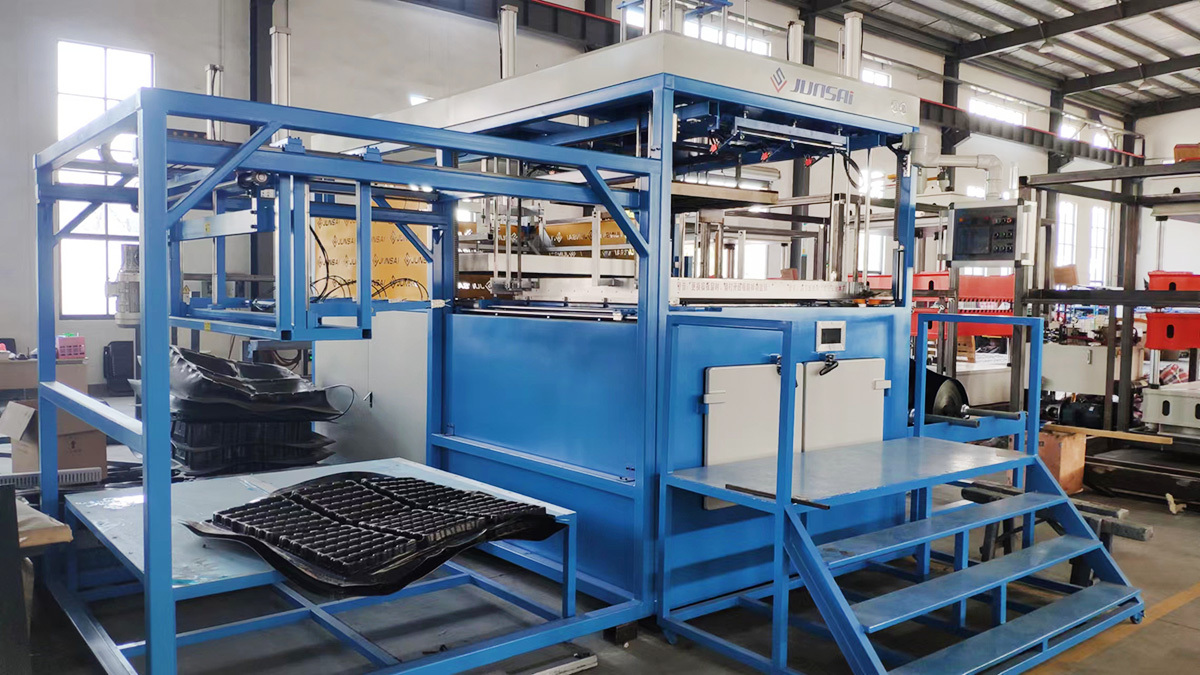
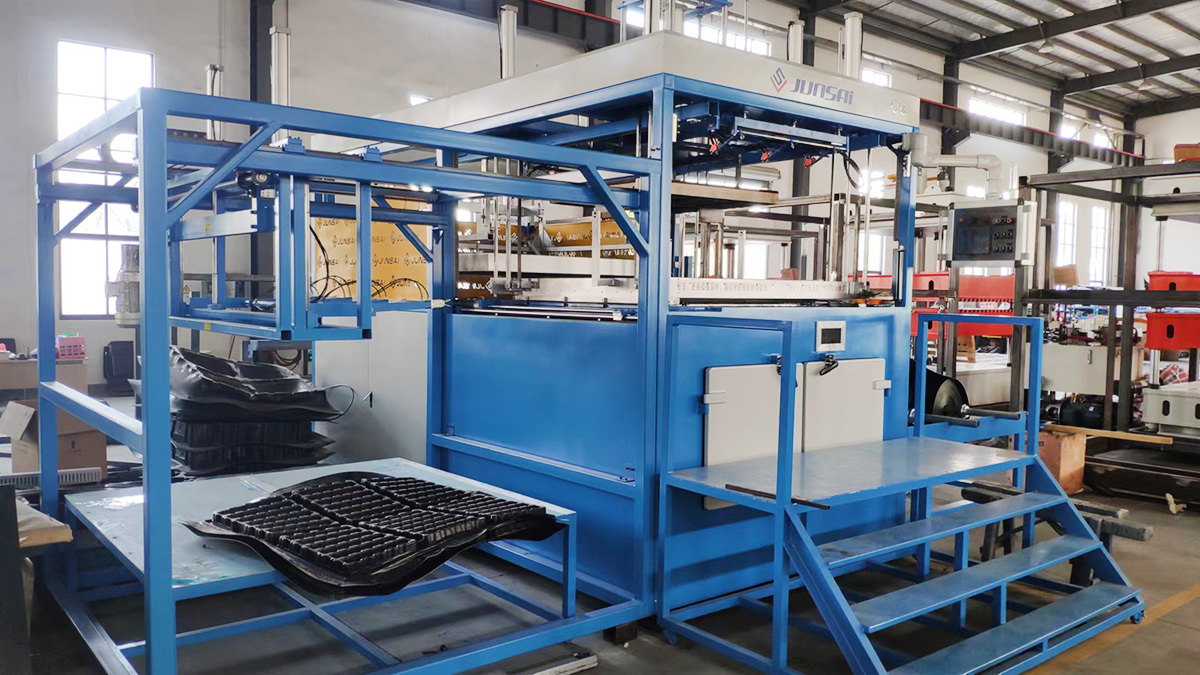
A vacuum forming machine removes air between the heated plastic sheet and the mold so atmospheric pressure draws the sheet against the mold surface. It is often suitable for large panels, machine covers, liners, housings, and other parts where the required detail can be achieved with vacuum.
When evaluating a vacuum forming machine, review the vacuum source, vacuum reservoir if fitted, valves, piping, mold venting, and the machine's ability to maintain consistent forming conditions. The complete system matters more than the pump specification alone.
Pressure forming uses compressed air to push the heated sheet against the mold, often in combination with vacuum. This additional pressure can help reproduce textures, lettering, sharper features, and other surface details.
If your product has a highly visible finish or complex surface features, ask whether pressure forming is necessary. Additional pressure capability can increase equipment and tooling requirements, so it should be selected to meet an actual product need rather than as an unused specification.
Deep-draw parts may benefit from plug assist or pre-stretching. These techniques help distribute the heated material before or during forming and can reduce excessive thinning in selected areas.
Their effectiveness depends on the part geometry, material properties, tooling design, and process settings. If your product has deep cavities or demanding wall-thickness requirements, ask the supplier to demonstrate how the proposed machine handles the geometry.
The mold affects part quality, material distribution, cooling, dimensional consistency, and the ease of releasing the finished component. It should be evaluated together with the machine rather than as a separate purchasing decision.
Heavy gauge thermoforming molds may be made from machined or cast aluminum, composite materials, or other suitable materials, depending on the production requirements. Aluminum tooling is commonly used for production applications that need reliable heat transfer and durable mold surfaces, while alternative tooling may be appropriate for prototypes or limited runs.
Discuss expected production quantity, mold maintenance, cooling requirements, surface finish, and anticipated design changes with the tooling supplier. A lower initial mold cost may not offer the best value if it requires frequent repairs or cannot maintain the required part quality.
Vacuum passages and vents help remove air from between the sheet and the mold. Poor venting can leave incomplete details or trapped-air defects.
Cooling channels or other temperature-management features may help control the forming cycle and dimensional stability. Their design should match the material, mold geometry, and production target.
Heavy gauge parts often require trimming after forming. Edges, mounting holes, openings, and assembly features may need CNC routing, drilling, punching, or other finishing operations.
Plan trimming requirements early. Ask whether the supplier can provide CNC trimming, trim fixtures, or interfaces for downstream equipment. If the machine supplier does not provide these operations, include the cost and space requirements of separate equipment in your budget.
Heavy gauge thermoforming machines are available in different configurations. A single-station machine may be suitable for simpler applications, while shuttle or multi-station systems can help separate heating, forming, cooling, and loading tasks.
In a single-station configuration, several operations take place at the same working position. This design can offer a straightforward layout and may be suitable for lower production volumes or parts with relatively simple processing requirements.
However, heating, cooling, loading, and unloading may compete for the same station time. Assess whether the resulting cycle time meets your output target.
A shuttle machine moves the sheet or clamp frame between stations, allowing some operations to take place at different positions. Multi-station designs may separate heating, forming, cooling, and handling more effectively.
These configurations can improve throughput when operations overlap, but their value depends on the product, required cooling time, handling method, and automation level. A more complex machine is not necessarily more productive for every application.
Manual loading may be acceptable for smaller production volumes or products that require flexible handling. Semi-automatic and automatic systems can reduce repetitive work and improve consistency for regular production.
When comparing automation options, examine sheet loading, mold changing, part unloading, trimming, and material movement. Consider operator safety, training, maintenance skills, and the expected number of shifts.
The goal is to select an automation level that supports your real production plan without adding unnecessary complexity.
Production capacity should be based on the complete manufacturing cycle rather than the forming machine's advertised speed alone.
A typical heavy gauge thermoforming cycle includes sheet loading, clamping, heating, transfer or positioning, forming, cooling, demolding, and unloading. Trimming and finishing may take place in separate operations, but they still affect the output of the overall production line.
A useful starting point is to estimate theoretical hourly output:
Theoretical output per hour = 3,600 ÷ cycle time in seconds
For example, if a machine completes one forming cycle every 180 seconds, its theoretical output is 20 cycles per hour. Actual accepted output will be lower if the process requires additional handling, experiences downtime, or produces rejected parts.
For a machine producing one part per cycle, one cycle corresponds to one part before scrap. If a mold produces several parts per cycle, account for the number of parts and the actual operating conditions.
Heavy gauge parts may require substantial cooling time to maintain their shape after demolding. Releasing a part too early can lead to warpage or dimensional changes, while unnecessarily long cooling reduces throughput.
Ask the supplier to demonstrate a complete cycle using your material and mold. The test should include the cooling time required to achieve acceptable part quality, not simply the time needed to form the sheet.
The forming machine may not be the slowest stage in the production process. CNC trimming, inspection, assembly, or manual unloading can limit overall output.
If you are investing in a complete production line, calculate the capacity of each stage and determine where additional automation would deliver the greatest improvement.
The machine should consistently produce parts that meet your dimensional, visual, and functional specifications.
As a plastic sheet stretches over or into a mold, its thickness changes. Deep draws and complex geometries can produce thinner areas, particularly around corners and high-stretch regions.
Ask the supplier how wall thickness will be assessed during the forming trial. Depending on the application, you may need measurements at several locations rather than a single average thickness value.
For visible parts, evaluate surface texture, gloss, color consistency, scratches, marks, and reproduction of mold details. Heating control, mold quality, handling methods, and process settings can all affect the final appearance.
If the product needs a painted, printed, bonded, or textured surface, discuss these requirements before selecting the machine and tooling.
Measure important dimensions across multiple samples produced under stable conditions. Check whether the machine maintains acceptable tolerances after startup and during sustained production.
Dimensional performance depends on the complete process, including material variation, mold temperature, cooling, trimming, and measurement methods. Confirm that the proposed machine can meet your actual drawing requirements.
Heavy gauge thermoforming machines combine hot surfaces, moving mechanisms, electrical equipment, vacuum systems, and sometimes compressed-air systems. Safety provisions and maintenance access should be reviewed before purchase.
Check guarding, emergency-stop functions, overtemperature protection, electrical safety, and safeguards around moving platens or shuttle mechanisms. Confirm that the manufacturer provides clear operating instructions, maintenance procedures, and relevant compliance documentation.
If automatic loading, unloading, or trimming equipment is included, assess the safety of the complete production cell rather than the forming machine alone.
Ask how heaters, sensors, vacuum components, valves, seals, and other wear items are inspected and replaced. Difficult maintenance access can increase downtime and labor costs.
Review the availability of replacement parts, technical support, remote troubleshooting, and operator training. For production equipment expected to run multiple shifts, also clarify recommended preventive maintenance intervals.
A successful short demonstration does not necessarily prove that a machine will remain stable over an entire shift. Request a sustained trial or a documented acceptance test that evaluates repeatability, temperature stability, alarms, and normal operating interruptions.
The acceptance criteria should be agreed upon before purchase so that both parties understand how machine performance will be evaluated.
The initial machine price is only one part of the investment. Long-term cost effectiveness depends on the machine's ability to produce acceptable parts at a predictable cost.
Include the following cost categories in your comparison:
| Cost category | What to evaluate |
|---|---|
| Machine purchase | Base equipment price and included options |
| Tooling | Mold design, fabrication, maintenance, and replacement |
| Installation | Transport, commissioning, electrical connections, and facility preparation |
| Energy | Electricity used for heating, vacuum generation, compressed air, and auxiliary systems |
| Labor | Loading, unloading, trimming, inspection, and material handling |
| Consumables and maintenance | Replacement heaters, seals, sensors, and other service items |
| Scrap and rework | Material lost through forming defects, trimming errors, or dimensional failures |
| Downstream equipment | CNC trimming, drilling, finishing, and assembly |
| Downtime | Lost output during maintenance, faults, or tooling changes |
A machine with a lower purchase price may cost more to operate if it consumes more energy, requires additional manual handling, or produces a higher scrap rate.
Cost per accepted part provides a more useful comparison than machine price alone.
Cost per accepted part = Total manufacturing cost ÷ Number of accepted parts
Use the same accounting period and include the relevant machine, labor, material, tooling, energy, and finishing costs. When comparing quotations, ensure that each supplier is using comparable assumptions for production volume, material thickness, cycle time, and scrap.
Estimate the financial benefit of the proposed machine based on expected demand, labor savings, quality improvements, reduced outsourcing, and additional production capacity.
Avoid basing the calculation entirely on the supplier's maximum advertised speed. Use realistic operating hours, maintenance allowances, expected changeovers, and actual demand.
A machine with a higher initial price may offer better long-term value if it improves accepted output and reduces recurring costs. The figures should be supported by production estimates or trial results.
The machine supplier's engineering capability, commissioning support, and ability to solve process problems can influence the long-term value of the investment.
Ask whether the manufacturer has supplied machines for products similar to yours in size, material, thickness, and geometry. Relevant experience is more useful than a general claim that the company produces heavy gauge equipment.
Request case studies, sample parts, or a machine demonstration where possible. If the application involves deep draws, demanding tolerances, or special materials, ask the engineering team to review your drawings before finalizing the specification.
A useful trial should include your intended plastic material, sheet thickness, mold design, and target production conditions.
Evaluate heating uniformity, forming quality, cycle time, wall thickness, dimensions, and the need for secondary finishing. Record the machine settings and test conditions so that the results can be used during commissioning.
Confirm what is included in the quotation: installation, operator training, commissioning, documentation, warranty, and technical support. Establish who is responsible for tooling integration, electrical connections, and downstream equipment.
For international purchases, also check shipping arrangements, local service availability, spare-parts delivery, and communication procedures for troubleshooting.
One common mistake is selecting equipment based on maximum sheet thickness without checking the material, forming area, and draw depth. A machine may accept the sheet but still fail to achieve the required part geometry or cycle time.
Another is focusing on heating power rather than actual sheet temperature and heating uniformity. High installed power does not guarantee consistent results.
Some buyers underestimate mold and trimming requirements. Heavy gauge parts often need carefully designed tooling and secondary machining to achieve their final dimensions. These operations should be considered during equipment selection.
It is also easy to overestimate production capacity by using the shortest advertised cycle time. Cooling, loading, unloading, trimming, and maintenance can reduce real output.
Finally, buyers sometimes compare quotations without checking whether they include the same accessories, tooling, automation, installation, and after-sales services. A clear technical specification makes supplier comparisons more reliable.
A heavy gauge thermoforming machine heats relatively thick plastic sheets and forms them into durable three-dimensional parts. Typical applications include automotive panels, industrial equipment covers, machine guards, transportation components, seating shells, liners, and protective housings.
The supported thickness depends on the machine design, material, heating system, forming method, and part geometry. Heavy gauge thermoforming commonly involves sheets around 2.5–3 mm and thicker, with many industrial applications using several-millimeter sheets. Some machines can process sheets around 10–12 mm or beyond, but buyers should confirm the actual range with the manufacturer.
Heavy gauge machines generally process individual, thicker plastic sheets for large or durable components. Thin gauge machines commonly process thinner material for packaging products, often using roll-fed or high-speed sheet-fed systems. The equipment, heating arrangements, tooling, handling, and typical production cycles differ.
A vacuum forming machine is often suitable for large components with moderate detail requirements. Pressure forming adds compressed air to improve contact between the sheet and mold, which can help reproduce finer details and textures. The right choice depends on part geometry, surface requirements, material, and budget.
Depending on its configuration, a machine may process ABS, HIPS, HDPE, PP, PETG, acrylic, polycarbonate, and other thermoplastic sheet materials. Compatibility should be verified for the specific grade, thickness, and end-use conditions.
Start by dividing 3,600 seconds by the cycle time in seconds to estimate theoretical cycles per hour. Then account for parts per cycle, setup, downtime, scrap, and any bottlenecks in trimming or finishing. The actual accepted output should be established through a production trial.
No. A higher-priced machine may offer more automation, better control, or greater capacity, but those features only provide value when they meet actual production needs. Compare total cost of ownership, accepted output, quality, energy consumption, and maintenance requirements.
Choose equipment that matches the part size and material range, optimize heating and cooling, reduce scrap, plan trimming requirements early, and minimize unnecessary manual handling. Compare energy and labor costs per accepted part rather than focusing only on the initial equipment price.
Not every application requires integrated CNC trimming, but many heavy gauge parts need secondary operations to produce accurate edges, holes, and assembly features. Determine whether trimming will be performed manually, on a separate CNC machine, or in an automated production cell, and include the cost in your equipment plan.
Prepare product drawings or 3D models, maximum part dimensions, material grade, sheet thickness range, annual demand, target cycle time, surface-finish requirements, and dimensional tolerances. Include information about deep draws, inserts, mounting holes, trimming, and any special operating conditions.
Check sheet heating uniformity, forming quality, dimensions, wall-thickness distribution, cycle time, safety functions, and repeatability across multiple parts. Where relevant, measure energy consumption and confirm that trimming and downstream operations can meet the production target.
Yes, if the machine's forming area, sheet thickness capacity, heating system, and forming method support the required products. Different parts may need separate molds and process recipes. Consider mold-change time, recipe storage, and tooling compatibility when evaluating production flexibility.
Service life depends on build quality, operating conditions, maintenance, usage, and availability of replacement components. Ask the supplier for maintenance schedules, warranty terms, expected service support, and the availability of key spare parts rather than relying on a single general lifespan estimate.
Provide both suppliers with the same product specifications and production targets. Compare usable forming area, thickness range, heating and forming systems, automation, tooling, trimming requirements, cycle-time estimates, energy use, included accessories, installation, warranty, and after-sales support. A trial using the intended material and mold provides a stronger basis for comparison than the specification sheet alone.
Buying a heavy gauge thermoforming machine requires a balanced assessment of product requirements, material compatibility, forming capacity, heating performance, tooling, automation, and operating costs.
Start with your actual part drawings, plastic sheet specifications, expected production volume, and quality requirements. Then evaluate the machine's forming area, draw depth, heating zones, vacuum or pressure capability, mold handling, cycle time, and downstream trimming needs.
For many large plastic components, a vacuum forming machine can provide an economical production solution when its capabilities match the application. For parts requiring additional detail or pressure-assisted forming, a more specialized configuration may be appropriate.
The most reliable purchasing decision combines a documented production trial with a realistic total-cost analysis. This approach helps manufacturers select equipment that meets present production requirements while supporting future demand and long-term cost effectiveness.