Quote now
EN

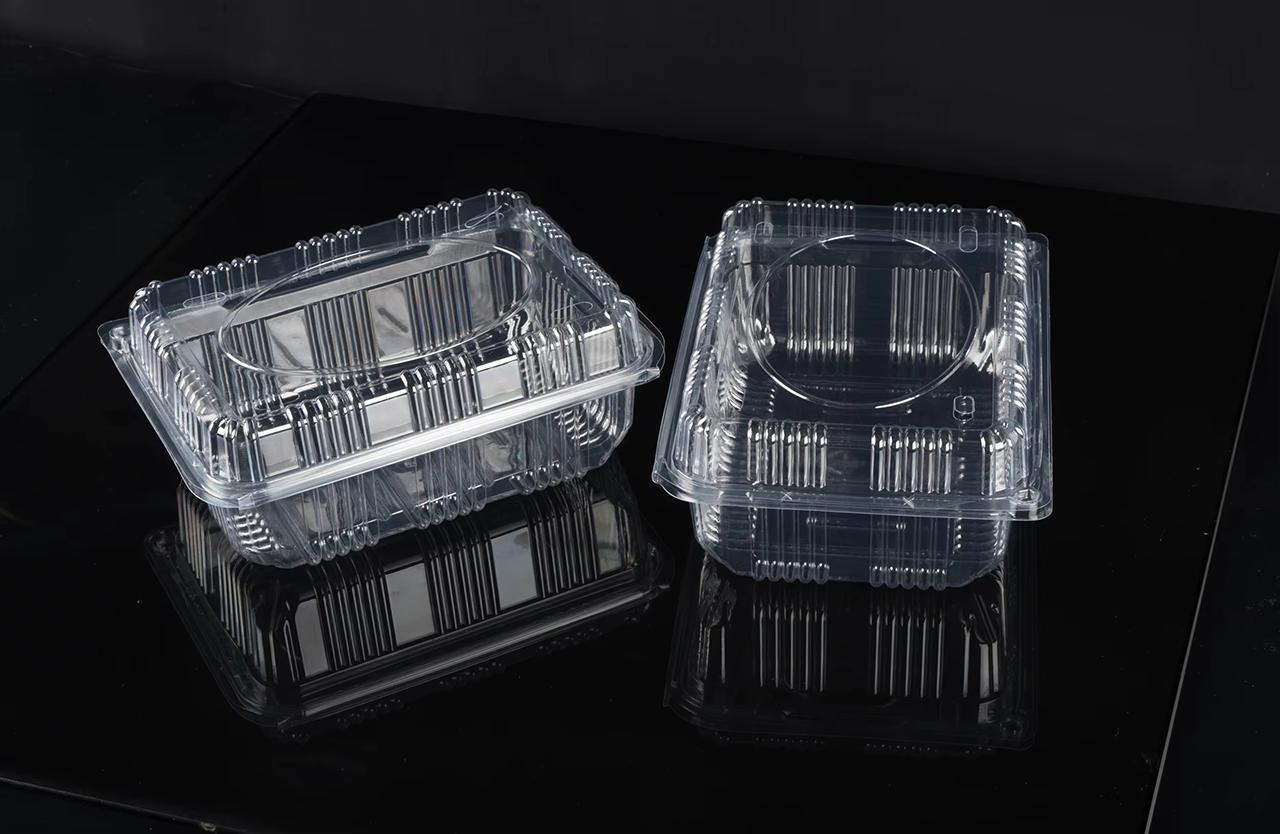
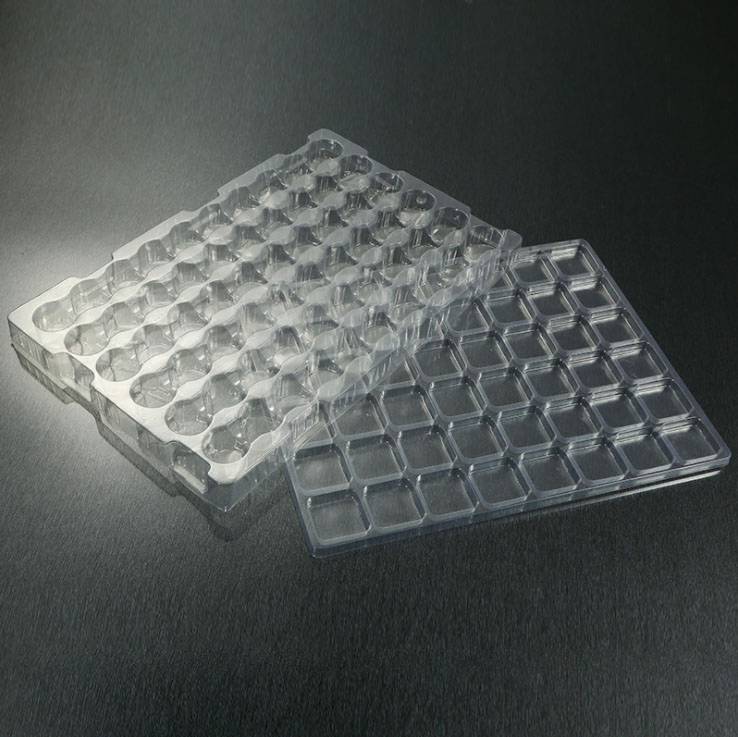
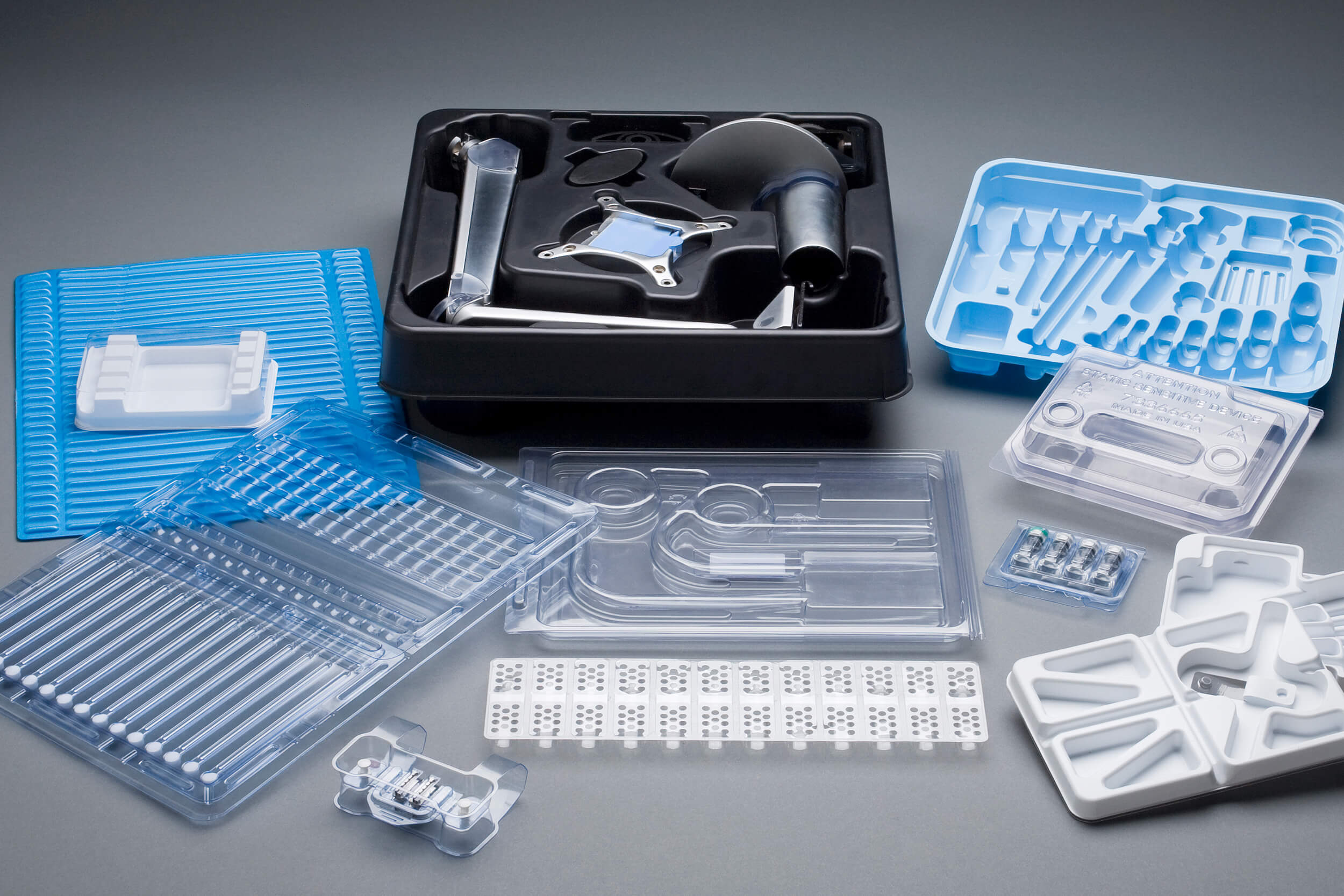
Thermoforming equipment for food trays and plastic containers heats a thermoplastic sheet or roll-fed plastic film, forms it into a mold, cools the material, and trims the finished products into the required shapes. A thermoforming machine can manufacture food trays, takeaway containers, hinged clamshells, deli containers, lids, meal-prep packaging, and other rigid plastic packaging. Depending on the application, manufacturers can use materials such as polypropylene (PP), polyethylene terephthalate (PET), polystyrene (PS), and high-impact polystyrene (HIPS). The right equipment depends on container dimensions, material thickness, production capacity, mold design, food-contact requirements, and the level of automation needed.
Thermoforming equipment is industrial machinery that converts thermoplastic sheets or rolls into three-dimensional plastic products by applying heat, forming pressure, and controlled cooling. In food packaging manufacturing, the equipment is used to produce containers and trays with defined dimensions, wall thicknesses, compartment layouts, and stacking features.
A typical thermoforming machine includes a material feeding system, heating station, forming station, mold, cooling system, trimming mechanism, and product discharge unit. Depending on the machine configuration, forming and cutting may take place at separate stations or within an integrated production system.
Unlike injection molding, which injects molten plastic into a closed mold, thermoforming generally starts with an existing plastic sheet. The machine heats the sheet until it reaches a suitable forming temperature, shapes it against or into the mold, and cools it before trimming.
This process is widely used for food packaging because it supports a range of product sizes and shapes, from shallow fruit trays to deep takeaway containers. Manufacturers can also adapt the tooling to produce multiple cavities in a single forming cycle, improving output when the product design and equipment capacity allow.
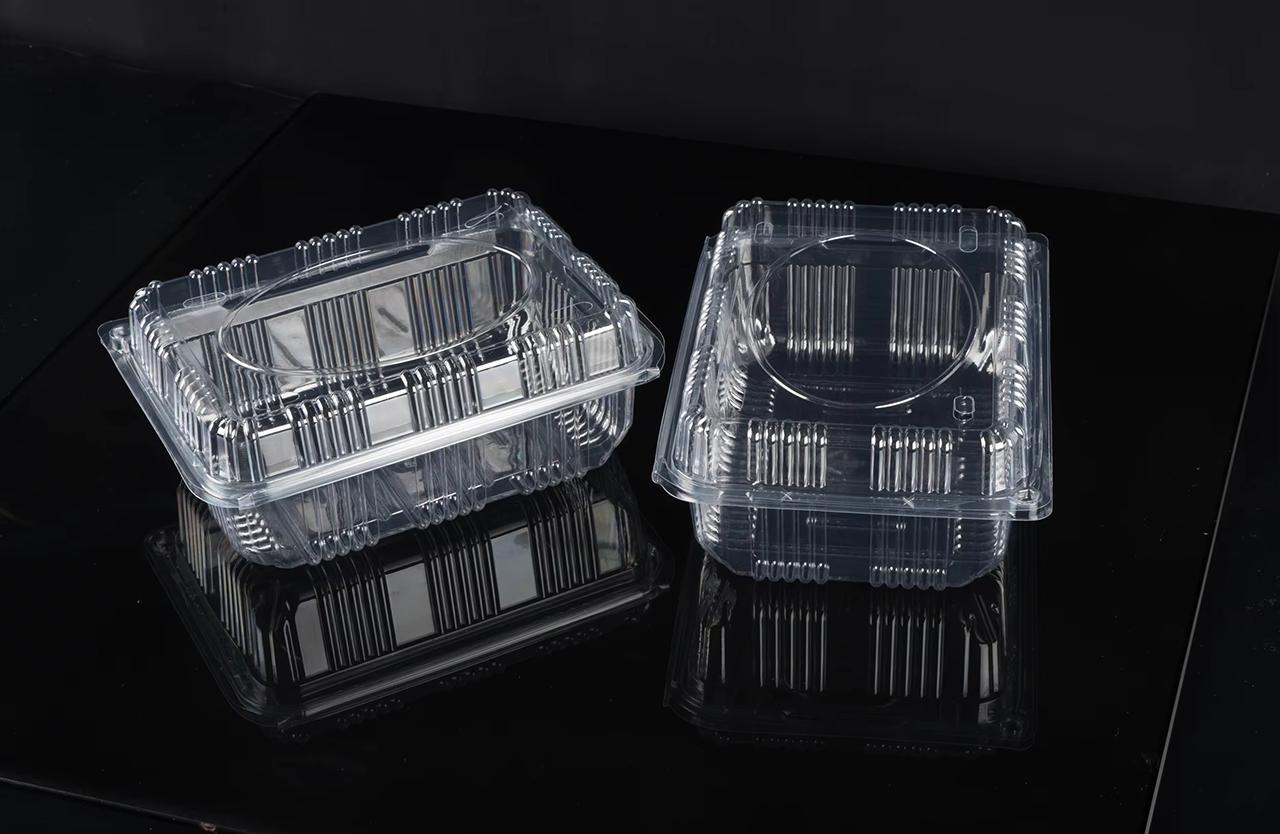
The production process typically follows several stages. The exact sequence depends on whether the equipment uses roll-fed or sheet-fed material, vacuum forming, pressure forming, or another thermoforming configuration.
The process begins with a thermoplastic sheet or a continuous roll of plastic material. Roll-fed systems are common in high-volume packaging production because they can feed material continuously through the machine.
The feeding mechanism advances the material at a controlled speed and keeps it aligned with the heating and forming stations. Stable feeding helps maintain consistent cavity positioning and reduces material waste.
The material specification should be selected before production. Factors include polymer type, sheet thickness, color, transparency, stiffness, forming behavior, and suitability for the intended food-contact application.
The plastic passes through a heating station that softens it enough to form without tearing or excessive thinning. Heating systems may use infrared heaters, ceramic heating elements, or other suitable technologies.
Temperature distribution matters because unevenly heated material may produce inconsistent wall thickness, distorted rims, or poorly defined corners. The required heating profile depends on the polymer, sheet gauge, machine speed, and container geometry.
Modern equipment may use adjustable heating zones to control the temperature across different areas of the sheet. This is especially useful when forming deep containers or products with uneven cavity dimensions.
Once the material reaches its forming temperature, it moves into the mold station. The machine shapes the softened sheet using vacuum, compressed air, mechanical assistance, or a combination of these methods.
Vacuum forming draws the sheet against the mold by removing air from the cavity. Pressure forming adds compressed air to improve contact with the mold surface and can help reproduce finer details. Plug-assisted forming uses a mechanical plug to distribute material more evenly into deeper cavities.
The mold determines the finished container's length, width, depth, corner radius, rim profile, compartment arrangement, and stacking geometry.
After forming, the plastic must cool sufficiently to retain its intended shape. Cooling may take place inside the mold or through a dedicated cooling station, depending on the machine design.
Inadequate cooling can lead to warping, dimensional variation, or deformation during trimming and stacking. The cooling system should therefore be matched to the material, container thickness, cycle time, and mold design.
The formed sheet is trimmed to separate the individual containers or trays. Depending on the production line, cutting may occur immediately after forming or at a separate station.
Common configurations include form-cut-stack machines, which integrate forming, cutting, and stacking, and post-trim systems, which separate the forming and trimming operations.
Accurate trimming produces clean edges and consistent container dimensions. The cutting method and tooling must suit the plastic material, product shape, and required tolerances.
Finished food containers are collected and stacked for transfer to packaging, storage, or downstream operations. Automatic stacking systems help organize products and reduce repetitive manual handling.
The stacker must accommodate the container's geometry. Features such as nesting depth, rim shape, draft angle, and container flexibility affect how reliably finished products separate and stack.
For high-volume production, stacking performance should be evaluated alongside forming speed because a slow discharge system can restrict the output of the entire line.
Different thermoforming machine configurations suit different container designs, production volumes, and manufacturing requirements. Understanding the differences helps buyers select equipment that matches their intended products.
Roll-fed thermoforming machines process continuous rolls of plastic film or sheet. The material moves through the heating, forming, cooling, and trimming stages without requiring individual sheets to be loaded for each cycle.
These machines are commonly used for high-volume production of disposable food trays, takeaway containers, lids, and other thin-gauge packaging products.
Their main advantages include continuous material feeding, automated operation, compatibility with integrated cutting systems, and efficient production when the tooling layout is well matched to the product.
When comparing roll-fed machines, manufacturers should consider maximum forming width, sheet thickness range, heating capacity, mold dimensions, indexing accuracy, and material utilization.
<text color="secondary" size="sm">Typical applications: disposable food trays, takeaway containers, lids, and meal-prep packaging.</text>
<AsyncImageGroup query={["industrial form cut stack thermoforming machine plastic food container production line","thermoformed clear plastic food containers stacked production","industrial thermoformed plastic takeaway trays manufacturing"]} aspectRatio="5:4" layout="bento" numPerQuery={1}/>
A form-cut-stack thermoforming machine combines three major operations: forming the plastic, cutting individual products, and stacking the finished containers.
This integrated configuration is useful for manufacturers that need continuous production and organized product discharge. It can reduce intermediate handling and simplify the connection between forming and packaging operations.
The machine is particularly suitable for standardized food packaging produced in large quantities. However, performance depends on container geometry, cutting-tool design, stacker compatibility, and the time required for each production cycle.
Pressure thermoforming uses vacuum and compressed air to shape heated plastic against a mold. The additional pressure can improve surface definition and reproduce details that may be difficult to achieve with vacuum alone.
This technology can be suitable for food containers with defined rims, textured surfaces, more detailed features, or specific appearance requirements.
Pressure forming does not automatically guarantee uniform wall thickness. Material distribution still depends on the starting sheet, mold design, heating profile, forming sequence, and depth of the container.
Vacuum thermoforming uses a pressure difference to pull heated plastic against the mold surface. It is a widely used forming method for packaging products with relatively straightforward geometries.
Applications include shallow trays, inserts, lids, and many standard food containers.
Vacuum forming may offer a practical solution when the required mold detail, wall thickness, and product appearance can be achieved without additional forming pressure. The suitability of the process should be confirmed through sample production.
Sheet-fed equipment processes individual sheets rather than continuous rolls. It can be useful for certain production arrangements, larger sheet formats, specialized materials, or operations where continuous roll feeding is not preferred.
The choice between sheet-fed and roll-fed equipment depends on production volume, material supply, sheet dimensions, labor requirements, and the intended manufacturing workflow.
Material selection affects container strength, transparency, heat resistance, forming behavior, cost, and compatibility with the intended food application. The material must also comply with the applicable food-contact regulations for the destination market and the intended conditions of use.
| Material | Main characteristics | Typical applications and considerations |
|---|---|---|
| Polypropylene (PP) | Good chemical resistance and heat performance for suitable grades | Food containers, meal-prep trays, and selected microwaveable packaging |
| PET | Good clarity, stiffness, and presentation | Clear food trays, produce packaging, bakery containers, and cold-food packaging |
| HIPS | Good rigidity and forming characteristics | Selected disposable trays and foodservice packaging |
| Polystyrene (PS) | Can provide clear or rigid packaging depending on grade | Selected food trays and containers, subject to performance and regulatory requirements |
| Recycled-content PET or other approved recycled materials | Can reduce demand for virgin material where suitable | Applications permitted by the relevant food-contact regulations and recycling process |
PP is frequently selected for food packaging where the application requires chemical resistance and suitable heat performance. Certain PP grades are used for containers intended for reheating, but microwave suitability must be established for the finished package rather than assumed from the polymer name alone.
PP can require careful control of heating and cooling because its forming behavior differs from that of PET and PS. Mold design and machine settings should be developed for the selected grade and container geometry.
PET is commonly used when transparency and product presentation are important. It is suitable for many cold-food applications, including produce trays, bakery packaging, and clear containers for prepared foods.
PET grades and sheet structures vary. Manufacturers should verify forming performance, seal compatibility when lidding is required, and suitability for the intended food-contact conditions.
HIPS is used in some rigid food packaging applications because it can provide a practical balance of rigidity, formability, and cost. General-purpose PS is also used in selected packaging products.
The choice depends on the required impact performance, appearance, temperature range, and local packaging regulations. Restrictions on certain single-use plastics or foodservice products may also affect whether a particular material is suitable for a given market.
Some manufacturers consider recycled-content plastics, recyclable mono-material structures, or alternative packaging materials to meet customer requirements and environmental objectives.
However, recycled material must be suitable for the application and comply with relevant food-contact requirements. Paper-based or fiber-based alternatives may require different forming equipment, moisture management, or barrier treatments, so they should not be assumed to be direct substitutes for conventional thermoplastics on the same machine.
Choosing the right thermoforming machine requires evaluating the finished product, manufacturing targets, and operating conditions together.
Start with the intended container's length, width, depth, rim design, corner radius, compartment layout, and stacking requirements.
Deep containers and complex shapes can create uneven material distribution. The design may need to be adjusted to achieve adequate wall thickness, reliable demolding, and acceptable dimensional stability.
If several container sizes will be produced on the same machine, confirm the available mold area, maximum forming depth, tool mounting arrangements, and changeover procedure.
The machine must support the chosen polymer and its specified sheet thickness. Heating capacity, forming pressure, cooling performance, and feeding mechanisms should be suitable for the material.
A supplier should evaluate actual sheet samples whenever possible. This helps identify forming limitations before the equipment specification is finalized.
Production requirements should be expressed in finished containers per hour or another practical output measure.
The number of cavities in the mold and the number of completed cycles per hour determine the theoretical output.
For example, if a mold produces 12 containers per cycle and the machine completes 15 cycles per minute, the theoretical output is:
12 containers × 15 cycles/minute × 60 minutes = 10,800 containers per hour.
This is a calculated theoretical rate, not a guaranteed production result. Actual output will be lower if the machine experiences downtime, changeovers, rejected products, material-feed interruptions, or downstream stacking limitations.
For this reason, ask suppliers to provide expected output using the actual product dimensions, material thickness, mold layout, and planned operating conditions.
The mold affects product quality, cycle time, material distribution, and the number of containers formed in each cycle.
Tooling requirements may include the forming mold, plug assist, trimming die, cooling channels, and stacking components. Not every configuration requires all these elements.
Manufacturers producing several container sizes should compare the initial tooling investment with the expected production volume and the cost of changing between formats.
Automation can include roll feeding, temperature control, automatic forming, cutting, stacking, counting, and product transfer.
A highly automated machine may reduce manual handling, but the full production line must be considered. If stacking, inspection, or secondary packaging cannot keep up with the forming machine, the additional capacity may not translate into higher finished output.
Heating, compressed air, vacuum systems, cooling, and mechanical movement all contribute to operating costs.
Ask suppliers for power requirements, expected energy consumption under defined operating conditions, maintenance intervals, spare-parts availability, and technical support arrangements.
It is also useful to understand how easily operators can access heating elements, molds, cutting tools, and other wear components.
The finished packaging must be appropriate for the intended food, temperature range, storage duration, and distribution conditions.
Depending on the destination market, requirements may cover material composition, migration testing, traceability, hygiene, and restrictions on particular substances.
The machine itself does not automatically make a container compliant with food-contact regulations. Compliance depends on the material, processing conditions, manufacturing environment, and finished product.
Consistent production requires control over material behavior, tooling, temperature, pressure, and cutting accuracy.
Wall thickness distribution: Deep cavities and sharp transitions can stretch the plastic unevenly. Suitable plug assistance, mold geometry, and forming conditions help control material distribution.
Heating consistency: Uneven heating can cause thin areas, wrinkles, distorted edges, and variation between cavities. Zoned heating and regular process checks can help maintain consistency.
Cooling and dimensional stability: Insufficient cooling may cause warping or shrinkage after demolding. Cooling requirements depend on material type, thickness, mold temperature, and production speed.
Trimming accuracy: Poorly aligned cutting tools can produce uneven rims, burrs, or dimensional errors. Tool maintenance and accurate registration help maintain clean edges.
Stacking performance: Containers must separate and nest consistently. Draft angles, rim geometry, and nesting depth influence whether the products can be stacked and handled efficiently.
Material quality: Variations in sheet thickness, composition, or surface condition can affect forming performance. Incoming material inspection and consistent material specifications help reduce production variation.
A well-configured thermoforming machine should be tested using the intended production material and tooling before its output and quality are accepted.
Food packaging must protect the product while meeting the applicable food-contact requirements. Equipment selection should therefore account for more than container shape and production speed.
Materials that contact food should be suitable for the specific application, including the type of food, contact duration, temperature, and intended use. Suppliers should provide relevant material declarations, compliance documentation, and test information where applicable.
The manufacturing process should also support suitable cleaning, handling, and contamination-control procedures. Areas where formed containers are exposed before stacking or secondary packaging may require particular attention.
For hot-fill, microwave, refrigerated, or frozen applications, manufacturers should confirm the performance of the complete container under the intended conditions. A material that works well for cold food may not be suitable for hot filling or repeated heating.
Shelf-life and food-protection claims should be supported by appropriate product and packaging tests rather than inferred solely from the forming method.
Thermoforming and injection molding can both produce plastic food packaging, but their material-processing methods and tooling requirements differ.
| Comparison | Thermoforming | Injection molding |
|---|---|---|
| Starting material | Thermoplastic sheet or roll | Plastic resin melted and injected into a mold |
| Process | Heats, forms, cools, and trims the sheet | Injects molten plastic into a mold and cools it |
| Typical products | Trays, lids, clamshells, thin-wall containers | Cups, tubs, closures, and molded containers |
| Tooling | Forming molds and often separate trimming tools | Injection molds with runners or other material-delivery features |
| Material utilization | Trim scrap may be generated and recovered where suitable | Runners and rejected parts may generate scrap, depending on the system |
| Production suitability | Strong option for many thin-gauge packaging formats | Strong option for products suited to injection-molded geometry |
| Main decision factors | Sheet thickness, forming depth, trim layout, and cycle time | Part geometry, mold complexity, resin flow, and cycle time |
Neither process is automatically more economical for every food container. The decision depends on part design, annual volume, tooling investment, material usage, quality requirements, and production costs.
For thin-walled trays and many disposable packaging formats, thermoforming can be an effective option. For containers requiring particular geometries, integrated features, or designs better suited to injection molding, the alternative process may be preferable.
Thermoforming can support efficient packaging production when the machine, mold, material, and downstream operations are designed as a coordinated system.
Multiple cavities allow several containers to be formed during one cycle. Roll-fed systems can reduce interruptions associated with individual sheet loading, while automatic cutting and stacking reduce manual handling.
Material efficiency can also be improved through careful mold layout and nesting of cavity patterns across the sheet. Trim scrap generated during production may be recoverable where material quality, process controls, and the intended reuse application permit it.
Manufacturers should assess the complete production system rather than focusing on machine speed alone. Useful performance measures include accepted containers per hour, scrap rate, energy consumption per unit, changeover time, tooling life, and maintenance downtime.
A production trial using the intended container design is often the most practical way to verify these factors before purchasing equipment.
A thermoforming machine heats plastic sheet or film and shapes it into a mold to produce finished plastic products. In food packaging, it is commonly used to manufacture trays, takeaway containers, lids, clamshells, deli packaging, and meal-prep containers.
Depending on the machine and tooling, thermoforming equipment can produce shallow trays, compartment trays, fruit containers, bakery packaging, takeaway boxes, hinged clamshells, deli containers, and various lids. Product dimensions and forming depth must fall within the machine's operating limits.
Common materials include PP, PET, HIPS, and PS. The correct choice depends on transparency, stiffness, heat resistance, forming behavior, food-contact requirements, and the intended storage or heating conditions.
Vacuum forming draws heated plastic against a mold using a vacuum. Pressure forming uses compressed air in addition to vacuum to improve mold contact and reproduce finer details. The best method depends on the product geometry, material, and required surface definition.
Production speed varies with the number of cavities, cycle time, container dimensions, sheet thickness, material, and level of automation. Actual output also depends on cutting, stacking, and downtime. Manufacturers should request a production estimate based on their specific container design.
Yes, some machines can produce different sizes by changing molds and related tooling. However, the available size range depends on forming area, cavity depth, sheet width, heating capacity, cutting configuration, and stacking arrangements.
Certain PP grades are suitable for microwaveable food packaging, but suitability depends on the material grade, wall thickness, container design, intended heating conditions, and relevant testing. The finished container should be verified for its stated use.
PET is widely used for food trays and containers, particularly when transparency and product visibility are required. The selected grade and finished package must meet the applicable food-contact requirements and withstand the intended storage and handling conditions.
A form-cut-stack machine integrates the forming, cutting, and stacking stages into a production system. It is commonly used for manufacturing large quantities of standardized food trays, takeaway containers, lids, and similar products.
The cost depends on machine configuration, forming area, automation, heating system, mold requirements, cutting technology, and production capacity. Buyers should compare the complete project cost, including tooling, installation, utilities, spare parts, and maintenance, rather than the machine price alone.
Thermoforming can generate trim scrap when excess material is removed from the formed sheet. Manufacturers may recover suitable production scrap through controlled recycling or reprocessing, subject to material quality, contamination risks, and applicable regulations. Scrap recovery should be evaluated as part of the overall material-use plan.
Consistent quality depends on stable material feeding, suitable heating profiles, accurate mold design, adequate cooling, precise trimming, and reliable stacking. Routine inspection and process monitoring help identify defects before they affect large production batches.
Review the intended container dimensions, material types, sheet thickness, expected output, mold configuration, automation level, cutting and stacking systems, energy requirements, maintenance support, and food-contact requirements. A sample production trial can help verify whether the proposed machine meets the actual manufacturing needs.
Thermoforming equipment provides a flexible manufacturing solution for food trays and plastic containers across takeaway packaging, fresh-food presentation, bakery products, meal preparation, and other foodservice applications.
The right thermoforming machine depends on the intended container design, plastic material, production volume, mold requirements, and required level of automation. Roll-fed systems and form-cut-stack machines can support continuous production, while vacuum forming, pressure forming, and plug-assisted forming offer different ways to shape the material.
For manufacturers evaluating new equipment, the most useful approach is to compare complete production performance, including accepted output, material consumption, trimming accuracy, stacking reliability, energy use, and changeover time. Testing the intended product with the proposed material and tooling provides a stronger basis for equipment selection than rated speed alone.
By matching machine configuration to the actual packaging requirements, manufacturers can produce consistent food trays and plastic containers while managing operating costs and meeting applicable food-contact standards.