





What Should You Check During a Thermoforming Machine FAT?
During a thermoforming machine factory acceptance test (FAT), buyers should verify that the machine matches the approved specifications, operates correctly, produces acceptable formed parts, meets the agreed production targets, and includes all required safety features.
A complete FAT should cover mechanical construction, electrical systems, heating performance, sheet feeding, clamping, vacuum and pressure systems, forming cycles, cooling, trimming or cutting functions, PLC and HMI controls, alarms and warning systems, and emergency stops. Buyers should also review FAT documentation, record test results, and confirm that unresolved issues have assigned corrective actions before approving shipment.
The purpose of FAT testing is to establish that the equipment meets the purchase agreement before it leaves the manufacturer's factory. Tests that depend on the buyer's actual factory utilities, production line connections, or installation conditions should be included in the later site acceptance test (SAT).
1. What Is a Factory Acceptance Test (FAT)?
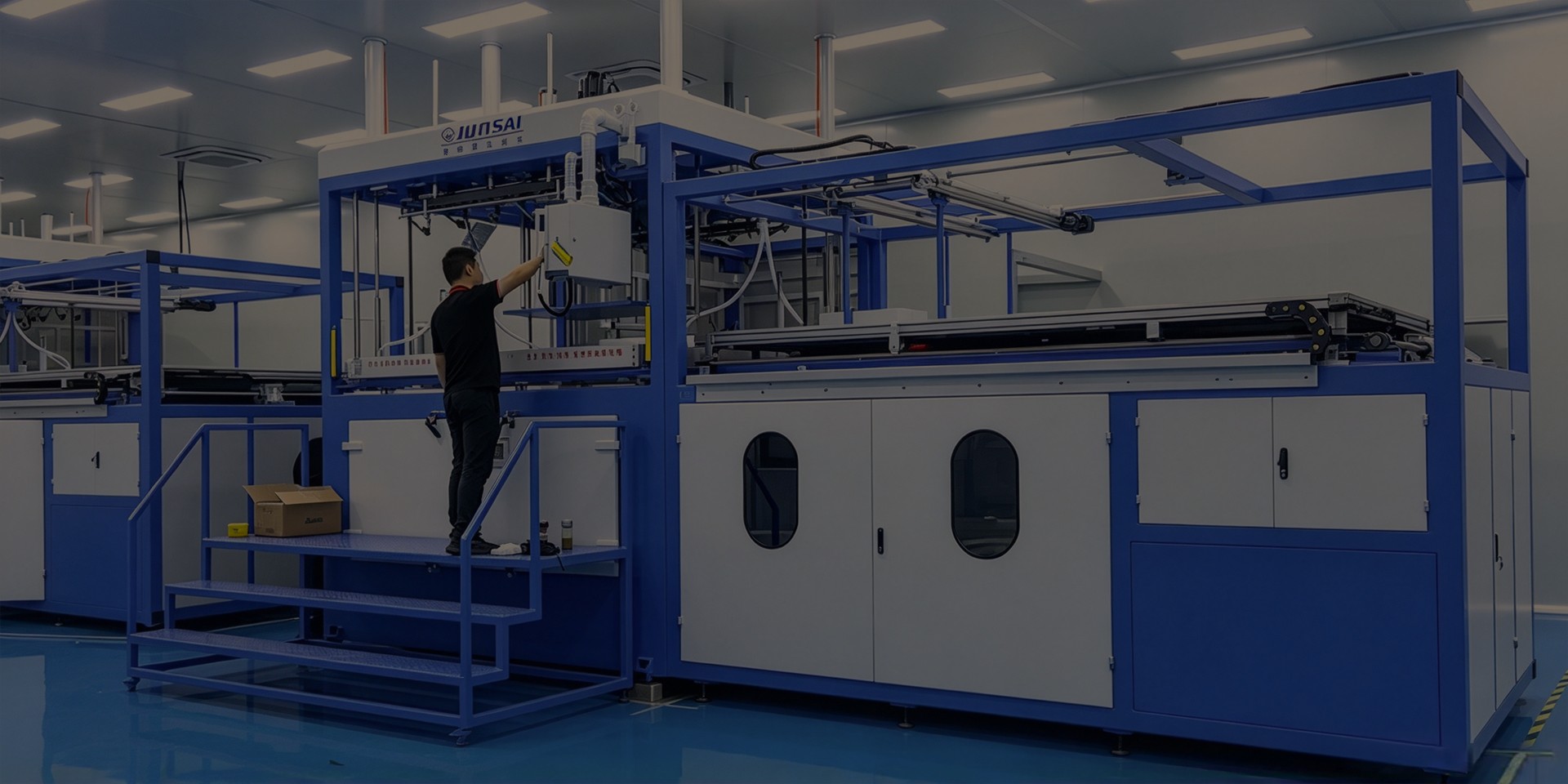
A Factory Acceptance Test (FAT) is a structured inspection and testing process performed at the equipment manufacturer's facility before a machine is shipped to the buyer. It verifies that the completed equipment has been manufactured, assembled, configured, and tested according to the approved technical specifications, purchase order, and agreed acceptance criteria.
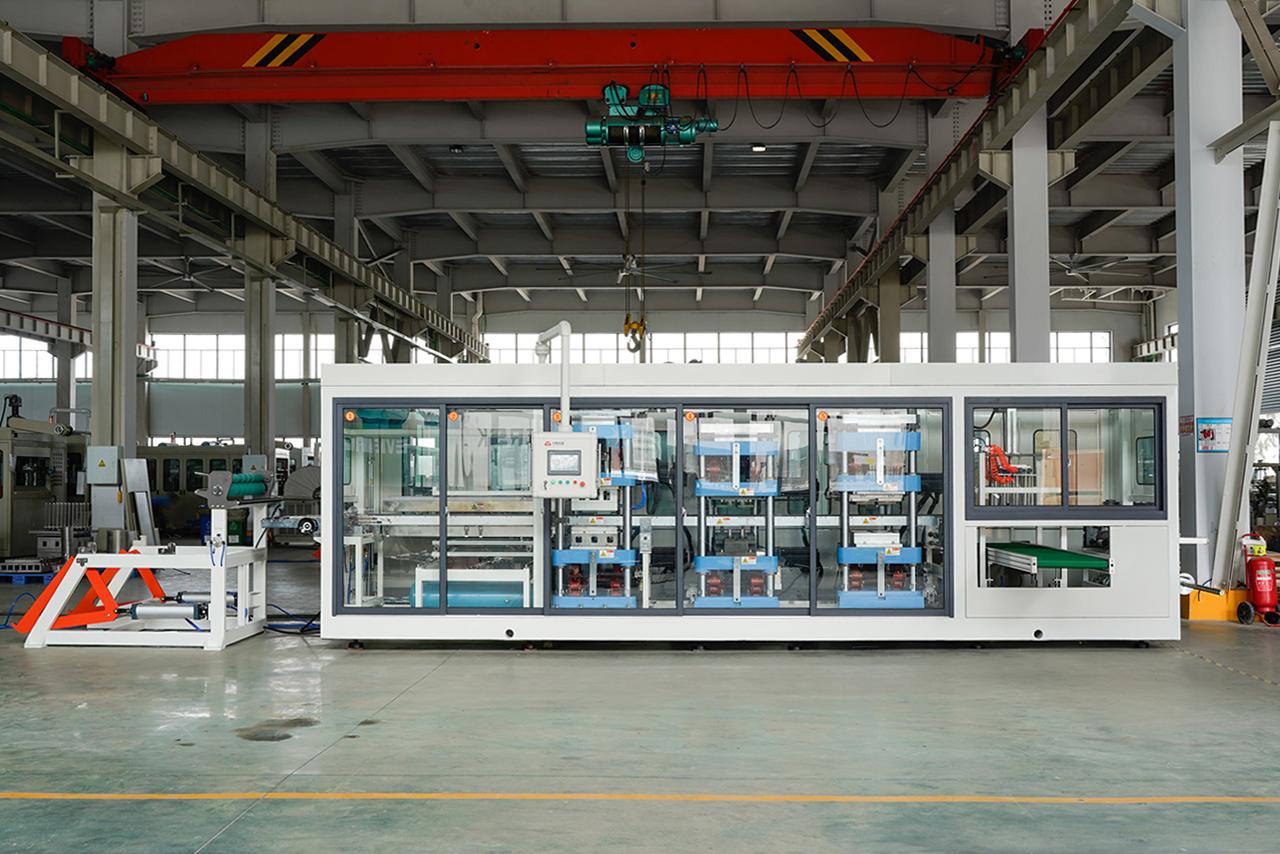
For a thermoforming machine, FAT testing normally involves inspecting the mechanical structure, checking electrical and control systems, operating individual components, running automatic production cycles, and evaluating the quality of formed plastic parts.
The factory acceptance test may be conducted by the manufacturer, the buyer's engineering team, a quality inspector, or an independent third-party inspection company. The buyer should have an opportunity to witness the agreed testing procedures and review the results.
A successful FAT provides documented evidence that the machine is ready for shipment, subject to the agreed treatment of any outstanding items.
2. Why Is FAT Testing Important When Buying a Thermoforming Machine?
A thermoforming machine contains several interconnected systems. The heating system, sheet feeding mechanism, mold clamping structure, vacuum equipment, pressure system, cooling arrangement, and control software must work together to produce consistent plastic parts.
Testing only whether the machine can start and stop does not demonstrate that it is ready for production.
FAT testing gives the buyer an opportunity to identify mechanical, electrical, operational, and quality-related problems while the equipment is still at the manufacturer's facility. At this stage, the engineering team that designed and assembled the machine is usually available to investigate problems and make adjustments.
For example, a heating zone may have an incorrect temperature setting, a mold may not align correctly with the clamping frame, or the vacuum system may take longer than expected to reach the required pressure. These issues can affect forming quality and production output.
Finding them before shipment can reduce commissioning delays, additional service costs, and the time needed to achieve stable production at the buyer's facility.
A well-planned FAT also gives the buyer a clearer understanding of machine operation, maintenance requirements, safety functions, and production procedures.
3. Review the Approved Specifications and FAT Test Plan
Before testing begins, the buyer and manufacturer should agree on the test plan. The test plan defines what will be inspected, how each test will be performed, and what results are required for acceptance.
The approved purchase order, technical proposal, machine drawings, and final configuration should provide the basis for the factory acceptance tests.
For a thermoforming machine, the test plan should identify the following technical parameters:
- Maximum forming area and available mold dimensions.
- Compatible plastic materials and sheet thickness ranges.
- Heating system configuration and temperature control requirements.
- Sheet feeding and clamping arrangements.
- Vacuum and pressure forming capabilities, where applicable.
- Forming depth and mold compatibility.
- Cooling system configuration.
- Automatic and manual operating modes.
- Expected cycle time and production capacity.
- Control system functions and recipe management.
- Safety devices, interlocks, and emergency stop requirements.
The acceptance criteria should be measurable whenever possible. For example, instead of stating that the machine must have a high production speed, the agreement should specify the expected cycle time under defined production conditions.
Likewise, instead of describing the heating system as stable, the test plan should define the required temperature range and the method used to verify temperature control.
The buyer should review the test procedures before the FAT date. This helps prevent disagreements about testing methods and acceptance requirements during the inspection.
4. Inspect the Machine's Mechanical Structure and Manufacturing Quality
The first physical inspection should establish whether the delivered machine configuration matches the approved drawings and technical agreement.
The buyer should examine the machine frame, support structure, mold mounting system, moving assemblies, sheet feeding mechanism, and other major mechanical components.
Particular attention should be given to the following areas:
Machine frame and structural stability
Check the overall frame construction, welding quality, surface finish, and assembly condition. The structure should be suitable for the machine's intended operating loads and forming process.
Mold mounting and clamping system
Inspect the mold installation area, clamping frame, mold positioning arrangement, and mechanical locking components. The mold should be installed securely and positioned correctly during the forming cycle.
Moving components
Observe the movement of platforms, tables, clamps, lifting mechanisms, and other moving assemblies. Movement should be smooth and consistent, without abnormal vibration, excessive noise, or unexpected mechanical interference.
Sheet feeding system
Check the feeding rollers, chain system, guide rails, positioning devices, and sheet transfer mechanism. The system should transport the plastic sheet into the forming area without unwanted displacement or damage.
General manufacturing quality
Inspect fasteners, protective covers, cable routing, pneumatic connections, surface treatment, and machine labeling. Look for visible damage, loose components, oil leakage, air leakage, or unfinished assembly work.
Mechanical inspection should be compared with the approved drawings rather than relying only on visual appearance.
5. Check the Heating System and Temperature Control
The heating system has a direct effect on the quality of thermoformed products. Uneven heating can cause inconsistent material stretching, thin areas, poor surface definition, deformation, and other forming defects.
During FAT testing, the buyer should verify that the heating system operates according to the agreed configuration.
For machines using ceramic, infrared, quartz, or other heating technologies, the inspection should cover the installed heater arrangement, temperature control system, electrical connections, and heating zone configuration.
The main areas to examine include:
Heating zone operation
Confirm that each heating zone can be controlled independently if the machine design includes independent zone control. Check whether the heating elements respond correctly to the temperature settings.
Temperature measurement
Compare the displayed temperature with the available measurement equipment. The measurement method, instrument accuracy, and acceptable tolerance should be defined in advance.
Heating uniformity
Evaluate whether the sheet receives sufficiently consistent heat across the forming area. A thermal imaging camera or other suitable measurement equipment can help identify temperature differences.
Temperature adjustment
Test whether operators can adjust heating parameters through the control system and whether the machine maintains the selected settings during operation.
Heating protection
Check the operation of over-temperature protection and related alarms. Confirm that the machine responds according to its approved control and safety design when a temperature limit is exceeded.
Temperature uniformity should be evaluated under defined conditions. A single temperature reading from one location is not enough to establish that the entire plastic sheet is heated evenly.
6. Test the Plastic Sheet Feeding and Clamping System
The sheet feeding and clamping system determines how the plastic material enters and remains positioned in the forming area.
During factory testing, the buyer should observe the complete feeding sequence using the agreed plastic sheet material.
Check whether the machine can feed sheets of the specified dimensions and thicknesses. The sheet should remain properly aligned as it moves through the machine.
The clamping frame should secure the sheet firmly enough to prevent unwanted movement during heating and forming. At the same time, the clamping arrangement should avoid damaging the sheet edges.
For automatic thermoforming machines, the feeding and clamping sequence should be tested repeatedly to confirm consistent operation.
The inspection should also cover:
- Sheet positioning accuracy.
- Feeding speed and adjustment.
- Clamping pressure or force, where applicable.
- Frame opening and closing movements.
- Sensor detection and positioning signals.
- Compatibility with the agreed sheet dimensions.
- Response to a sheet feeding interruption.
If the machine uses roll-fed material, additional attention should be given to roll loading, tension control, material tracking, and continuous feeding.
The purpose is to verify that the feeding mechanism can handle the buyer's intended material format under the agreed operating conditions.
7. Verify the Vacuum and Pressure Forming Systems
Vacuum and pressure systems are responsible for shaping heated plastic sheets against the mold. Their performance affects product definition, surface quality, forming depth, and cycle consistency.
The exact tests depend on whether the machine uses vacuum forming, pressure forming, or a combination of both.
Vacuum system testing
The buyer should inspect the vacuum pump, vacuum tank, pipelines, valves, filters, and connections. During operation, observe whether the system reaches the required vacuum level within the agreed time.
Check for visible leakage, unstable vacuum readings, and abnormal pump noise.
Where vacuum performance is specified in the purchase agreement, record the measured values and the test conditions.
Pressure forming system testing
For machines equipped with pressure forming, inspect the compressed-air supply, pressure regulators, valves, pressure chamber, and associated connections.
Verify that the system can reach and maintain the specified operating pressure. The pressure should remain within the agreed range during the forming sequence.
Valve and sequence operation
Observe whether vacuum and pressure valves open and close at the correct stages of the production cycle. Incorrect timing can affect product formation and cycle consistency.
Leakage and protection
Check the relevant piping and connections for air leakage. Verify that pressure-related protection devices operate according to the machine design.
A successful test should demonstrate that the forming system performs consistently under the conditions defined in the FAT procedure.
8. Run Complete Thermoforming Machine Functional Testing
Functional testing verifies that the machine's individual components and operating sequences work together as intended.
The manufacturer should demonstrate the machine's operating modes, including manual, semi-automatic, and automatic functions where these are included in the purchased configuration.
The buyer should observe a complete production cycle rather than testing each component in isolation.
A typical thermoforming cycle may include:
- Loading or feeding the plastic sheet.
- Positioning and clamping the material.
- Heating the sheet to the required forming temperature.
- Moving the mold or forming platform into position.
- Applying vacuum or pressure to form the plastic.
- Cooling the formed product.
- Releasing or transferring the formed part.
- Repeating the cycle for the next production run.
During the test, confirm that each stage follows the intended sequence.
The machine should respond correctly to operator commands, sensor signals, programmed delays, and process settings. The control system should also prevent incompatible operations where the approved design requires an interlock.
For example, the machine should not begin a forming operation if the required sheet positioning or clamping condition has not been confirmed.
Functional testing should include normal start-up, production operation, controlled stopping, and recovery from defined operating interruptions.
9. Evaluate Formed Product Quality
A thermoforming machine should be evaluated by the parts it produces, not only by its mechanical movements.
The manufacturer should conduct a forming trial using the agreed mold and representative plastic material. If the buyer has provided sample material, that material should be used whenever practical.
The inspection should consider the product requirements defined in the purchase agreement, approved samples, or technical drawings.
Dimensional accuracy
Measure the formed part's length, width, height, depth, and other specified dimensions. Compare the results with the approved drawings and tolerances.
Wall thickness distribution
Check whether the plastic material is distributed appropriately across the formed part. Excessive thinning in deep-draw areas may indicate unsuitable heating, forming parameters, or mold design.
Surface appearance
Inspect for wrinkles, bubbles, cracks, scratches, uneven surfaces, and other visible defects.
Forming definition
Check whether the machine reproduces the required contours, corners, edges, and surface details of the mold.
Product consistency
Produce multiple samples under the same settings and compare their dimensions and appearance. This helps establish whether the machine can maintain consistent forming conditions.
Demolding and part release
Observe whether formed products can be released from the mold without excessive sticking, deformation, or damage.
Product acceptance criteria should be agreed before testing. Some appearance and dimensional requirements depend on the application, material, mold design, and customer specifications.
A successful forming trial demonstrates that the machine can produce acceptable parts under the tested conditions. It does not automatically prove that every material, mold, or production format will achieve the same results.
10. Measure Cycle Time and Equipment Performance
Equipment performance should be measured under clearly defined conditions.
A machine's advertised maximum speed may differ from its actual production output. Material thickness, forming depth, heating requirements, cooling time, mold design, and operator involvement can all affect cycle time.
During FAT testing, the buyer should record the actual production cycle and compare it with the agreed performance target.
The test should define:
- Plastic material type and thickness.
- Product and mold dimensions.
- Forming temperature settings.
- Vacuum or pressure parameters.
- Cooling time.
- Operating mode.
- Number of production cycles measured.
- Method used to calculate production output.
For a machine producing one finished part per cycle, theoretical hourly output can be estimated as:
Hourly output = 3,600 / Cycle time in seconds
For example, if the measured cycle time is 30 seconds:
3,600 / 30 = 120 cycles per hour
If each cycle produces one part, the theoretical output is 120 parts per hour. If each cycle produces multiple parts, multiply the cycle count by the number of parts produced per cycle.
However, theoretical output is not the same as actual production output. Loading, unloading, material handling, trimming, quality inspection, and other operational factors may reduce the number of acceptable finished parts.
For this reason, the buyer should distinguish between machine cycle time, theoretical output, and actual good-part production.
Where the contract specifies a production capacity, the FAT should use the agreed calculation method and test duration.
11. Inspect the Cooling, Trimming, and Auxiliary Systems
Depending on the machine configuration, thermoforming production may involve cooling equipment, trimming units, cutting systems, conveyors, stacking devices, and other auxiliary equipment.
These systems should be tested if they form part of the purchased machine or production line.
Cooling system
Check the cooling fans, water circuits, pumps, cooling connections, and temperature control arrangements where applicable. Confirm that the system operates correctly during the production cycle.
Trimming and cutting equipment
For machines equipped with integrated trimming or cutting functions, verify tool positioning, cutting sequence, movement, and finished-part dimensions.
Conveyors and transfer systems
Observe whether products are transferred smoothly between operating stations without collision, jamming, or unnecessary handling.
Stacking and unloading
For automatic unloading or stacking systems, verify product positioning and transfer consistency.
Auxiliary equipment integration
Confirm that the machine communicates correctly with the supplied auxiliary equipment and follows the intended operating sequence.
If some downstream equipment is not available during FAT, the buyer and manufacturer should document which tests will be completed during SAT.
12. Verify the PLC, HMI, and Control System
The control system coordinates the machine's operating sequence and allows operators to manage production parameters.
The FAT should include functional testing of the PLC, HMI touchscreen, control panel, sensors, input/output signals, and relevant software functions.
The inspection should cover the following areas.
HMI operation
Check whether the touchscreen displays the correct machine status, operating parameters, temperatures, alarms, and production information.
Recipe management
If the machine supports recipe storage, test whether operators can save, select, edit, and retrieve production settings.
Operating modes
Verify the availability and correct operation of manual, semi-automatic, and automatic modes, according to the purchased configuration.
Parameter adjustment
Confirm that authorized operators can adjust relevant parameters, including heating temperatures, forming time, vacuum settings, pressure settings, and cooling time.
Sensor and signal response
Test the relevant sensors and control signals to establish whether the PLC receives and processes the expected inputs.
Power recovery and restart behavior
Verify the machine's behavior after an approved power interruption or restart test. The machine should follow its designed recovery procedure and should not resume hazardous movement unexpectedly.
Control system security
Where access levels are provided, confirm that operator and maintenance permissions work as specified.
The buyer should also request the agreed electrical drawings, PLC backup, HMI project files, software version information, and other control-system documentation.
13. Test Safety Features, Emergency Stops, and Protective Devices
Reliability and safety should be a top priority during the factory acceptance test.
Thermoforming machines combine high temperatures, electrical equipment, mechanical movement, pneumatic systems, and potentially hazardous pinch points. The machine should therefore be evaluated against its approved safety design and applicable requirements.
Safety testing should be performed by qualified personnel using the agreed procedures. A general FAT inspection does not replace a formal machine risk assessment or safety validation where one is required.
Important safety features to examine include:
Emergency stop devices
Verify the location and operation of emergency stop buttons. Test the required stop response at the designated operating positions.
Protective guards
Inspect fixed guards, movable guards, and protective covers around hazardous areas. Confirm that they are installed according to the approved design.
Door and guard interlocks
Where safety interlocks are installed, test whether opening a protected access point produces the specified safety response.
Electrical protection
Review grounding, electrical enclosures, circuit protection, and other electrical safety provisions included in the machine specification.
Hot surface protection
Check whether exposed heating components and other hot surfaces have suitable guarding, insulation, or warning labels.
Pneumatic and pressure protection
Inspect the relevant pressure regulators, relief devices, isolation arrangements, and protective functions.
Restart prevention
Verify that resetting an emergency stop or closing a guard does not automatically restart hazardous machine movement unless the approved safety design explicitly provides a controlled sequence that meets applicable requirements.
Energy isolation
Confirm that the machine has suitable isolation arrangements for electrical, pneumatic, and other relevant energy sources, supporting safe maintenance procedures.
The FAT report should identify each safety function tested, the test method, expected response, actual response, and result.
14. Check Alarms and Warning Systems
Alarms and warning systems help operators identify abnormal machine conditions and respond appropriately.
During FAT testing, the buyer should verify that the machine displays the correct alarm messages and performs the expected response when a defined fault condition occurs.
Depending on the machine configuration, the test may cover:
- Heater over-temperature alarms.
- Heating system faults.
- Vacuum pressure abnormalities.
- Compressed-air pressure warnings.
- Motor overload alarms.
- Servo or drive faults.
- Sheet feeding errors.
- Positioning sensor faults.
- Guard or door status warnings.
- Cooling system abnormalities.
- Emergency stop status.
- PLC communication errors.
The inspection should establish whether each alarm is displayed clearly on the HMI and whether the machine responds according to the approved control logic.
For example, if the vacuum system cannot reach the required level, the control system may display an alarm and prevent the next stage of the forming cycle.
The buyer should also verify how alarms are reset, whether fault history is available, and whether the machine requires a deliberate operator action before returning to normal production.
Alarm messages should be understandable and relevant to the actual fault. A generic error message may make troubleshooting more difficult for production and maintenance personnel.
15. Evaluate Machine Reliability During Repeated Operation
A machine may complete one production cycle successfully but still experience problems during continuous operation.
For this reason, the FAT should include an agreed repeated-cycle test or sustained operation test when required by the purchase agreement.
During the test, observe whether the machine maintains stable operation across multiple production cycles.
Pay attention to:
- Unexpected stops or interruptions.
- Abnormal mechanical noise and vibration.
- Temperature fluctuations.
- Unstable vacuum or pressure readings.
- Sheet feeding inconsistencies.
- Repeated alarms.
- Product quality variation.
- Overheating of motors or electrical components.
- Irregular movement of mechanical assemblies.
The test duration and operating conditions should be agreed in advance. A short demonstration should not be presented as proof of long-term service life or guaranteed reliability.
Reliability evaluation during FAT provides evidence of operational stability under the tested conditions. Long-term reliability also depends on maintenance, operating practices, material quality, production conditions, and component service life.
16. Review FAT Documentation and Technical Records
FAT documentation is the formal record of the factory acceptance tests and their results.
The buyer should receive a clear document package showing what was inspected, which tests were completed, and whether the equipment met the agreed acceptance criteria.
The FAT documentation package may include:
| Document | Purpose |
|---|---|
| Approved FAT test plan | Defines test scope, methods, and acceptance criteria |
| Machine technical specifications | Confirms the agreed machine configuration |
| General arrangement drawings | Shows machine dimensions and layout |
| Mechanical drawings | Documents the machine's mechanical design |
| Electrical drawings | Identifies electrical components and wiring |
| Pneumatic diagrams | Shows pneumatic circuits and connections |
| Component list | Identifies major components and specifications |
| PLC and HMI information | Records control system configuration and software details |
| Functional test records | Documents machine operating tests and results |
| Safety test records | Records emergency stop, interlock, and protection tests |
| Performance test report | Documents cycle time and measured production performance |
| Product sample inspection report | Records formed-part quality and measurements |
| Calibration certificates | Supports the accuracy of relevant test instruments |
| User manual | Provides operating instructions |
| Maintenance manual | Describes maintenance requirements and procedures |
| Spare parts list | Identifies recommended spare parts |
| FAT punch list | Records outstanding issues and corrective actions |
| Final FAT report | Summarizes the overall test results and acceptance decision |
The buyer should check that document revisions match the final machine configuration.
Where applicable, test reports should include actual measured values rather than statements such as "OK" or "Passed" without supporting information.
Photographs, HMI screenshots, test videos, and signed inspection records can provide additional evidence.
17. Understand the Difference Between FAT and Site Acceptance Test (SAT)
Factory acceptance tests and site acceptance tests are two separate stages of equipment verification.
FAT takes place at the manufacturer's facility before shipment. SAT takes place at the buyer's site after delivery, installation, and connection to the actual factory utilities and production environment.
Both tests have different purposes.
| Comparison | Factory Acceptance Test (FAT) | Site Acceptance Test (SAT) |
|---|---|---|
| Testing location | Manufacturer's factory | Buyer's production facility |
| Testing stage | Before shipment | After installation |
| Main purpose | Verify equipment against the agreed specifications before delivery | Verify the installed machine under actual site conditions |
| Mechanical inspection | Checks machine construction and assembly | Checks installation and mechanical connections |
| Electrical system | Tests available electrical functions | Verifies actual site power and electrical connections |
| Functional testing | Tests machine sequences and controls | Repeats relevant functions after installation |
| Material testing | Uses agreed test materials available at the manufacturer's facility | Uses the buyer's actual production materials where required |
| Production performance | Verifies agreed performance under FAT conditions | Evaluates production under actual operating conditions |
| Integration | Tests available equipment interfaces and simulated signals | Tests connections with the buyer's production line and plant systems |
| Documentation | Produces FAT reports and outstanding-item records | Produces SAT reports and commissioning records |
For a thermoforming machine, FAT can verify the heating system, forming cycle, vacuum performance, control functions, safety devices, and product samples under agreed factory conditions.
SAT should confirm that the machine operates correctly after installation, with the buyer's actual power supply, compressed air, cooling water, production materials, molds, and connected equipment.
For example, a machine may pass its factory testing but require adjustments after installation because the buyer's compressed-air supply or cooling-water conditions differ from those used during FAT.
FAT and SAT should therefore be treated as complementary stages rather than alternatives.
18. How to Handle Problems Found During FAT Testing
Not every machine passes every test on the first attempt. The important point is that problems are identified, recorded, evaluated, and resolved through an agreed process.
When a test fails, the manufacturer should document the issue and investigate its cause.
Common examples include:
- Heating zones that do not reach the specified temperature.
- Vacuum systems that cannot achieve the agreed vacuum level.
- Inconsistent sheet feeding or positioning.
- Formed parts that do not meet dimensional requirements.
- Unexpected alarms during automatic operation.
- Incorrect HMI display information.
- Safety interlocks that do not respond as specified.
- Production cycles that exceed the agreed time.
Each issue should be entered into the FAT punch list with a clear description, responsible person, corrective action, and target completion date.
It is useful to classify outstanding items according to their impact.
Major issues
These affect machine safety, essential functionality, product quality, or contractual performance. They should normally be resolved and retested before shipment.
Minor issues
These may involve documentation corrections, labeling, cosmetic finishing, or other matters that do not prevent safe operation or the agreed performance. Their acceptance and completion schedule should be agreed in writing.
Items deferred to SAT
Some tests cannot be fully completed at the manufacturer's factory because they depend on the buyer's site utilities, production line, or actual operating environment. These should be clearly identified and transferred to the SAT test plan.
The buyer should avoid signing an unconditional acceptance document when major safety or performance issues remain unresolved.
19. When Should a Buyer Approve a Thermoforming Machine FAT?
FAT approval should be based on the agreed acceptance criteria and recorded test results, not simply on whether the machine looks complete.
Before approving the equipment for shipment, the buyer should establish that:
- The machine configuration matches the approved purchase agreement.
- The mechanical and electrical systems have passed the required inspections.
- The heating and forming systems operate as specified.
- Functional testing has demonstrated the required operating sequences.
- Product samples meet the agreed quality requirements.
- Cycle time and equipment performance meet the contractual targets under the tested conditions.
- Required safety functions and protective devices have passed their tests.
- Alarms and warning systems operate as specified.
- Required FAT documentation has been provided.
- Outstanding issues have been resolved or formally accepted with documented responsibilities and deadlines.
The final acceptance decision should be recorded in a signed FAT report.
Depending on the contract, the buyer may approve shipment, approve shipment subject to specified minor outstanding items, or require corrective work and repeat testing.
The shipment release should follow the contractual acceptance procedure.
20. How to Prepare for a Successful Thermoforming Machine Factory Acceptance Test
A successful test depends on preparation by both the manufacturer and the buyer.
The manufacturer should complete its internal inspection and pre-FAT testing before inviting the buyer to witness the equipment. The machine should be assembled, connected, configured, and ready for the agreed test procedures.
The buyer should review the technical specifications, drawings, and FAT test plan before the inspection date.
Test materials should be prepared in sufficient quantities to complete the planned forming trials. If the buyer requires a particular plastic material, thickness, or product sample, this should be arranged in advance.
Both parties should also agree on the people responsible for witnessing the tests, recording results, approving deviations, and signing the final report.
The test instruments used for relevant measurements should be suitable for the required accuracy and have valid calibration records where necessary.
Most importantly, acceptance criteria should be agreed before the machine is tested. This gives both parties a consistent basis for evaluating the results.
A well-prepared FAT allows the buyer to evaluate machine performance in a structured way and gives the manufacturer a clear opportunity to demonstrate that the equipment meets the agreed requirements.
Frequently Asked Questions About Thermoforming Machine FAT
1. What does FAT stand for in machine manufacturing?
FAT stands for Factory Acceptance Test. It is a testing and inspection process conducted at the equipment manufacturer's facility before shipment. Its purpose is to verify that the machine meets the agreed technical specifications, functional requirements, performance targets, and safety requirements.
2. What is included in a thermoforming machine factory acceptance test?
A thermoforming machine FAT generally includes mechanical inspection, electrical inspection, heating system testing, sheet feeding checks, mold clamping verification, vacuum or pressure system testing, functional testing, product forming trials, cycle time measurement, safety testing, alarm verification, and documentation review.
The exact scope depends on the machine configuration and purchase agreement.
3. Why should buyers witness FAT testing before shipment?
Witnessing FAT allows buyers to observe actual machine operation and verify the agreed requirements before the equipment leaves the manufacturer's factory. It also provides an opportunity to identify problems while the manufacturer's engineering team is available to investigate and correct them.
4. How long does a thermoforming machine FAT take?
The duration depends on machine size, automation level, technical complexity, number of functions, and the agreed test scope.
A relatively simple machine may require a shorter inspection, while a fully automatic thermoforming production line with multiple stations, molds, and auxiliary systems may require more time.
The manufacturer and buyer should agree on a realistic FAT schedule before the test.
5. What materials should be used during thermoforming machine FAT testing?
The test should use plastic sheet materials representative of the buyer's intended production applications.
Depending on the machine's design, these may include ABS, HIPS, PET, PETG, PVC, PP, or other compatible thermoplastic materials.
The material type, sheet thickness, dimensions, and condition should be agreed before the test because they can affect heating requirements, forming quality, and cycle time.
6. How do you evaluate thermoforming machine performance during FAT?
Performance can be evaluated by measuring cycle time, production output, heating stability, vacuum or pressure performance, feeding consistency, and formed-part quality.
The test conditions should be recorded so that the results can be compared with the contractual performance requirements.
7. What safety features should be tested during a machine FAT?
Depending on the machine design, safety testing may include emergency stops, fixed and movable guards, safety interlocks, electrical protection, hot-surface protection, pressure protection, warning labels, and safe restart behavior.
Qualified personnel should test these functions according to the approved safety procedures and applicable requirements.
8. What is the difference between FAT and SAT?
FAT is performed at the manufacturer's factory before shipment to verify that the machine meets the agreed specifications.
SAT is performed at the buyer's facility after installation to confirm that the machine operates correctly with the actual site utilities, materials, production environment, and connected equipment.
FAT does not replace SAT.
9. What documents should buyers request after FAT testing?
Buyers should request the signed FAT report, test plan, inspection records, performance results, safety test records, electrical and mechanical drawings, operating manual, maintenance manual, spare parts list, and relevant calibration certificates.
The exact document package should be defined in the purchase agreement.
10. What happens if a thermoforming machine fails its FAT?
If the machine fails a test, the problem should be recorded in the FAT report or punch list. The manufacturer should investigate the cause, complete the corrective work, and repeat the affected test.
Major safety, functional, or performance issues should normally be resolved before shipment unless the buyer formally agrees to another arrangement consistent with the contract.
11. Can a thermoforming machine pass FAT but fail SAT?
Yes. FAT and SAT are performed under different conditions.
A machine may pass factory testing but encounter problems after installation because of differences in site utilities, electrical supply, compressed air, cooling water, material handling, or production line integration.
This is why SAT remains necessary after delivery.
12. Is a production trial necessary during thermoforming machine FAT?
A production trial is strongly recommended when the machine's ability to form a particular product is part of the purchase requirements.
The trial provides direct evidence of heating performance, forming quality, cycle time, and production consistency under the tested conditions.
For customized thermoforming machines, a representative mold and suitable plastic material should be included in the agreed FAT plan whenever practical.
13. Who should participate in a factory acceptance test?
The FAT may involve the manufacturer's mechanical and electrical engineers, control system technicians, quality personnel, and project manager.
The buyer may send purchasing representatives, production engineers, maintenance personnel, quality inspectors, or an independent third-party inspector.
The participants should be agreed before the test so that technical questions and acceptance decisions can be handled efficiently.
14. Does FAT guarantee the long-term reliability of a thermoforming machine?
No. FAT demonstrates that the machine meets the agreed requirements under the conditions tested at the manufacturer's facility.
Long-term reliability also depends on machine design, component quality, maintenance, operating conditions, operator training, and production practices.
A well-documented FAT provides useful evidence of initial machine condition and performance, but it cannot replace ongoing maintenance and operational monitoring.
Conclusion
A thermoforming machine factory acceptance test should evaluate the complete machine rather than focus on a few visible operating functions. Mechanical construction, heating stability, sheet feeding, vacuum and pressure performance, forming quality, production speed, control functions, safety features, and technical documentation all contribute to the final acceptance decision.
For buyers, the most effective approach is to establish clear acceptance criteria before testing, witness the agreed procedures, record actual results, and ensure that unresolved issues are addressed before shipment.
A thorough FAT gives both the manufacturer and buyer a shared understanding of machine condition and performance. It also provides a more reliable starting point for installation, site acceptance testing, and production commissioning.