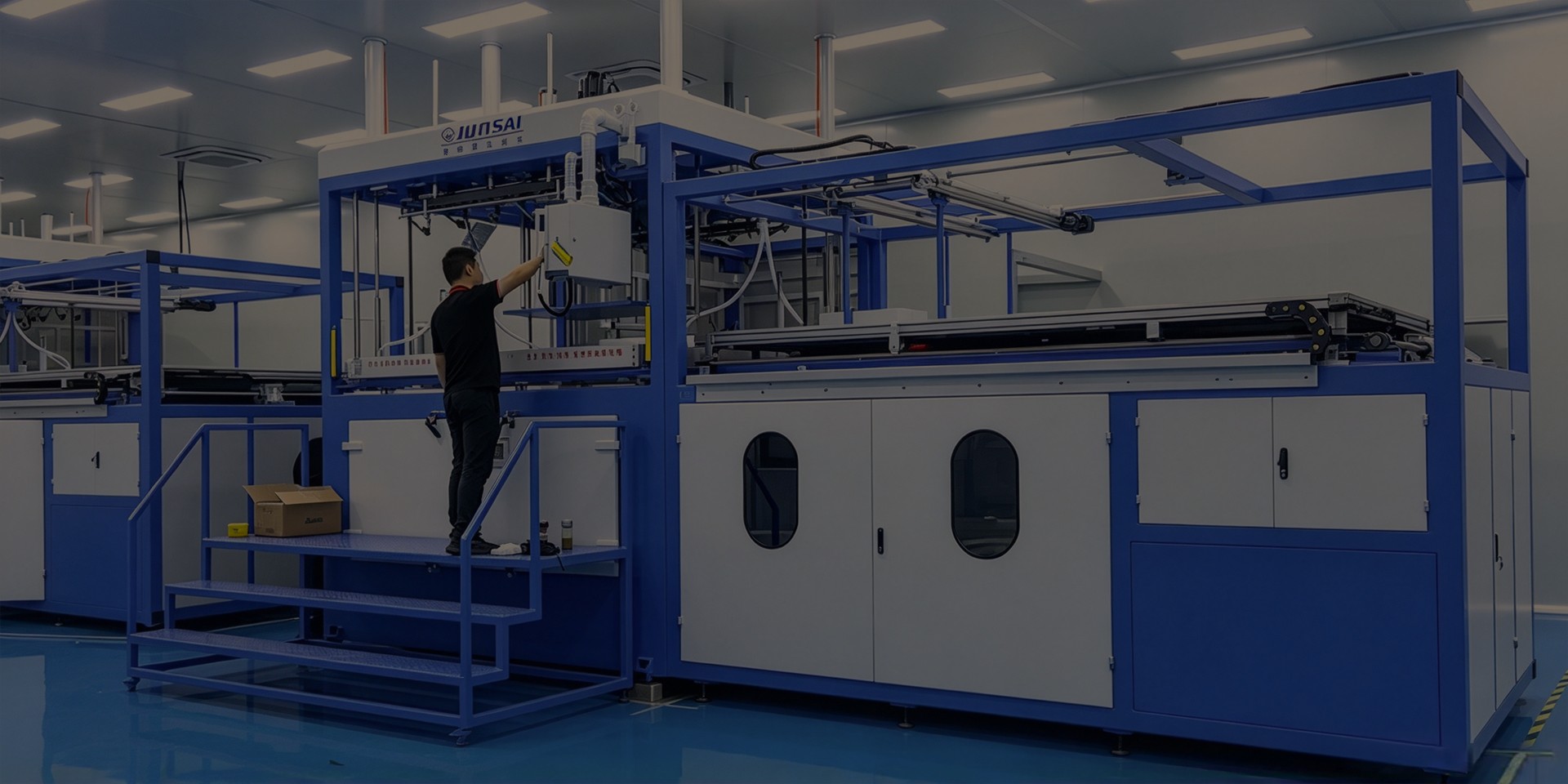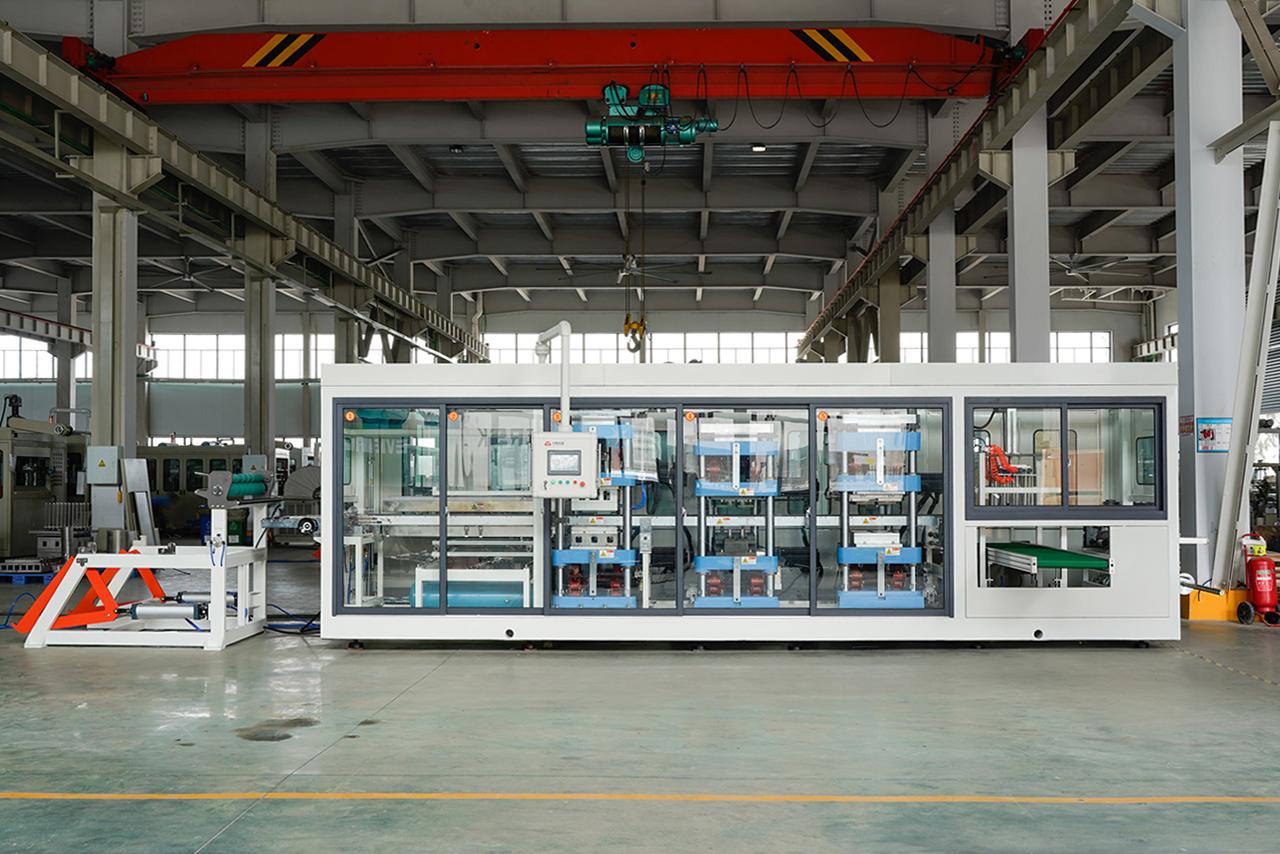






Choosing between custom and standard thermoforming machines is an important decision for manufacturers planning a new plastic production line or upgrading existing equipment. Both options can produce high-quality plastic components, but they differ in machine configuration, flexibility, production capacity, investment requirements, and suitability for different applications.
A standard thermoforming machine is generally designed around established specifications and common production requirements. A custom thermoforming machine is configured according to a manufacturer's specific products, raw material, forming area, production volume, automation requirements, and factory conditions.
The right choice depends on what you manufacture, how your production process operates, and whether standard equipment can meet your technical requirements without major modifications.
This guide compares custom and standard thermoforming equipment, explains their advantages and limitations, and provides practical advice for selecting the right machine for your project.
Should You Choose a Custom or Standard Thermoforming Machine?
A standard thermoforming machine is usually the better choice when your products have common dimensions, your production requirements match available machine specifications, and you want a relatively straightforward purchasing process.
A custom thermoforming machine is generally more suitable when your products require a special forming area, unusual sheet dimensions, specific heating and forming configurations, pressure forming capabilities, customized automation, or integration with existing production equipment.
Choose a standard machine when:
- Your product dimensions fit an available machine model.
- Your raw material and plastic sheet specifications are within the machine's supported range.
- Your production volume matches the machine's capacity.
- Standard vacuum forming or heating forming functions meet your requirements.
- You want to minimize engineering modifications and equipment investment.
Choose a custom machine when:
- Your products require a non-standard forming area or forming depth.
- You process special materials or a wide range of plastic sheet thicknesses.
- Your production process requires customized heating zones or forming methods.
- You need specific pressure forming or vacuum forming configurations.
- You want to integrate automatic feeding, trimming, stacking, or other production operations.
The best solution is not necessarily the most advanced or expensive machine. It is the equipment that matches your actual production requirements and provides suitable performance over its expected service life.
What Is a Standard Thermoforming Machine?
A standard thermoforming machine is equipment manufactured according to an established design and a predefined range of technical specifications.
The manufacturer develops the machine model for common applications, with standard options for forming dimensions, heating systems, control systems, clamping structures, and production functions.
Depending on the model, standard thermoforming equipment may include:
- A fixed forming area
- Standard heating configurations
- A predefined sheet thickness range
- Vacuum forming capabilities
- Standard mold mounting arrangements
- PLC or touchscreen controls
- Manual, semi-automatic, or automatic operation
- Standard electrical and pneumatic components
Standard machines are commonly used for products with relatively established dimensions and production processes.
For example, manufacturers producing conventional plastic trays, covers, packaging components, or other repeatable products may find that an existing machine model meets their requirements.
The main advantage is that the equipment configuration is already established. Buyers can evaluate available specifications without developing an entirely new machine design.
However, a standard model may not accommodate every product dimension, raw material, forming depth, or factory requirement.
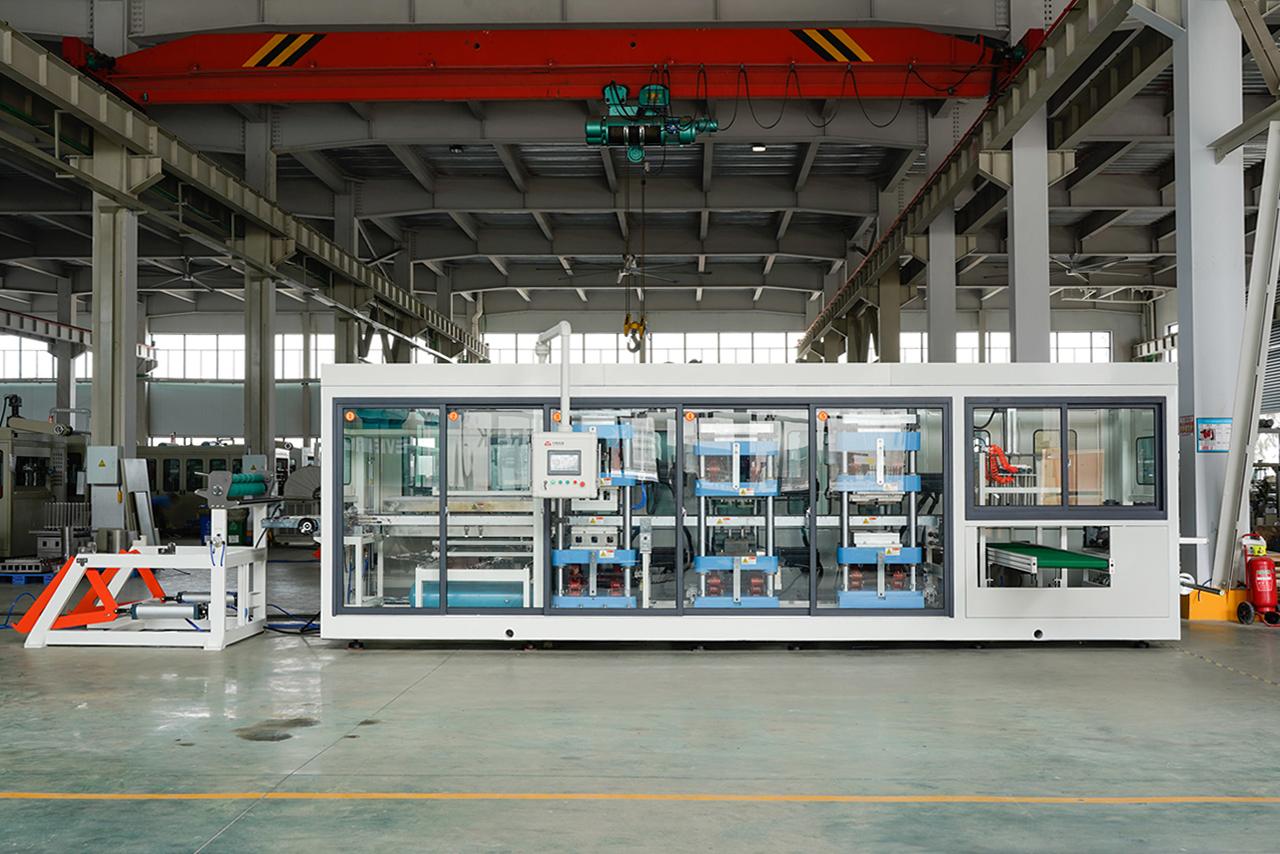
What Is a Custom Thermoforming Machine?
A custom thermoforming machine is equipment designed or modified according to a customer's specific production requirements.
Instead of selecting only from predefined machine specifications, the buyer and manufacturer work together to determine the appropriate machine configuration.
Customization may involve:
- Forming area and machine dimensions
- Maximum product height and forming depth
- Plastic sheet dimensions and thickness range
- Heating system and heating zone arrangement
- Vacuum forming and pressure forming functions
- Mold structure and mounting arrangements
- Manual, semi-automatic, or fully automatic operation
- Sheet loading and unloading systems
- Cutting, trimming, and stacking equipment
- PLC controls and production automation
- Electrical specifications and factory integration
For example, a manufacturer producing large luggage shells may require a forming area, heating arrangement, and mold configuration that differ from those of a machine designed for small packaging products.
Similarly, a factory processing several types of raw material may need a heating system that can accommodate different forming temperatures and processing conditions.
Custom equipment allows these requirements to be considered during machine design rather than forcing the production process to fit a standard configuration.
Custom vs. Standard Thermoforming Machines: Key Differences
The following table summarizes the main differences between the two options.
| Comparison Factor | Standard Thermoforming Machine | Custom Thermoforming Machine |
|---|---|---|
| Machine design | Established specifications | Designed or modified for specific requirements |
| Forming area | Predefined sizes | Can be customized |
| Plastic sheet dimensions | Limited to model specifications | Can be configured for required dimensions |
| Raw material compatibility | Based on standard machine capabilities | Can be adapted to specified materials |
| Heating system | Standard configuration | Customized heating arrangement |
| Forming method | Available standard functions | Can include specific vacuum or pressure forming requirements |
| Automation | Available standard options | Can be tailored to the production process |
| Mold configuration | Standard mounting arrangement | Can be designed for specific tooling |
| Production capacity | Based on model specifications | Can be engineered around production targets |
| Factory integration | Usually limited to standard connections | Can accommodate specific layout and integration requirements |
| Initial investment | Often lower | May be higher depending on customization |
| Engineering time | Generally shorter | Usually requires additional design and validation |
| Flexibility | Suitable for established applications | Better suited to specialized requirements |
The differences are not absolute. Some standard machines offer a range of optional configurations, while some custom projects involve only a few modifications to an existing model.
The most useful comparison is therefore between the actual technical specifications offered by each supplier.
1. Machine Configuration and Forming Area
The forming area is one of the first specifications to compare when selecting thermoforming equipment.
It determines the maximum sheet dimensions and the available space for forming the product. The required area depends on product length, width, mold layout, clamping margins, and the number of products formed in each cycle.
Standard Machine Configuration
Standard thermoforming machines are generally available with predefined forming areas.
This works well when the product dimensions fit an existing model. Buyers can select from available machine sizes without requiring major structural modifications.
However, a standard forming area may be unsuitable for unusually large products, special mold arrangements, or applications requiring several products to be formed simultaneously.
Custom Machine Configuration
A custom machine can be designed around the required forming dimensions.
Possible modifications include:
- Larger or smaller working areas
- Special clamping frame dimensions
- Customized mold tables
- Increased forming depth
- Specific sheet loading dimensions
- Special machine layouts
For example, manufacturers producing large plastic housings or suitcase shells may need a larger forming area than conventional packaging applications.
The forming area should be determined from the actual plastic sheet and mold dimensions rather than the finished product dimensions alone.
Buyers should also consider future product sizes. Selecting a machine with suitable additional capacity may help avoid another equipment investment when the product range expands.
2. Raw Material and Plastic Sheet Compatibility
The raw material used in production affects the heating system, forming process, cooling requirements, and machine configuration.
Thermoforming equipment can process various thermoplastic materials, depending on the machine design and application.
Common materials include:
- ABS (Acrylonitrile Butadiene Styrene)
- HIPS (High Impact Polystyrene)
- PET (Polyethylene Terephthalate)
- PETG (Polyethylene Terephthalate Glycol)
- PP (Polypropylene)
- PVC (Polyvinyl Chloride)
- PMMA (Polymethyl Methacrylate)
- PC (Polycarbonate)
These materials have different processing temperatures, stiffness, stretching behavior, and cooling characteristics.
When a Standard Machine Is Suitable
A standard machine may be sufficient if the raw material is commonly used and falls within the equipment's specified processing range.
For example, a manufacturer producing packaging products from a consistent type of plastic sheet may not need special heating or material-handling modifications.
When Customization Is Needed
Custom equipment may be more appropriate when production involves:
- Multiple plastic materials
- Unusual sheet thicknesses
- Large or heavy plastic sheets
- Special material handling requirements
- Different heating conditions
- Specific forming and cooling processes
The machine should be evaluated using the actual material grade, sheet dimensions, thickness range, and product design.
A supplier should not confirm material compatibility based only on the material name. Sheet thickness, formulation, forming temperature, and product geometry also affect the result.
3. Heating Forming System
Heating is a major part of the thermoforming process.
The plastic sheet must be heated until it reaches a suitable forming condition. It is then shaped using a mold and vacuum, air pressure, or other forming methods.
The heating system influences temperature distribution, material stretching, cycle time, and product consistency.
Standard Heating Configuration
A standard thermoforming machine generally has a predefined heater arrangement and temperature control system.
This configuration may be suitable for manufacturers processing a consistent material and product range.
Depending on the machine, standard heating functions may include:
- Upper or lower heating elements
- Fixed heating zones
- Temperature controllers
- Adjustable heating time
- Standard heater positioning
Customized Heating Configuration
Custom heating systems may be developed for applications involving:
- Large plastic sheets
- Thick plastic materials
- Multiple material types
- Complex product geometries
- Different heating requirements across the sheet
- Specific production cycle targets
Independent heating zones can help operators adjust temperature distribution according to the product and material.
For example, a product with deep forming areas may require more careful temperature management to control material stretching and thickness distribution.
When evaluating a custom heating system, buyers should request information about heater type, installed power, zone control, temperature adjustment, and expected heating performance.
4. Vacuum Forming Machines vs. Pressure Forming Requirements
The forming method is another factor when deciding between standard and custom thermoforming machines.
Vacuum forming and pressure forming are two widely used thermoforming processes.
Vacuum Forming
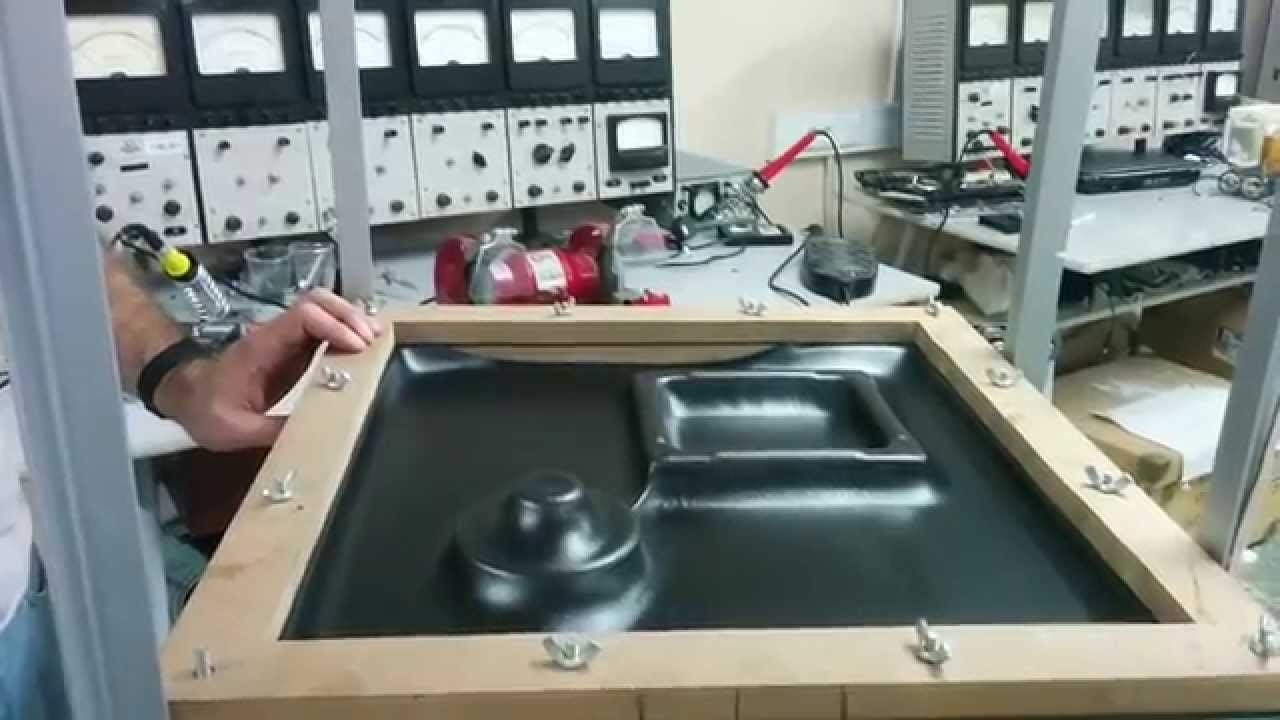
Vacuum forming uses negative pressure to draw a heated plastic sheet against a mold.
The process is suitable for many products with relatively straightforward shapes, including:
- Plastic trays
- Equipment covers
- Luggage shells
- Refrigerator liners
- Industrial housings
- Protective plastic components
Standard vacuum forming machines may be sufficient when the required product shape, forming depth, and surface details are within the machine's capabilities.
Pressure Forming
Pressure forming uses compressed air in addition to vacuum to push the heated plastic sheet against the mold.
This method can produce more detailed surface features and sharper contours in suitable applications.
It may be considered for products requiring:
- Detailed surface textures
- Defined edges and contours
- More complex product geometry
- Specific cosmetic surface requirements
A standard machine with pressure forming capability may be suitable if its available specifications match the application.
A custom configuration may be needed when the required pressure system, clamping structure, mold arrangement, or control sequence differs from the standard model.
Vacuum and pressure forming should not be selected based on the assumption that one method is always better. The choice depends on product design, material properties, appearance requirements, and production targets.
5. Production Capacity and Cycle Time
Production volume is an important consideration when selecting a thermoforming machine.
A machine used for small batches may not require the same automation and operating speed as equipment designed for continuous high-volume production.
Standard Machine Capacity
Standard machines have established performance ranges.
If the required output matches the available machine specifications, a standard model may provide a practical solution without additional engineering.
Custom Machine Capacity
A custom machine can be configured around a specific production target.
Depending on the application, customization may include:
- Faster sheet transfer
- Improved heating arrangements
- Automated loading and unloading
- Servo-driven movement
- Integrated cutting and stacking
- Multiple forming stations
- Production line connections
However, a higher advertised cycle speed does not automatically mean higher finished-product output.
Actual production capacity also depends on heating time, forming time, cooling time, mold configuration, trimming operations, and material handling.
When comparing machines, ask suppliers to estimate output using the actual product, raw material, mold, and production process.
6. Automation Level: Manual, Semi-Automatic, and Fully Automatic
The required automation level affects both the equipment configuration and the overall project investment.
Manual Thermoforming Machines
Manual machines require operators to perform more production steps, such as loading sheets, positioning molds, and removing formed products.
They may suit:
- Small workshops
- Prototype production
- Small-batch manufacturing
- Applications with frequent product changes
Semi-Automatic Thermoforming Machines
Semi-automatic machines combine automated forming operations with manual handling or selected operator-controlled steps.
They can be a practical choice for manufacturers that need improved production efficiency but do not require a fully integrated production line.
A semi-automatic machine may be sufficient when the production volume is moderate and the product range changes regularly.
Fully Automatic Thermoforming Machines
Fully automatic systems can integrate multiple operations, including:
- Automatic sheet feeding
- Heating
- Forming
- Cutting
- Stacking
- Product unloading
- Material handling
These systems are generally suitable for larger production volumes and standardized manufacturing processes.
Does Customization Require Full Automation?
No. Customization and automation are separate decisions.
A custom machine can be manual, semi-automatic, or fully automatic. Likewise, standard equipment may already include advanced automation options.
Buyers should first define the required production process and then select the appropriate automation level.
7. Mold Design and Tooling Compatibility
The mold determines the shape of the finished thermoformed product.
Its dimensions, material, structure, cooling arrangement, and mounting method influence the machine configuration.
Standard machines generally use established mold mounting arrangements and available tooling dimensions.
This is convenient when the buyer's molds are compatible with the machine's working area and mechanical structure.
Custom machines may be needed when the application requires:
- Special mold dimensions
- Unusual mold heights
- Customized mounting structures
- Multiple mold arrangements
- Special cooling connections
- Specific mold-changing mechanisms
Manufacturers producing several product models should also consider how quickly molds can be changed.
If the production process involves frequent product changes, a suitable mold-changing arrangement can help reduce setup time.
Before purchasing equipment, confirm whether existing molds can be used or whether new tooling must be manufactured.
8. Product Shape and Forming Depth
Product geometry affects how the plastic sheet stretches during heating and forming.
Simple shapes may be processed using standard equipment, while products with deep cavities, complex contours, or special surface details may require additional forming functions.
Examples include:
- Deep plastic containers
- Large luggage shells
- Automotive interior panels
- Industrial equipment housings
- Bathtub and sanitary product shells
The forming depth should be considered together with the forming area, sheet thickness, material properties, and mold design.
For deep-draw applications, the equipment may require suitable pre-stretching, plug-assist, vacuum, pressure, or cooling arrangements.
A custom machine can be designed around these requirements when the standard configuration is insufficient.
Buyers should provide product drawings or physical samples so the equipment manufacturer can evaluate the forming process.
9. Factory Layout and Production Line Integration
The available factory space and existing production equipment may affect the choice between standard and custom machinery.
A standard machine is usually easier to integrate when the factory has sufficient floor space and compatible utilities.
However, manufacturers may have specific requirements involving:
- Machine installation dimensions
- Sheet loading direction
- Operator access
- Electrical supply
- Compressed air
- Ventilation
- Material storage
- Product unloading
- Connection to downstream equipment
A custom machine can be designed or modified to fit a specific factory layout.
This may be useful when replacing older equipment, connecting multiple production stages, or installing a machine in a restricted space.
Before confirming the machine design, buyers should provide the supplier with factory layout drawings and utility specifications.
10. Initial Investment and Total Cost of Ownership
Standard thermoforming machines often have a lower initial investment because their designs and configurations are already established.
Custom machines may require additional engineering, specialized components, and manufacturing work, increasing the initial project cost.
However, the initial purchase price does not represent the entire cost of operating the equipment.
The total cost of ownership may include:
- Machine purchase price
- Mold and tooling costs
- Auxiliary equipment
- Shipping and installation
- Electricity consumption
- Labor costs
- Maintenance
- Spare parts
- Operator training
- Production downtime
A standard machine may be less expensive initially but require additional equipment or manual operations to meet the production target.
A custom machine may cost more initially but reduce unnecessary handling or improve production flow when its configuration is properly designed.
The correct comparison should consider the expected production volume, operating hours, labor requirements, maintenance costs, and product quality requirements.
11. Delivery Time and Engineering Requirements
Delivery time is another difference between standard and custom equipment.
Standard Machines
Standard machines may have shorter engineering and manufacturing lead times because the main design and specifications are already established.
Actual delivery time still depends on component availability, production schedules, optional configurations, testing, and shipping arrangements.
Custom Machines
Custom equipment generally requires additional project work.
This may include:
- Reviewing product drawings and technical requirements
- Confirming the forming area and machine dimensions
- Selecting the heating and forming systems
- Designing mechanical structures and mold arrangements
- Reviewing electrical and automation requirements
- Manufacturing and assembling the machine
- Testing and commissioning
The amount of engineering work depends on how far the proposed machine differs from an existing design.
A machine based on a standard platform with selected modifications may require less development time than a completely new machine design.
Buyers should request a project schedule that separates design approval, manufacturing, testing, and delivery.
12. Maintenance, Spare Parts, and Technical Support
Maintenance requirements should be considered before purchasing either type of machine.
Standard machines often use established components and configurations. Their maintenance procedures may be familiar to the manufacturer's service team.
Custom machines can also be designed with commonly available components, but specialized structures or control functions may require more specific maintenance documentation.
Buyers should evaluate:
- Availability of replacement parts
- Electrical component brands and specifications
- Heating element replacement procedures
- Vacuum pump maintenance
- Mechanical inspection requirements
- Software and PLC support
- Remote troubleshooting
- Warranty coverage
- Operator and maintenance training
A custom machine does not necessarily mean more difficult maintenance. The result depends on component selection, design quality, documentation, and supplier support.
For international buyers, access to technical assistance and spare parts is especially important.
13. Which Industries Benefit from Custom Thermoforming Machines?
Different industries have different product dimensions, material requirements, and production processes.
Custom thermoforming equipment may be suitable when standard machines cannot accommodate these requirements.
Automotive Manufacturing
Automotive applications include interior panels, dashboards, door components, trim panels, and protective covers.
Some products require large forming areas, specific material thicknesses, and controlled surface appearance.
Luggage and Suitcase Manufacturing
Luggage shells may require large forming dimensions, suitable heating systems, and molds designed for specific shell shapes.
A customized machine may be considered when manufacturers produce different suitcase sizes or require special forming configurations.
Refrigerator and Appliance Manufacturing
Refrigerator liners and appliance components may involve large plastic sheets, deep forming areas, and specific dimensional requirements.
Machine selection should account for product geometry, material properties, and the required forming process.
Sanitary Products
Bathtubs, shower trays, and other sanitary products often involve large molds and deep forming requirements.
Equipment selection should consider the sheet dimensions, heating capacity, mold structure, and cooling process.
Industrial Plastic Products
Large equipment covers, protective housings, and machine enclosures may require special forming areas or material specifications.
Custom equipment can be useful when products do not fit the dimensions or process capabilities of available standard models.
14. When Is a Standard Thermoforming Machine the Better Choice?
A standard machine is often the more practical option when the production requirements are relatively straightforward.
Consider standard equipment when:
Your product dimensions are common. The available forming area and mold dimensions match your product drawings.
Your material requirements are within the standard range. The machine can process the specified plastic sheet materials and thicknesses.
Your production volume is predictable. The machine's output capacity meets the required production target.
Your forming process is established. Standard vacuum forming or pressure forming functions are sufficient.
Your factory utilities are compatible. The electrical supply, compressed air, and installation space meet the equipment requirements.
You want a simpler purchasing process. An established machine model can reduce the amount of engineering work needed before production.
In these situations, purchasing a custom machine may not provide enough additional value to justify the extra engineering and investment.
15. When Should You Choose a Custom Thermoforming Machine?
Custom equipment is worth considering when standard machine specifications do not match the production requirements.
A custom machine may be appropriate when:
Your product requires a special forming area. The available standard models cannot accommodate the required sheet or mold dimensions.
You process unusual raw materials. Your plastic sheet materials or thickness ranges require a different heating or forming configuration.
Your product has complex geometry. Deep forming areas, detailed surfaces, or special contours require additional process functions.
Your production line needs special automation. You need automatic loading, unloading, trimming, stacking, or integration with other machinery.
Your factory has installation restrictions. The machine must fit a specific layout or connect to existing production equipment.
Your production process requires a special configuration. The standard heating, vacuum, pressure, or mold arrangement cannot meet the application requirements.
In these cases, customization can help create a machine that better matches the actual manufacturing process.
16. How to Choose the Right Thermoforming Machine for Your Project
A structured evaluation helps buyers avoid selecting equipment based only on price or general specifications.
Step 1: Define the Finished Product
Prepare product drawings, photographs, or physical samples.
Specify:
- Product length and width
- Product height
- Forming depth
- Surface requirements
- Dimensional tolerances
- Expected product quantity
Step 2: Confirm Raw Material Specifications
Provide the plastic sheet material, thickness range, sheet dimensions, and any special processing requirements.
If multiple materials are used, list each material separately.
Step 3: Determine the Required Forming Method
Decide whether vacuum forming, pressure forming, or another thermoforming process is suitable for the product.
The decision should consider the product geometry, surface detail, material properties, and required finish.
Step 4: Confirm the Forming Area
Calculate the required working area based on the sheet size, mold dimensions, clamping margins, and production layout.
Do not select the machine based only on the finished product dimensions.
Step 5: Estimate Production Capacity
Define the expected hourly, daily, or monthly output.
Ask the manufacturer to estimate realistic production performance based on the actual material and mold.
Step 6: Select the Automation Level
Determine whether manual, semi-automatic, or fully automatic equipment is appropriate.
Consider labor availability, production volume, product variety, and future expansion plans.
Step 7: Compare Standard and Custom Configurations
Ask the supplier whether an existing machine model can meet the requirements.
If modifications are necessary, request a clear explanation of which specifications need to be customized and why.
Step 8: Evaluate the Complete Project Cost
Compare machine price, mold costs, auxiliary equipment, installation, shipping, energy use, maintenance, and technical support.
A detailed quotation makes it easier to compare suppliers on an equivalent basis.
17. Information to Provide When Requesting a Thermoforming Machine Quotation
A detailed technical inquiry helps the manufacturer recommend suitable equipment and prepare a more accurate quotation.
| Information | Details to Provide |
|---|---|
| Product name | Tray, housing, luggage shell, panel, container, etc. |
| Product dimensions | Length, width, and height |
| Forming depth | Required maximum depth |
| Raw material | ABS, PET, PETG, PP, HIPS, PVC, PC, etc. |
| Plastic sheet thickness | Minimum and maximum thickness |
| Sheet dimensions | Length and width |
| Forming method | Vacuum forming, pressure forming, or other requirements |
| Forming area | Required working dimensions |
| Production capacity | Expected pieces per hour, day, or month |
| Automation level | Manual, semi-automatic, or fully automatic |
| Mold requirements | Existing molds or new tooling |
| Factory conditions | Power supply, compressed air, floor space |
| Special requirements | Cutting, trimming, stacking, or production line integration |
| Destination | Country and delivery location |
Providing these details allows the supplier to assess whether a standard machine is sufficient or whether a custom configuration is needed.
Product drawings and samples are particularly useful when evaluating forming depth, material stretching, and mold dimensions.
18. Common Mistakes When Comparing Custom and Standard Machines
Assuming Custom Machines Are Always Better
A custom machine offers flexibility, but additional features are not automatically useful.
If a standard machine already meets the technical requirements, customization may increase investment without improving production results.
Choosing a Standard Machine Based Only on Price
A low initial price may not reflect the complete production requirements.
If the machine needs extensive modifications or additional equipment after installation, the total project cost may increase.
Ignoring Plastic Sheet Specifications
Different raw materials and sheet thicknesses require suitable heating and forming conditions.
Buyers should confirm material compatibility before approving the machine configuration.
Selecting the Wrong Forming Area
A machine that is too small may restrict future product development, while an unnecessarily large machine can increase equipment and operating costs.
The forming area should match the actual sheet and mold requirements.
Overlooking Downstream Operations
Forming is only one part of the manufacturing process.
Cutting, trimming, stacking, cooling, and material handling should also be considered when planning a complete production line.
Focusing Only on Advertised Cycle Speed
Actual production output depends on the entire process, including heating, forming, cooling, and product handling.
Ask for performance estimates based on your specific product.
19. Frequently Asked Questions About Custom and Standard Thermoforming Machines
1. What is the difference between custom and standard thermoforming machines?
A standard thermoforming machine is manufactured according to established specifications and available configurations. A custom thermoforming machine is designed or modified to meet specific requirements involving forming area, plastic sheet materials, heating systems, forming methods, automation, and production capacity.
2. Is a custom thermoforming machine better than a standard machine?
Not always. A custom machine is more suitable when the production process requires special dimensions, materials, heating arrangements, or automation. A standard machine is often a better choice when its specifications already meet the application requirements.
3. Are custom thermoforming machines more expensive?
Custom machines may cost more because they can require additional engineering, specialized components, and manufacturing work. However, the actual investment depends on the extent of customization. Modifying an existing machine platform may cost less than developing a completely new design.
4. How do I know whether I need a custom thermoforming machine?
Compare your product dimensions, raw material, plastic sheet thickness, forming area, production capacity, and automation requirements with the specifications of available standard machines. If one or more essential requirements cannot be met, a custom configuration may be necessary.
5. Can standard thermoforming machines process different plastic materials?
Many standard machines can process several thermoplastic materials, depending on their heating and forming capabilities. Materials such as ABS, PET, PETG, PP, HIPS, PVC, PMMA, and PC may be suitable for specific models. Buyers should confirm the material and thickness range with the manufacturer.
6. What is the difference between vacuum forming machines and pressure forming machines?
Vacuum forming machines use negative pressure to draw heated plastic sheets against a mold. Pressure forming uses compressed air to push the material against the mold, often producing more detailed surface features. The appropriate method depends on product geometry and appearance requirements.
7. Can a semi-automatic thermoforming machine be customized?
Yes. A semi-automatic machine can be customized in areas such as forming dimensions, heating configuration, mold mounting, vacuum systems, control functions, and selected material-handling operations. Customization does not necessarily require a fully automatic production line.
8. Does a larger forming area require a custom machine?
Not necessarily. Some manufacturers offer standard machines in several forming sizes. A custom machine may be needed when the required sheet dimensions, mold layout, or forming area fall outside the available standard specifications.
9. What information is needed to design a custom thermoforming machine?
The manufacturer generally needs product drawings or samples, raw material specifications, sheet dimensions, thickness range, forming depth, production targets, mold information, automation preferences, and factory utility requirements.
10. Can one thermoforming machine process different product sizes?
Yes, if the machine's forming area, mold mounting arrangement, heating system, and process capabilities support the different products. Interchangeable molds may allow one machine to manufacture multiple product models, although changeover time and tooling compatibility should be considered.
11. How does the heating system affect thermoforming machine selection?
The heating system determines how the plastic sheet reaches its forming temperature. Material type, thickness, sheet dimensions, and product geometry influence the required heating configuration. Applications with multiple materials or complex shapes may benefit from adjustable heating zones.
12. How long does it take to manufacture a custom thermoforming machine?
The lead time depends on design complexity, component availability, manufacturing capacity, testing requirements, and project approval. A machine based on an existing model with selected modifications may require less time than a completely new machine design. Buyers should request a project schedule from the supplier.
13. Can a standard thermoforming machine be upgraded later?
Some standard machines can be upgraded with additional automation, heating controls, feeding systems, or auxiliary equipment. However, upgrade possibilities depend on the original machine structure, electrical system, available space, and manufacturer support. Buyers should discuss future expansion before purchasing.
14. Which thermoforming machine is suitable for large plastic products?
Large plastic products require equipment with a suitable forming area, sheet-handling system, heating capacity, mold arrangement, and forming depth. Depending on the product, a standard large-format machine may be sufficient, or a custom configuration may be needed.
15. Should I choose a custom or standard machine for high-volume production?
The decision depends on product consistency, output requirements, material specifications, and automation needs. A standard automatic machine may be suitable for established high-volume products. Custom equipment may be preferable when high-volume production requires special forming dimensions, integrated handling systems, or a specific production layout.
Conclusion
The choice between custom and standard thermoforming machines depends on the relationship between product requirements and available equipment specifications.
Standard thermoforming equipment is often a practical solution for manufacturers whose plastic sheet materials, forming area, production capacity, and forming processes match established machine models.
Custom thermoforming equipment offers greater flexibility when the project involves special product dimensions, unusual raw material requirements, customized heating forming systems, pressure forming functions, or production line integration.
Before making a purchasing decision, manufacturers should evaluate the finished product, raw material, sheet thickness, forming area, production volume, automation level, and total project cost.
The most suitable machine is the one that meets the required production specifications without unnecessary complexity or investment.
JUNSAI Group provides thermoforming machine solutions for different plastic forming applications. Whether your project requires standard thermoforming equipment or a customized machine configuration, you can discuss your product drawings, plastic sheet specifications, forming requirements, and production targets with the JUNSAI Group team to identify a suitable solution.