Quote now
EN

Medical thermoforming provides a flexible manufacturing method for producing plastic components, protective enclosures, trays, and packaging used across the healthcare industry. By combining suitable thermoplastic materials, carefully designed tooling, and controlled heating and forming parameters, manufacturers can develop components that meet defined dimensional, functional, and production requirements.
Junsai Group provides thermoforming machinery and automation solutions for manufacturers seeking to improve forming consistency, streamline production processes, and prepare for scalable manufacturing. From equipment housings and diagnostic equipment covers to thermoformed medical packaging, the appropriate machine configuration depends on the part geometry, material properties, required tolerances, and expected production volume.
Whether a project involves prototype development, small-batch production, or a high volume manufacturing program, selecting suitable thermoforming machines and process configurations can help manufacturers balance product quality, tooling investment, cycle time, and long-term cost effectiveness.
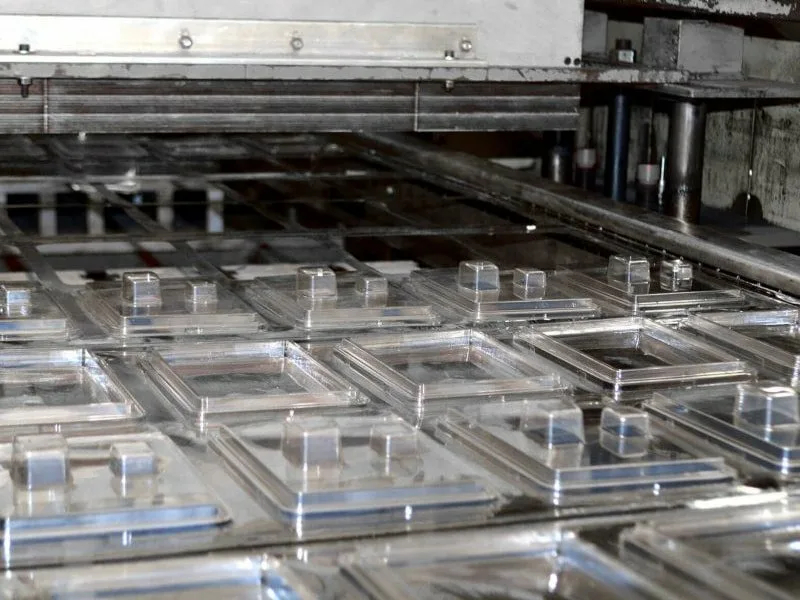
Medical thermoforming is a plastic manufacturing process in which a thermoplastic sheet or film is heated until it becomes formable, shaped over or into a mold using vacuum, pressure, or a combination of forming methods, and cooled to retain the required geometry. The formed component is then trimmed, inspected, and prepared for subsequent assembly or packaging operations.
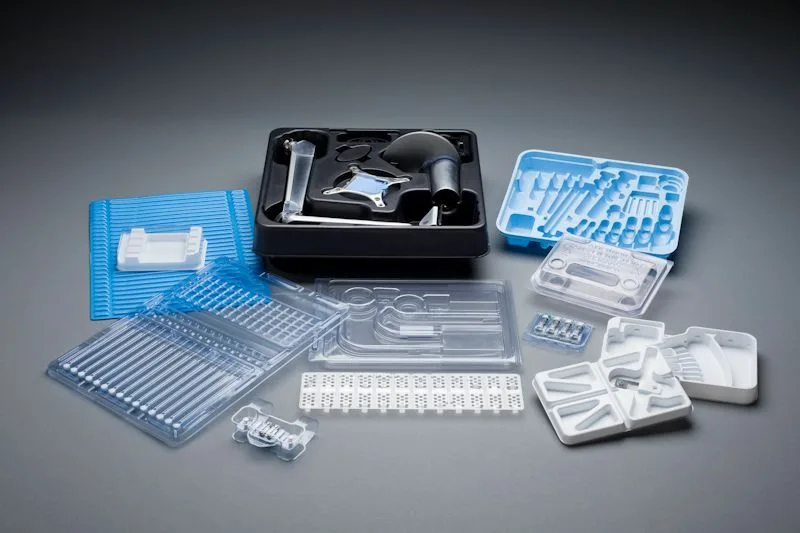
In medical device manufacturing, thermoforming is used to make a wide variety of products, including protective trays, medical equipment housings, diagnostic instrument covers, component organizers, and packaging that holds medical devices in a defined position.
The process is particularly suitable for applications requiring relatively lightweight plastic structures, customized shapes, and repeatable production. The final result depends on material selection, mold design, temperature control, forming pressure, cooling conditions, and trimming accuracy.
Medical thermoforming does not automatically make a component sterile or suitable for direct patient contact. Material compatibility, cleanliness, sterilization requirements, packaging performance, and applicable regulatory requirements must be assessed for the intended medical application.
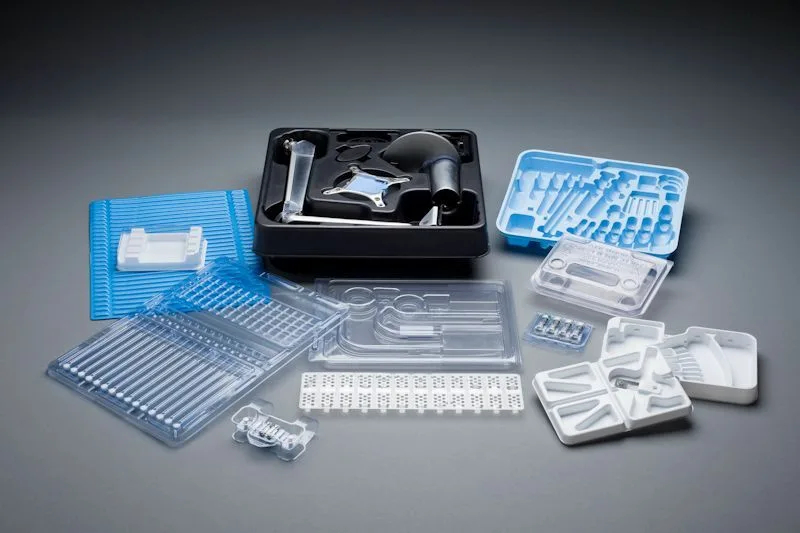
Thermoformed plastics serve both the functional components and packaging needs of the medical industry. The design requirements vary according to whether a part protects an instrument, supports a diagnostic workflow, organizes components, or forms part of a medical device enclosure.
Thermoformed plastic parts can be used for outer covers, protective panels, equipment enclosures, internal organizers, and selected structural components. These parts may need to accommodate electronic assemblies, provide access to service points, support cable routing, or fit within an existing equipment structure.
For medical equipment manufacturers, the forming process should account for mounting locations, wall thickness, surface finish, dimensional stability, and the interaction between the plastic component and other assemblies.
The design may also need to consider exposure to cleaning agents, repeated handling, temperature changes, and the intended service environment. These factors influence the choice of thermoplastic materials and the forming process.
Diagnostic equipment often combines molded or formed plastic parts with sensors, displays, electronic components, fluid-handling assemblies, and replaceable consumables. Thermoformed covers and housings can provide a lightweight external structure while accommodating the shape and layout of the equipment.
Laboratory trays, sample organizers, instrument holders, and transport inserts are additional applications where formed plastic can help keep components arranged during handling and processing.
For these products, designers should evaluate cavity geometry, part rigidity, dimensional consistency, cleaning requirements, and compatibility with the materials or equipment that the component will contact.
Medical packaging is an established application for plastic thermoforming. Depending on the packaging design, thermoforming can produce trays, inserts, blister packs, and custom cavities that position and protect devices during handling, storage, and transportation.
Packaging designs may need to accommodate device contours, prevent unwanted movement, provide adequate protection against physical damage, and work with a compatible lidding or sealing process.
For sterile medical device packaging, the packaging system must be developed and validated for its intended use. Material selection, sealing performance, barrier requirements, sterilization compatibility, and package integrity need to be considered together rather than treated as separate design decisions.
A wide variety of custom thermoformer parts can be produced for medical and healthcare applications. Examples include protective shells, equipment covers, trays, inserts, and formed plastic components designed around specific assembly requirements.
Custom production begins with a clear understanding of the finished part. Drawings, three-dimensional models, material specifications, tolerance requirements, annual demand, and downstream assembly details help determine the suitable tooling and machine configuration.
The medical thermoforming process involves several connected stages. Each stage affects dimensional accuracy, surface quality, material distribution, and the consistency of the finished component.
Before production begins, engineers review the part geometry, wall thickness, draft angles, corner radii, forming depth, trimming requirements, and intended function. This design review helps identify features that may cause excessive material thinning, difficult demolding, or dimensional variation.
For medical device manufacturing, the review should also identify the required inspection points, traceability needs, cleanliness expectations, and any packaging or sterilization considerations relevant to the finished product.
Thermoformable plastics must be selected according to the component's mechanical, thermal, chemical, visual, and regulatory requirements. The selected grade must also be suitable for the intended forming conditions.
Common material families used in thermoforming include PETG, PET, polypropylene (PP), polystyrene (PS), ABS, polycarbonate (PC), and selected polyethylene grades. Not every material is suitable for every medical application, and availability varies by grade and supplier.
Medical-grade or application-specific documentation may be necessary when the component has defined requirements for biocompatibility, chemical exposure, sterilization, or packaging performance. A material's general suitability for thermoforming does not by itself establish suitability for a particular medical use.
Plastic sheet is heated to a controlled temperature range that allows it to form without unacceptable degradation or inconsistent material flow. Heating uniformity matters because uneven temperature distribution can affect draw depth, wall thickness, surface appearance, and dimensional repeatability.
The required heating profile depends on the polymer, sheet thickness, sheet dimensions, mold geometry, and machine configuration. Proper process development establishes a repeatable operating window rather than relying on a single temperature setting for every material.
Once the sheet reaches the required forming condition, it is shaped against the mold.
Vacuum forming uses reduced pressure to draw the heated plastic against the mold surface. It is often suitable for parts whose geometry and surface-detail requirements can be achieved with vacuum assistance.
Pressure forming uses positive air pressure to push the heated sheet against the mold. Depending on the tooling and machine setup, it can reproduce finer surface features and more defined contours than a basic vacuum-forming arrangement.
The choice between vacuum forming and pressure forming depends on part geometry, required detail, material behavior, appearance, and tooling considerations. More complex parts may require additional forming aids or a different production method.
After forming, the component is cooled sufficiently to retain its shape before demolding. Trimming then removes excess material and creates the final perimeter, openings, and other specified features.
Depending on the part design, secondary operations may include drilling, machining, edge finishing, assembly, labeling, or inspection. These operations should be planned during product development because they can affect total cycle time and overall production cost.
Finished parts should be inspected against defined acceptance criteria. Typical checks may include overall dimensions, wall thickness, appearance, warpage, edge quality, and the location of functional features.
Where tight tolerance requirements apply, manufacturers should define the measurement method, sampling frequency, acceptance limits, and response to nonconforming parts. Critical dimensions should be evaluated against actual process capability rather than assumed to be achievable simply because a thermoforming machine has been selected.
For medical applications, documentation and validation requirements depend on the product, manufacturing responsibilities, intended use, and applicable quality system.
Selecting the right thermoforming machines starts with the part and production requirements. Machine size, heating system, forming method, mold arrangement, automation level, and trimming strategy all affect the range of products that can be manufactured efficiently.
Vacuum thermoforming machines are used for components whose shapes can be produced through vacuum-assisted forming. Depending on the design, they can support trays, covers, organizers, and other formed plastic parts.
When evaluating a vacuum system, manufacturers should consider the available forming area, sheet thickness range, heating uniformity, vacuum performance, mold compatibility, cooling arrangements, and repeatability of the forming cycle.
Pressure forming machines are appropriate for applications that require more detailed surface features or more closely defined contours than a particular vacuum-forming setup can provide.
The machine must be matched to the required forming pressure, mold design, material, sheet dimensions, and production rate. Tooling design and process trials are important for determining whether the required appearance and dimensional performance can be achieved consistently.
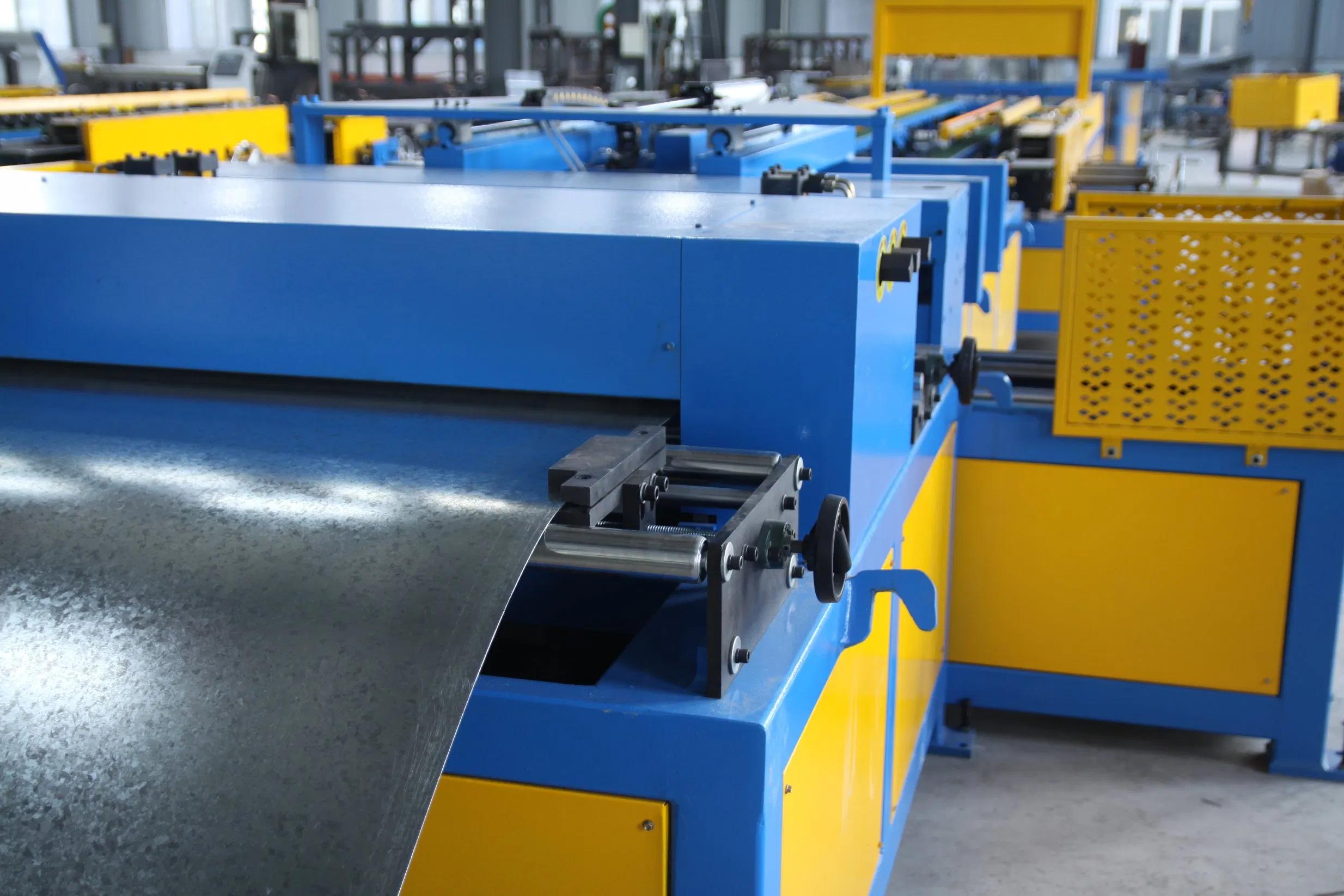
Automated thermoforming systems can integrate sheet loading, heating, forming, demolding, trimming, and part handling. The extent of automation depends on the product and factory layout.
For high volume manufacturing, automation may reduce manual handling, stabilize cycle timing, and support consistent movement between process stages. However, automation alone does not guarantee better quality or lower cost. The complete system must be evaluated against the actual part design, changeover requirements, inspection needs, and planned production rate.
Junsai Group can be considered when evaluating thermoforming machinery and automation configurations for a defined manufacturing application. Final equipment selection should be based on confirmed machine specifications, material compatibility, sample trials, and the production requirements supplied by the customer.
Material selection affects forming behavior, component strength, appearance, chemical resistance, and compatibility with the intended healthcare application. The most suitable polymer depends on the function of the part rather than on a general ranking of materials.
| Material | Potential characteristics | Possible considerations |
|---|---|---|
| PETG | Transparency, formability, and suitability for many packaging and tray designs | Verify grade-specific chemical and sterilization compatibility |
| PET | Useful mechanical properties and availability in packaging grades | Confirm the specific grade and forming requirements |
| Polypropylene (PP) | Low density and chemical resistance in many applications | Control shrinkage and dimensional behavior |
| Polystyrene (PS) | Formability and availability in different grades | Evaluate impact resistance and intended use |
| ABS | Toughness and suitability for many equipment covers and housings | Confirm chemical resistance and required surface finish |
| Polycarbonate (PC) | Impact resistance and potential for transparent components | Assess forming conditions, chemical exposure, and grade suitability |
| Polyethylene (PE) | Chemical resistance in many environments | Consider stiffness, forming behavior, and dimensional requirements |
This table is a general material-selection guide, not a substitute for supplier data or application testing. Different grades within the same polymer family can have substantially different performance characteristics.
For products that contact patients, medicines, biological samples, or sterile contents, manufacturers should assess the specific regulatory and performance requirements. The material must be qualified for the intended application, and any sterilization process should be evaluated for its effect on both the polymer and the finished component.
Tight tolerance requirements need to be addressed during product design, tooling development, process setup, and inspection planning. Thermoforming can produce accurate components, but achievable tolerances depend on material shrinkage, sheet thickness, forming depth, mold design, cooling behavior, trimming accuracy, and the measurement method.
Several factors can improve dimensional consistency:
Mold geometry determines the shape of the formed component. Draft angles, radii, venting, surface finish, and material distribution should be considered during tooling design. Features that require precise locations may need dedicated trimming fixtures or secondary machining.
Consistent heating helps the plastic sheet reach a suitable forming condition across the required area. Controlled cooling reduces the risk of distortion and supports repeatable demolding. Process settings should be developed for each relevant material and part configuration.
Sheet thickness, polymer grade, storage conditions, and material handling can affect forming results. Incoming material checks and traceability procedures help identify variation before it creates larger production problems.
Dimensional inspection should focus on the characteristics that affect fit, function, sealing, or assembly. When tolerance limits are narrow, manufacturers should collect production data and evaluate process capability using an appropriate statistical method. Tolerances should be agreed upon with the equipment supplier and tooling team before finalizing the production plan.
Cost effectiveness in medical thermoforming depends on more than the purchase price of a machine. The full manufacturing process includes material usage, tooling, labor, cycle time, energy consumption, trimming, scrap, inspection, packaging, maintenance, and equipment downtime.
For a new product, thermoforming may offer a practical route when the part can be made from sheet plastic and the required tooling investment fits the project budget. It can also support design changes during development, although tooling modifications and repeated process trials still carry costs.
For high volume production, manufacturers should evaluate:
A production plan should account for both the target output and the required quality level. A machine that produces parts quickly may not be the most economical option if it creates excessive scrap, requires frequent adjustment, or cannot meet the specified dimensional requirements.
For scale production, manufacturers should validate the complete process at a representative operating rate before committing to long production runs. Actual output depends on the equipment configuration, mold design, part geometry, and downstream operations.
Thermoforming is one of several production processes used to manufacture plastic components for the healthcare industry. Its suitability depends on part geometry, expected volume, material, tooling budget, and required performance.
| Manufacturing process | Typical strengths | Factors to evaluate |
|---|---|---|
| Thermoforming | Forms sheet plastic into relatively large or shallow-to-deep shapes; tooling can be economical for suitable designs | Material thinning, trimming, draw depth, and dimensional control |
| Injection molding | Supports repeatable production of complex three-dimensional parts and integrated features | Mold investment, design complexity, material selection, and production volume |
| CNC machining | Provides controlled material removal for prototypes and selected precision components | Cycle time, material waste, and unit cost at higher volumes |
| Additive manufacturing | Supports rapid design iterations and complex geometries without conventional production tooling | Material qualification, surface finish, throughput, and part-specific requirements |
No single manufacturing method is best for every medical product. Injection molding may suit small, intricate components with integrated features, while thermoforming may be appropriate for larger covers, trays, and sheet-based designs. CNC machining and additive manufacturing can also support prototype development or specialized components.
The most suitable method should be selected through design review, material evaluation, prototype testing, and a comparison of total production costs.
Medical device manufacturing often involves several linked operations rather than a standalone forming cycle. A production line may include material preparation, heating, forming, trimming, inspection, assembly, and packaging.
Integration planning should address how parts move between stations, how production status is monitored, and how nonconforming products are identified and separated. Equipment interfaces, safety systems, operator access, and maintenance requirements also affect the design of the line.
For high volume programs, automation can improve the coordination of production processes and reduce repetitive manual tasks. The potential benefits depend on the consistency of incoming material, the stability of the forming process, and the ability of downstream equipment to keep pace with the forming cycle.
Manufacturers should define the expected cycle time, product mix, acceptable downtime, inspection method, and changeover frequency before deciding how much automation to install. This helps ensure that the production line is configured for actual demand rather than an assumed maximum output.
The healthcare industry has product-specific requirements that may extend beyond ordinary dimensional and cosmetic inspection. Medical device components, protective housings, and medical packaging do not necessarily have the same cleanliness, traceability, or validation needs.
Manufacturers should determine which requirements apply to the intended product and production environment. Depending on the application, these may include material documentation, process validation, inspection records, lot traceability, cleanroom controls, packaging validation, or sterilization compatibility assessments.
A cleanroom is not automatically required for every thermoformed medical component. The need for controlled manufacturing conditions depends on the product's intended use, contamination risks, and customer or regulatory requirements.
Likewise, purchasing thermoforming machinery does not by itself establish compliance with medical device regulations or quality standards. Compliance depends on the complete manufacturing system, the procedures in use, the responsibilities of the manufacturer, and the evidence maintained for the finished product.
Junsai Group provides industrial machinery and automation solutions for manufacturing applications. For a medical thermoforming project, the appropriate equipment configuration should be evaluated against the specific product, selected thermoplastic materials, required forming method, target output, and dimensional requirements.
A practical equipment review should establish:
These details help determine whether a proposed machine and tooling arrangement is suitable for the application. Sample production and process evaluation should be completed where needed to confirm forming quality, repeatability, and production feasibility.
For manufacturers planning a new medical component or upgrading an existing production line, Junsai Group can discuss the machinery and automation requirements based on the project specifications. Equipment capabilities, process suitability, and any required certifications should be confirmed directly before a purchasing decision.
Medical thermoforming is used to produce plastic components such as medical device trays, blister packaging, protective inserts, equipment covers, diagnostic equipment housings, and laboratory organizers. The suitable application depends on the material, part geometry, cleanliness requirements, and intended use.
Common material families include PETG, PET, polypropylene, polystyrene, ABS, polycarbonate, and selected polyethylene grades. The right choice depends on mechanical performance, transparency, chemical resistance, sterilization conditions, forming behavior, and the specific requirements of the finished medical product.
Vacuum forming uses reduced pressure to draw heated plastic against a mold. Pressure forming uses positive air pressure to press the material against the mold surface and may reproduce finer surface details. The preferred method depends on geometry, appearance, material, tooling, and production requirements.
Thermoforming can produce components with controlled dimensions, but achievable accuracy depends on mold design, material behavior, sheet thickness, forming depth, cooling, trimming, and inspection. Where tight tolerance requirements apply, manufacturers should define acceptance criteria and verify process capability through testing and production data.
Yes, thermoforming can support high volume production when the part design, tooling arrangement, cycle time, material supply, and downstream operations are suitable. Automation may increase output consistency and reduce handling, but actual capacity should be confirmed through representative production trials.
Cost effectiveness can result from suitable tooling investment, efficient material utilization, reduced manual handling, repeatable forming cycles, and coordinated downstream operations. Total cost should also include trimming, scrap, inspection, maintenance, changeovers, and quality-related losses.
No. Thermoforming is a shaping process and does not inherently sterilize a finished component. Sterility depends on the intended product, validated sterilization method where applicable, packaging system, handling conditions, and relevant quality procedures.
Yes. Thermoforming is commonly used to manufacture trays, inserts, blister packs, and other packaging formats that hold and protect medical devices. Packaging intended for sterile products requires appropriate material selection and validation of the complete packaging system for its intended use.
Key considerations include forming area, sheet thickness, polymer compatibility, heating uniformity, forming method, mold design, cycle time, automation, trimming requirements, inspection needs, and the target production volume. Medical applications may also require specific documentation or controlled manufacturing conditions.
Start with a part drawing or 3D model, material requirements, target annual volume, dimensional tolerances, intended application, and downstream processing needs. These details allow the equipment and tooling requirements to be reviewed before prototype trials and production planning.
Choosing the right medical thermoforming solution begins with the finished component and its intended use. Material selection, mold design, forming technology, process control, and downstream automation should be considered together to achieve consistent parts and a practical production cost.
Junsai Group can review your machinery requirements based on part dimensions, thermoplastic materials, forming method, target output, and production-line needs. Share your product drawings and key manufacturing specifications to discuss an equipment configuration suited to your project.