Quote now
EN

Automotive air duct forming involves shaping sheet metal or other suitable materials into duct components that guide, distribute, and control airflow within vehicle systems. In automotive manufacturing, accurately formed air ducts support ventilation, heating, air conditioning, and selected cooling applications. Manufacturers need repeatable forming processes that deliver consistent dimensions, reliable joints, and efficient production.
Junsai Group provides metal forming machinery and automation solutions for industrial manufacturing applications. For businesses involved in automotive air duct production, selecting suitable cutting, shearing, folding, flange forming, and duct assembly equipment can improve workflow coordination and help maintain consistent product quality.
From individual duct components to a complete production line, the right equipment configuration depends on material type, sheet thickness, duct geometry, required tolerances, and production volume. By coordinating sheet preparation with forming and joining operations, manufacturers can establish an efficient manufacturing process for rectangular ducts, shaped air passages, and other sheet-metal air distribution components.
Automotive air duct forming is the process of cutting, bending, folding, and assembling suitable materials to create air ducts that direct airflow through vehicle ventilation, heating, air conditioning, or other designated systems. For sheet-metal applications, the process may include shearing, notching, Pittsburgh lock forming, flange forming, and final assembly.
The manufacturing sequence begins with material preparation and cutting. The flat sheet is then formed into the required profile, and its edges or connecting sections are prepared for joining. Depending on the design, the finished duct may include seams, flanges, bends, mounting features, or transitions between different cross-sectional shapes.
Automotive air ducts vary considerably in size, material, and construction. Some are made from plastic or flexible materials, while selected applications use formed sheet metal. The appropriate manufacturing method depends on the airflow requirements, operating temperature, available installation space, noise considerations, and the specifications of the vehicle system.
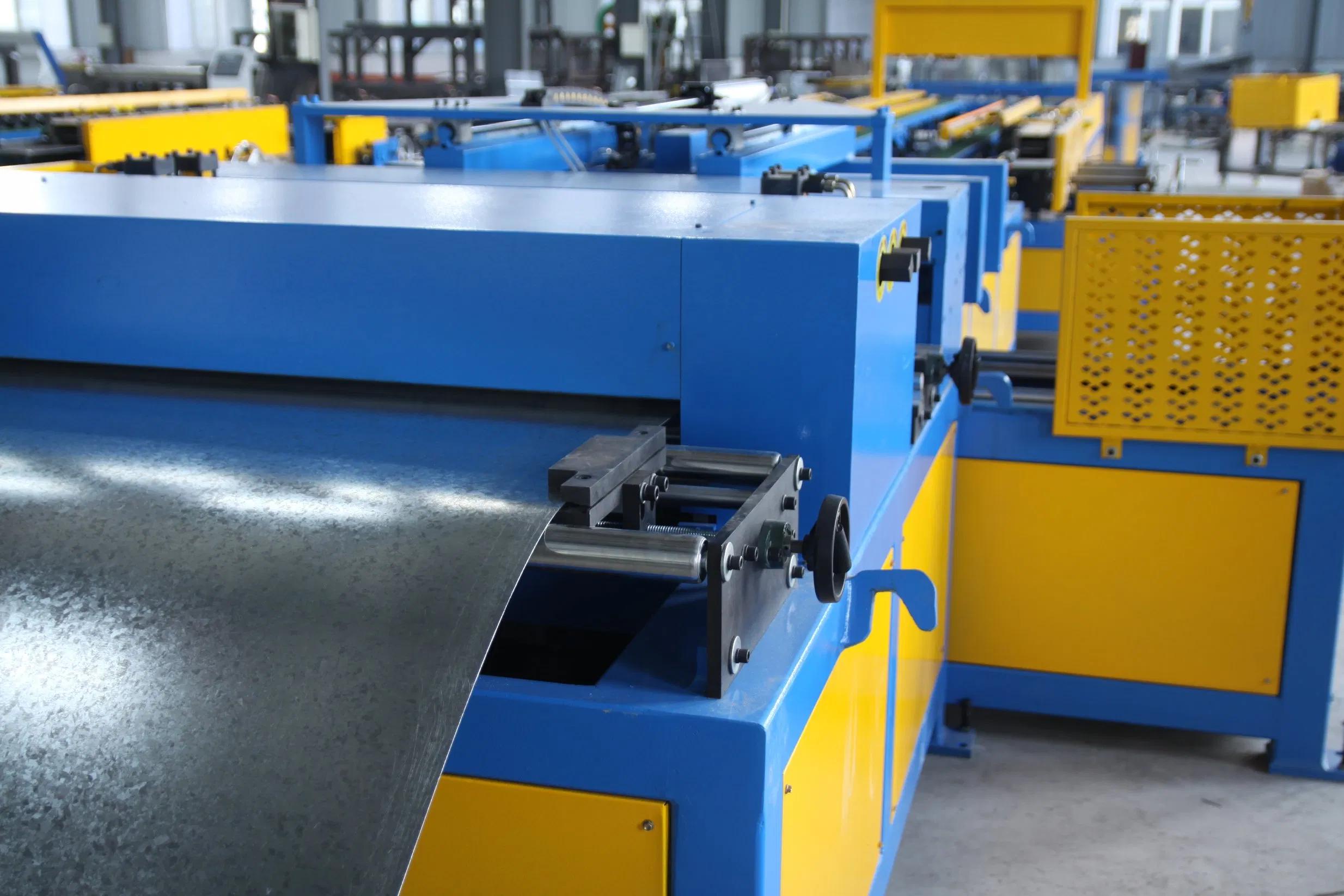
For manufacturers producing sheet-metal ducts, an integrated duct forming process can help coordinate cutting, folding, flange preparation, and assembly while reducing unnecessary material handling.
Air ducts serve different purposes throughout a vehicle. Their design and manufacturing requirements depend on the location, airflow conditions, and surrounding components.
Automotive HVAC systems distribute conditioned air from the heating and air conditioning unit to the passenger compartment. Ducts may direct airflow toward dashboard vents, footwells, rear passenger outlets, and defrosting outlets.
These components require suitable internal dimensions, secure connections, and smooth airflow paths. Depending on the application, manufacturers may use molded plastics, flexible ducts, or other materials rather than sheet metal.
Selected automotive cooling systems use dedicated air passages to direct airflow toward components that require thermal management. These may include brake cooling arrangements, electronic equipment, or other designated vehicle assemblies.
The material and forming process must match the operating temperature, vibration exposure, available installation space, and mechanical requirements of the application.
Some automotive and vehicle-related air distribution applications use rectangular or custom-shaped duct components to fit restricted spaces and connect different system sections.
Rectangular ducts require accurate dimensions and consistent corner geometry. Where sheet metal is specified, appropriate folding and seam-forming operations help produce the required cross-section.
Not every automotive air duct is rectangular or made from metal. Product drawings and material specifications should determine the manufacturing route.
An efficient HVAC duct manufacturing workflow coordinates material preparation, cutting, forming, joining, and inspection. The exact sequence varies with duct geometry and the selected manufacturing technology.
The process begins with selecting the specified sheet material and thickness. Depending on the application, manufacturers may process galvanized steel, stainless steel, aluminum, or other approved sheet-metal grades.
Material properties influence bend allowance, springback, seam formation, corrosion resistance, and finished-part weight. Before production, the sheet should be checked for dimensional accuracy, surface condition, and compatibility with the selected machines.
For plastic automotive air ducts, the production route may instead involve injection molding, extrusion, blow molding, or another suitable process.
Cutting sheet metal establishes the blank dimensions and prepares the material for subsequent forming operations. A shearing machine can cut straight edges efficiently, while laser cutting, punching, or other methods may be suitable for complex outlines and openings.
Accurate blank preparation helps control finished duct dimensions and reduces unnecessary scrap. Cut quality, burr formation, and dimensional consistency should be considered when selecting the cutting method.
For high-volume production, automated material feeding and coordinated cutting operations can reduce manual handling and improve production repeatability.
The Pittsburgh lock is a common seam configuration in rectangular sheet-metal duct fabrication. It creates an interlocking edge that can be assembled with a mating edge to form a duct seam.
A Pittsburgh lock forming machine prepares the required profile along the sheet edge. The finished seam geometry depends on the sheet thickness, machine settings, material characteristics, and tooling condition.
This joining method is frequently used in commercial HVAC ductwork. Its suitability for automotive applications must be confirmed against the particular duct design, material specification, space constraints, and required joint performance.
TDF flange forming machines produce flange profiles used to connect rectangular duct sections. TDF, or Transverse Duct Flange, is a flange-forming system associated with rectangular sheet-metal duct construction.
A properly formed flange helps provide a consistent connection interface between compatible duct sections. Depending on the design, the assembly may also require corner pieces, fasteners, gaskets, sealants, or other joining components.
For automotive air duct production, TDF equipment is relevant only when the component design specifies a compatible flange system. Many vehicle HVAC ducts use different connection methods, especially when the ducts are made from molded plastics or flexible materials.
A folding machine bends the prepared sheet into the required duct geometry. Accurate bending establishes the side walls, corners, transitions, and other features shown in the part drawing.
The machine must accommodate the sheet thickness, bend length, material properties, and required angle. Tooling selection and bend allowance calculations help maintain dimensional consistency and reduce rework.
For rectangular ducts, coordinated bending operations help produce the required cross-section while preparing the edges for seam closure or other joining methods.
After forming, the duct components are assembled using the joining method specified for the product. Depending on the material and design, joining may involve interlocking seams, fasteners, welding, adhesives, or molded connections.
Assembly should preserve the required dimensions and prevent unintended gaps or deformation. For HVAC applications, leakage requirements depend on the particular system specification and operating conditions.
Finished duct components should be inspected against the approved drawings and manufacturing specifications.
Typical checks include overall dimensions, cross-sectional geometry, flange accuracy, seam engagement, surface condition, and connection alignment. Where required, manufacturers can also conduct leakage tests, airflow assessments, vibration testing, and other application-specific evaluations.
Documented inspection procedures and consistent machine settings help manufacturers maintain quality across production batches.
The appropriate machine combination depends on the duct design, material, production volume, and required level of automation.
A shearing machine cuts sheet metal into blanks with defined straight edges. It is suitable for production processes that require repeatable sheet dimensions and efficient preparation of rectangular or other simple blanks.
When selecting a shearing machine, manufacturers should consider maximum sheet thickness, cutting length, material type, positioning accuracy, and expected throughput.
A folding machine forms sheet metal into the required angles and profiles. In duct manufacturing, it can produce the side walls, corners, and other bends needed to create rectangular or shaped duct sections.
Machine capacity should match the material thickness, sheet dimensions, bend length, and part geometry.
A Pittsburgh lock forming machine creates an interlocking seam profile for compatible sheet-metal duct components. It is commonly used where a mechanically assembled rectangular duct seam is required.
The machine should be configured for the specified material thickness and seam dimensions.
TDF flange forming machines prepare compatible flange edges on rectangular duct sections. They can help standardize the connection geometry between sections produced within the same manufacturing system.
The correct equipment depends on the required flange profile, sheet thickness, duct dimensions, and connection method.
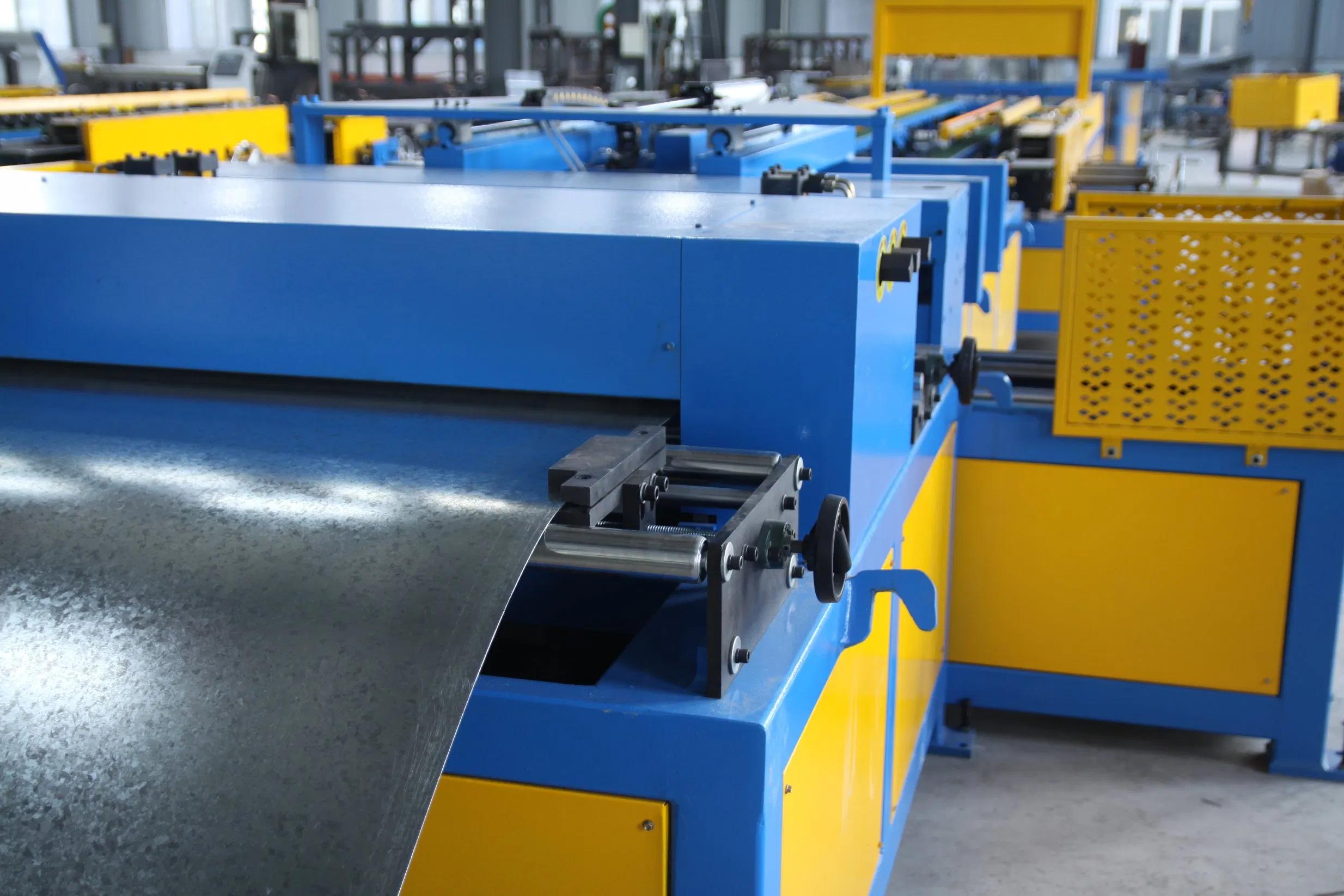
A duct production line may include shearing, punching, laser cutting, or other blank-preparation equipment. Automated feeding and transfer systems can connect these operations with downstream forming stations.
For high-volume applications, coordinated handling can reduce material movement and help maintain a more predictable production sequence.
A duct line should be configured around the product family and expected output rather than automation level alone.
Manual or semi-automatic equipment can suit smaller production batches, frequent design changes, and manufacturers that produce a varied range of duct components.
This configuration may offer flexibility when operators need to adjust setups for different sheet sizes, flange profiles, or duct geometries. However, output and repeatability depend on operator skills, setup procedures, and material handling.
An automatic duct production line can coordinate cutting, forming, transfer, and selected downstream operations with reduced manual intervention.
Depending on the equipment configuration, automation may improve production consistency, reduce handling time, and support higher output. Manufacturers should assess setup time, changeover requirements, maintenance needs, and the actual cycle time of the complete process.
High volumes of standardized duct components may justify greater automation when demand is stable and product designs are compatible with repeatable machine setups.
Before investing in an automated line, calculate the expected output, utilization rate, material waste, labor requirements, downtime, and maintenance costs. The appropriate solution should meet the production target without adding unnecessary equipment or complexity.
Material selection depends on the duct's intended function and operating environment.
Sheet-metal ducts may use galvanized steel, aluminum, or stainless steel when the design requires the associated mechanical, thermal, or corrosion-resistance properties. Plastic ducts may use suitable thermoplastic grades where low weight, complex geometry, or integration with molded features is required.
Manufacturers should evaluate the following factors during product development:
These requirements should be defined before selecting machines or finalizing the production line layout.
Automotive air duct forming and commercial HVAC duct manufacturing share several sheet-metal fabrication techniques, but their product requirements may differ.
| Factor | Automotive air duct forming | Commercial HVAC duct manufacturing |
|---|---|---|
| Typical application | Vehicle ventilation, heating, air conditioning, and selected cooling systems | Building air distribution and ventilation |
| Common materials | Application-dependent plastics, flexible materials, or sheet metal | Galvanized steel, aluminum, stainless steel, and other specified materials |
| Product geometry | Often shaped around restricted vehicle installation spaces | Frequently rectangular or circular duct sections |
| Joining methods | May include molded connections, clips, adhesives, welding, or specified metal seams | May include Pittsburgh locks, TDF flanges, fasteners, and sealants |
| Design priorities | Packaging, weight, noise, vibration, temperature, and airflow | Airflow capacity, leakage control, structural integrity, installation, and maintenance |
| Equipment requirements | Depend on the selected material and component design | May include shearing, lock forming, flange forming, folding, and automated duct lines |
Equipment used for commercial rectangular HVAC duct production may be applicable to selected sheet-metal automotive components. However, a TDF flange forming machine or Pittsburgh lock machine should not be assumed suitable for every automotive air duct.
The part drawing, material specification, joining method, and required performance should determine the equipment configuration.
Manufacturers can improve production performance by coordinating individual operations and reducing avoidable rework.
Document material grades, sheet thicknesses, cutting dimensions, forming parameters, and inspection criteria for each product family. Standardized setups can reduce adjustment time and improve repeatability.
Efficient blank layout reduces scrap and can improve material utilization. The layout should account for part orientation, edge allowances, cutting restrictions, and downstream forming requirements.
Arrange cutting, shearing, folding, lock forming, flange forming, and assembly stations to minimize unnecessary movement. Buffer capacity between operations should reflect differences in cycle time and production demand.
Regular inspection of tooling, rollers, blades, guides, and machine alignment helps reduce defects caused by wear or incorrect settings. Preventive maintenance also helps limit unplanned downtime.
Monitor scrap rates, rework, cycle times, downtime, and dimensional inspection results. These measurements help identify process bottlenecks and determine whether automation or equipment changes would provide a measurable benefit.
Junsai Group provides industrial machinery and automation solutions for manufacturing applications. When evaluating an automotive air duct forming project, the first step is to define the product and identify the processes required to manufacture it.
For sheet-metal duct components, the equipment configuration may involve cutting or shearing, folding, seam forming, flange forming, and assembly. For plastic automotive air ducts, a different production route may be required, such as injection molding, extrusion, or another suitable forming process.
To assess the appropriate solution, manufacturers should prepare:
This information supports a more accurate assessment of machine capacity, process compatibility, tooling, and production-line integration.
Junsai Group can help manufacturers evaluate their equipment requirements and identify suitable machinery configurations for the intended production process.
Automotive air duct forming is the process of shaping materials into ducts that guide air through vehicle ventilation, heating, air conditioning, or selected cooling systems. Depending on the design, manufacturing may involve sheet-metal cutting, folding, seam forming, assembly, plastic molding, or other material-specific processes.
Sheet-metal HVAC duct manufacturing may use shearing machines, folding machines, Pittsburgh lock forming machines, TDF flange forming machines, punching equipment, and laser cutting systems. The required equipment depends on the duct geometry, material, connection method, and production volume.
A Pittsburgh lock is an interlocking sheet-metal seam used to join compatible duct edges. A Pittsburgh lock forming machine prepares the seam profile, which is then assembled to create the required duct joint. Its suitability depends on the duct design and specified joint performance.
TDF flange forming machines produce compatible flange profiles on rectangular sheet-metal duct sections. These flanges provide a connection interface for joining duct sections using the specified assembly components. TDF equipment is commonly associated with rectangular HVAC ductwork and should be selected according to the actual product requirements.
Yes. An automatic duct production line can manufacture rectangular ducts when the machine configuration supports the required dimensions, material thickness, seam profiles, and connection methods. Depending on the system, the line may integrate cutting, folding, lock forming, flange forming, and material handling.
No. Automotive air ducts may be made from plastics, flexible materials, sheet metal, or combinations of materials. The selection depends on the operating temperature, airflow requirements, available space, noise and vibration considerations, weight targets, and component specifications.
Capacity can be improved through suitable machine sizing, optimized cutting layouts, standardized setups, coordinated material handling, reduced changeover time, and preventive maintenance. Automation may support higher output for standardized products, but the complete production cycle and downstream bottlenecks must be considered.
Consider the material grade, maximum sheet thickness, bend length, required angles, part geometry, positioning accuracy, tooling compatibility, and expected production volume. The machine should support the dimensions and forming operations specified in the product drawings.
Automotive air duct forming covers components used in vehicle airflow systems, including plastic, flexible, and sheet-metal designs. Rectangular HVAC duct manufacturing generally refers to forming rectangular sheet-metal ducts used in building ventilation systems. Although some fabrication techniques overlap, the materials, joint designs, installation conditions, and equipment requirements can differ.
Manufacturers should provide the product drawings, material specification, sheet thickness, duct dimensions, seam and flange requirements, target production volume, quality criteria, and automation expectations. These details help determine the required cutting, shearing, folding, forming, and handling equipment.
Efficient duct production starts with the correct manufacturing process and equipment configuration. Whether your project involves sheet-metal duct components, rectangular HVAC duct sections, or specialized automotive airflow components, the production solution should match the material, geometry, joining method, and expected output.
Junsai Group supports manufacturers evaluating industrial forming machinery and automation options for their production requirements.
Contact Junsai Group to discuss your automotive air duct forming project, share your technical drawings, and identify a suitable equipment configuration for your manufacturing operation.