Quote now
EN

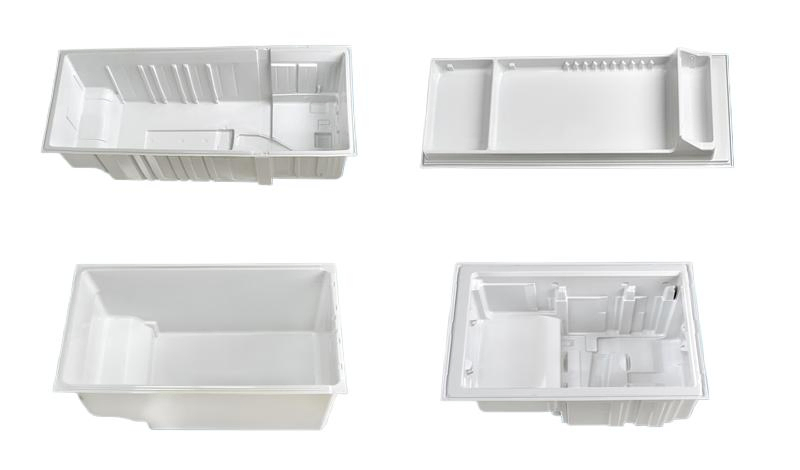
Plastic packaging thermoforming is widely used to manufacture blister packaging, product trays, clamshells, protective inserts, and other formed plastic packages. By heating thermoplastic sheet and shaping it with a mold, manufacturers can produce packaging designed around a product’s dimensions, appearance, handling requirements, and distribution conditions.
For packaging manufacturers, choosing the right thermoforming equipment involves more than selecting a high-speed packaging machine. Material utilization, tooling design, forming accuracy, trimming performance, operator requirements, and downstream packaging operations all influence production efficiency and long-term operating costs.
Junsai Group provides industrial machinery and automation solutions for manufacturing applications. For plastic packaging projects, equipment selection should be based on the required package design, material, production volume, forming method, and level of automation. A well-matched system can help manufacturers maintain packaging quality, manage labor cost, and establish a production process suited to current demand and future growth.
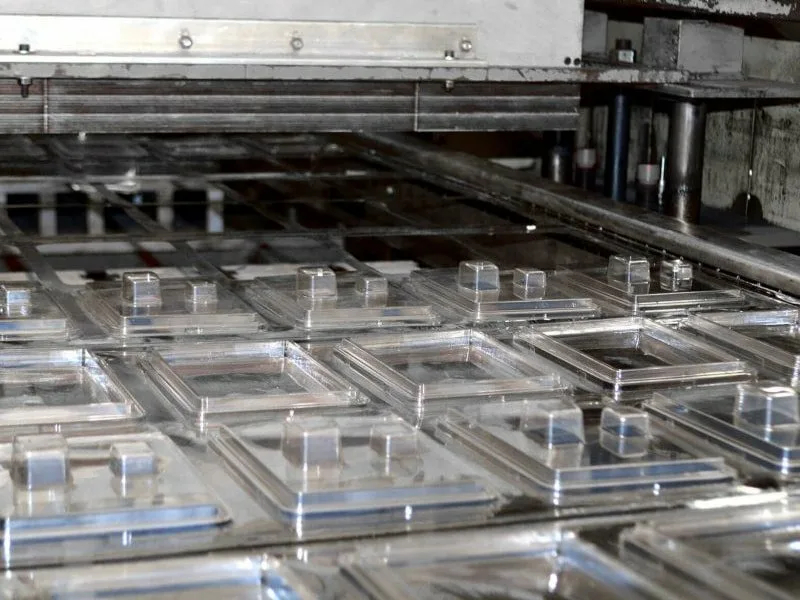
Plastic packaging thermoforming is a manufacturing process in which a thermoplastic sheet or film is heated until it becomes formable, shaped over or into a mold, cooled, and trimmed to produce a finished packaging component. Depending on the application, the process may use vacuum, positive air pressure, or mechanical assistance to form the plastic.
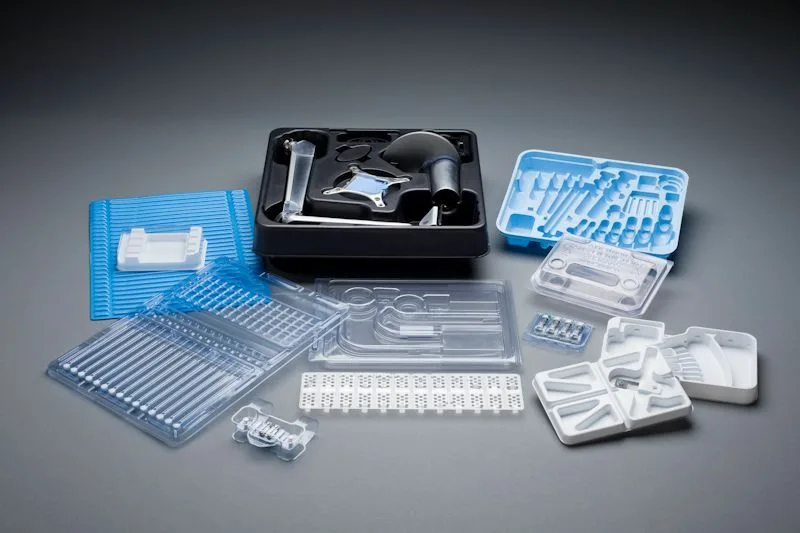
The process is used to manufacture a wide range of packaging products, including blister packs, transparent clamshells, product trays, retail display packaging, protective inserts, and custom packaging cavities. The finished package can be designed to hold an item in position, protect it during transport, display it to customers, or prepare it for a subsequent filling and sealing operation.
Plastic packaging thermoforming is particularly useful when packaging needs a defined three-dimensional shape. The mold determines the package geometry, while material selection and process settings affect clarity, stiffness, wall thickness, dimensional consistency, and appearance.
Depending on the product and production setup, thermoforming may be performed as a standalone forming operation or integrated with cutting, stacking, filling, sealing, and inspection equipment.
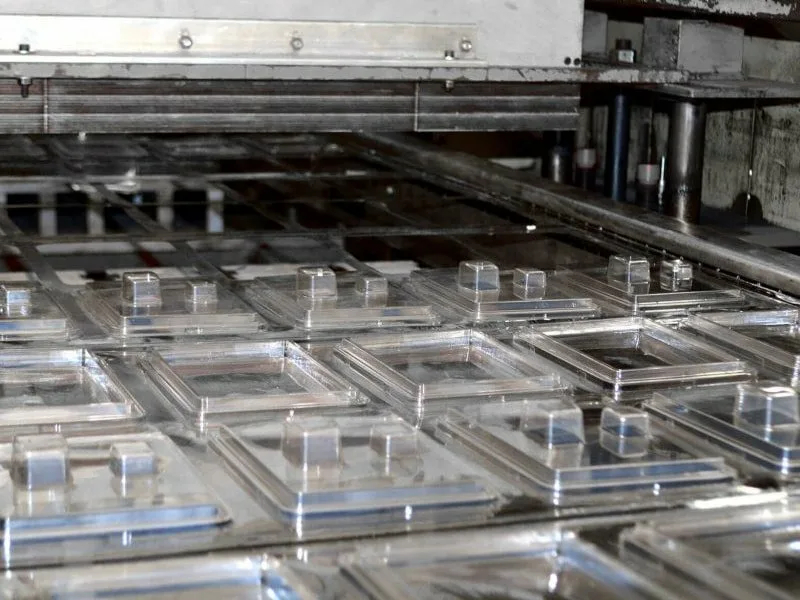
Thermoforming supports packaging requirements across retail, consumer goods, electronics, industrial components, food products, and selected medical and pharmaceutical applications. Each application has its own requirements for material compatibility, product protection, presentation, and production volume.
Blister packaging consists of a formed plastic cavity that holds a product and is commonly combined with a backing card, foil, paperboard, or another sealing material. The cavity can be designed to match the product’s dimensions and help keep it in place during handling and display.
Typical applications include hardware, small tools, electronic accessories, consumer products, and selected pharmaceutical or medical products.
A blister package may require transparent material for product visibility, a controlled cavity depth, a flat sealing flange, or a specific opening method. These requirements should be considered when designing the mold and choosing the material.
For pharmaceutical blister packing, the packaging structure must be selected for the product’s intended use. Moisture and oxygen protection, chemical compatibility, seal integrity, and regulatory requirements may determine whether a particular thermoformed structure is suitable.
Retail packaging often needs to combine product visibility with a secure fit and an attractive presentation. Thermoforming can produce transparent covers, clamshells, display trays, and shaped inserts for consumer goods.
A custom package can reduce unnecessary movement inside the pack and make the product easier to display. Package designers should also consider how the product is loaded, how the package closes, whether customers need easy access, and how the finished package will be transported and stored.
Thermoformed plastic trays and containers are used for selected food packaging applications. The package may need to accommodate filling equipment, stacking, sealing, refrigeration, or distribution conditions.
Material selection should reflect the food type, temperature range, contact conditions, and applicable food-contact requirements. A plastic grade suitable for one application should not automatically be assumed suitable for another.
For modified-atmosphere or other sealed food packaging, the complete package structure and sealing process must be assessed for the intended shelf-life and distribution requirements.
Electronics and industrial products may require trays or custom inserts that keep components separated and reduce movement during transport. Thermoformed packaging can be designed around the dimensions of the item, including selected cavities for connectors, assemblies, tools, or delicate parts.
Where electrostatic discharge protection is needed, the specified material or surface treatment must provide the required electrical properties. Ordinary plastic thermoforming does not automatically provide ESD protection.
Medical packaging may include formed trays, protective inserts, and blister structures for holding devices or other products. Requirements can vary significantly depending on whether the package is intended for transport protection, organization, unit-dose packaging, or a sterile barrier system.
For sterile medical device packaging, the material, sealing process, sterilization compatibility, package integrity, and intended storage conditions must be assessed together. The fact that a package is thermoformed does not establish that it is sterile or suitable for a particular medical application.
The production process begins with material and package design, followed by heating, forming, cooling, trimming, and quality inspection. Depending on the application, additional stages may include stacking, product loading, sealing, labeling, and final packaging.
The package design defines the dimensions, cavity shape, wall geometry, trim line, flange, and other features required for the finished product. Engineers should review the product’s dimensions and the packaging function before committing to production tooling.
Design considerations include draw depth, draft angles, corner radii, material distribution, demolding, stacking, and the available space between adjacent cavities. These features influence how easily the sheet forms and how consistently the finished package can be trimmed.
For high-volume production, tooling should also be evaluated in relation to the number of cavities, forming cycle, cutting arrangement, and downstream handling equipment.
Thermoplastic sheet may be supplied from rolls or as individual sheets, depending on the machine design and packaging format. The material is heated until it reaches a suitable forming range.
Heating uniformity affects how the material stretches into the mold. Uneven heating can lead to inconsistent wall thickness, poor cavity definition, surface defects, or differences between cavities.
The correct heating profile depends on the polymer, sheet thickness, package geometry, machine configuration, and production speed. Settings should be established through material-specific trials rather than applied identically to every plastic.
Once the sheet reaches the required condition, it is shaped against a mold.
Vacuum forming draws the heated sheet against the mold through reduced pressure. Pressure forming uses positive air pressure to push the material against the mold, potentially improving the reproduction of fine surface details. Mechanical forming assistance may also be used when the package geometry requires better control of material distribution.
The appropriate forming method depends on the required shape, surface detail, material properties, package dimensions, and cost target.
After forming, the plastic is cooled sufficiently to retain the intended shape. The formed web then passes through a trimming or cutting operation that separates individual packages or creates the required package perimeter.
Cutting accuracy affects edge quality, package dimensions, stacking, and the fit of subsequent sealing or assembly operations. Tooling wear and inconsistent material behavior should be monitored because they can affect trimming results over time.
Depending on the application, formed packages may be stacked automatically or transferred to a separate filling and sealing line.
Blister packaging may require product loading followed by the attachment of a backing card, foil, or another lidding material. Other packages may be used as protective trays or inserts without a sealing operation.
When forming and packaging are integrated into a single system, the transfer between stations must be coordinated. The forming machine, feeder, sealing equipment, and cutting station should operate at compatible rates to avoid bottlenecks.
Finished packaging should be checked against defined requirements. Typical checks include cavity dimensions, wall appearance, trimming quality, package fit, stacking behavior, and seal performance where applicable.
Inspection methods depend on the product and the function of the package. A transparent retail blister may require appearance and dimensional checks, while pharmaceutical or sterile medical packaging may require additional process controls and package-integrity testing.
The most suitable packaging machine depends on the type of package being produced and the operations that must be completed. A thermoforming machine may perform the forming and trimming stages, while a complete packaging system may also include feeding, filling, sealing, printing, stacking, or conveying equipment.
A semi automatic system may suit manufacturers producing smaller batches, handling frequent product changes, or introducing a new packaging format.
Some operations are automated, while an operator performs other tasks such as loading products, transferring packages, or managing changeovers. This configuration may reduce the initial investment compared with a more integrated system, depending on the equipment and application.
However, the actual labor requirement depends on the workflow, product handling, safety requirements, and expected output. A semi-automatic machine is not necessarily the lowest-cost option when labor availability or production demand changes.
Automated systems can coordinate multiple production stages, reducing the need for repeated manual handling and helping maintain consistent timing between operations.
Depending on the machine configuration, automation may include roll feeding, sheet heating, forming, trimming, stacking, product transfer, filling, sealing, and inspection. Not every packaging application requires all these functions in one line.
Manufacturers should evaluate the complete system rather than focusing only on the forming machine. The output of the line is affected by the slowest operation, changeover time, material availability, maintenance, and quality-related interruptions.
A high speed packaging machine is designed to achieve a high production rate under specified operating conditions. Actual output depends on package dimensions, material, cavity count, forming depth, sealing requirements, cutting arrangement, and the stability of the production process.
A machine's nominal speed should not be treated as a guarantee of saleable output. Manufacturers should confirm performance using the intended material and package design, including start-up, routine operation, product changes, reject rates, and downstream handling.
For high-volume applications, production trials provide a more useful basis for comparing equipment than maximum cycle speed alone.
Material choice affects package clarity, stiffness, impact resistance, chemical compatibility, forming behavior, and total material cost. The material must be suitable for both the thermoforming process and the package’s intended use.
| Material | Common characteristics | Selection considerations |
|---|---|---|
| PET and APET | Transparency and use in many tray, blister, and retail packaging applications | Confirm the grade, forming requirements, and intended contact conditions |
| PETG | Clarity and formability for selected packaging designs | Evaluate chemical compatibility and application-specific performance |
| PVC | Formability and clarity in selected packaging applications | Consider the product requirements, recycling options, and relevant market restrictions |
| HIPS | Formability and suitability for selected opaque or impact-modified packaging designs | Evaluate stiffness, impact performance, and surface requirements |
| Polypropylene (PP) | Low density and chemical resistance in many applications | Control shrinkage and dimensional behavior; verify temperature requirements |
| Polycarbonate (PC) | Impact resistance and potential for transparent formed parts | Confirm grade suitability, chemical exposure, and cost |
| Polyethylene (PE) | Chemical resistance in many environments | Consider stiffness, forming behavior, and dimensional stability |
This is a general comparison. Performance can vary between grades, suppliers, sheet thicknesses, and processing conditions. Packaging intended for food, pharmaceutical, or medical use requires material selection based on the specific application and applicable requirements.
Material selection should also consider how much scrap is generated during trimming, whether production scrap can be recovered, the availability of recycled content where appropriate, and any restrictions that apply to the finished package.
Packaging quality depends on the relationship between package design, material, tooling, machine settings, and downstream operations. Improving one part of the process may not solve a problem caused by another stage.
The heating system should deliver a repeatable temperature profile across the forming area. Variations in heating can cause differences in cavity depth, wall thickness, and appearance. Material-specific process settings and regular equipment checks help maintain stable forming conditions.
Mold design influences material flow, cavity definition, release, and dimensional consistency. Appropriate draft angles and radii can make forming and demolding more reliable, while the layout of multiple cavities affects sheet utilization and production output.
A fast forming cycle does not necessarily result in high overall production efficiency if trimming, stacking, or product transfer cannot keep up. The line should be assessed as a connected production process, with attention to station timing, material movement, and common sources of downtime.
Material utilization affects the cost of each finished package. Package layout, cavity spacing, sheet dimensions, trim design, and material thickness influence the amount of usable product obtained from each sheet or roll.
Manufacturers should evaluate material consumption alongside package performance. Reducing thickness or changing the layout may lower material use, but any change must preserve the package’s required stiffness, protection, sealing, and dimensional characteristics.
Inspection criteria should be defined before production begins. Depending on the package, this may include dimensions, appearance, edge quality, cavity depth, package fit, or seal integrity.
Monitoring defects over time helps identify whether variation originates from material, tooling, heating, forming, trimming, or downstream handling. Corrective action should address the source of the variation rather than relying only on final inspection.
Labor cost is one element of the total cost of a packaging operation. Equipment purchase price, tooling, material consumption, energy, maintenance, changeovers, scrap, and downtime also affect the economics of production.
A semi-automatic machine may offer a practical entry point for limited volumes or varied product formats. An automated system may reduce repetitive manual tasks and support higher output when the production demand is stable enough to justify the additional equipment and integration work.
Before choosing a system, manufacturers should estimate the cost per acceptable package rather than compare machine prices alone. The calculation should include:
Long term cost effectiveness depends on how well the equipment matches the actual product mix and demand. An oversized system may leave capacity unused, while an undersized system may require additional shifts or create production bottlenecks.
A realistic assessment should use the expected product range, shift pattern, annual volume, and quality requirements. Where possible, validate these assumptions through trials using the intended material and package design.
Thermoforming is one option within a wider range of packaging manufacturing methods. The right process depends on package geometry, material, required features, production volume, and tooling budget.
| Process | Typical applications | Main considerations |
|---|---|---|
| Plastic thermoforming | Blister packs, trays, clamshells, inserts, and formed covers | Suitable sheet material, mold design, material distribution, and trimming |
| Injection molding | Rigid plastic containers, closures, and components with complex integrated features | Mold investment, part geometry, and production volume |
| Flexible packaging conversion | Pouches, flexible bags, and film-based packaging | Film structure, sealing method, barrier performance, and filling equipment |
| Paperboard converting | Folding cartons, sleeves, backing cards, and display packaging | Board grade, print quality, folding geometry, and assembly |
These processes can also be combined. A blister package, for example, may use a thermoformed plastic cavity with a paperboard card or foil lid. The overall package design should account for how each material and process affects protection, appearance, sealing, cost, and end-of-life handling.
A suitable packaging solution should meet the required output without compromising package performance or creating unnecessary operating costs. High-volume production requires attention to equipment capacity, material supply, changeover planning, maintenance access, and downstream handling.
The following factors help guide equipment selection:
Package dimensions and geometry: Establish the forming area, cavity depth, trim outline, and required dimensional tolerances.
Material and thickness: Confirm the polymer grade, sheet format, thickness range, and material behavior during heating and forming.
Target output: Define the expected number of acceptable packages per shift or year, including normal changeovers and planned downtime.
Automation level: Decide which operations should be automated and which may remain manual based on volume, product variation, and staffing.
Quality requirements: Identify the checks needed for package appearance, dimensions, fit, sealing, and intended product protection.
Future product changes: Consider whether the line must accommodate different cavity designs, package sizes, or material specifications.
Equipment specifications should be confirmed against the actual production requirements. Sample trials and a review of the complete production process help establish whether the selected configuration can deliver the intended result.
Junsai Group provides industrial machinery and automation solutions for manufacturing applications. For plastic packaging thermoforming projects, the equipment review should begin with the required package, the selected thermoplastic material, and the expected production conditions.
A practical project assessment can include:
These details help establish the machine configuration and tooling requirements for further evaluation. Where performance targets are important, production trials should confirm forming quality, dimensional consistency, actual cycle time, material utilization, and downstream compatibility.
For manufacturers planning to upgrade a packaging process or develop a new product package, Junsai Group can discuss machinery requirements based on the intended application. Machine capabilities, production rates, and material compatibility should be confirmed against the final project specifications before equipment selection.
Plastic packaging thermoforming is a process that heats thermoplastic sheet, forms it over or into a mold, cools it, and trims it into a finished package. Common products include blister packs, trays, clamshells, and protective inserts.
Thermoforming can produce a wide range of packaging products, including retail blisters, transparent clamshells, food trays, electronics inserts, industrial component trays, and selected medical packaging. The appropriate design depends on material properties, package geometry, and the product’s intended use.
The terms are often used interchangeably. Blister packaging usually refers to the package structure, while blister packing may refer to the process of placing products into blister cavities and completing the package. In production planning, it is useful to distinguish the thermoforming stage from filling, sealing, and final cutting.
A high-speed packaging machine can increase output when forming, trimming, filling, sealing, and handling operations remain synchronized. Actual production efficiency also depends on changeovers, downtime, material availability, reject rates, and the ability of downstream stations to keep pace.
A semi-automatic system may suit smaller batches, frequent product changes, or lower initial production demand. A fully automated system may suit stable, higher-volume production where reduced manual handling and coordinated operations justify the investment. The best choice depends on labor requirements, product variation, expected output, and total operating cost.
PET, APET, PETG, PVC, HIPS, polypropylene, polycarbonate, and selected polyethylene grades are used in different thermoforming applications. The material must be chosen according to the package’s stiffness, clarity, chemical compatibility, temperature exposure, forming requirements, and intended use.
Labor cost may be reduced by automating repetitive operations, improving material handling, shortening changeovers, reducing rework, and coordinating the forming and downstream stations. The financial benefit should be evaluated against equipment investment, maintenance, staffing needs, and actual production volume.
Packaging quality depends on material consistency, heating uniformity, mold design, forming conditions, cooling, trimming accuracy, and downstream handling. Packages that require sealing must also be evaluated for the performance of the complete sealing process.
Yes, when the package design, material, tooling, equipment, and production controls are suited to the application. Long-term performance depends on repeatable process settings, maintenance, material supply, tooling condition, and monitoring of product quality.
Start with the package drawing, material, sheet thickness, forming area, target production volume, and required operations. Then evaluate automation, tooling, cycle time, trimming, downstream integration, maintenance, and inspection requirements. Confirm key performance expectations through trials where appropriate.
The right thermoforming setup combines package design, material selection, forming technology, trimming accuracy, and downstream handling into a coordinated production process. Evaluating these factors together helps manufacturers improve production efficiency, control labor cost, and maintain packaging quality over the long term.
Contact Junsai Group to discuss your plastic packaging application, production volume, material requirements, and automation objectives. Providing package drawings and target output details will help establish a practical basis for evaluating the required machinery and production configuration.