





Plastic box forming solutions help manufacturers produce durable, lightweight, and accurately shaped plastic boxes for packaging, storage, industrial handling, retail display, and product protection. Depending on product design, material requirements, production volume, and budget, manufacturers can choose from vacuum forming, injection molding, blow molding, rotational molding, and other plastic molding technologies.
For products made from flat thermoplastic sheets, vacuum forming and other thermoforming methods provide a flexible way to manufacture plastic boxes in a wide range of sizes, depths, wall profiles, and surface finishes. With suitable thermoforming machines, well-designed molds, and controlled processing conditions, manufacturers can improve product consistency, manage material usage, and optimize production efficiency.
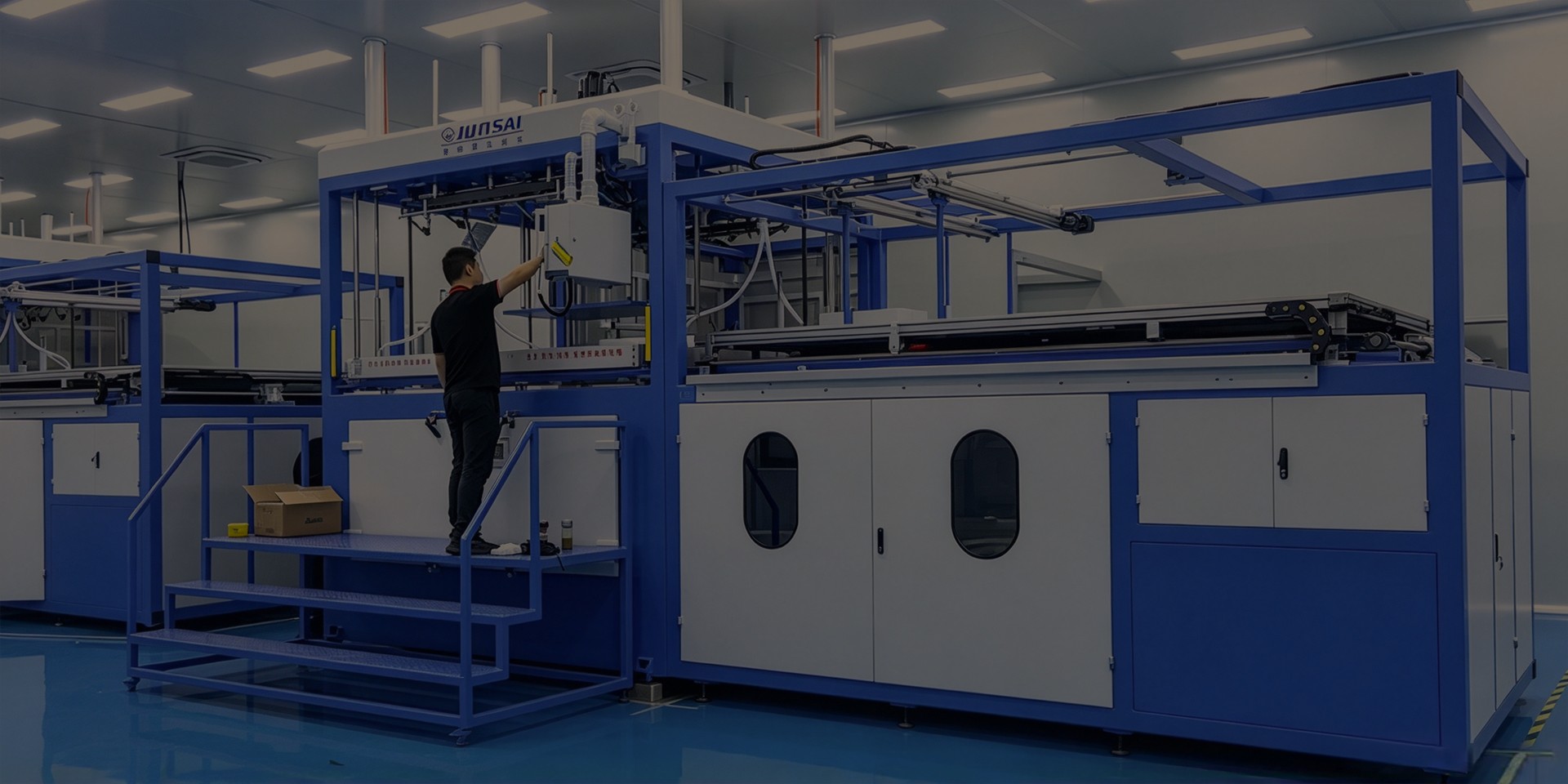
Junsai Group provides thermoforming automation solutions for manufacturers seeking to improve plastic forming operations and develop equipment configurations that match their product specifications and production goals.
What Are Plastic Box Forming Solutions?
Plastic box forming solutions are manufacturing processes and equipment systems used to convert plastic materials into boxes, trays, containers, and protective enclosures. Depending on the required geometry, material properties, and production volume, these solutions may use a heated plastic sheet, molten plastic injected into a mold, or plastic powder processed inside a rotating mold.
For sheet-based products, the thermoforming process typically involves heating a plastic sheet until it becomes formable, shaping it over or against a mold using vacuum or pressure, cooling the part, and trimming excess material.
The most suitable forming process depends on several factors:
- Box dimensions, depth, and wall thickness
- Plastic material and mechanical performance requirements
- Annual production volume and target cycle time
- Mold complexity and surface finish
- Tooling investment and operating costs
- Requirements for trimming, stacking, and automated handling
Selecting the right process helps manufacturers balance product quality, manufacturing flexibility, and total production costs.
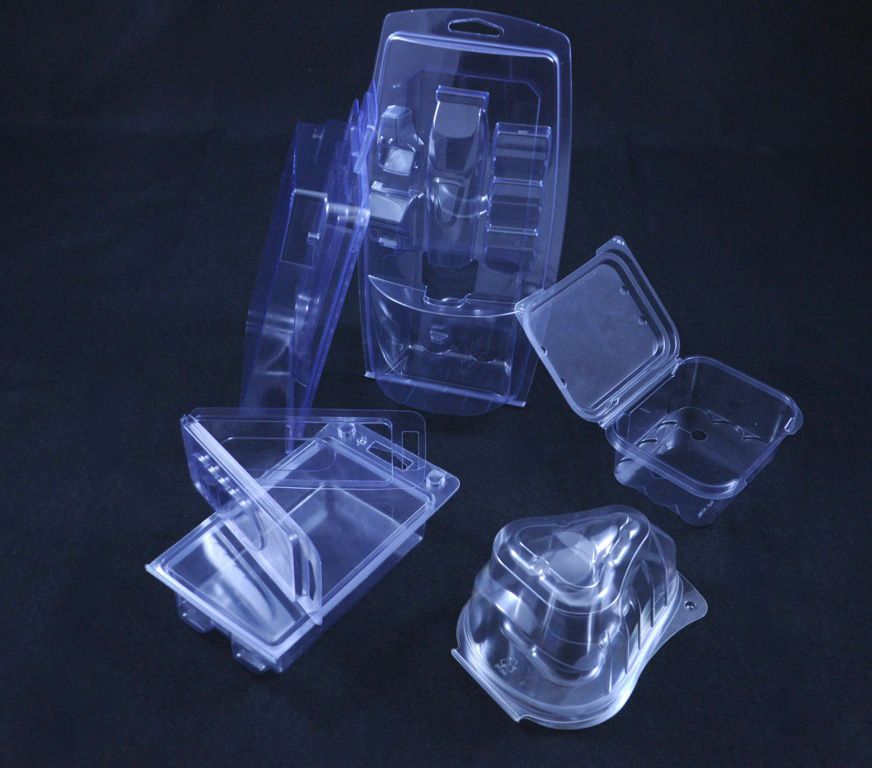
What Is the Thermoforming Process for Plastic Boxes?
The thermoforming process converts a flat thermoplastic sheet into a three-dimensional product through controlled heating and mold forming. It is commonly used to manufacture packaging boxes, storage trays, protective cases, component containers, and industrial packaging.
The process starts with a suitable plastic sheet. The sheet is heated to its forming temperature, shaped against a mold, cooled, and removed for finishing. Depending on the equipment configuration, manufacturers can integrate sheet feeding, heating, forming, trimming, and part handling into an automated production line.
1. Plastic Sheet Selection and Feeding
The production process begins with selecting a plastic sheet that meets the product's performance and appearance requirements. Common materials include ABS, HIPS, PET, PETG, and PP, depending on the application.
Material selection affects impact resistance, stiffness, chemical compatibility, transparency, formability, and cost. Sheet thickness, surface finish, and material consistency should also be considered before production.
The selected plastic sheet is then loaded into the thermoforming machine manually or through an automated feeding system.
2. Sheet Heating
The plastic sheet passes through a heating station, where it is brought to a temperature suitable for forming. Depending on the machine design, the heating system may use ceramic heaters, infrared heating elements, or other industrial heating technologies.
Uniform heating helps the sheet stretch consistently during forming. Uneven temperatures can lead to thin corners, inconsistent wall thickness, surface defects, or incomplete mold reproduction.
For deep plastic boxes, manufacturers may need to adjust heating zones and temperature settings to control material distribution across the mold.
3. Mold Forming
Once the sheet reaches the appropriate forming temperature, it is positioned over or against the mold. Vacuum forming uses negative pressure to draw the softened sheet against the mold surface. Pressure-assisted methods can use additional air pressure to improve detail reproduction or accommodate more demanding geometries.
The mold determines the box's dimensions, depth, surface texture, and other design features. Mold venting, draft angles, forming depth, and material distribution should be evaluated during product development.
4. Cooling and Demolding
After the plastic reaches the required shape, it is cooled until it can maintain its dimensions during removal. Cooling time depends on material type, sheet thickness, mold temperature, and product geometry.
Controlled cooling helps reduce warping, dimensional changes, and deformation during demolding. The cooling process should be appropriate for the material and product design to support consistent output.
5. Trimming and Finishing
Many thermoformed boxes require trimming to remove excess plastic around the formed part. Depending on the product, finishing operations may include edge trimming, hole cutting, drilling, labeling, stacking, or assembly.
Trimming can be performed using dedicated tools, CNC equipment, robotic systems, or integrated cutting stations. The appropriate method depends on dimensional tolerances, production volume, and required edge quality.
6. Inspection and Packaging
Finished boxes are inspected for dimensions, wall thickness, surface quality, edge condition, and functional performance. Quality checks can be performed manually or through automated inspection systems.
After inspection, the products may be stacked, counted, packed, or transferred to the next production stage.
Which Forming Process Is Best for Plastic Boxes?
Different plastic manufacturing technologies serve different product requirements. Vacuum forming is often suitable for sheet-based boxes and trays, while injection molding, blow molding, and rotational molding are better suited to specific geometries and production needs.
Vacuum Forming
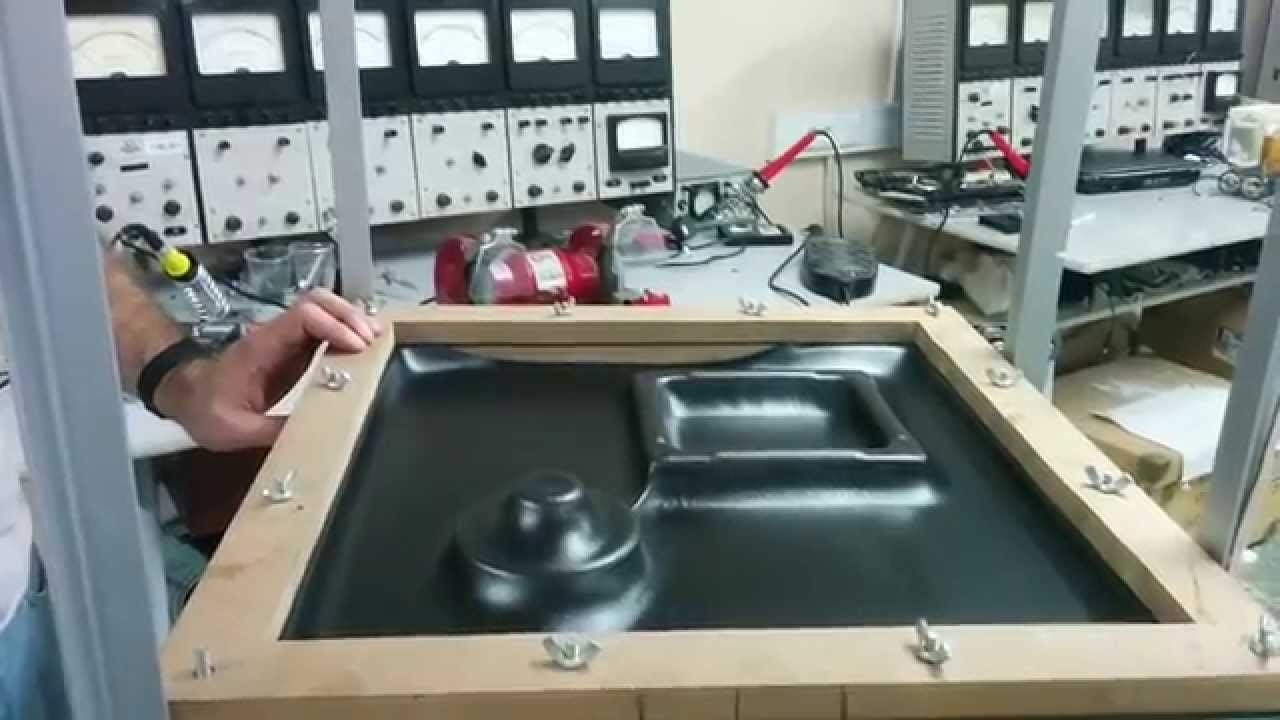
Vacuum forming heats a plastic sheet and draws it against a mold using vacuum pressure. It is suitable for large trays, packaging boxes, protective covers, and relatively shallow or moderately deep containers.
Best suited for: sheet-based products, larger parts, and applications where tooling flexibility and material efficiency are important considerations.
Injection Molding
Injection molding forces molten plastic into a closed mold cavity, where it cools and solidifies. This molding process can produce detailed parts with repeatable dimensions and complex features.
Best suited for: high-volume production, complex geometries, integrated product features, and applications requiring consistent repeatability.
Blow Molding
Blow molding forms hollow plastic products by expanding softened plastic against a mold using air pressure. It is widely used for bottles, tanks, and other hollow containers.
Best suited for: hollow containers with geometries that can be produced through a controlled blowing process.
Rotational Molding
Rotational molding generally uses plastic powder inside a mold that is heated and rotated around multiple axes. The material coats the mold's internal surface to form a hollow product.
Best suited for: large hollow boxes, heavy-duty containers, and products requiring relatively thick walls without conventional injection pressure.
Thermoforming vs. Injection Molding, Blow Molding, and Rotational Molding
| Comparison factor | Thermoforming / vacuum forming | Injection molding | Blow molding | Rotational molding |
|---|---|---|---|---|
| Starting material | Plastic sheet | Plastic pellets, usually melted before injection | Plastic melt or a suitable parison | Commonly plastic powder |
| Typical products | Open boxes, trays, covers | Complex molded parts | Hollow containers | Large hollow products |
| Tooling considerations | Often economical for suitable sheet-based parts | Can require substantial mold investment | Requires suitable molds and blowing equipment | Mold and heating-cycle requirements vary |
| Production characteristics | Flexible for many sheet-based designs | Well suited to high-volume repeat production | Suited to specific hollow-container geometries | Often suited to large hollow products |
| Main design considerations | Sheet stretching and trimming | Gate design, shrinkage, and mold complexity | Parison control and wall distribution | Wall uniformity and cycle time |
No single molding process suits every plastic box. Manufacturers should compare the complete production process, including material cost, tooling, cycle time, finishing, scrap, and quality requirements, before choosing a technology.
Advantages of Thermoforming for Plastic Box Manufacturing
Thermoforming offers several advantages for manufacturers producing plastic boxes from sheet materials. Its suitability depends on product design, production volume, material, and machine configuration.
1. Cost-Effective Tooling for Suitable Applications
Vacuum forming molds can be less expensive and faster to develop than some injection molds, particularly for large, relatively simple sheet-based parts. This can make thermoforming a cost effective option for product development, medium-volume production, and applications where mold revisions are expected.
Actual savings depend on mold construction, production volume, material consumption, and finishing requirements.
2. Flexible Product Dimensions
Thermoforming can accommodate a wide range of box dimensions, from small packaging inserts to large industrial trays and protective covers. Appropriate machine dimensions, heating capacity, and mold layouts determine the practical size range.
This flexibility allows manufacturers to develop different product formats without relying on a single standard box design.
3. Broad Material Options
Depending on the application and equipment, manufacturers can use ABS, HIPS, PET, PETG, PP, and other thermoformable plastics.
Each material offers different characteristics. ABS is often selected for impact resistance, HIPS for economical packaging and general-purpose parts, and PET or PETG for applications requiring clarity or particular packaging properties. Material performance should be confirmed for the actual grade and operating environment.
4. Efficient Production of Large Parts
Vacuum forming can be suitable for large-area products that would require substantial tooling and equipment investment using other methods. Sheet-based forming also supports designs with broad surfaces and relatively shallow cavities.
For deep-draw boxes, manufacturers should evaluate sheet thickness, stretching behavior, mold geometry, and the risk of thin areas before confirming the process.
5. Automation Potential
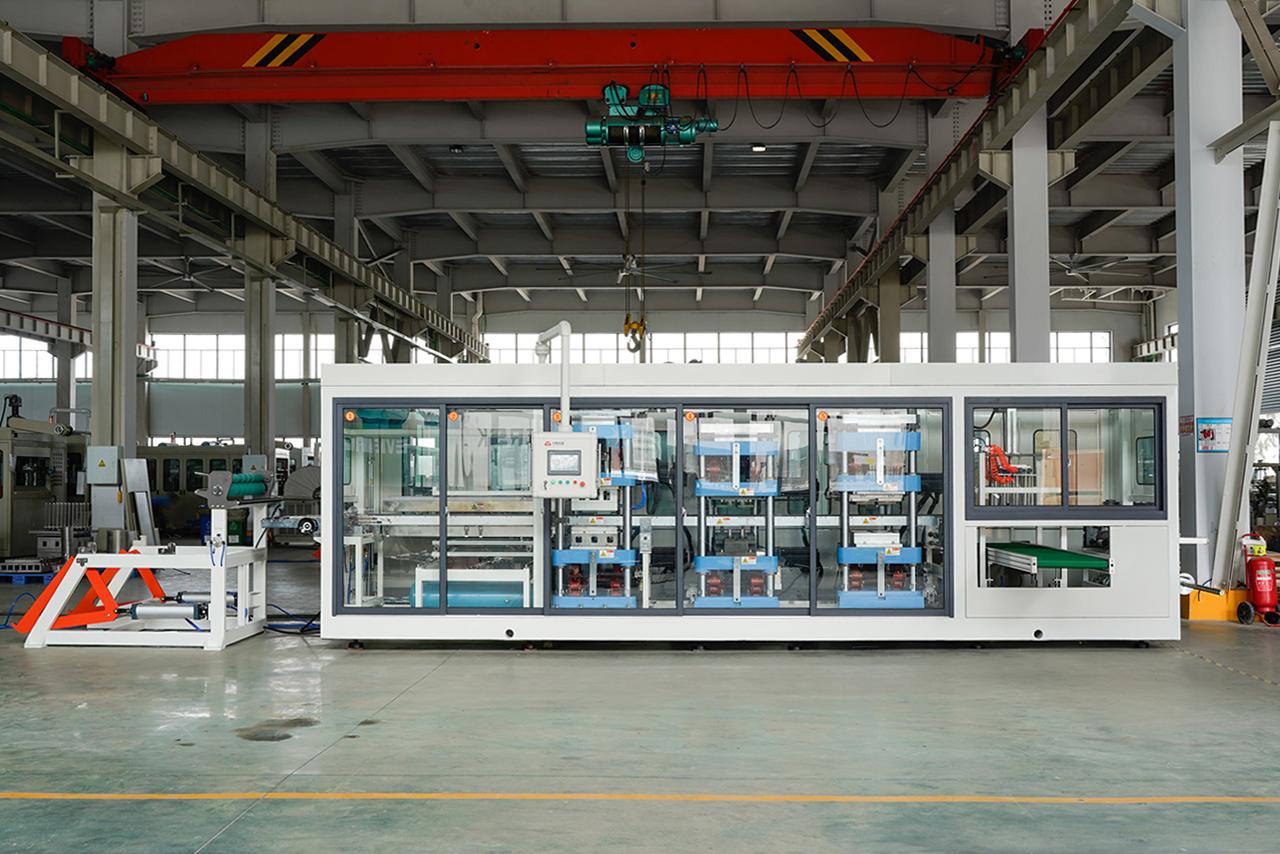
Modern thermoforming machines can incorporate automatic sheet feeding, heating control, forming, trimming, stacking, and part transfer. A well-configured system can reduce repetitive manual handling and improve production consistency.
Automation requirements should be defined according to output targets, product variation, and the level of integration needed with upstream and downstream equipment.
6. Material Utilization and Scrap Management
Thermoforming uses sheet material, and trimming often produces offcuts. Manufacturers can improve material utilization by optimizing sheet layouts, nesting multiple parts where practical, controlling forming depth, and minimizing rejected products.
Scrap recycling depends on the plastic type, contamination, material specifications, and applicable regulations. Recycled material should only be reused where product performance and quality requirements permit.
Plastic Box Forming Applications
Plastic box forming solutions support a wide variety of packaging and industrial applications.
Packaging Boxes and Inserts
Thermoformed packaging boxes and inserts protect products during storage, shipping, and retail display. Depending on the material and design, they can hold electronics, consumer goods, accessories, and packaged components.
Industrial Storage Trays
Formed trays can organize parts during manufacturing, assembly, warehouse handling, and internal logistics. Compartments and locating features help keep components separated and organized.
Automotive and Mechanical Components
Large formed plastic boxes, covers, and protective housings can be used for component storage, transport, and selected equipment applications. Material and design selection should reflect the operating environment and required mechanical performance.
Medical and Laboratory Packaging
Suitable thermoformed trays and boxes can organize devices, instruments, and laboratory supplies. Applications with medical or sterile-packaging requirements need materials, manufacturing controls, and validation appropriate to the intended use.
Reusable Industrial Containers
Depending on the design and material, plastic forming technologies can produce storage boxes, protective enclosures, and handling containers for manufacturing and distribution.
How to Select the Right Thermoforming Machines
Choosing thermoforming machines for plastic box production requires more than comparing machine prices. The machine must match the sheet dimensions, forming depth, mold design, output target, and required level of automation.
Forming Area and Product Dimensions
Confirm the maximum sheet size, mold dimensions, and usable forming area. The equipment should accommodate the largest planned box while allowing suitable spacing, clamping, and trimming.
Material and Sheet Thickness
Different thermoplastics require different heating temperatures and forming conditions. Check whether the machine can heat the specified materials evenly across the full sheet and maintain stable process settings during production.
Forming Depth and Geometry
Deep boxes and products with narrow cavities may require plug assistance, pressure assistance, specialized mold design, or other process adjustments. The equipment supplier should assess the actual part geometry rather than relying only on overall box dimensions.
Heating and Temperature Control
Uniform heating supports consistent material distribution. Evaluate heating-zone control, temperature monitoring, adjustment flexibility, and the ability to repeat proven process settings.
Output and Cycle Time
Estimate the required number of finished boxes per hour or shift. Production capacity depends on heating time, forming and cooling time, mold layout, trimming, handling, and downtime—not just the machine's nominal forming speed.
Automation and Downstream Integration
Depending on production needs, the line may include automatic sheet loading, part removal, trimming, stacking, and conveying. Integrated automation can reduce handling time, but its benefits should be evaluated against investment costs, maintenance, and product changeover requirements.
Maintenance and Technical Support
Review access to spare parts, maintenance procedures, operator training, and technical support. Appropriate service arrangements can help reduce downtime over the machine's operating life.
How to Improve Plastic Box Forming Quality and Efficiency
Product quality depends on the relationship between material properties, mold design, heating, forming pressure, cooling, and trimming. A stable production process requires these factors to be assessed together.
Reduce Wall-Thickness Variation
When a heated plastic sheet stretches over a mold, material distribution changes. Corners, deep cavities, and narrow sections may become thinner than flatter areas.
Manufacturers can investigate sheet thickness, heating patterns, forming temperature, plug-assist requirements, mold geometry, and forming speed to improve wall-thickness distribution. Trial runs and measurements of actual parts are more reliable than relying on machine settings alone.
Prevent Warping and Dimensional Changes
Warping can result from uneven heating, inconsistent cooling, unsuitable demolding conditions, or residual stresses. A review of mold temperature, cooling time, part geometry, and material behavior can help identify the cause.
Dimensional checks should be performed after the parts have cooled and stabilized under the intended inspection conditions.
Improve Surface Appearance
Surface defects can arise from sheet contamination, uneven heating, trapped air, mold surface conditions, or incorrect process settings. Keeping the sheet and mold clean, maintaining appropriate ventilation, and controlling the heating cycle can improve surface consistency.
Optimize the Forming and Trimming Cycle
Reducing cycle time should not come at the expense of dimensional accuracy or product strength. Manufacturers should measure the full production process, including sheet loading, heating, forming, cooling, trimming, and stacking.
Cycle-time improvements can then focus on the stages that constrain actual output.
Control Material Waste
Material utilization can be improved through mold layout optimization, consistent heating, accurate trimming, and defect reduction. For products made in large quantities, even small reductions in scrap per part can affect total material costs.
Is Thermoforming a Cost-Effective Choice for Plastic Boxes?
Thermoforming can be cost effective when the product is compatible with sheet-based forming, mold investment needs to remain manageable, or the design requires relatively large parts. It can also be attractive when manufacturers expect changes to product dimensions or mold configurations over time.
However, the lowest initial tooling cost does not automatically produce the lowest total manufacturing cost.
A practical cost comparison should include:
- Mold design, fabrication, and maintenance
- Plastic sheet or other raw material costs
- Material utilization and scrap rate
- Machine purchase and operating costs
- Cycle time and production capacity
- Trimming, finishing, and labor
- Quality inspection, rework, and rejected parts
- Product changes and expected service life
Injection molding may offer a better overall cost structure for some high-volume products with complex details. Blow molding or rotational molding may be more appropriate for specific hollow designs. The final choice should be based on part requirements and expected production volume.
Why Choose Junsai Group for Plastic Box Forming Solutions?
Junsai Group focuses on thermoforming automation solutions for industrial plastic forming applications. Selecting an appropriate system starts with understanding the product, the required output, the sheet material, and the downstream manufacturing process.
When evaluating a plastic box forming project, manufacturers should establish the following information before selecting equipment:
- Product drawings or representative samples
- Box dimensions, forming depth, and wall-thickness requirements
- Plastic material and sheet thickness
- Expected output per hour, shift, or year
- Mold layout and number of parts per cycle
- Trimming, stacking, and handling requirements
- Factory space and automation integration needs
These details help define the machine configuration, mold requirements, and automation scope for the proposed production line.
If you are planning a new plastic box production project or upgrading an existing forming line, contact Junsai Group to discuss your product specifications and thermoforming equipment requirements.
Frequently Asked Questions About Plastic Box Forming Solutions
1. What are plastic box forming solutions?
Plastic box forming solutions are manufacturing processes and equipment used to convert plastic materials into boxes, trays, containers, and protective enclosures. Depending on the product design, manufacturers may use thermoforming, injection molding, blow molding, rotational molding, or other plastic molding methods.
2. What is the best process for manufacturing plastic boxes?
The best process depends on box geometry, material, production volume, tooling budget, and performance requirements. Vacuum forming is suitable for many sheet-based boxes and trays, injection molding supports complex parts and high-volume production, blow molding suits specific hollow containers, and rotational molding is often used for large hollow products.
3. What is the thermoforming process?
The thermoforming process heats a thermoplastic sheet until it becomes formable, shapes it against a mold using vacuum or pressure, cools the formed part, and removes excess material through trimming when necessary. It is widely used for trays, packaging boxes, covers, and other sheet-based plastic products.
4. Which materials are commonly used for thermoformed plastic boxes?
Common options include ABS, HIPS, PET, PETG, and PP. The appropriate material depends on impact resistance, stiffness, transparency, chemical compatibility, temperature exposure, and cost. Material grades should be evaluated against the intended application.
5. What is the difference between vacuum forming and injection molding?
Vacuum forming shapes a heated plastic sheet against a mold, while injection molding injects molten plastic into a closed mold cavity. Vacuum forming may offer lower tooling costs for suitable large or sheet-based parts, while injection molding is often suitable for high-volume production of complex components.
6. Is vacuum forming suitable for deep plastic boxes?
Yes, vacuum forming can produce many deep plastic boxes, but achievable depth and quality depend on the sheet material, thickness, mold design, heating conditions, and forming method. Deep cavities may require plug assistance or other process adjustments to manage wall-thickness variation.
7. Are thermoforming machines suitable for automated production?
Yes. Depending on the machine configuration, thermoforming machines can integrate sheet feeding, heating, forming, trimming, stacking, and product transfer. The appropriate automation level depends on output targets, product consistency, labor requirements, and available factory space.
8. How can manufacturers reduce defects in plastic box forming?
Manufacturers can investigate material consistency, heating uniformity, forming temperature, mold venting, cooling conditions, and trimming accuracy. Recording process settings and inspecting finished parts helps identify the sources of recurring defects.
9. How can wall thickness be controlled during thermoforming?
Wall thickness is influenced by sheet thickness, temperature distribution, forming depth, mold geometry, and material stretching. Manufacturers can evaluate heating zones, plug assistance, mold design, and forming parameters to improve material distribution. Part measurements and production trials are needed to confirm improvements.
10. Is thermoforming cost effective for plastic box manufacturing?
Thermoforming can be cost effective for suitable sheet-based products, especially where tooling flexibility and large part dimensions matter. Total cost depends on material usage, mold investment, machine operation, trimming, scrap, production volume, and maintenance.
11. What is the difference between blow molding and rotational molding?
Blow molding expands softened plastic against a mold using air pressure, generally to produce hollow containers. Rotational molding heats and rotates a mold containing plastic powder so that the material coats the inner surface. The two processes suit different product geometries, materials, and production requirements.
12. Can thermoforming produce customized plastic boxes?
Yes. Thermoformed boxes can be customized through mold geometry, dimensions, cavity layouts, surface textures, material selection, and trimming patterns. Design feasibility should be checked against forming depth, draft angles, sheet stretching, and the required dimensional tolerances.
13. What information is needed to select a plastic box forming machine?
Useful information includes product drawings, dimensions, material type, sheet thickness, forming depth, required production output, mold layout, and finishing requirements. Manufacturers should also specify automation needs, available factory space, and quality standards.
14. How can manufacturers improve the production process for plastic boxes?
Improvements may include optimizing sheet heating, stabilizing forming parameters, reducing cooling and handling delays, improving mold layout, and integrating trimming or stacking automation. The most effective changes are identified by measuring actual cycle time, scrap, quality, and equipment downtime.
15. How do I choose between thermoforming, injection molding, and other plastic molding methods?
Compare the product's geometry, material requirements, annual volume, tooling investment, dimensional tolerances, and finishing needs. Thermoforming is often suitable for sheet-based products, injection molding for detailed high-volume components, blow molding for suitable hollow containers, and rotational molding for certain large hollow products.
Conclusion
Plastic box forming solutions help manufacturers produce packaging, storage, and industrial components through different plastic manufacturing technologies. For sheet-based products, the thermoforming process offers flexibility in box dimensions, material selection, mold design, and automation.
Choosing the right solution requires a clear understanding of product geometry, required output, material behavior, tooling budget, and finishing operations. By matching these requirements with suitable thermoforming machines and a well-controlled forming process, manufacturers can improve product consistency, manage production costs, and build a system suited to their long-term manufacturing needs.