Quote now
EN

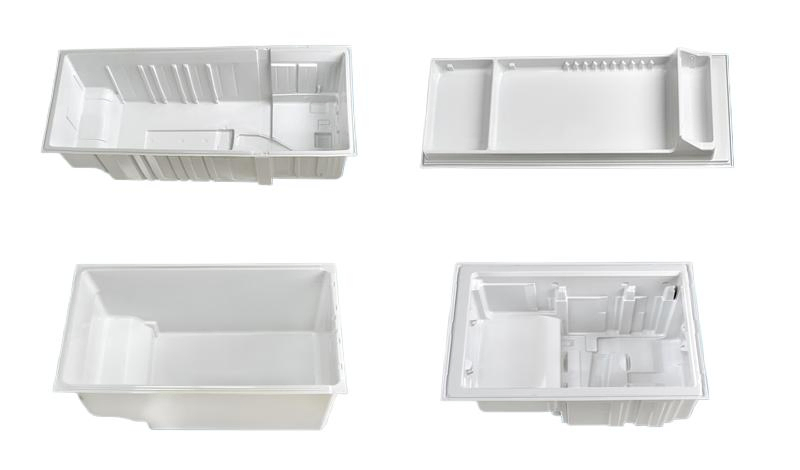
Refrigerator liner forming is a thermoplastic manufacturing process used to produce the inner compartments of refrigerators and freezers. By heating plastic sheets and shaping them with vacuum forming technology, manufacturers can create large, seamless interior liners with consistent dimensions, smooth surfaces, and integrated contours for shelves, drawers, air channels, and other functional features.
For refrigerator manufacturers, choosing the right vacuum forming process involves more than selecting a machine. Material selection, heating uniformity, mold design, forming depth, cooling, trimming, and production cycle time all affect the quality and consistency of the finished liner.
Junsai Group provides thermoforming equipment and automation solutions for industrial applications. For refrigerator liner production, the appropriate equipment configuration depends on liner dimensions, plastic sheet specifications, annual production volume, mold requirements, and the desired level of automation.
Refrigerator liner forming is the process of heating a thermoplastic sheet and shaping it into the inner shell of a refrigerator or freezer, commonly using vacuum forming. The formed liner provides the interior surfaces that accommodate shelves, storage compartments, door-related structures, airflow passages, and other refrigerator components.
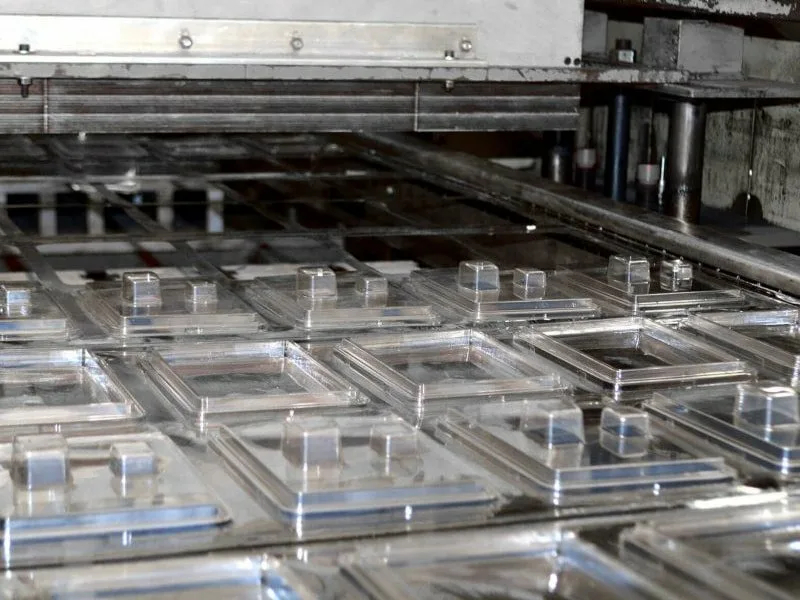
During vacuum forming, a plastic sheet is heated until it becomes sufficiently pliable. The sheet is positioned over or into a mold, and vacuum pressure draws the softened material against the mold surface. After cooling, the formed component is removed and trimmed to its final dimensions.
Depending on the refrigerator design, the liner may include deep cavities, rounded corners, recessed areas, mounting features, and transitions between different surface levels. These features must be formed without excessive thinning, wrinkles, or unacceptable surface defects.
Refrigerator liner forming is widely associated with vacuum forming because this process can produce large plastic components with complex three-dimensional shapes without requiring the injection molds used for conventional injection molding.
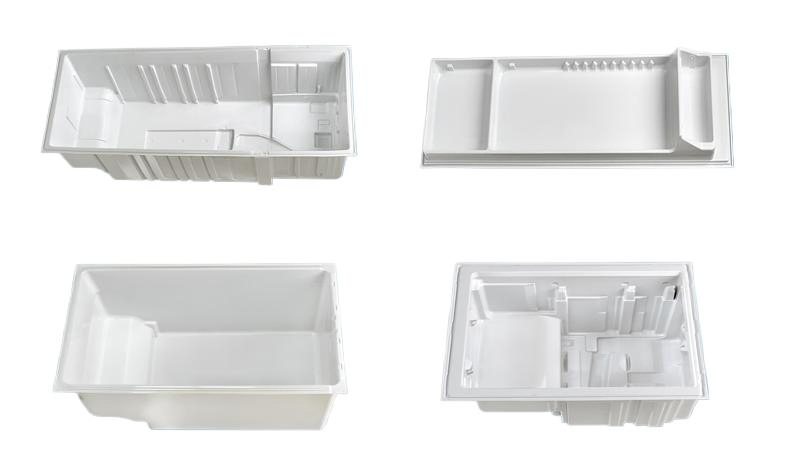
Vacuum forming converts a flat thermoplastic sheet into a shaped refrigerator interior liner. The exact production sequence depends on the machine, material, mold, and required output, but the process generally follows several stages.
A suitable thermoplastic sheet is loaded into the forming machine and secured in the sheet-holding frame. Sheet thickness, dimensions, surface condition, and material consistency should be checked before forming.
Consistent sheet positioning helps maintain repeatable forming conditions, particularly when producing large liners with deep draws and multiple recessed features.
The plastic sheet is heated using a controlled heating system until it reaches the forming temperature required by the selected material.
Heating uniformity is especially important for large refrigerator liners. If some areas are too hot while others remain too cold, the material may stretch unevenly during forming. This can cause thin corners, inconsistent wall thickness, surface distortion, or incomplete mold contact.
Heating parameters should be established through material-specific trials rather than relying on a single temperature setting for every sheet type.
Once the sheet reaches the required forming condition, the machine brings it into position over or into the mold. Vacuum removes air between the sheet and mold surface, allowing atmospheric pressure to push the softened plastic against the mold.
For refrigerator liner production, mold design must account for the depth of the liner, corner radii, surface details, vacuum distribution, and the way the material stretches across the mold.
Deep-draw areas may require carefully designed venting, controlled sheet heating, and suitable forming sequences to reduce excessive thinning.
After the sheet conforms to the mold, the liner is cooled until it can maintain its intended shape during removal and subsequent handling.
Cooling conditions influence dimensional stability, surface appearance, and cycle time. Insufficient cooling can result in deformation after demolding, while an unsuitable cooling arrangement may extend production cycles.
The formed liner is removed from the mold and trimmed to the required outline. Trimming operations may create openings, edges, or component interfaces according to the refrigerator design.
Accurate trimming helps the liner fit with the cabinet structure, insulation system, door assembly, and internal accessories. Depending on the production line, trimming may be performed in a separate station or integrated into an automated process.
Finished liners are inspected for dimensional accuracy, surface quality, wall-thickness distribution, cracks, wrinkles, and other defects.
Approved components can then move to downstream operations, such as cabinet assembly, insulation filling, or installation of internal components, according to the manufacturer's production process.
Material selection affects forming behavior, impact resistance, chemical compatibility, appearance, dimensional stability, and the performance of the finished refrigerator liner.
Common candidates include high-impact polystyrene (HIPS), acrylonitrile butadiene styrene (ABS), and selected polypropylene (PP) or other thermoplastic grades. The correct choice depends on the refrigerator design, operating environment, manufacturing requirements, and material supplier's specifications.
| Material | Typical characteristics | Considerations for forming |
|---|---|---|
| HIPS | Good impact resistance, suitable rigidity, and common use in appliance interiors | Requires suitable heating and forming control to achieve consistent thickness and surface quality |
| ABS | Good impact resistance and toughness, with grades offering different surface and processing properties | Material grade, cost, temperature requirements, and compatibility with the application should be evaluated |
| PP | Chemical resistance and low density, with properties that vary by grade | Shrinkage, stiffness, thermal behavior, and dimensional stability require careful assessment |
| Other engineered thermoplastics | May provide specific mechanical, thermal, or appearance characteristics | Suitability depends on the exact grade, liner design, processing window, and cost requirements |
HIPS is commonly considered for refrigerator inner liners because it offers a practical combination of formability, impact resistance, and cost. However, it is not the only option, and material selection should be based on verified performance requirements.
Before production, manufacturers should evaluate sheet thickness, forming temperature range, shrinkage, impact performance, cleaning-agent compatibility, and relevant appliance requirements. Material suppliers can provide technical data and processing recommendations for the selected grade.
Refrigerator liners often contain deep compartments and large surface areas. A successful forming process requires coordination between product geometry, material behavior, mold construction, and machine capability.
Deep-draw features require the sheet to stretch significantly as it conforms to the mold. Material may become thinner in corners, deep recesses, and other high-stretch regions.
Designers should evaluate draw depth, corner radii, transitions, and feature spacing before finalizing the mold. Mold trials and thickness measurements can help identify areas that require changes to geometry, heating settings, or forming conditions.
Sharp corners can concentrate material stretching and increase the risk of thinning or incomplete forming. Suitable radii and smooth transitions help the material flow across the mold more evenly.
The mold must also accommodate the required surface finish, dimensional tolerances, vent locations, and component interfaces. These details should be considered together rather than adjusted independently after production begins.
Vacuum performance depends on more than pump capacity. Mold venting, vacuum passages, seals, sheet temperature, and the sequence of contact between the sheet and mold all affect how well the material conforms to the intended shape.
Poor air evacuation can leave incomplete details, trapped air, or uneven surface definition. Mold design and forming trials should verify that vacuum reaches the necessary areas throughout the forming cycle.
Thermoplastic materials shrink as they cool. The amount of shrinkage depends on the material grade, sheet temperature, mold temperature, cooling conditions, and part geometry.
Mold dimensions should account for expected shrinkage, and production trials should confirm that the liner fits the refrigerator cabinet and mating components. Consistent process settings help reduce dimensional variation between batches.
The inner liner is a visible part of the finished appliance. Scratches, surface marks, uneven texture, wrinkles, and other defects can affect the perceived quality of the refrigerator.
Sheet handling, mold condition, temperature control, demolding methods, and storage practices all contribute to surface quality. Protective handling procedures can reduce damage between forming and assembly.
Selecting a refrigerator liner vacuum forming machine begins with the part specifications and the required production output. A machine that can accommodate the overall sheet dimensions may still be unsuitable if its heating system, forming depth, mold arrangement, or automation configuration does not match the application.
The effective forming area should accommodate the sheet and the liner geometry, including the clamping margin required by the machine. Manufacturers should also consider mold dimensions, loading access, trimming requirements, and space for automated handling.
Large refrigerator and freezer liners may require a machine designed specifically for large-format thermoplastic forming.
The heating system should provide sufficient capacity and controllability for the selected sheet material and thickness. Independent heating zones can help operators adjust heat distribution to match areas with different stretching requirements.
When evaluating a machine, review the heating configuration, temperature monitoring, adjustment range, and repeatability under the intended production conditions.
Maximum forming depth, mold clearance, clamping arrangement, and vacuum connections should be checked against the actual liner design.
A machine specification alone cannot confirm that a complex liner will form successfully. Testing with representative materials and tooling provides more useful evidence of process capability.
Cycle time includes sheet loading, heating, forming, cooling, demolding, and any integrated handling or trimming operations. The slowest stage can limit overall output.
Manufacturers should estimate the required output using realistic cycle assumptions, planned operating hours, changeover time, and expected downtime. A faster nominal forming cycle does not necessarily translate into higher finished-part output if downstream operations become bottlenecks.
Depending on the production plan, a refrigerator liner forming line may incorporate automatic sheet feeding, controlled transfer, demolding assistance, trimming, conveying, and inspection.
Automation can reduce repetitive manual handling and improve process consistency, but the investment should be assessed against production volume, product variation, available labor, maintenance capability, and the cost of integrating the equipment into the existing factory.
Identifying defects by their location and appearance helps manufacturers narrow down the possible causes and establish corrective actions.
| Defect | Possible causes | Process checks |
|---|---|---|
| Excessive thinning | Deep draws, uneven heating, unsuitable geometry, or excessive stretching | Measure wall thickness, review heating distribution, and inspect mold geometry |
| Wrinkles or folds | Incorrect sheet temperature, material movement, or unsuitable forming sequence | Review sheet clamping, temperature settings, and mold contact sequence |
| Incomplete mold definition | Insufficient vacuum, blocked vents, or unsuitable forming conditions | Inspect vacuum passages, seals, venting, and material temperature |
| Surface marks | Sheet damage, mold contamination, or handling problems | Check sheet storage, mold cleanliness, and demolding procedures |
| Dimensional variation | Inconsistent heating or cooling, material variation, or unstable process settings | Verify material batches, temperature control, cooling, and measurement methods |
| Warping after demolding | Inadequate cooling, uneven shrinkage, or part geometry | Review cooling time, support during removal, and material-specific processing settings |
These are general troubleshooting guidelines rather than definitive diagnoses. A defect may have multiple contributing causes, so adjustments should be verified through controlled trials and documented measurements.
Manufacturers can improve output and consistency by addressing the entire production process rather than focusing exclusively on forming speed.
A well-adjusted heating profile can reduce uneven stretching and help the sheet reach the required forming condition consistently. Heating parameters should be established for each material and thickness, then monitored as production conditions change.
Routine inspection of heating components, vacuum systems, mold surfaces, clamping mechanisms, and cooling equipment can help identify problems before they interrupt production.
Preventive maintenance schedules should reflect machine operating hours, component wear, and actual production conditions.
If multiple refrigerator models share a production facility, mold changeover time may influence overall equipment utilization. Organized tooling storage, standardized connections, documented setup parameters, and accessible mold-handling arrangements can simplify changeovers.
Forming capacity should be matched to trimming and downstream handling capacity. If formed liners accumulate before trimming or assembly, the overall line may not achieve the expected output.
Manufacturers should evaluate cycle times and material flow across all connected operations when planning an automated line.
A repeatable inspection plan can track key dimensions, wall thickness, surface defects, and fit with mating components. Recording process settings alongside inspection results helps teams identify trends and reproduce successful production conditions.
Vacuum forming is one of several ways to manufacture thermoplastic components. The best process depends on part dimensions, geometry, material, production quantity, tooling investment, and quality requirements.
| Process | General strengths | Considerations for refrigerator liners |
|---|---|---|
| Vacuum forming | Suitable for large sheet-based parts and complex surface contours | Requires control of material stretching, wall thickness, vacuum distribution, and trimming |
| Pressure forming | Uses additional air pressure to improve material definition in suitable applications | Equipment and tooling requirements may be higher; suitability depends on surface and geometry requirements |
| Injection molding | Suitable for many detailed parts and repeatable molded components | Large liner designs may require substantial tooling and specialized equipment; part geometry and economics must be evaluated |
| Other sheet-forming methods | May suit particular materials, shapes, or production requirements | Feasibility depends on the specific process and required liner characteristics |
Vacuum forming is often considered for large refrigerator liners because it shapes heated plastic sheets over a mold and can accommodate broad, relatively shallow or deep-drawn geometries. However, the appropriate method should be selected through engineering assessment and cost comparison rather than assuming one process fits every liner design.
Refrigerator liner forming supports the manufacture of inner plastic components for several types of cooling appliances.
Household refrigerator liners commonly incorporate storage compartments, shelf supports, rounded interior corners, and features designed around the appliance's cooling and insulation systems.
Freezer liners may require material and geometry choices suited to the intended operating temperatures, impact requirements, and storage layout. Material suitability should be confirmed for the actual application.
Display refrigerators, beverage coolers, and other commercial cooling appliances may use formed liners with different internal dimensions, drainage arrangements, and component interfaces.
Certain laboratory, medical, or industrial refrigeration products may use custom-formed interior components. Their material, cleaning, temperature, and regulatory requirements should be evaluated individually rather than assumed to match those of household appliances.
Refrigerator liner forming is the process of shaping heated thermoplastic sheets into the inner shells of refrigerators and freezers. Vacuum forming is commonly used to create the required three-dimensional contours, after which the part is cooled, removed from the mold, and trimmed.
Vacuum forming heats a plastic sheet until it becomes pliable, positions it over or into a mold, and removes air between the sheet and mold. The pressure difference draws the sheet against the mold surface, producing the refrigerator liner's intended shape.
High-impact polystyrene (HIPS) is a common candidate for refrigerator liners. ABS, PP, and other suitable thermoplastics may also be considered depending on impact resistance, temperature requirements, dimensional stability, appearance, processing characteristics, and cost.
HIPS offers a useful combination of formability, impact resistance, rigidity, and cost for many appliance-interior applications. The appropriate grade and sheet thickness still need to be validated against the liner's geometry, service conditions, and manufacturing requirements.
Manufacturers can investigate sheet heating uniformity, material temperature, draw depth, mold geometry, corner radii, and vacuum distribution. Wall-thickness measurements from trial parts help identify high-stretch areas and guide adjustments to the heating profile or mold design.
Common defects include excessive thinning, wrinkles, incomplete forming, surface marks, dimensional variation, and warping. Possible causes include uneven heating, unsuitable mold geometry, inadequate vacuum, inconsistent cooling, damaged sheets, or unstable process settings.
Evaluate the required forming area, maximum part dimensions, forming depth, heating system, vacuum performance, mold compatibility, cooling arrangement, trimming requirements, cycle time, and automation level. Trials using the intended material and tooling can help verify machine suitability.
Yes. Depending on the equipment design and production requirements, automation can include sheet feeding, forming, demolding assistance, trimming, conveying, and inspection. The appropriate level of automation depends on output targets, product variation, labor availability, and integration costs.
Mold geometry affects material stretching, corner thickness, surface definition, dimensional accuracy, and demolding. Appropriate radii, vent placement, vacuum passages, and shrinkage allowances help the sheet conform to the mold and maintain the required part dimensions.
Vacuum forming can support high-volume production when the machine, tooling, material, cycle time, and downstream operations are designed for the required output. Actual production capacity should be confirmed through realistic cycle-time estimates, quality trials, and maintenance planning.
Useful information includes liner drawings or samples, maximum dimensions, sheet material and thickness, forming depth, target output, trimming requirements, mold details, factory space, and the desired automation level. These specifications help equipment suppliers evaluate the proposed production configuration.
Vacuum forming uses vacuum to draw a heated plastic sheet against a mold. Pressure forming adds positive air pressure to help press the sheet against the mold, which may improve detail in suitable applications. The better choice depends on liner geometry, surface requirements, material, tooling, and production economics.
Choosing equipment for refrigerator liner production requires a clear understanding of the intended part, production volume, material, tooling, and factory layout.
When evaluating a refrigerator liner forming solution, manufacturers should prepare the liner drawings or samples, sheet specifications, required forming dimensions, target output, and automation expectations. These details help establish whether a proposed machine configuration can meet the application's requirements.
Junsai Group provides thermoforming equipment and automation solutions for industrial manufacturing applications. For a refrigerator liner project, the machine configuration and forming process should be evaluated against the actual production requirements, with representative material and tooling trials used where appropriate.
Contact Junsai Group to discuss your refrigerator liner forming requirements and determine the equipment specifications that best fit your production plan.