Quote now
EN

Automotive manufacturers need plastic components that meet demanding requirements for dimensional accuracy, durability, weight, appearance, and production efficiency. Automotive thermoforming solutions provide a practical way to manufacture large, lightweight, and precisely shaped plastic parts for vehicle interiors, exteriors, protective systems, and specialized automotive applications.
As an experienced thermoforming equipment supplier, Junsai Group provides thermoforming automation solutions for manufacturers seeking consistent part quality, efficient material use, and reliable production performance. By combining suitable forming technology, automated handling, temperature control, and process optimization, manufacturers can produce high-quality automotive parts for a wide range of vehicle platforms and production requirements.
From prototype development to high volume production, the right thermoforming equipment helps automotive parts manufacturers improve repeatability, manage production costs, and adapt to changing component designs. Junsai Group supports manufacturers in selecting equipment configurations based on part geometry, plastic materials, forming requirements, and factory automation needs.
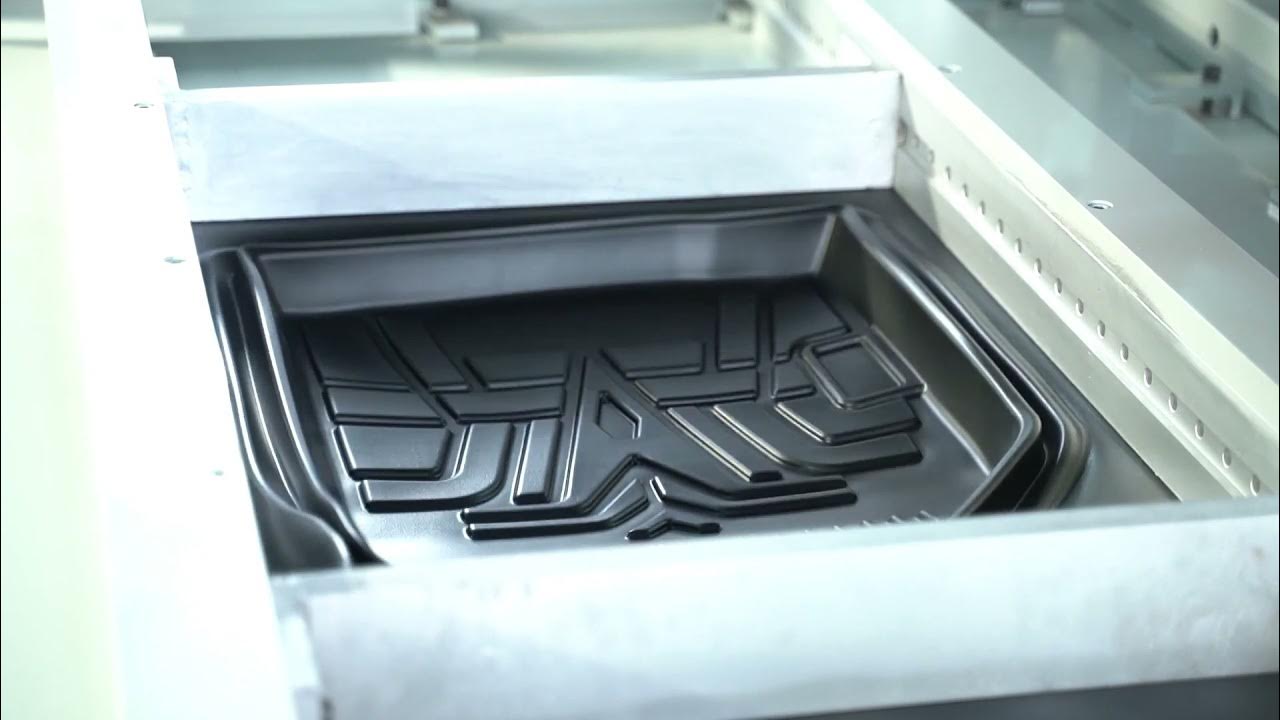
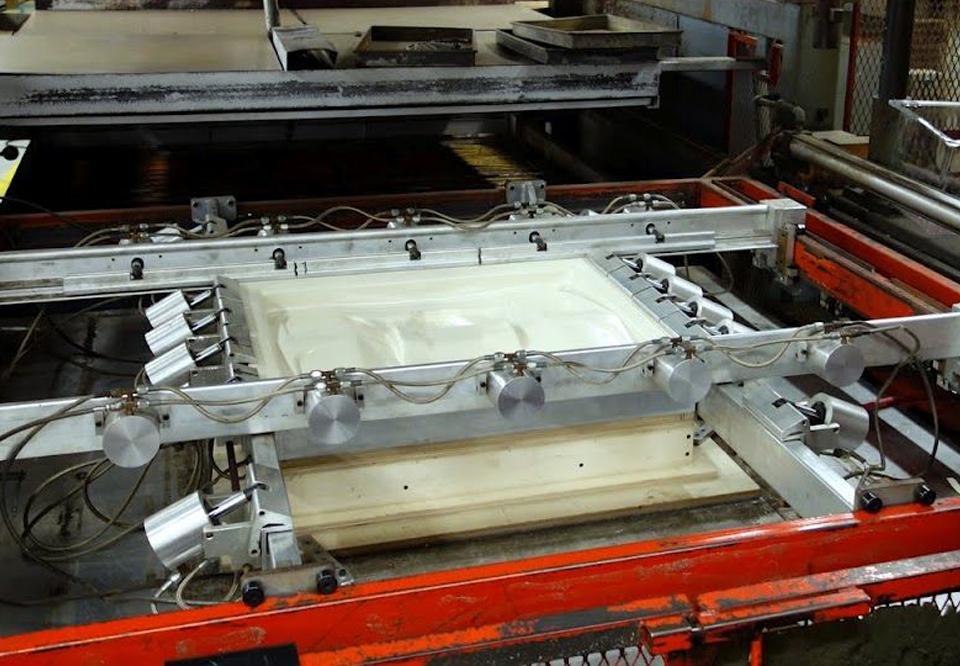
Automotive thermoforming solutions are manufacturing systems that heat thermoplastic sheets to a specified forming temperature and shape them over or into a mold using vacuum, pressure, or mechanical assistance. After cooling, the formed sheet is trimmed and finished to create components for automotive applications.
Compared with some other plastic manufacturing methods, thermoforming can be suitable for large-area components, relatively thin-walled parts, and applications that require flexibility in product design. Tooling requirements, cycle times, and unit costs depend on the component's geometry, material, production volume, and dimensional tolerances.
A complete automotive thermoforming solution may include sheet loading, heating, forming, cooling, mold release, trimming, inspection, and automated material handling. Integrating these operations can help manufacturers establish a more consistent manufacturing process and reduce unnecessary manual handling.
Thermoformed plastic components are used in many areas of vehicle manufacturing. Their suitability depends on the required mechanical properties, operating environment, safety requirements, and applicable automotive specifications.
Thermoforming can produce large and contoured interior components with controlled surface textures and finishes. Typical applications include:
For these applications, manufacturers can evaluate material thickness, surface quality, dimensional stability, scratch resistance, and compatibility with downstream assembly processes.
Selected exterior and underbody applications benefit from formed plastic sheets that provide broad surface coverage and relatively low component weight. Potential applications include:
Material selection must account for exposure to temperature changes, moisture, road debris, ultraviolet radiation, and automotive fluids where applicable. Components subject to impact, pedestrian protection, or other regulated safety requirements need application-specific engineering and validation.
Electric vehicle manufacturers continue to evaluate lightweight plastic components for interior systems, cargo spaces, protective covers, and selected battery-related applications.
Thermoforming can be considered for suitable non-structural covers, protective panels, and enclosure components when the selected material and design meet the required performance criteria. Applications near battery systems require additional assessment of heat resistance, flame performance, electrical insulation, chemical compatibility, and relevant vehicle safety standards.
Thermoforming should not be assumed to replace structural battery enclosures or other safety-critical components without appropriate engineering validation.
The most suitable production technology depends on the component design, annual demand, material requirements, and target cost. Automotive thermoforming offers several advantages for applications that align with its process characteristics.
Plastic thermoforming supports the production of thin-walled and large-area components. Compared with certain metal alternatives, suitable plastic parts can reduce component weight and provide greater freedom in surface contour design.
Lightweight parts can contribute to overall vehicle weight reduction, although the actual benefit depends on the material, wall thickness, component structure, and the part being replaced.
Thermoforming is well suited to many components with broad surfaces and relatively shallow or moderately deep geometries. A single formed part may combine several surface features, helping reduce the number of separate pieces required in selected designs.
The actual production rate depends on sheet heating, forming, cooling, trimming, and handling times. Automated systems can coordinate these operations to improve consistency and reduce idle time.
For suitable component geometries, thermoforming tooling can be less complex than injection molding tooling. This can make thermoforming attractive for large panels, lower-volume programs, product variations, and designs that may change during development.
Tooling cost varies considerably with mold size, material, surface finish, dimensional requirements, and production expectations. Manufacturers should compare the total cost of tooling, equipment, material, labor, and finishing rather than evaluating mold cost alone.
Controlled heating, forming pressure or vacuum, mold temperature, cooling, and trimming help maintain consistent product dimensions and surface quality.
Automation can improve process repeatability by controlling sheet movement, heating cycles, forming parameters, and part transfer. Production validation remains necessary to confirm that the finished parts meet the required specifications.
Depending on the equipment configuration and application, thermoforming can process materials such as ABS, HIPS, PETG, PP, and selected grades of PC and other thermoplastics.
Each material has different forming temperatures, shrinkage behavior, stiffness, impact resistance, chemical resistance, and recycling considerations. Material selection should be based on the finished component's actual operating conditions rather than price alone.
Thermoforming and the plastic injection molding process are both used in the automotive industry, but they are suited to different product geometries and production requirements.
| Comparison factor | Automotive thermoforming | Plastic injection molding |
|---|---|---|
| Basic process | Heated plastic sheet is formed over or into a mold | Molten plastic is injected into a mold cavity |
| Typical geometry | Large panels, liners, covers, and sheet-based components | Complex three-dimensional parts, detailed features, and integrated structures |
| Tooling considerations | Can offer lower tooling costs for suitable large parts | Tooling can be expensive, particularly for complex molds |
| Production volume | Suitable for low, medium, and high volumes depending on the application and automation | Often advantageous for high volume production of repeatable parts |
| Material input | Thermoplastic sheet | Plastic pellets or other suitable molding feedstock |
| Secondary operations | Trimming and edge finishing are often required | Gate removal and other finishing operations may be required |
| Design flexibility | Useful for broad surfaces and selected large-format shapes | Useful for complex parts, ribs, bosses, clips, and integrated details |
Injection molding is often preferred when parts require intricate geometry, precise integrated features, or very high output from a dedicated mold. Thermoforming can be a strong option for larger sheet-based components where tooling investment and part size are important considerations.
Neither process is universally better. Manufacturers should evaluate part dimensions, tolerance requirements, annual demand, tooling cost, cycle time, material utilization, and finishing requirements before choosing a manufacturing method.
The automotive industry uses several manufacturing technologies, including extrusion blow molding, injection molding, thermoforming, extrusion, and machining. The appropriate method depends on the shape and function of the final component.
Extrusion blow molding is commonly used to manufacture hollow plastic products. In this process, an extruded plastic tube, known as a parison, is inflated inside a mold to create the required shape.
Typical automotive applications include selected fluid reservoirs, air ducts, and hollow containers, depending on the material and component specification.
Thermoforming, by contrast, starts with a plastic sheet and is generally used for open or sheet-based structures such as liners, covers, panels, and interior components.
Plastic extrusion produces continuous profiles, sheets, films, or other products by pushing material through a shaped die. Thermoforming uses heated sheets to create three-dimensional parts from molds.
Extrusion can supply the plastic sheet used in thermoforming, making the two processes complementary within a broader manufacturing operation.
Machining removes material to achieve specific dimensions or features. Laser cutting uses a focused laser beam to cut or shape suitable materials along programmed paths.
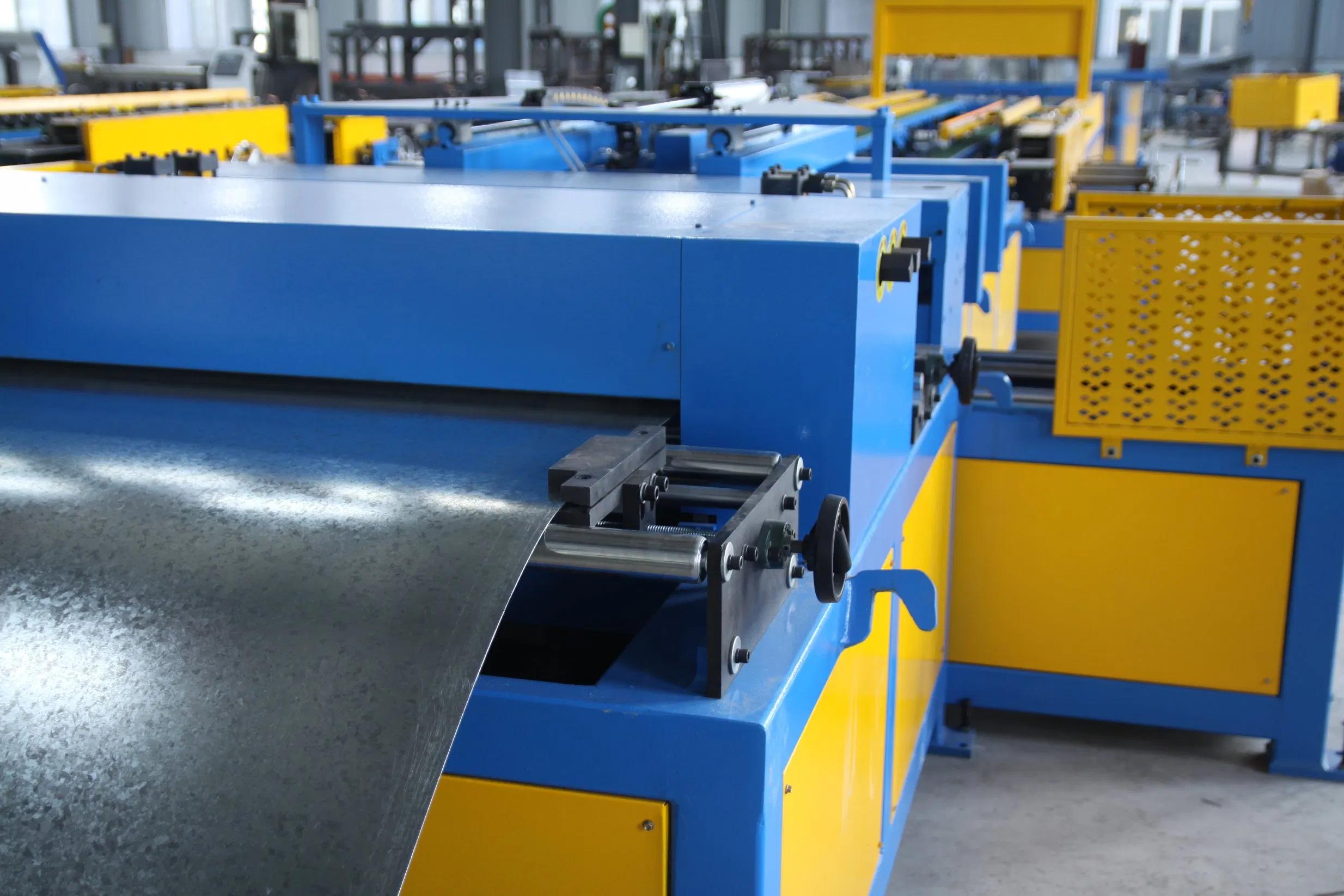
In thermoforming production, trimming is commonly required to remove excess sheet material and establish the final component outline. Depending on the plastic, thickness, edge requirements, and production rate, manufacturers may use CNC routers, dedicated trimming tools, or laser-cutting equipment.
Lasers cut suitable plastics effectively in selected applications, but laser processing is not appropriate for every polymer. Material compatibility, fumes, edge quality, and fire risks must be assessed before choosing the method.
Automotive parts manufacturers need equipment that matches their product specifications, production targets, and factory layout. Junsai Group provides thermoforming automation solutions designed around the forming process and the requirements of the finished product.
A suitable heating system distributes heat across the plastic sheet to achieve a forming window appropriate for the selected material. Consistent temperature control helps reduce defects caused by uneven heating, excessive thinning, or incomplete forming.
The forming station can be configured according to part dimensions, mold requirements, and the intended production cycle.
Automation can coordinate sheet feeding, forming, mold opening, part removal, and transfer to downstream operations. Depending on the system design, these functions can reduce manual handling and support more predictable production cycles.
Equipment configuration should reflect the actual part size, sheet thickness, cycle-time target, and level of automation required.
Many automotive thermoformed parts require trimming after forming. Integrating the forming equipment with downstream trimming and handling stations can simplify material flow and improve production coordination.
The trimming method should be selected according to dimensional tolerances, edge quality, component shape, and the characteristics of the plastic material.
A thermoforming production line can be designed around a single component or adapted for a family of similar products. Manufacturers should consider available floor space, loading and unloading arrangements, mold changes, maintenance access, and integration with existing production equipment.
Junsai Group can help evaluate these requirements when developing a suitable thermoforming automation configuration.
Choosing a thermoforming machine involves more than comparing maximum forming dimensions or rated output. The equipment must be appropriate for the product and the expected manufacturing conditions.
Provide the maximum component dimensions, forming depth, surface contours, edge requirements, and any areas requiring close dimensional control. Large or deep-drawn components may require specific heating arrangements, mold designs, and forming assistance.
Different plastic materials respond differently to heating and forming. Sheet thickness, material grade, surface finish, and recycled content can affect temperature settings, forming behavior, cooling time, and finished-part consistency.
Estimate the required daily or annual output and consider product changeovers, operating shifts, planned maintenance, and scrap rates. High volume production may benefit from automated loading, unloading, and trimming, provided that the equipment configuration supports the target cycle time.
Consider initial tooling investment, expected mold life, design changes, spare parts, and the number of product variants. A lower-cost mold may be suitable for certain programs, while demanding dimensional or surface requirements may justify a more advanced tooling solution.
Identify the required tolerances, inspection methods, mechanical properties, environmental resistance, and applicable automotive customer standards. Production trials and documented validation should confirm that the process consistently produces conforming parts.
Although automotive parts represent an important application area, thermoforming equipment can serve a wide range of industries.
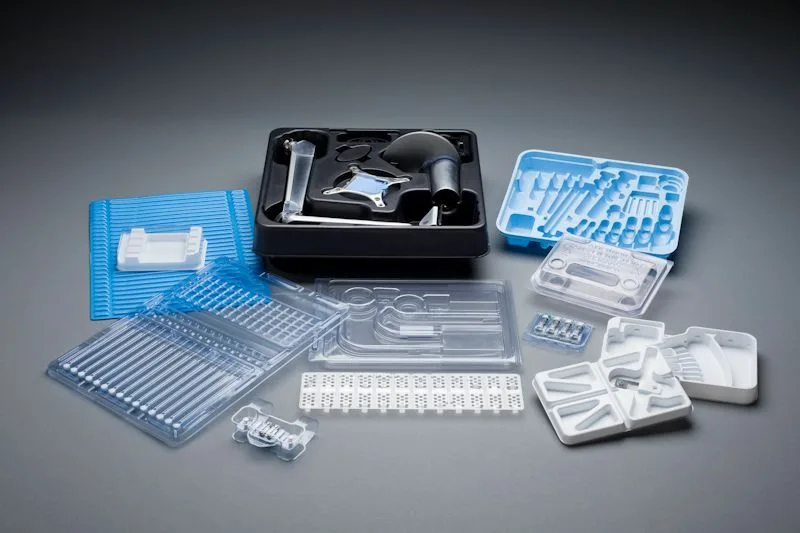
Potential applications include protective packaging, industrial equipment covers, appliance housings, medical-device packaging, agricultural equipment components, transportation interiors, and consumer products.
The same forming principles can be adapted to different product categories, but each application requires appropriate material selection, tooling design, process settings, and quality controls.
For manufacturers serving multiple sectors, a properly configured thermoforming system can support different product families when the sheet dimensions, mold arrangements, heating capacity, and changeover requirements are compatible.
Automotive thermoforming is a plastic manufacturing process in which a thermoplastic sheet is heated and shaped using a mold, typically with vacuum, pressure, or mechanical assistance. It is used to produce suitable vehicle components such as interior panels, cargo liners, protective covers, and selected exterior parts.
Common applications include interior trim substrates, luggage compartment liners, wheel arch liners, underbody covers, protective panels, and cargo-area components. The final application depends on part geometry, material properties, dimensional tolerances, and automotive performance requirements.
Yes. Thermoforming can support high volume production when the component design, cycle time, tooling, and automation system are suitable. Automated sheet handling, forming, trimming, and part transfer can improve output consistency. The achievable production rate should be confirmed through equipment specifications and production trials.
Materials may include ABS, HIPS, PETG, PP, and selected PC grades. Other thermoplastics may be suitable depending on the application. Material selection should account for forming behavior, stiffness, impact performance, temperature resistance, chemical exposure, surface finish, and relevant customer requirements.
Thermoforming starts with a heated plastic sheet and is often suitable for large panels and relatively broad surface geometries. Injection molding injects molten plastic into a mold and is often preferred for complex parts with integrated features. Thermoforming may offer lower tooling costs for some large components, while injection molding can offer advantages in repeatable high-volume production of complex parts.
Thermoforming shapes a heated plastic sheet into a mold, generally creating open or sheet-based components. Extrusion blow molding inflates a hot plastic parison inside a mold to form hollow products. The processes serve different product geometries and should be selected according to the component's intended function.
Manufacturers can evaluate material utilization, part nesting, sheet thickness, cycle time, mold design, automated handling, trimming efficiency, and scrap rates. The best cost improvements come from reviewing the entire manufacturing process rather than focusing exclusively on tooling or machine purchase price.
Thermoforming can produce parts that meet defined dimensional tolerances when the material, tooling, heating, forming, cooling, and trimming processes are properly controlled. The achievable precision depends on part geometry, shrinkage, material behavior, equipment capability, and inspection requirements. Applications with tight tolerances should be validated through sample production and measurement.
Yes. Thermoforming can produce thin-walled plastic panels, liners, and covers that may weigh less than certain alternative components. Weight reduction depends on the selected material, design, wall thickness, and the performance requirements of the finished part.
Manufacturers should provide the component drawings or samples, maximum part dimensions, material type, sheet thickness, target output, tolerance requirements, mold information, and automation expectations. These details help determine the appropriate forming area, heating system, tooling configuration, and downstream equipment.
Selecting the right thermoforming equipment begins with understanding the product and its production requirements. Whether you manufacture automotive interior components, protective panels, cargo liners, or other plastic parts, the equipment configuration should match the material, component geometry, quality targets, and expected output.
Junsai Group works with manufacturers to evaluate thermoforming automation requirements and identify suitable production configurations. Share your part drawings, material specifications, target production capacity, and automation objectives to discuss an equipment solution tailored to your manufacturing needs.
Contact Junsai Group to discuss your automotive thermoforming project and explore a suitable automated production solution.