Quote now
EN

Thermoforming automation solutions integrate forming machinery, material handling equipment, control systems, and automated loading and unloading processes to improve the consistency and efficiency of plastic sheet production. Depending on the production requirements, an automated thermoforming line may include sheet feeding, heating, forming, cutting, part transfer, stacking, inspection, and finished-product handling.
A well-designed automation system coordinates these operations to reduce manual handling, maintain repeatable production cycles, and help manufacturers manage labor requirements and production output. Depending on the factory layout and application, automation may also incorporate conveyors, robotic handling, automated guided vehicles (AGVs), and automated truck loading systems.
Junjingsai develops thermoforming machinery and manufacturing solutions for industrial production. Automation requirements can be evaluated according to the plastic material, product geometry, target output, available floor space, existing equipment, and required level of integration.
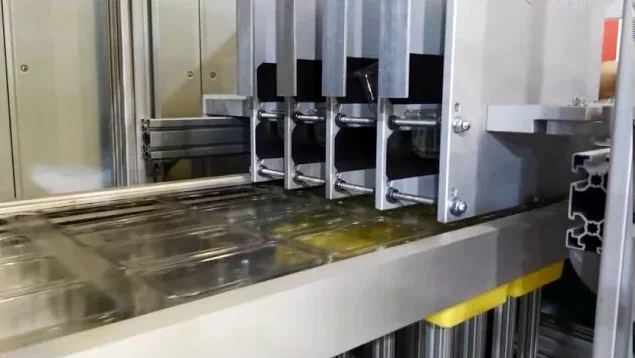
Thermoforming production involves more than shaping a heated plastic sheet. Material must move through each stage at the right time, and the forming machine must coordinate with upstream and downstream equipment. When these operations are poorly synchronized, production may experience delays, inconsistent cycle times, unnecessary manual work, or material accumulation between machines.
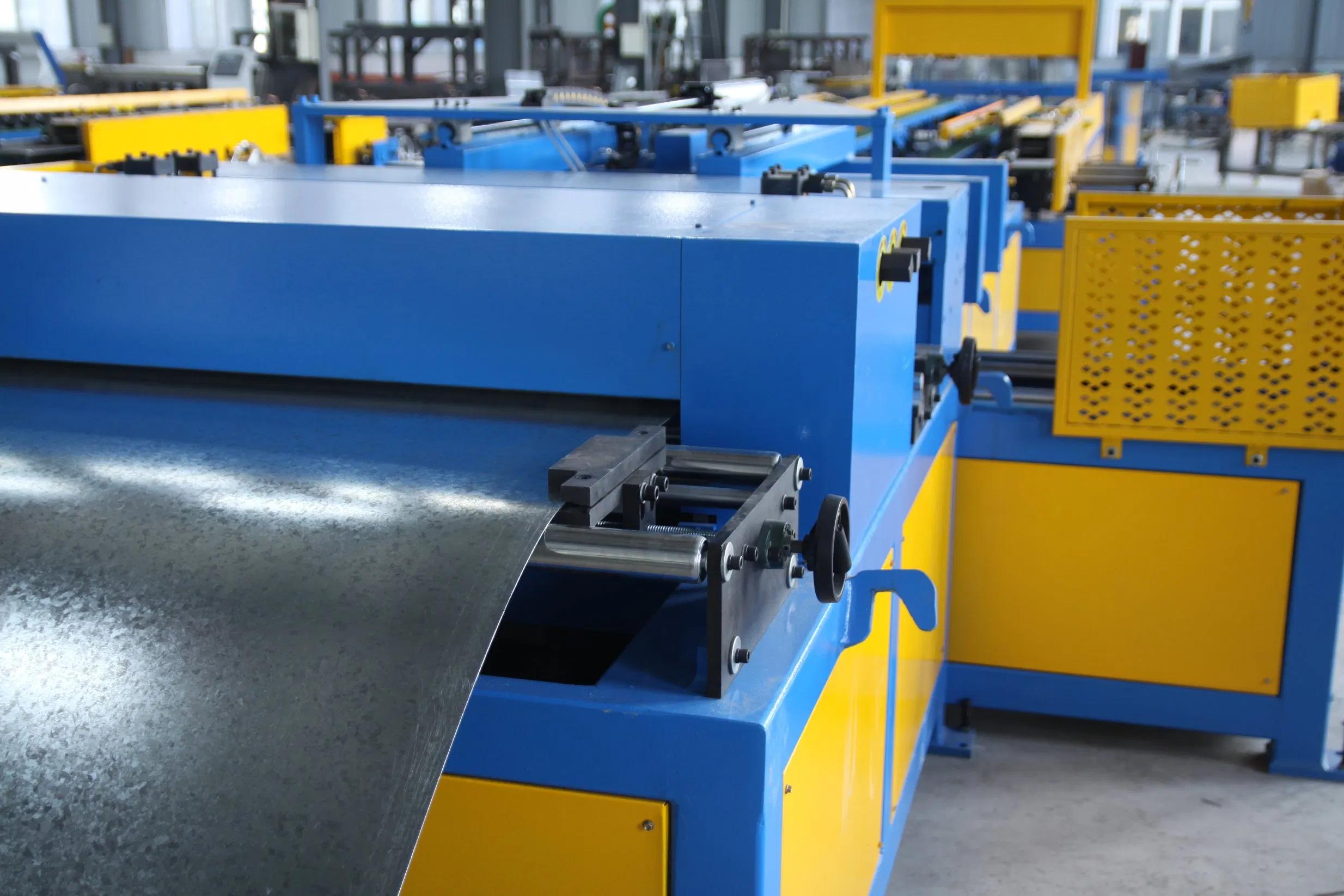
Thermoforming automation solutions connect individual operations into a coordinated roll forming line or thermoforming production line, depending on the manufacturing process. For plastic sheet thermoforming, the system may integrate sheet feeding, heating, forming, cutting, stacking, and transfer. Roll forming machine technology, by contrast, typically processes continuous metal strip through a sequence of rollers. The appropriate equipment and terminology should match the material and forming process being automated.
An integrated automation project may include:
The required configuration depends on the product, production volume, equipment layout, and the level of automation needed.
Consistent material feeding helps maintain a stable production cycle. An automatic loading system can position plastic sheets or feed compatible raw material into the machine with less manual intervention.
The design should consider sheet dimensions, material thickness, stack height, surface protection, loading frequency, and the available space around the machine. For applications involving rolls of material, the feeding equipment must be designed for the specific roll format and forming process.
Automatically loading raw material can reduce repetitive handling tasks and help the machine operator focus on monitoring production, checking product quality, and responding to process conditions.
Control systems coordinate machine movements, heating sequences, forming cycles, cutting operations, and material transfer. Depending on the system design, a centralized controller or connected machine controllers may manage the production sequence.
A suitable control system can provide operating status, cycle information, alarm messages, and selected production data in real time. Interlocks and fault-handling sequences help prevent incompatible machine movements and support safer operation.
For a fully integrated production line, the control architecture should be planned around the communication requirements of each machine, the factory's operating procedures, and any existing production management systems.
Material handling equipment moves raw materials, formed products, and intermediate components between production stages. Depending on the application, this may include conveyors, transfer mechanisms, lifting devices, robotic grippers, and dedicated fixtures.
A well-planned transfer system reduces unnecessary manual movement and helps prevent bottlenecks between the forming machine and downstream operations. The handling method must suit the part's dimensions, weight, shape, temperature, and surface condition.
For delicate or cosmetic components, the system should also consider contact points, part orientation, and the risk of scratches or deformation during transfer.
Automated loading and unloading systems move material into a machine and remove finished or semi-finished products after processing. Depending on the production task, these systems may use mechanical feeders, pick-and-place devices, robotic arms, conveyors, or dedicated transfer mechanisms.
The system design should account for part orientation, cycle time, gripping method, machine access, and the need for operator intervention. Where several machines are connected, loading and unloading sequences must be synchronized so that one station does not stop because another station is unavailable.
After forming, plastic components may require cutting, trimming, stacking, or transfer to a finishing station. The downstream equipment should be designed around the formed part and the required production rate.
A run out table can receive parts or material leaving a machine and provide a defined area for collection, inspection, or transfer to the next operation. Its dimensions and configuration should reflect product size, output speed, handling requirements, and available floor space.
Where the production process needs to form and cut in a coordinated cycle, the cutting equipment and transfer mechanisms should be synchronized with the forming machine to maintain consistent part positioning and output.
A connected production line must maintain a suitable balance between processing speed, transfer time, and downstream capacity. If a forming machine produces parts faster than the next station can accept them, products may accumulate and interrupt the workflow.
Automation engineering should consider cycle times, buffer capacity, machine availability, changeover requirements, and recovery procedures. This helps create productive, consistent production lines without assuming that every station must operate at exactly the same speed.
For manufacturers expanding an existing facility, integration may involve connecting new handling equipment to established machines. The project should account for equipment interfaces, control signals, floor space, and the operating limitations of the current line.
An automated guided vehicle (AGV) can transport raw material, tooling, containers, or finished products between designated locations within a factory. AGVs may be useful when thermoforming equipment is part of a larger automated manufacturing and warehouse operation.
Before integrating an AGV, manufacturers should evaluate payload, vehicle dimensions, travel paths, aisle widths, charging arrangements, traffic management, and interaction with personnel and other equipment. The required load capacity must cover the transported load and any handling fixtures, within the vehicle manufacturer's specified limits.
AGVs are generally a material transport solution rather than a direct replacement for the sheet-feeding mechanism inside a thermoforming machine. A complete automation design should distinguish between machine-level loading and factory-level logistics.
Automated truck loading systems can support the movement of finished goods from production or storage areas into transport vehicles. Depending on the factory layout, the system may use conveyors, pallet handling equipment, transfer platforms, or other automated logistics technology.
For thermoforming manufacturers, this type of automation is most relevant when production connects to a wider packaging, warehousing, and dispatch operation. It is not a standard requirement for every thermoforming line.
The design should account for product packaging, pallet dimensions, load stability, vehicle access, throughput requirements, and the load capacity of each handling component. Safety controls and coordination between warehouse systems and loading equipment should also be considered.
Automated sequences help coordinate feeding, heating, forming, cutting, and unloading. When machine movements and transfer operations are properly synchronized, manufacturers can reduce variation caused by inconsistent manual handling and timing.
Production consistency still depends on material properties, temperature control, mold condition, process settings, and equipment maintenance. Automation supports process repeatability but does not eliminate the need for quality control.
Automatic feeding and transfer equipment can reduce repetitive lifting, repositioning, and product movement. This may improve workflow and allow machine operators to focus on supervision, quality checks, setup, and maintenance activities.
The degree of labor reduction depends on the automation scope, product type, changeover frequency, and level of operator involvement that remains necessary.
Integrated material handling reduces unnecessary transfers and helps prevent bottlenecks between processing stations. Properly sized buffers, coordinated cycle times, and clear fault-recovery procedures can help the line resume operation more efficiently after a stoppage.
Control systems can provide real-time information about machine status, alarms, cycle counts, and selected process variables. Where data collection is included, production teams can use this information to identify recurring stoppages, compare output against targets, and plan maintenance.
The available information depends on the controller, sensors, network architecture, and any connected manufacturing software. Real-time monitoring should be specified according to the decisions operators and production managers need to make.
A well-planned automation layout can reduce unnecessary material movement and make better use of available floor space. However, conveyors, robots, AGVs, and maintenance access also require room. Layout design should balance compact equipment placement with safe access, material storage, and future expansion.
A successful automation project begins with the production requirements rather than a predetermined list of equipment. The following stages provide a typical framework for planning a new line or upgrading existing machinery.
The first stage is to review the raw material, product dimensions, forming process, required output, and current production workflow. The assessment should identify where manual handling occurs, which operations create delays, and what level of automation would provide a practical benefit.
If the facility already uses roll forming machine equipment for metal processing, that process should be assessed separately from plastic sheet thermoforming. Although both can use automated feeding, forming, and cutting sequences, their machinery, materials, and process requirements differ.
The next stage establishes the requirements for feeding, heating, forming, cutting, unloading, and downstream transport. Each station should be evaluated for cycle time, access, product compatibility, and capacity.
For automated handling, specify the dimensions and weight of the parts or material, gripping requirements, transfer distance, and allowable product contact. These details help determine the appropriate mechanical handling arrangement.
Control systems should coordinate machine operation, material transfer, safety interlocks, alarms, and fault recovery. The architecture should identify which equipment operates independently and which stations require synchronized control.
Where existing equipment is involved, its controller capabilities, communication interfaces, and safety arrangements should be checked before integration. Not every older machine can be connected to a new centralized control system without modification.
The layout should account for machine dimensions, operator access, raw material storage, finished-product collection, maintenance space, and the route between stations.
If AGVs or automated truck loading systems are planned, factory logistics must also be considered. Their travel paths and operating areas should be coordinated with production equipment, pedestrian routes, and warehouse operations.
Commissioning should verify machine sequencing, feeding accuracy, transfer performance, safety functions, and recovery from common faults. Trial production can help identify problems with part positioning, cycle synchronization, or downstream capacity.
Acceptance criteria should be agreed upon before testing. Depending on the project, these may cover output, repeatability, handling accuracy, product quality, and the performance of specified automation functions.
Machine operators need to understand normal operating sequences, alarms, safe intervention procedures, changeovers, and basic troubleshooting. Maintenance personnel should also receive relevant information about inspection schedules, wear components, lubrication, sensors, and control backups.
Clear operating procedures help sustain the intended performance after installation and reduce avoidable downtime.
The best automation configuration depends on production objectives, current equipment, material characteristics, factory layout, and budget. A system designed for a small batch of frequently changing products may differ considerably from one intended for continuous, high-output manufacturing.
When comparing solutions, manufacturers should consider the following factors.
| Selection factor | What to evaluate |
|---|---|
| Product and material | Sheet dimensions, material type, part geometry, weight, and surface requirements |
| Production target | Required output, cycle time, batch size, and changeover frequency |
| Loading and unloading | Feeding method, transfer distance, part orientation, and handling accuracy |
| Control systems | Machine communication, operator interface, alarms, monitoring, and fault recovery |
| Load capacity | Payload and rated capacity of feeders, conveyors, lifting devices, robots, and AGVs |
| Factory layout | Floor space, access, material routes, safety zones, and future expansion |
| Integration scope | Existing equipment, forming and cutting stations, stacking, storage, and dispatch |
| Operating costs | Labor, energy, maintenance, consumables, downtime, and expected service life |
Manufacturers should also compare the total cost of ownership rather than relying solely on the initial equipment price. A higher level of automation may improve throughput or reduce handling effort, but its financial benefit depends on utilization, product mix, staffing, maintenance, and the cost of downtime.
Shanghai Junjingsai Automation Machinery Co., Ltd. develops thermoforming machinery and related manufacturing solutions for industrial applications. Automation planning should connect the forming equipment with the actual production requirements, including material feeding, machine operation, product handling, and downstream processing.
For a new project or existing-line upgrade, manufacturers can provide product drawings, material specifications, target output, current machine details, and factory layout information. These inputs help clarify which operations may benefit from automation and what equipment interfaces need to be addressed.
Project discussions can cover:
The final equipment configuration should be established through a technical review. AGVs, automated truck loading, and other factory logistics systems should be treated as application-dependent options rather than standard features of every thermoforming machine.
Thermoforming automation solutions combine forming machinery, material feeding, control systems, handling equipment, and downstream operations to reduce manual intervention and coordinate production. Depending on the application, a line may include heating, forming, cutting, stacking, inspection, and product transfer.
Depending on the product and production requirements, an automated line may include sheet feeders, heating and forming equipment, cutting stations, conveyors, transfer tables, stacking devices, robotic handling, and monitoring systems. The final configuration depends on the manufacturing process and required output.
Yes. Compatible feeding and handling equipment can automatically load raw material and transfer finished or semi-finished parts. The system must be designed around the material dimensions, product weight, machine cycle, handling method, and available operating space.
Control systems coordinate machine sequences, material transfer, operating status, alarms, and safety interlocks. Depending on the configuration, they may also collect real-time cycle information and production data to support monitoring and troubleshooting.
An automated guided vehicle can support factory-level transport of raw materials, tooling, containers, or finished goods. Integration depends on payload, travel paths, factory layout, traffic management, charging, and communication with the wider logistics system. An AGV does not automatically replace machine-level sheet feeding.
A roll forming line typically shapes continuous metal strip through a series of roller stations. A thermoforming line heats plastic sheets and forms them over or against molds using vacuum, pressure, or other forming methods. Both can incorporate automated loading, control systems, cutting, and material handling, but they process different materials using different forming technologies.
Yes. Forming and cutting operations can be coordinated within an automated production sequence when the equipment is designed for the required process. The arrangement depends on the machine configuration, part geometry, cutting method, and cycle-time requirements.
Load capacity should be determined from the weight and dimensions of the material or product, handling fixtures, acceleration and movement requirements, and the rated limits of the equipment. Robots, conveyors, lifting devices, and AGVs each have their own capacity specifications, which must be checked for the intended application.
No. Many projects only require machine-level feeding, forming, cutting, and unloading. AGVs and automated truck loading systems are generally considered when factory logistics, warehouse transport, or dispatch operations justify the additional integration.
Useful information includes product drawings, plastic material and sheet dimensions, target production output, current machine specifications, handling requirements, factory layout, and the desired level of automation. For logistics integration, load capacity, transport routes, and warehouse interfaces should also be provided.
Manufacturers can review cycle-time balance, feeding reliability, heating and forming consistency, cutting performance, material transfer, and downstream capacity. Real-time operating data, preventive maintenance, appropriate operator training, and clear fault-recovery procedures can help identify bottlenecks and maintain consistent production.
To assess a thermoforming automation project, provide details about the product, plastic material, current manufacturing process, desired production output, and existing equipment. A factory layout or process-flow diagram can also help clarify material movement and space constraints.
If the project includes automatic loading and unloading, specify the part dimensions, weight, handling orientation, and required transfer rate. For AGV or logistics integration, provide the load capacity, transport route, destination, and relevant warehouse or dispatch requirements.
With this information, Junjingsai can review the application and discuss a suitable automation approach based on production needs, machine compatibility, and integration scope.