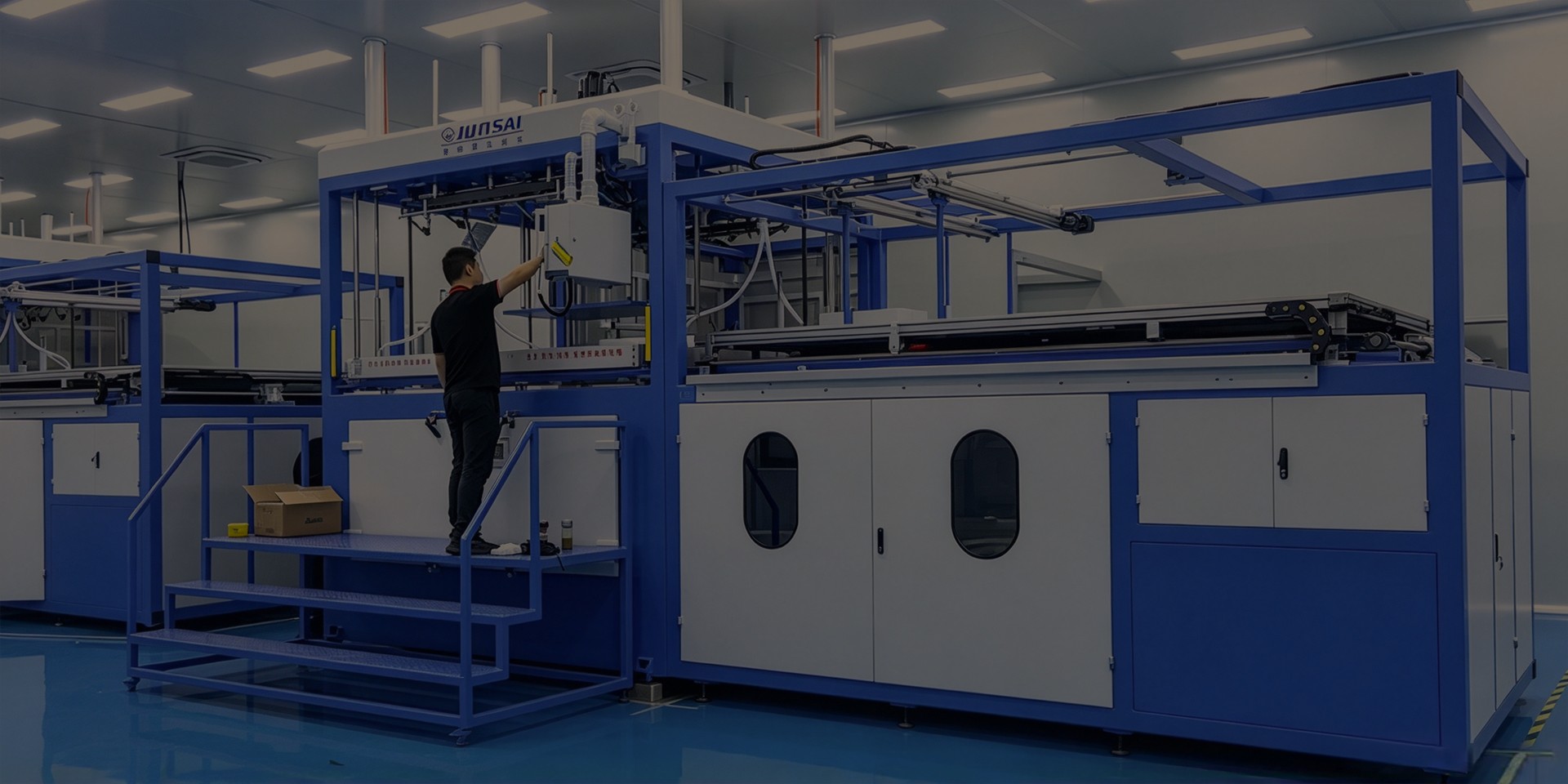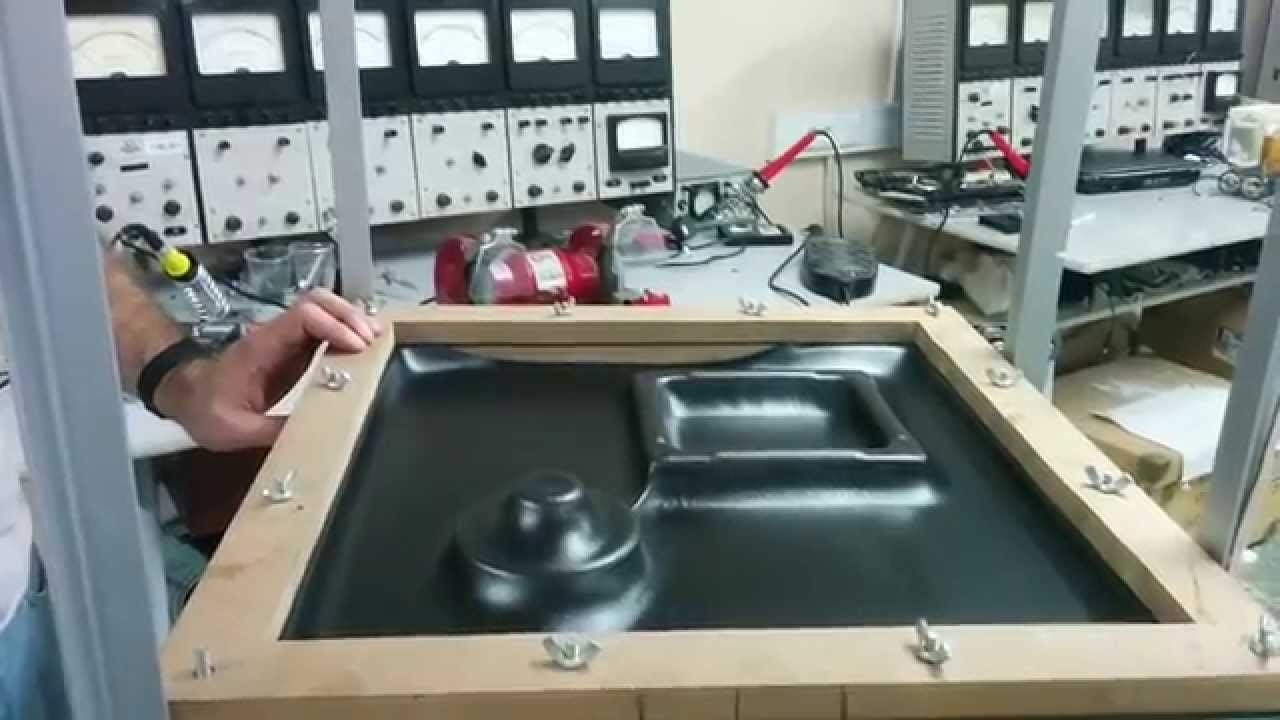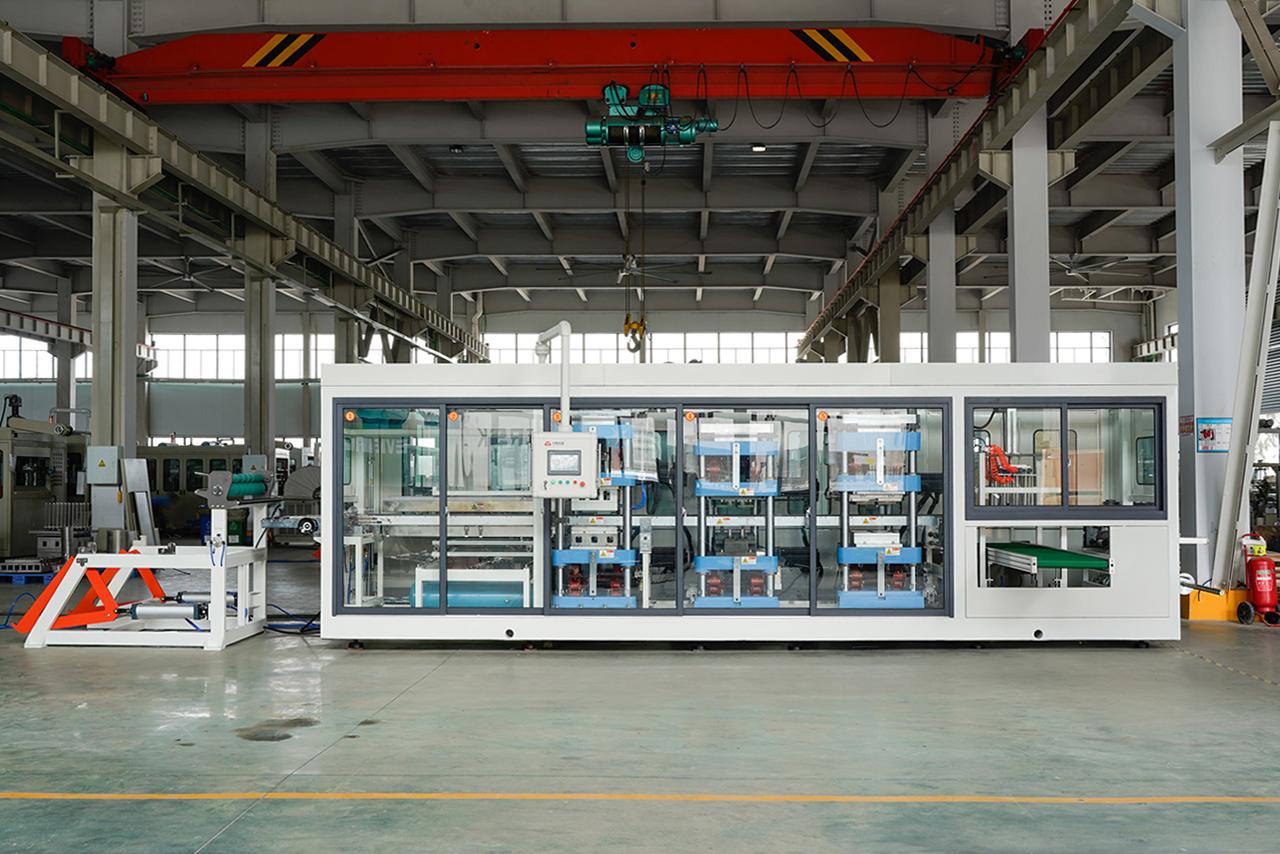






The cost of a thermoforming machine depends on more than its purchase price. Machine size, production capacity, heating technology, automation level, mold design, material compatibility, and additional equipment all influence the final investment. A machine designed for small plastic components will have a different configuration and price from an industrial system used to manufacture large automotive panels, refrigerator liners, or luggage shells.
For manufacturers planning to process plastic sheets, understanding these cost factors helps them select suitable thermoforming equipment without paying for unnecessary functions or choosing a machine that cannot meet future production requirements.
This guide explains the main factors affecting thermoforming machine prices, the additional costs buyers should consider, and how to evaluate the total investment before purchasing.
What Affects the Cost of a Thermoforming Machine?
The cost of a thermoforming machine is mainly affected by:
- Machine size and forming area: Larger machines require bigger frames, heating systems, clamping structures, and vacuum capacity.
- Production capacity: Higher output requirements may need faster forming cycles, advanced controls, and more powerful components.
- Heating system: Heating zones, heater type, temperature control, and energy efficiency influence machine configuration and cost.
- Automation level: Manual, semi-automatic, and fully automatic systems have different equipment and integration costs.
- Mold design and quantity: Mold dimensions, materials, complexity, cooling channels, and interchangeable tooling affect the total investment.
- Plastic sheet compatibility: Different materials, sheet thicknesses, and forming requirements may require specific machine configurations.
- Vacuum and pressure systems: Pump capacity, pressure-forming functions, and supporting components add to the equipment cost.
- Auxiliary equipment: Sheet loading, trimming, cutting, stacking, and material handling systems can increase the overall project budget.
- Customization and installation: Special production requirements, factory integration, shipping, and commissioning also affect the final price.
The best purchasing decision is based on the machine's ability to meet actual production requirements and its total cost of ownership, rather than the lowest initial quotation.
What Is a Thermoforming Machine?
A thermoforming machine is industrial equipment that heats thermoplastic sheets until they become soft and formable, then shapes the heated material over or into a mold using vacuum, air pressure, mechanical force, or a combination of these methods.
After forming, the plastic material is cooled and removed from the mold. Depending on the production system, the formed parts may then undergo trimming, cutting, stacking, or other finishing operations.
Thermoforming equipment is used to manufacture products such as:
- Food packaging trays and containers
- Plastic blister packaging
- Refrigerator inner liners
- Automotive interior and exterior components
- Luggage and suitcase shells
- Bathtubs and sanitary products
- Industrial equipment covers
- Medical packaging components
- Protective plastic housings
The machine configuration varies according to the product dimensions, plastic sheet properties, production volume, and required forming accuracy.
1. Machine Size and Forming Area
Machine size is one of the first factors influencing the cost of thermoforming equipment.
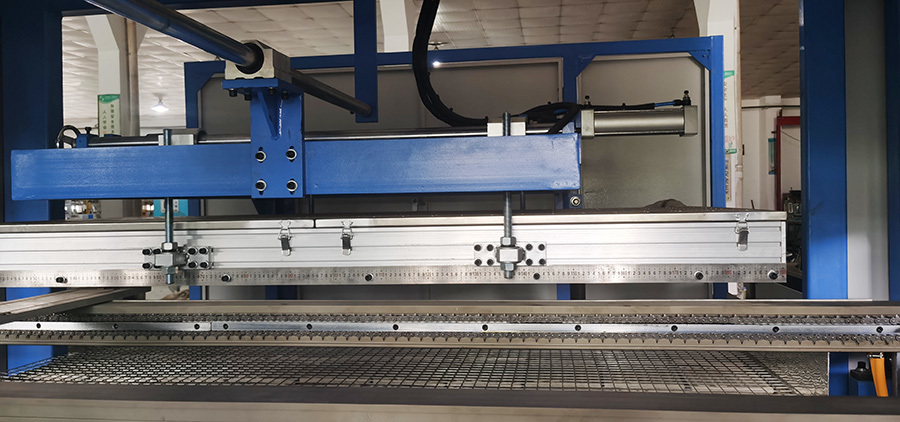
The forming area determines the maximum dimensions of the plastic sheet and the products that can be processed. A machine with a larger working area generally requires a stronger frame, larger heating sections, a bigger clamping system, and more substantial mechanical structures.
For example, a machine designed to produce small packaging trays does not require the same structure as equipment used to form large luggage shells or automotive interior panels.
Several dimensions should be considered:
- Maximum sheet width and length
- Maximum forming area
- Maximum product height or forming depth
- Mold dimensions
- Clamping frame dimensions
- Loading and unloading space
A larger machine may also require higher electrical power and more factory floor space.
Buyers should avoid selecting equipment based only on the dimensions of their current product. If future products are likely to be larger, it may be more economical to consider the required forming area during the initial purchase.
However, choosing an oversized machine without a clear production requirement can increase equipment costs, energy consumption, and factory space requirements.
2. Production Capacity and Cycle Speed
Production capacity directly affects machine configuration and price.
A manufacturer producing several thousand parts per day may have different equipment requirements from a factory manufacturing smaller batches of customized products.
Production speed is influenced by several factors:
- Heating time
- Sheet thickness
- Plastic material properties
- Forming and vacuum time
- Cooling time
- Mold design
- Loading and unloading operations
- Trimming and stacking efficiency
A higher-speed machine may require more powerful heating equipment, improved temperature control, faster mechanical movement, and automated material handling.
It is also important to distinguish between the machine's advertised cycle speed and actual production output.
A machine may complete a forming cycle quickly, but the complete production process can take longer when loading, cooling, trimming, or stacking operations are included.
When comparing quotations, buyers should ask manufacturers to provide realistic production estimates based on their actual plastic sheets, mold configuration, and product design.
3. Heating System Configuration
The heating system is another major cost factor.
Thermoforming requires plastic sheets to reach a suitable forming temperature before they are shaped. Different materials and sheet thicknesses require different heating conditions.
Common heating system considerations include:
- Ceramic heaters
- Infrared heating elements
- Heating plate configuration
- Number of heating zones
- Independent temperature control
- Heating distance adjustment
- Temperature monitoring and control accuracy
A machine with multiple independently controlled heating zones generally provides greater flexibility when processing different sheet materials or products with uneven forming requirements.
For large or thick plastic sheets, a more advanced heating arrangement may be needed to achieve uniform temperature distribution.
The heating system also affects energy consumption. Equipment with suitable insulation, zone control, and heating management may reduce unnecessary energy use during production.
However, a more advanced heating system should be selected according to the material and product requirements. Not every application needs the same heating capacity or control functions.
4. Plastic Sheet Materials and Thickness
The type of plastic sheet used in production influences the machine configuration.
Thermoforming equipment can process a range of thermoplastic materials, including:
- ABS (Acrylonitrile Butadiene Styrene)
- HIPS (High Impact Polystyrene)
- PET (Polyethylene Terephthalate)
- PETG (Polyethylene Terephthalate Glycol)
- PP (Polypropylene)
- PVC (Polyvinyl Chloride)
- PMMA (Polymethyl Methacrylate)
- PC (Polycarbonate)
These materials have different forming temperatures, stiffness, stretching behavior, and cooling characteristics.
For example, ABS is widely used for luggage shells and automotive components, while PET and HIPS are common choices for packaging applications.
Sheet thickness also affects the machine requirements. Thin plastic sheets used for packaging can often be processed with different equipment configurations from thick sheets used for industrial housings or sanitary products.
Thicker plastic sheets may require:
- Higher heating capacity
- Longer heating time
- Greater clamping force
- More powerful vacuum or pressure systems
- Longer cooling time
- Stronger mechanical structures
A machine designed for thin-gauge packaging should not automatically be considered suitable for heavy-gauge applications.
Before purchasing, buyers should provide the manufacturer with the actual material types, sheet thickness range, sheet dimensions, and product samples or drawings.
This information helps determine whether standard thermoforming equipment is sufficient or whether a customized configuration is required.
5. Automation Level
The level of automation has a direct effect on the total equipment price.
Thermoforming machines can generally be divided into manual, semi-automatic, and fully automatic configurations.
Manual Thermoforming Machines
Manual machines usually require operators to perform more production steps, such as loading plastic sheets, positioning molds, removing formed products, and handling finished parts.
They are often suitable for:
- Small production volumes
- Product development
- Sample manufacturing
- Workshops with limited production requirements
- Applications involving frequent product changes
Their initial equipment investment may be lower, but labor requirements can be higher.
Semi-Automatic Thermoforming Machines
Semi-automatic machines combine automated forming operations with manual handling or selected production steps.
They can offer a practical balance between equipment investment, production efficiency, and operational flexibility.
This configuration may suit manufacturers with moderate production volumes or several product types.
Fully Automatic Thermoforming Machines
Fully automatic systems can integrate multiple production operations, including sheet feeding, heating, forming, cutting, stacking, and material handling.
They may require:
- Automatic sheet loading systems
- Servo-driven mechanisms
- PLC control systems
- Touchscreen operator interfaces
- Automatic cutting or trimming units
- Robotic or mechanical product handling
- Integrated safety systems
Although fully automatic equipment generally requires a higher initial investment, it can reduce manual handling and improve production consistency when operating at suitable volumes.
The appropriate automation level depends on labor costs, output targets, product variety, and the expected operating schedule.
6. Mold Design and Tooling Costs
Molds are an important part of a thermoforming production system. Their design and manufacturing costs should be included when calculating the total investment.
A mold determines the shape and dimensions of the finished product. Its structure, material, cooling design, surface finish, and manufacturing accuracy all affect its price.
Common mold materials include:
- Aluminum
- Cast aluminum alloys
- Steel
- Other application-specific materials
Aluminum molds are widely used in thermoforming because of their thermal conductivity and relatively convenient machining characteristics.
The cost of a mold depends on several factors:
Product complexity: Products with deep cavities, complicated contours, undercuts, or detailed surface features may require more complex mold structures.
Mold dimensions: Larger molds generally require more material and machining work.
Cooling design: Some applications need internal cooling channels to improve temperature control and shorten production cycles.
Surface finish: Products with visible surfaces or specific appearance requirements may need additional polishing or surface treatment.
Production quantity: A mold designed for continuous high-volume manufacturing may require different construction and durability considerations from a prototype mold.
Number of molds: Manufacturers producing several product models may need multiple interchangeable molds.
Buyers should confirm whether the machine quotation includes the mold or whether tooling is priced separately. They should also ask about mold compatibility, replacement costs, and the time required for mold changes.
7. Vacuum and Pressure Systems
The forming system also affects the price of a thermoforming machine.
Vacuum forming uses negative pressure to pull heated plastic sheets against the mold surface. Pressure forming uses compressed air to push the softened material against the mold, often allowing more detailed surface features.
Some machines use vacuum forming, while others include pressure-forming capabilities or combined forming methods.
The cost of these systems depends on:
- Vacuum pump capacity
- Vacuum tank volume
- Air pressure requirements
- Pressure-forming components
- Pipeline design
- Valve configuration
- Vacuum and pressure control
- Required forming speed
Products with deep cavities, complex shapes, or demanding surface details may need a more advanced forming system.
A higher-capacity vacuum pump is not automatically the best choice. Its specification should match the mold volume, material, forming process, and required cycle time.
Buyers should discuss actual production samples with the equipment manufacturer to determine the appropriate vacuum and pressure configuration.
8. Control Systems and Electrical Components
The electrical and control systems influence both the purchase price and the machine's operating convenience.
Common control components include:
- PLC controllers
- Touchscreen interfaces
- Temperature controllers
- Servo motors
- Sensors
- Electrical cabinets
- Safety interlocks
- Automatic fault detection systems
A basic control system may be sufficient for straightforward production processes.
More advanced systems can provide programmable production parameters, automated movement control, temperature monitoring, and fault information.
Servo-driven systems may offer more precise movement control than simpler mechanical arrangements, depending on the application and machine design.
Buyers should also consider the availability of replacement parts and technical support for the selected control components.
Using well-supported electrical components can make maintenance and troubleshooting easier over the equipment's service life.
9. Machine Structure and Component Quality
The machine frame, mechanical components, and manufacturing quality contribute to the equipment cost.
A thermoforming machine must withstand repeated heating, clamping, forming, cooling, and mechanical movement.
Its structural design affects stability, alignment, and long-term operation.
Important areas to evaluate include:
- Machine frame construction
- Clamping system
- Guide rails and linear bearings
- Drive mechanisms
- Hydraulic or pneumatic components
- Heating system supports
- Electrical cabinet construction
- Mechanical processing accuracy
A machine with a stronger structure and suitable components may cost more initially, but it can provide better stability under the intended operating conditions.
Buyers should ask for information about the machine's main components, maintenance requirements, and quality inspection procedures.
They should also evaluate the manufacturer's production experience rather than relying only on component brand names or general claims about machine quality.
10. Auxiliary Equipment and Complete Production Lines
The main thermoforming machine is not always the only equipment required for production.
Depending on the application, additional machinery may be needed to complete the manufacturing process.
Common auxiliary equipment includes:
- Plastic sheet loading systems
- Automatic feeding units
- Sheet cutting machines
- CNC trimming machines
- Punching equipment
- Edge trimming systems
- Product stacking units
- Cooling equipment
- Conveyors
- Material handling systems
For example, a manufacturer producing plastic packaging trays may need forming, cutting, stacking, and material handling equipment.
A factory manufacturing large plastic components may require a separate CNC trimming system to achieve the required product dimensions and edge quality.
When purchasing a complete production line, the total cost includes the machine, auxiliary equipment, electrical integration, control connections, and factory layout requirements.
Buyers should clarify which operations are included in the main machine quotation and which require separate equipment.
11. Customization Requirements
Standard thermoforming machines are designed for common production applications. However, some manufacturers need customized equipment to meet specific product or factory requirements.
Customization may involve:
- Special forming dimensions
- Non-standard sheet thickness ranges
- Customized heating arrangements
- Special mold configurations
- Higher forming depth
- Automatic loading and unloading
- Integrated trimming systems
- Special electrical specifications
- Production line integration
Each customization requirement may affect the machine's engineering, manufacturing, testing, and delivery costs.
For example, a machine designed for large luggage shells may need a different forming area and mold arrangement from a machine producing small food containers.
Customization is useful when standard equipment cannot meet the production requirements. However, unnecessary customization can increase the investment without delivering meaningful improvements.
A clear technical specification helps manufacturers distinguish between required functions and optional features.
12. Installation, Shipping, and Commissioning
The quoted machine price may not include every expense associated with purchasing and installing thermoforming equipment.
International buyers should consider:
Shipping costs: Machine dimensions, weight, packaging method, destination port, and transportation arrangements affect freight charges.
Import duties and taxes: These depend on the destination country's regulations and the applicable product classification.
Installation: Some machines require professional mechanical and electrical installation.
Commissioning: Equipment may need testing, parameter adjustment, and production trials before normal operation.
Operator training: Operators and maintenance personnel may require training to use the equipment properly.
Factory preparation: Electrical supply, compressed air, ventilation, floor space, and material handling arrangements may need to be prepared in advance.
Before placing an order, buyers should confirm which services are included in the supplier's quotation and which costs are payable separately.
13. After-Sales Service and Spare Parts
After-sales support is another factor to consider when evaluating the total cost of thermoforming equipment.
A machine purchase is a long-term production investment. Maintenance, troubleshooting, and replacement parts can affect operating expenses over time.
Buyers should evaluate:
- Warranty coverage
- Technical support availability
- Remote troubleshooting
- Spare parts supply
- Maintenance instructions
- Operator training
- Response time for service requests
- Availability of installation and commissioning support
A supplier offering a lower initial price may not provide the same level of technical support or spare parts availability as another manufacturer.
For overseas buyers, remote technical support and clear documentation can help reduce downtime when problems occur.
The purchase decision should therefore consider the supplier's service capabilities as well as the machine specification.
14. Energy Consumption and Operating Costs
The purchase price represents only part of the total cost of owning a thermoforming machine.
During production, manufacturers also need to pay for electricity, labor, maintenance, molds, and auxiliary equipment.
Energy consumption is influenced by:
- Heater power
- Heating time
- Production cycle
- Material thickness
- Machine insulation
- Vacuum pump operation
- Compressed air consumption
- Operating hours
A machine with an appropriate heating system and well-controlled production process may reduce energy use per finished product.
The actual result depends on the material, product design, operating conditions, and production schedule.
Manufacturers should request estimated power consumption and compare it with the expected production output.
A useful way to compare energy efficiency is to calculate the electricity consumed per finished product rather than looking only at the machine's total installed power.
15. How to Calculate the Total Cost of a Thermoforming Machine
To evaluate the investment accurately, buyers should consider the complete cost of purchasing, installing, and operating the equipment.
A simple total investment formula is:
Total Initial Investment = Machine Price + Mold Cost + Auxiliary Equipment + Shipping + Installation + Commissioning + Other Initial Expenses
For long-term cost evaluation, consider:
Total Cost of Ownership = Total Initial Investment + Energy Costs + Labor Costs + Maintenance Costs + Spare Parts + Other Operating Expenses
For example, two machines may have different purchase prices, but the lower-priced option may require more manual labor or additional equipment.
The more expensive machine may provide better production efficiency under the right operating conditions.
A fair comparison should consider the expected production volume, product quality, operating schedule, and maintenance requirements.
16. How to Choose Cost-Effective Thermoforming Equipment
Selecting cost-effective equipment means matching machine capabilities with actual manufacturing requirements.
The following factors can help buyers compare different suppliers.
Define the Product Requirements
Prepare product drawings, dimensions, photographs, and samples where possible.
Specify the maximum product size, forming depth, surface requirements, and expected production quantity.
Confirm Plastic Sheet Specifications
Provide the material type, sheet thickness, sheet dimensions, and any special material requirements.
This allows the supplier to recommend a suitable heating system and forming configuration.
Calculate Required Production Capacity
Estimate daily or monthly production targets.
Ask suppliers to explain how their cycle-time estimates relate to actual finished-product output.
Compare Machine Configurations
Compare forming area, heating zones, vacuum capacity, automation level, control systems, and auxiliary equipment.
Do not compare quotations based only on the machine's name or advertised production speed.
Review Mold and Tooling Costs
Confirm the number of molds included, mold materials, mold-changing methods, and whether additional tooling is required for future products.
Evaluate Service and Maintenance
Ask about warranty terms, spare parts, technical support, and operator training.
Compare Total Project Costs
Include shipping, installation, commissioning, energy consumption, and expected maintenance costs.
A detailed comparison helps manufacturers avoid unexpected expenses after the machine arrives.
17. Information to Prepare Before Requesting a Thermoforming Machine Quotation
Providing accurate production information helps equipment manufacturers prepare more relevant quotations.
Buyers should ideally provide:
| Information | Details to Prepare |
|---|---|
| Product type | Tray, container, luggage shell, automotive part, housing, etc. |
| Product dimensions | Length, width, height, and forming depth |
| Plastic material | ABS, PET, PETG, PP, HIPS, PVC, PC, etc. |
| Sheet thickness | Minimum, maximum, and commonly used thickness |
| Sheet dimensions | Width and length |
| Production target | Expected pieces per hour, day, or month |
| Mold requirements | Existing molds or new molds |
| Automation preference | Manual, semi-automatic, or fully automatic |
| Factory conditions | Power supply, compressed air, available floor space |
| Destination | Country and delivery location |
Product drawings, sample photographs, and material specifications can help the manufacturer assess the application more accurately.
The more complete the information, the easier it is to recommend suitable thermoforming equipment and prepare a realistic quotation.
18. Common Mistakes When Evaluating Thermoforming Machine Prices
Choosing Only by Initial Price
A low quotation may exclude molds, auxiliary equipment, installation, or other required functions.
Compare the complete project cost rather than the headline machine price.
Ignoring Material Compatibility
Not every machine is suitable for every plastic sheet material or thickness.
Confirm the equipment's material range before purchasing.
Overestimating Production Speed
Advertised cycle speed may not represent actual finished-product output.
Ask for production estimates based on your specific product and mold.
Purchasing Unnecessary Automation
Fully automatic equipment may not be economical for small production volumes or frequent low-volume product changes.
Select automation according to actual labor and production requirements.
Forgetting Future Mold Requirements
If the factory plans to introduce additional products, mold compatibility and mold-changing arrangements should be considered during machine selection.
Overlooking After-Sales Support
Limited technical support or long spare parts delivery times can increase operating costs.
Evaluate the supplier's service capabilities before making a final decision.
19. Frequently Asked Questions About Thermoforming Machine Costs
1. What factors affect the price of a thermoforming machine?
The main factors include machine size, forming area, production capacity, heating system, automation level, mold design, plastic sheet compatibility, vacuum or pressure systems, auxiliary equipment, and customization requirements. Shipping, installation, and after-sales services can also affect the total investment.
2. Why do large thermoforming machines cost more?
Large thermoforming machines generally require stronger frames, larger heating systems, bigger clamping structures, and higher-capacity vacuum or pressure systems. Their manufacturing, transportation, and installation requirements may also be more demanding.
3. Does automation increase the cost of thermoforming equipment?
Yes. Automatic sheet feeding, servo drives, PLC controls, automatic cutting, stacking, and integrated material handling can increase the equipment price. However, automation may reduce manual labor and improve production consistency when the factory has sufficient production volume.
4. Does plastic sheet thickness affect machine cost?
Yes. Thick plastic sheets generally require higher heating capacity, stronger clamping structures, and suitable forming systems. Equipment designed for heavy-gauge thermoforming may therefore have different specifications and costs from machines used for thin packaging sheets.
5. Which plastic materials can a thermoforming machine process?
Depending on the machine configuration, thermoforming equipment can process materials such as ABS, HIPS, PET, PETG, PP, PVC, PMMA, and PC. The suitable material range should be confirmed with the manufacturer based on sheet thickness and forming requirements.
6. Are molds included in the thermoforming machine price?
Not always. Some quotations include standard molds, while others price molds separately. Mold costs depend on dimensions, material, complexity, cooling design, surface finish, and production requirements. Buyers should confirm the number and specifications of included molds.
7. Is a fully automatic thermoforming machine always better?
No. Fully automatic equipment is generally suitable for manufacturers with higher production volumes and standardized processes. Manual or semi-automatic machines may be more economical for small batches, product development, or applications requiring frequent product changes.
8. What is the difference between vacuum forming and pressure forming equipment?
Vacuum forming uses negative pressure to draw heated plastic sheets against a mold. Pressure forming uses compressed air to push the softened plastic against the mold. Pressure forming can provide more detailed surface features in suitable applications, but the appropriate system depends on the product design and production requirements.
9. Does a higher machine price mean better product quality?
Not necessarily. Product quality depends on machine design, heating uniformity, forming control, mold quality, material properties, and process settings. Buyers should evaluate machine performance through technical specifications, product samples, and production trials rather than price alone.
10. What additional costs should buyers consider?
Additional expenses may include molds, auxiliary equipment, shipping, import duties, installation, commissioning, operator training, factory preparation, spare parts, electricity, and maintenance.
11. How can manufacturers reduce thermoforming machine investment costs?
Manufacturers can control investment costs by selecting the correct machine size, avoiding unnecessary automation, optimizing mold design, confirming material compatibility, and purchasing only the auxiliary equipment needed for their production process. Comparing total project costs from multiple qualified suppliers is also useful.
12. How do I get an accurate quotation for a thermoforming machine?
Provide the manufacturer with product drawings or samples, plastic sheet material, sheet thickness, sheet dimensions, required production capacity, mold requirements, and preferred automation level. The destination country and factory power supply should also be specified.
13. How much does a custom thermoforming machine cost?
The cost of a custom thermoforming machine depends on its forming area, heating configuration, automation level, mold requirements, material range, and special production functions. A reliable quotation requires a review of the actual product and production specifications.
14. What should I compare when choosing a thermoforming machine manufacturer?
Compare the manufacturer's industry experience, machine design, component quality, material compatibility, production performance, customization capabilities, mold support, warranty terms, spare parts availability, and technical service. Requesting product samples or a machine demonstration can help verify whether the proposed equipment meets your requirements.
Conclusion
The cost of a thermoforming machine is determined by its technical configuration and the production requirements it needs to meet. Machine dimensions, production capacity, heating technology, plastic sheet materials, automation, mold design, and auxiliary equipment all contribute to the final investment.
A suitable machine should process the required plastic sheets, produce parts at the expected output level, and maintain consistent product quality under normal operating conditions.
Before requesting a quotation, manufacturers should prepare product drawings, material specifications, sheet thickness, production targets, and automation requirements. This information allows equipment suppliers to recommend a more suitable configuration and provide a clearer cost breakdown.
JUNSAI Group provides thermoforming machine solutions for different plastic forming applications. Manufacturers planning a new production line or upgrading existing equipment can discuss their product requirements and technical specifications with the JUNSAI Group team to explore suitable machine configurations.