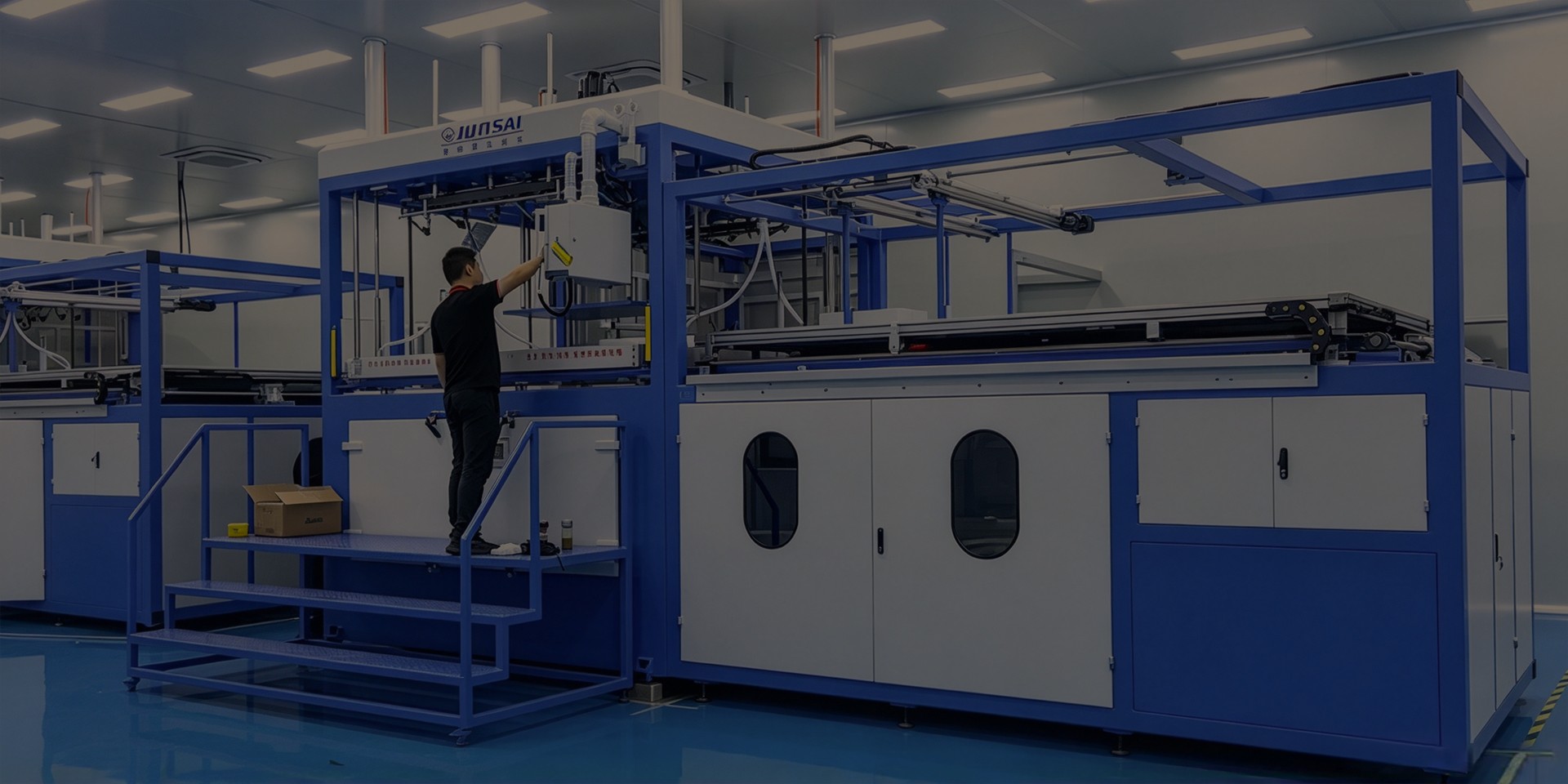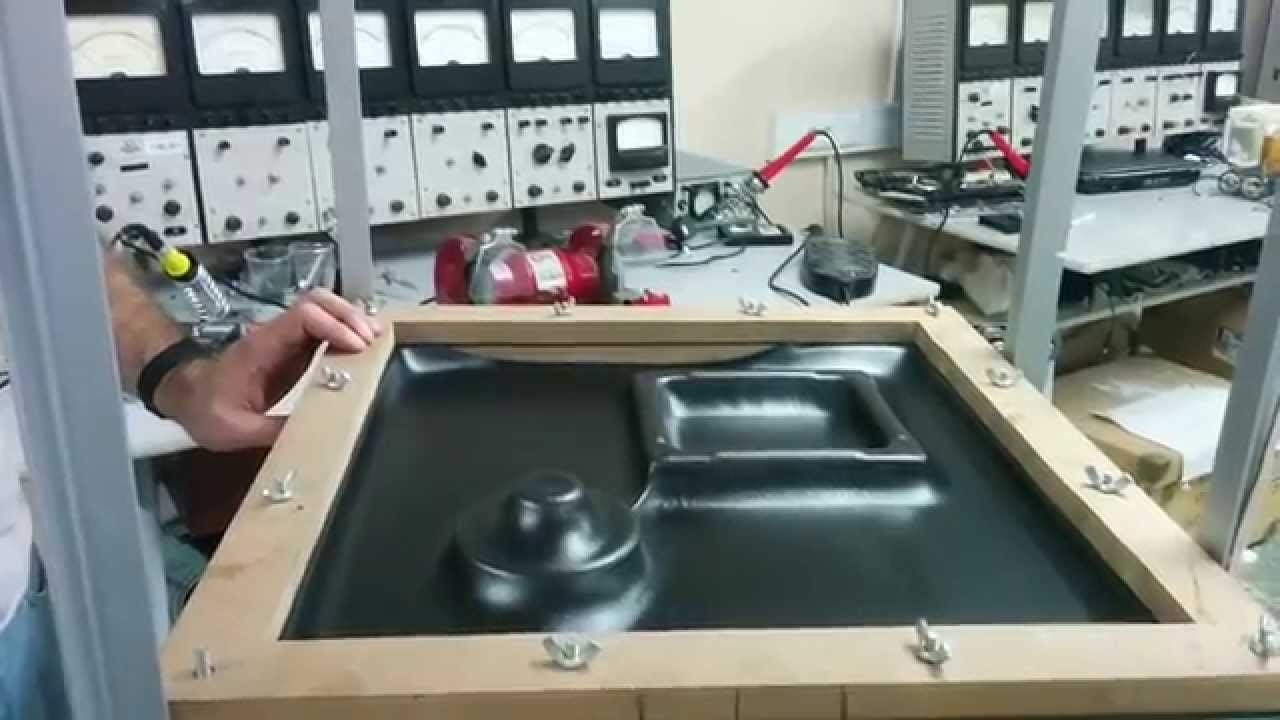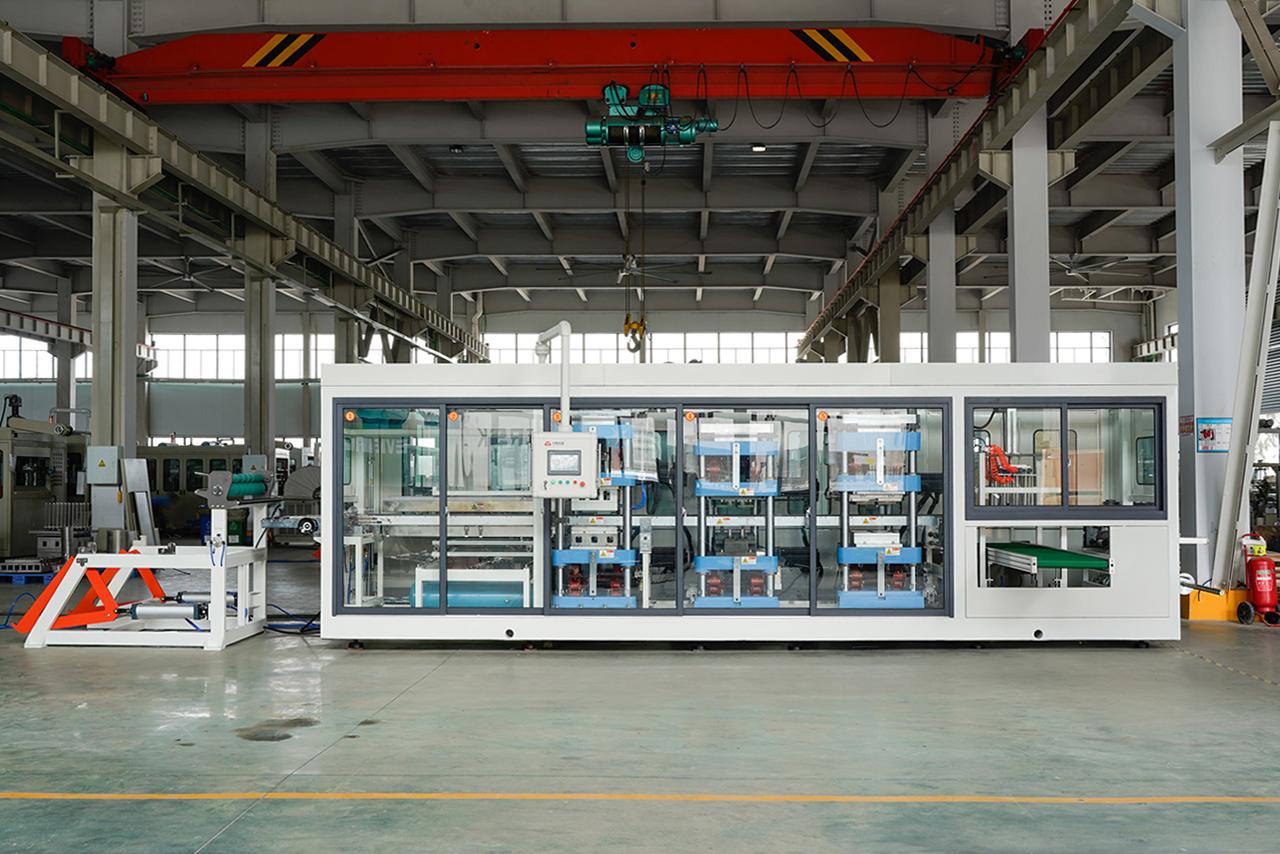






Thermoforming machines for luggage and suitcase shell production heat a thermoplastic plastic sheet until it becomes flexible, then use vacuum pressure, a mold, and controlled cooling to form rigid three-dimensional luggage shells. After forming, the shells are trimmed, drilled or punched, inspected, and transferred to the luggage assembly line.
Common materials include acrylonitrile butadiene styrene (ABS), polycarbonate (PC), and PC/ABS blends. The quality of the finished shell depends on material selection, sheet thickness, heating uniformity, mold design, vacuum performance, cooling time, and trimming accuracy.
For luggage manufacturers, choosing the right luggage vacuum forming machines requires matching the equipment's forming area, mold configuration, heating system, automation level, and production capacity to the intended suitcase sizes and materials.
What Are Luggage Vacuum Forming Machines?
Luggage vacuum forming machines are specialized thermoforming equipment used to shape heated thermoplastic sheets into rigid suitcase shells. During the forming process, the machine heats a flat plastic sheet until it softens, positions it over or into a mold, and applies vacuum to draw the sheet against the mold surface. The plastic is then cooled to retain the desired shape.
These machines are commonly used to produce the front and back shells of hard-shell suitcases, travel cases, and other molded luggage products. Depending on the production line, they may operate as standalone equipment or as part of an integrated luggage manufacturing system that includes plastic sheet extrusion, trimming, punching, surface finishing, and assembly.
The term thermoforming machine describes a broader category of equipment. Luggage vacuum forming machines are a specialized type designed to accommodate the dimensions, forming depth, material requirements, and surface appearance of luggage shells.
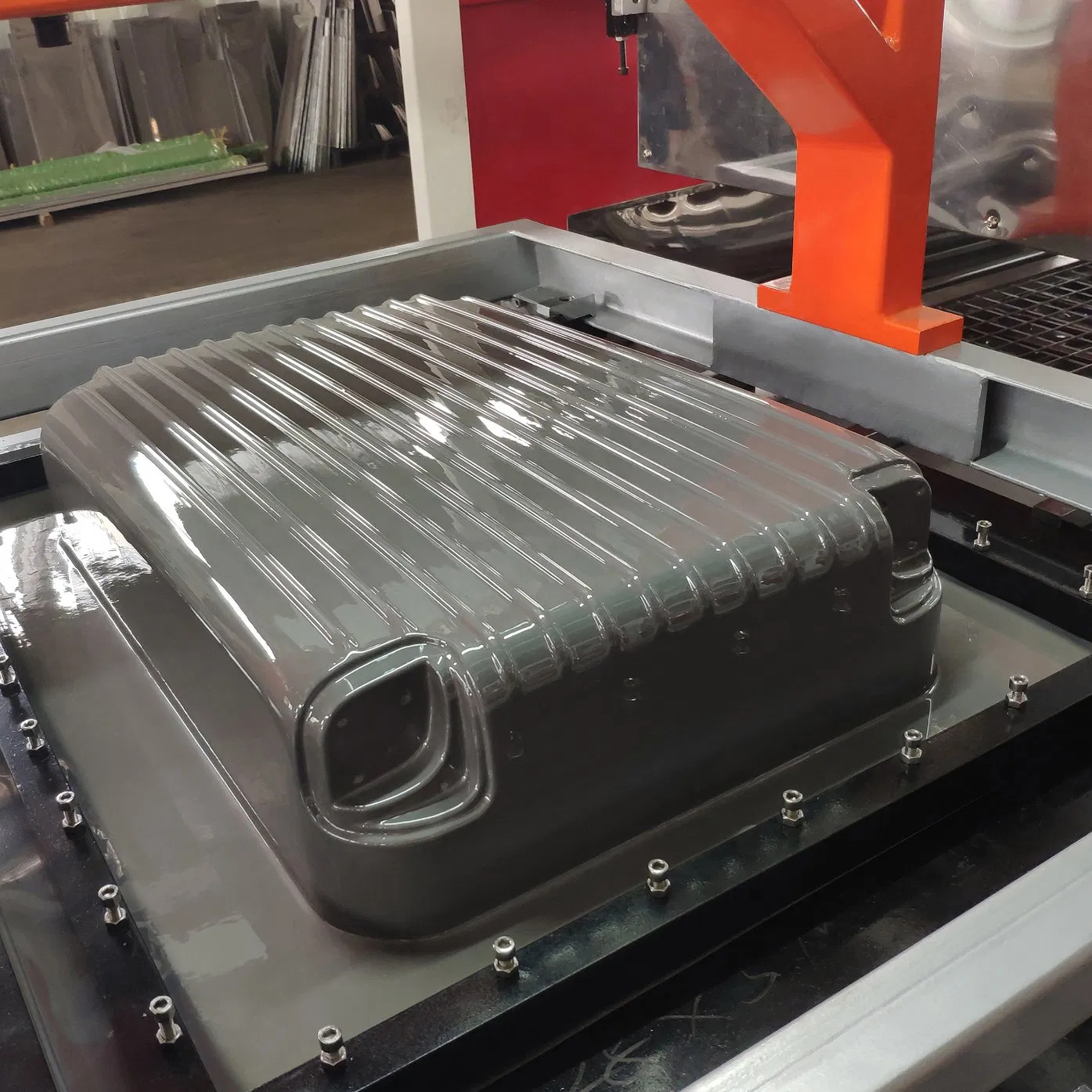
1. Why Thermoforming Is Used in Luggage Manufacturing
Hard-shell luggage must combine low weight with sufficient stiffness, impact resistance, and an attractive exterior. Its shape also needs to accommodate handles, hinges, wheels, locks, zippers, and internal lining components.
Thermoforming offers manufacturers a way to produce large, contoured plastic shells from sheet material without injecting molten plastic into a closed mold under high pressure.
Production of Large, Lightweight Shells
A flat plastic sheet can be formed into a three-dimensional suitcase shell with broad panels, rounded corners, side walls, and molded design features. The forming process allows manufacturers to create a range of shell geometries using suitable molds and machine configurations.
The final weight depends on the material density, starting sheet thickness, shell dimensions, and wall-thickness distribution.
Flexible Product Design
Luggage manufacturers often produce several suitcase sizes, colors, textures, and surface patterns. Thermoforming can accommodate different shell designs through compatible molds and suitable process adjustments.
Changing a mold or product design still requires technical validation. Manufacturers should confirm mold dimensions, forming depth, machine compatibility, and trimming requirements before introducing a new shell design.
Production Efficiency
Automated luggage vacuum forming machines can coordinate sheet positioning, heating, forming, cooling, and mold release. Depending on the machine design, automated handling can reduce manual work and improve repeatability.
Actual output depends on the shell size, material, heating time, cooling requirements, number of forming stations, and downstream operations. Advertised machine speed should therefore be evaluated against the intended product rather than treated as a guaranteed production rate.
Consistent Appearance Across Product Batches
For luggage brands, visual consistency matters alongside mechanical performance. Uneven gloss, surface marks, wrinkles, and inconsistent textures can affect the perceived quality of the finished suitcase.
A controlled forming process helps manufacturers reproduce the intended surface appearance and dimensions across production batches.
2. Which Plastic Materials Are Used for Luggage Shells?
Material selection determines how a plastic sheet responds to heating and stretching, as well as the impact performance, weight, surface finish, and cost of the finished shell.
The most common materials for rigid luggage shells include ABS, polycarbonate, and PC/ABS blends. Polypropylene is also used in some luggage designs and production systems.
ABS Plastic
Acrylonitrile butadiene styrene (ABS) is used in luggage manufacturing because it offers a useful balance of impact performance, rigidity, processability, and cost.
ABS sheets can be thermoformed into a range of suitcase shell shapes. The appropriate grade and sheet thickness depend on the product's durability requirements, design, and target market.
ABS is often considered for value-oriented and mid-range hard-shell luggage, although the performance of the finished product depends on the complete design and material specification.
Polycarbonate (PC)
Polycarbonate is widely associated with premium hard-shell luggage because of its impact resistance and ability to withstand deformation under appropriate conditions.
PC requires processing conditions suited to its specific grade. Its forming temperature, heating duration, and cooling requirements may differ significantly from those of ABS.
Manufacturers should use the material supplier's processing guidance and validate the actual forming window through production trials.
PC/ABS Blends
PC/ABS blends combine the properties of polycarbonate and ABS in formulations developed for particular performance and processing requirements.
These blends may be selected when manufacturers want a balance of impact performance, rigidity, appearance, and manufacturing cost. Results vary by formulation, so the material specification should be confirmed before the machine settings are finalized.
Polypropylene (PP)
Polypropylene is used in some rigid luggage designs because of its low density and flexibility. Its behavior during heating, forming, and cooling differs from that of ABS and PC.
A machine intended for PP luggage shells must be configured for the relevant sheet characteristics and product geometry. Compatibility should be confirmed with the machine supplier rather than assumed from the machine's general thermoforming capability.
Comparing Common Luggage Shell Materials
| Material | Common reasons for selection | Manufacturing considerations |
|---|---|---|
| ABS | Balance of cost, rigidity, and impact performance | Requires a validated heating window and suitable mold design |
| Polycarbonate (PC) | Impact resistance and premium product positioning | Requires material-specific heating and cooling control |
| PC/ABS blend | Balance of selected PC and ABS properties | Processing conditions depend on the formulation |
| Polypropylene (PP) | Low density and flexibility | Requires suitable equipment settings and dimensional control |
There is no universally best material for every suitcase. Manufacturers should compare impact requirements, shell weight, surface appearance, material cost, production conditions, and intended service life before choosing a grade.
3. The Forming Process: From Plastic Sheet to Suitcase Shell
The forming process transforms a flat plastic sheet into a rigid, contoured shell. Each stage influences the dimensions, wall thickness, appearance, and performance of the final component.
Step 1: Prepare the Plastic Sheet
The process begins with a plastic sheet that meets the requirements for material grade, thickness, width, color, and surface quality.
Some luggage factories produce their own sheet using plastic sheet extrusion equipment. Others purchase pre-extruded sheets from specialist suppliers.
Sheet consistency matters because variations in thickness or material properties can change how the sheet heats and stretches. Poor incoming material may cause uneven wall thickness, surface defects, or differences between finished shells.
The sheet should be stored and handled according to the supplier's recommendations to avoid contamination, scratches, or other conditions that could affect forming quality.
Step 2: Clamp and Position the Sheet
The sheet is positioned over the forming area and held securely by a clamping frame or other machine-specific holding system.
Correct positioning ensures that sufficient material covers the mold and that the sheet remains stable during heating and forming.
The required sheet dimensions depend on the shell size, mold layout, clamping arrangement, and trimming allowance. A larger suitcase shell may require a machine with a greater usable forming area and a suitable handling system.
Step 3: Heat the Sheet Uniformly
The machine heats the plastic sheet until it becomes sufficiently pliable to form around the mold.
Heating systems may use infrared elements, ceramic heaters, or other arrangements depending on the machine design. Independently controlled heating zones can help adjust the temperature distribution across different areas of the sheet.
Uniform heating is important because different parts of the sheet stretch at different rates when their temperatures vary. A region that is too cold may resist forming, while an overheated region may stretch excessively or develop surface defects.
The correct forming temperature depends on the plastic type, material grade, sheet thickness, heater arrangement, and cycle conditions. Manufacturers should not use one temperature setting for all materials.
To ensure uniformity, production teams should monitor heating-zone settings and validate the sheet's temperature distribution under actual operating conditions.
Step 4: Form the Shell Using Vacuum Pressure
Once the sheet reaches the required forming window, the machine positions it against the mold.
A vacuum system removes air between the heated sheet and the mold, allowing atmospheric pressure to push the softened plastic against the mold surface. The sheet takes on the mold's shape as it stretches around the contours.
The mold determines the principal shell geometry, including the main panel, side walls, rounded corners, and surface patterns.
Deep-drawn regions require particular attention because the sheet stretches as it covers a larger surface area. If material distribution is poorly controlled, corners and side walls may become thinner than intended.
Depending on the shell design and machine configuration, manufacturers may use pre-stretching, plug assistance, or other forming aids to improve material distribution. The suitability of these techniques should be established through mold design and process trials.
Step 5: Cool the Formed Shell
After the sheet has conformed to the mold, it must cool until it can retain its shape during release and handling.
Cooling may involve a temperature-controlled mold, forced air, or other systems incorporated into the machine.
Insufficient cooling can lead to deformation after the shell leaves the mold. Excessive cooling time can lengthen the production cycle and reduce output.
The correct cooling conditions depend on material properties, shell thickness, mold temperature, and geometry. Production trials should establish a cycle that balances dimensional stability with practical output.
Step 6: Release the Shell From the Mold
When the formed shell has cooled sufficiently, the machine releases it from the mold.
Controlled release helps prevent scratches, distortion, and damage to the shell's edges. The removal method may be manual, semi-automatic, or fully automatic depending on the equipment configuration.
The shell should remain adequately supported during transfer, especially when its temperature or geometry makes it susceptible to deformation.
Step 7: Trim and Finish the Shell
The formed plastic sheet usually contains excess material around the shell perimeter. Trimming removes this material to establish the final outline and prepare the shell for assembly.
Depending on the production line, trimming may use dedicated cutting fixtures, presses, CNC equipment, or other suitable tools.
Additional operations may include drilling or punching mounting holes for handles, hinges, locks, wheels, and other hardware. Surface finishing, printing, texturing, or protective treatments may also be required by the product design.
Accurate trimming helps ensure that the two suitcase halves align correctly and that downstream assembly can proceed without unnecessary rework.
Step 8: Inspect the Finished Luggage Shells
The final shell should be checked against the product specification before entering the next manufacturing stage.
Inspection may include:
- Overall dimensions and shell depth
- Wall-thickness distribution in corners and deep-drawn areas
- Surface appearance, including gloss, texture, scratches, and wrinkles
- Warping and dimensional stability
- Edge quality and trimming accuracy
- Positions of holes and mounting features
- Fit between the front and rear shell halves
Inspection methods should reflect the actual product requirements. For example, wall-thickness measurements may focus on areas known to experience greater stretching during forming.
Consistent inspection records help manufacturers identify process variations and improve production settings.
4. Main Components of Luggage Vacuum Forming Machines
The machine configuration determines how accurately and efficiently plastic sheets can be transformed into luggage shells.
Heating System
The heating system softens the plastic sheet before forming. Its output, temperature-control range, heater arrangement, and zoning should suit the selected materials and shell dimensions.
A heating system that works well for one sheet grade may require different settings for another. Buyers should verify the supported material range and ask how heating uniformity is controlled.
Vacuum System
The vacuum system removes air between the plastic sheet and mold. Its capacity, response time, piping arrangement, and sealing condition affect how effectively the sheet conforms to the mold.
The required vacuum performance depends on the shell geometry, mold design, material, and production cycle. Buyers should request confirmation that the system can form their actual product.
Forming Mold
The mold establishes the main shape of the suitcase shell. Its surface finish, geometry, vacuum passages, cooling arrangement, and mounting dimensions influence both appearance and repeatability.
Mold selection should account for the largest shell size, required draw depth, surface pattern, and expected production volume.
Control System
A programmable control system can coordinate heating time, forming sequence, vacuum operation, cooling, and other machine functions.
Recipe storage may help operators reproduce settings for different products, although consistent output still depends on material quality, mold condition, machine maintenance, and proper process validation.
Clamping and Handling Mechanism
The clamping system holds the sheet during heating and forming. Handling mechanisms move the sheet or formed shell between positions.
Their capacity should match the sheet dimensions and shell weight. Stable positioning helps reduce misalignment and supports repeatable forming.
Safety Systems
Thermoforming equipment combines heated surfaces, moving mechanisms, vacuum equipment, and sometimes pneumatic systems. Appropriate guarding, emergency stops, safe operating procedures, and maintenance isolation arrangements should be included in the equipment assessment.
Machine operators should receive training on safe loading, unloading, troubleshooting, and maintenance.
5. How to Ensure Uniformity and High Quality in Luggage Shell Production
Producing high quality luggage shells requires control over the entire manufacturing process, not just the forming machine.
Maintain Consistent Sheet Thickness
The initial plastic sheet affects how material is distributed during forming. Variations in incoming thickness can produce differences in the finished shell even when the machine settings remain unchanged.
Manufacturers should establish incoming-sheet specifications and verify thickness at appropriate locations. If the factory produces its own sheet, extrusion and sheet-calendering controls also need to be monitored.
Control Heating Across the Sheet
Uneven heating can cause incomplete mold reproduction, excessive stretching, wrinkles, or local thinning.
Heating zones should be configured for the specific shell design, and settings should be validated after changes to material grade, thickness, mold, or production conditions.
A repeatable heating profile helps ensure uniformity across the formed surface.
Optimize Mold Geometry
Mold geometry affects how the sheet stretches into corners, side walls, and other contours.
Designs with suitable radii and draft angles can make forming and part release easier. Very deep draws or tight corners may require additional material-distribution strategies.
The mold should be reviewed with the equipment supplier and product designer before production tooling is finalized.
Set Appropriate Vacuum and Forming Timing
Vacuum performance and timing affect how closely the sheet follows the mold. Inadequate forming may leave some features poorly defined, while poor process coordination can contribute to uneven material distribution.
The appropriate settings should be established through production trials and adjusted for the specific material and shell design.
Allow Adequate Cooling
Cooling helps the shell retain its intended shape. Removing the part too early may cause warping, while unnecessarily long cooling periods can reduce productivity.
Manufacturers should establish a validated cooling time and avoid stacking or loading shells in ways that could deform them while they are still warm.
Keep Molds and Equipment in Good Condition
Dust, damaged mold surfaces, blocked vacuum passages, worn seals, and faulty heating elements can lead to repeated defects.
Preventive maintenance should cover the heating system, vacuum components, mold surfaces, clamping mechanisms, controls, and trimming equipment.
Track Defects and Corrective Actions
When defects occur, record their type, location, material batch, mold, and operating conditions. A pattern of thin corners, for example, may indicate a material-distribution problem rather than a trimming issue.
Adjustments should be verified with follow-up production runs and inspection results. This approach helps reduce avoidable scrap and improves process consistency over time.
6. How to Choose the Right Thermoforming Machine for Luggage Manufacturing
Selecting suitable luggage vacuum forming machines starts with the intended suitcase shell, not the machine catalog.
Confirm Shell Dimensions and Forming Depth
Identify the largest and smallest shell sizes the factory intends to produce. Confirm the required forming area, usable sheet dimensions, mold envelope, and maximum draw depth.
The machine must accommodate the complete mold and clamping arrangement, not just the nominal width and length stated in the specifications.
Match the Machine to the Plastic Material
Confirm whether the production line will use ABS, PC, PC/ABS, PP, or another sheet material. Ask the supplier to verify the heating system, forming method, vacuum capacity, and cooling arrangement for the selected grades.
Material changes may require new recipes and production trials.
Evaluate Production Capacity
Estimate output using the full cycle, including loading, heating, forming, cooling, release, and any manual handling.
For example, a machine may advertise a short forming time, but the total production cycle can be longer when cooling and handling are included. The expected number of acceptable shells per hour is more useful than a forming-time figure alone.
If the production plan includes several shell sizes, evaluate changeover time and the effort required to switch molds and settings.
Compare Automation Levels
Semi-automatic equipment may suit smaller production volumes or factories with frequent product changes. Automatic systems can reduce manual handling and support higher output when the process is properly integrated.
The decision should account for labor availability, product mix, maintenance capability, factory layout, and investment budget.
Review Mold Changeover and Tooling Costs
A factory producing multiple suitcase sizes needs a practical way to change molds and manage product-specific settings.
Ask about mold compatibility, installation procedures, tooling lead times, spare parts, and maintenance requirements. Mold cost should be assessed together with expected production volume and the number of product designs.
Assess After-Sales Support
Technical support affects installation, commissioning, operator training, and long-term operation.
Before purchasing, clarify the scope of installation assistance, availability of spare parts, maintenance documentation, warranty coverage, and remote or on-site troubleshooting.
Where possible, request a demonstration or forming trial using a representative sheet material and shell design.
7. Luggage Vacuum Forming Machines vs. Other Shell Manufacturing Methods
Vacuum thermoforming is not the only way to manufacture rigid luggage shells. The appropriate method depends on the material, product design, tooling budget, production volume, and desired performance.
| Comparison factor | Vacuum thermoforming | Injection molding |
|---|---|---|
| Starting material | Thermoplastic sheet | Plastic pellets or granules |
| Forming method | Heated sheet drawn against a mold by vacuum | Molten plastic injected into a mold |
| Typical suitability | Large, relatively thin-walled shell components | Parts suited to injection-molding geometry |
| Tooling considerations | Often attractive for large shell designs | Large injection molds can require substantial investment |
| Wall thickness | Changes as the sheet stretches | Influenced by part design, mold filling, and process settings |
| Secondary operations | Trimming and hole-making are commonly needed | Some features can be molded in, although finishing may still be required |
| Main process considerations | Heating uniformity, draw depth, vacuum, cooling, and trimming | Filling, packing, shrinkage, cooling, and mold design |
For many rigid suitcase shells, thermoforming is attractive because it can produce large contoured parts from plastic sheet. Injection molding may be appropriate for other luggage components or specific designs where its tooling and production characteristics are suitable.
The choice should be based on total manufacturing cost, quality requirements, tooling investment, material usage, and the expected product volume.
8. Common Problems in the Luggage Shell Forming Process
Understanding typical forming defects helps production teams diagnose problems more efficiently.
| Defect | Possible causes | General corrective approach |
|---|---|---|
| Uneven wall thickness | Uneven heating, deep draws, unsuitable mold geometry, or inconsistent sheet thickness | Review heating profiles, material distribution, and mold design |
| Incomplete forming | Insufficient sheet temperature, poor vacuum performance, or inadequate forming time | Verify temperature, vacuum system condition, and cycle settings |
| Wrinkles or folds | Poor sheet positioning, uneven stretching, or unsuitable forming sequence | Check clamping, pre-stretching, and forming parameters |
| Warping after release | Inadequate cooling or uneven shrinkage | Validate cooling conditions and handling methods |
| Surface marks | Dirty or damaged mold surfaces, sheet contamination, or overheating | Inspect the mold, sheet condition, and heating process |
| Inaccurate edges | Trimming fixture wear, incorrect positioning, or inconsistent shell dimensions | Check trimming tooling, fixtures, and dimensional controls |
The same defect may have more than one cause. Production teams should test possible causes systematically instead of changing several machine settings at once.
9. Frequently Asked Questions
What are luggage vacuum forming machines used for?
Luggage vacuum forming machines shape heated plastic sheets into three-dimensional suitcase shells. The formed shells are then cooled, trimmed, inspected, and prepared for hardware installation and final assembly.
Which plastic sheet materials are suitable for suitcase shell production?
ABS, polycarbonate, and PC/ABS blends are commonly used for rigid suitcase shells. Polypropylene is also used in some designs. Material suitability depends on the product's impact requirements, weight target, surface finish, forming conditions, and cost.
How does the luggage shell forming process work?
The process generally involves preparing and clamping a plastic sheet, heating it until pliable, drawing it against a mold using vacuum, cooling the formed shell, releasing it from the mold, and trimming the excess material. The finished shell is then inspected before further processing.
How can manufacturers ensure uniformity in luggage shells?
Manufacturers can improve uniformity by controlling incoming sheet thickness, heating distribution, vacuum performance, mold geometry, cooling time, and trimming accuracy. Consistent operating procedures and finished-part inspections help maintain repeatable results.
What causes thin corners in vacuum-formed suitcase shells?
Thin corners can result from excessive stretching as the sheet is drawn over deep or tight mold features. Initial sheet thickness, heating distribution, pre-stretching, mold geometry, and forming timing all influence material distribution. The best corrective action depends on the location and pattern of the thinning.
Can one thermoforming machine produce different suitcase sizes?
Yes, if the machine's forming area, draw depth, clamping system, and mold interface support the required designs. Different sizes generally require compatible molds and validated process settings. Buyers should confirm the largest shell dimensions and expected changeover requirements before purchase.
How do luggage vacuum forming machines affect production efficiency?
Machine design affects heating time, forming consistency, cooling time, handling, and mold changeover. Automation can reduce manual handling, but actual output also depends on shell size, material, tooling, and downstream trimming and assembly operations.
What should buyers check before purchasing luggage vacuum forming machines?
Buyers should evaluate the forming area, maximum draw depth, compatible plastic materials, sheet thickness range, heating controls, vacuum capacity, mold requirements, cycle time, automation level, safety features, and after-sales service. A production trial using the intended material and shell design can help verify suitability.
Is vacuum forming suitable for high-quality hard-shell luggage?
Yes. Vacuum forming can produce high-quality luggage shells when the material, mold, heating profile, forming conditions, cooling process, and finishing operations are properly controlled. The final performance still depends on product design, material grade, wall-thickness distribution, and quality verification.
How should manufacturers calculate the production capacity of a luggage vacuum forming machine?
A basic theoretical estimate is 3,600 divided by the total cycle time in seconds, multiplied by the number of shells produced per cycle. Actual output will be lower when loading, mold changes, maintenance, rejected parts, and other interruptions are considered. Manufacturers should use a representative production trial to establish a realistic capacity estimate.
Conclusion
Thermoforming machines for luggage and suitcase shell production transform plastic sheet into rigid, contoured shells through controlled heating, vacuum forming, cooling, and trimming. The process can accommodate several thermoplastic materials and a range of suitcase sizes, provided the machine and mold are configured for the intended product.
Successful luggage manufacturing depends on more than selecting a machine with a large forming area or high advertised speed. Sheet consistency, material selection, heating uniformity, mold design, vacuum performance, cooling, and finishing all affect the final result.
By evaluating these factors together, luggage manufacturers can select suitable luggage vacuum forming machines, improve production consistency, reduce avoidable defects, and manufacture high quality suitcase shells that meet their design and market requirements.