





Choosing the right thermoforming machine manufacturer is an important decision for businesses involved in plastic packaging, food containers, medical packaging, automotive components, and other thermoformed products. The performance of a thermoforming machine directly affects production capacity, product quality, material consumption, operating costs, and long-term manufacturing efficiency.
With many machine manufacturers offering different machine configurations, automation levels, and production capabilities, comparing suppliers based on price alone can lead to problems after installation. A machine with a lower purchase price may have slower cycle speeds, inconsistent forming results, limited technical support, or higher maintenance costs.
A more effective approach is to evaluate manufacturers based on their engineering capabilities, years of experience, machine performance, customization options, quality control, and after-sales service.
This guide explains how to evaluate a thermoforming machine manufacturer, what technical specifications to compare, which questions to ask before purchasing, and how to identify a supplier that can support your production requirements over the long term.
How Do You Evaluate a Thermoforming Machine Manufacturer?
To evaluate a thermoforming machine manufacturer, examine its industry experience, machine engineering capabilities, production speed, forming accuracy, automation systems, material compatibility, quality control procedures, customization options, and after-sales support.
A reliable manufacturer should provide detailed technical specifications, demonstrate actual machine performance, explain achievable cycle speeds, offer suitable vacuum forming or pressure forming solutions, and provide references from existing customers.
The best supplier is not necessarily the one offering the lowest quotation. It is the manufacturer that can deliver consistent product quality, stable production efficiency, reasonable operating costs, and dependable technical support throughout the machine's service life.
What Is a Thermoforming Machine Manufacturer?
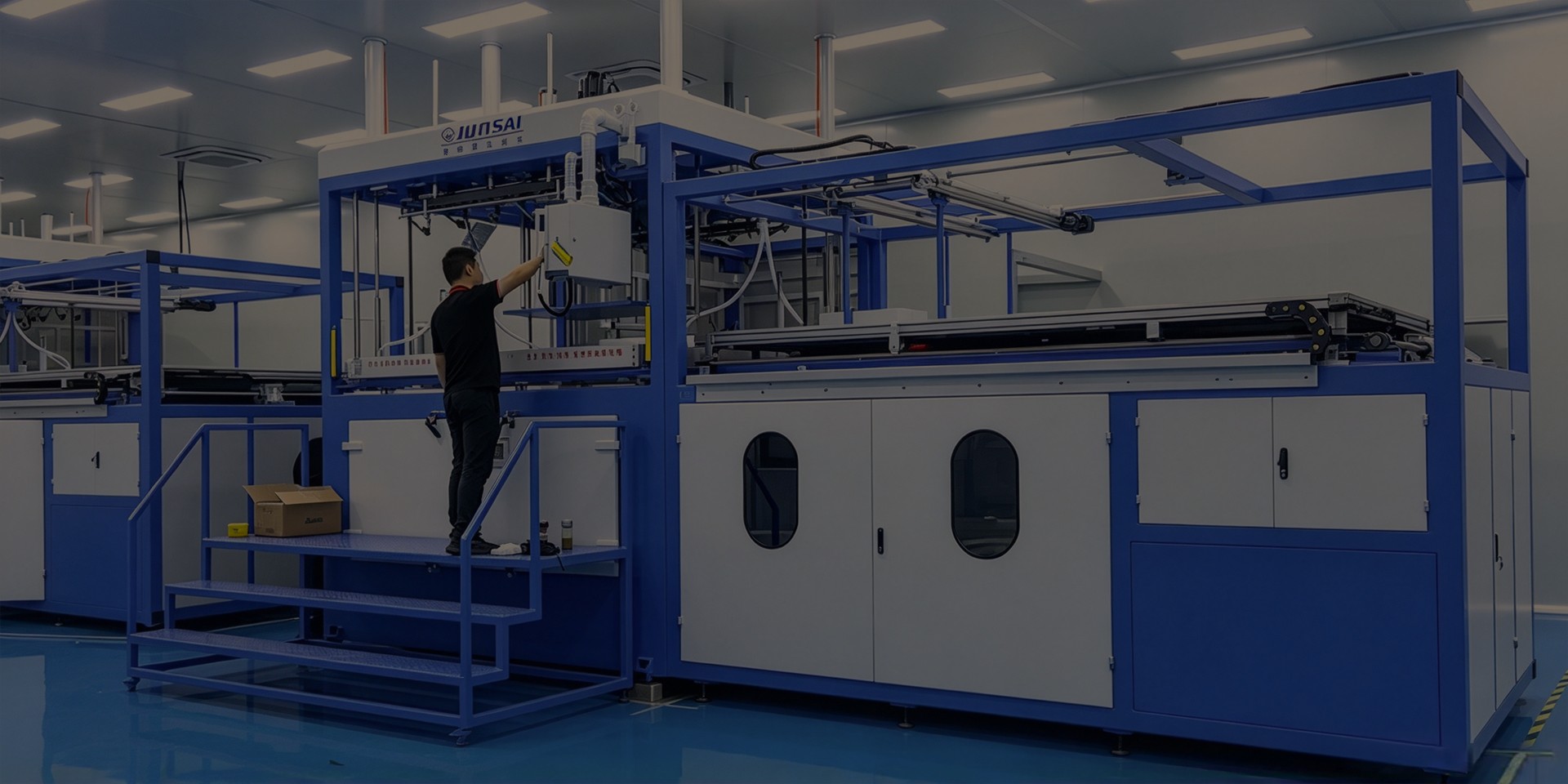
A thermoforming machine manufacturer is a company that designs, engineers, produces, assembles, and supplies equipment used to shape heated thermoplastic sheets into specific products through vacuum forming, pressure forming, or other thermoforming processes.
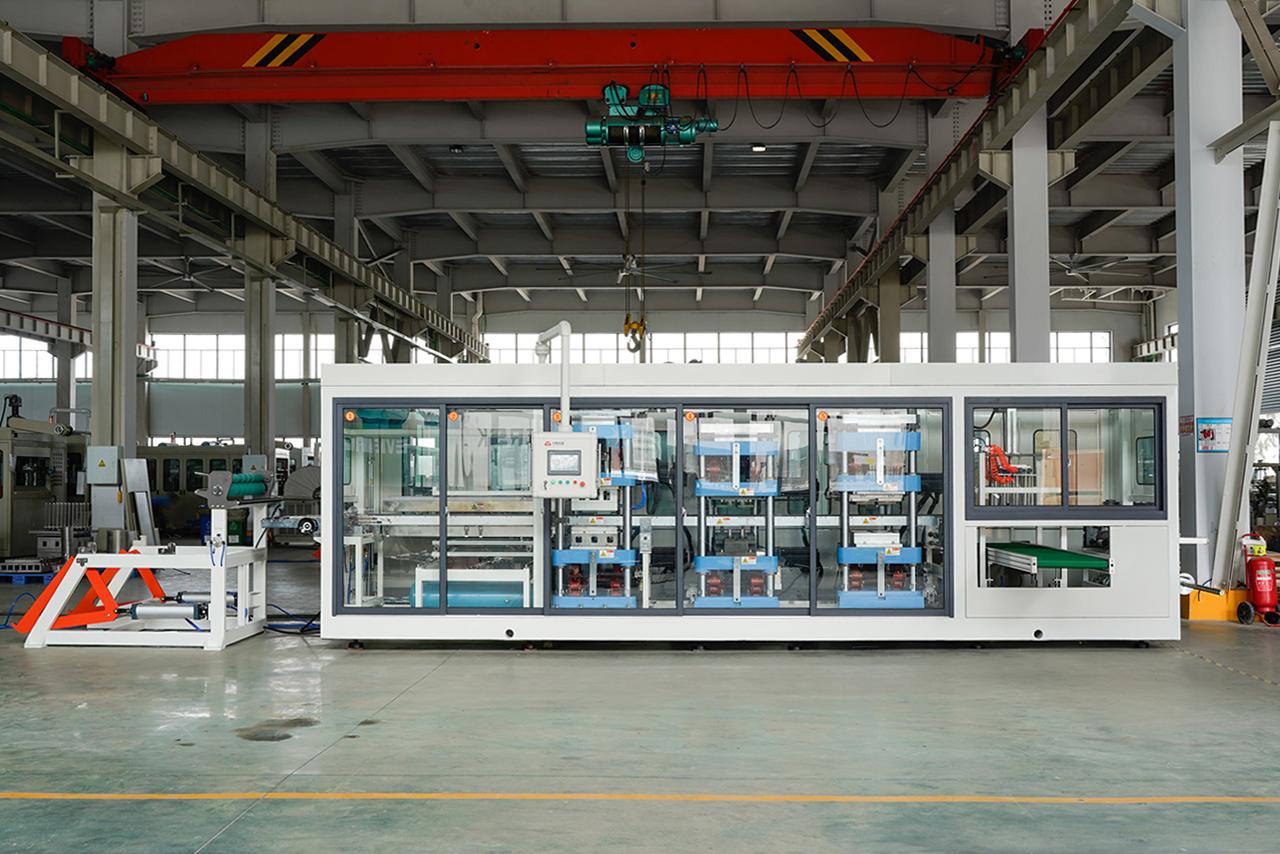
These manufacturers may provide standard thermoforming machines, automatic production lines, customized forming equipment, molds, heating systems, cutting units, stacking systems, and integrated packaging solutions.
Depending on the application, their equipment can be used to manufacture food trays, disposable containers, plastic cups, medical packaging, electronic component trays, industrial packaging, and automotive plastic parts.
A professional thermoforming machine manufacturer should understand both machine engineering and the practical requirements of the products being manufactured.
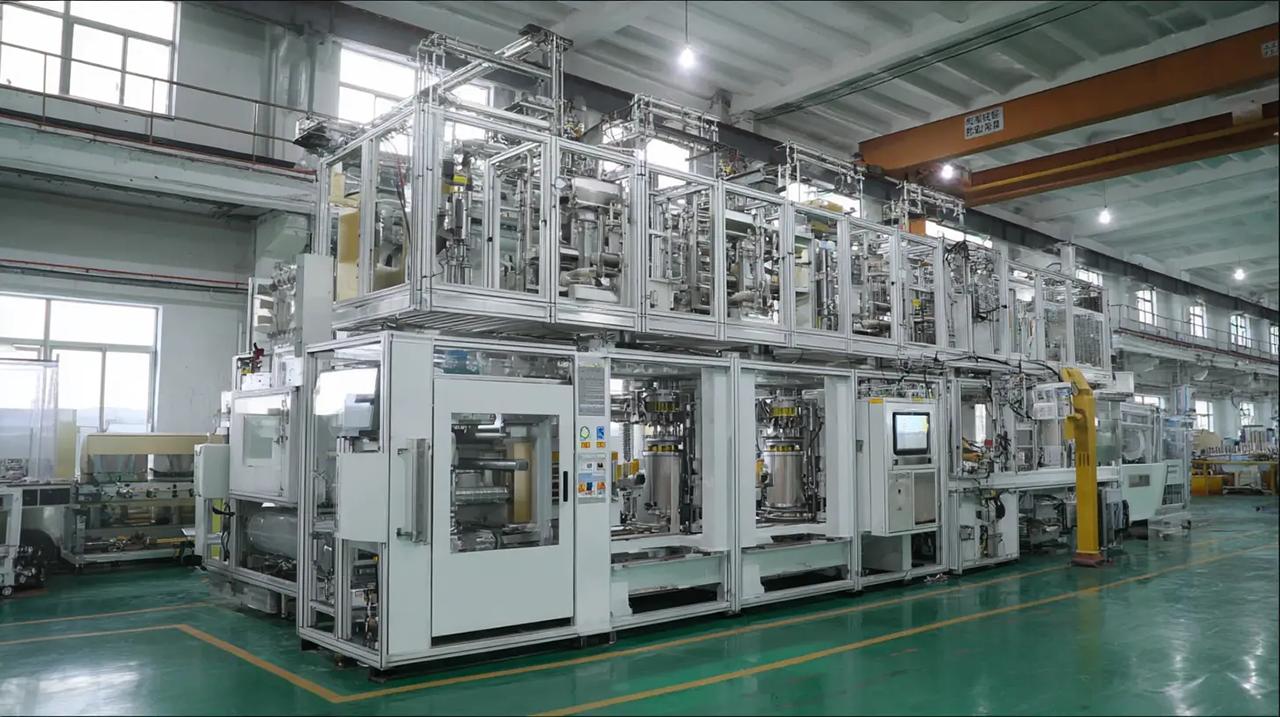
1. Evaluate the Manufacturer's Industry Experience
Years of experience provide a useful starting point when comparing thermoforming machine manufacturers. Companies with extensive industry experience have generally encountered different production requirements, material characteristics, mold configurations, and equipment challenges.
However, experience should be supported by actual engineering capabilities and completed projects rather than company history alone.
Check the Manufacturer's Production Background
Find out how long the company has been manufacturing thermoforming equipment and which industries it serves.
For example, a manufacturer specializing in food packaging equipment may have extensive experience with thin-gauge plastic sheets, high-speed forming, automatic stacking, and packaging production lines.
A supplier focused on heavy-gauge thermoforming may have more experience with thicker plastic sheets, larger forming areas, and complex industrial components.
Ask the manufacturer to provide information about:
- Years of experience in thermoforming machine manufacturing.
- Main product categories and machine models.
- Industries and applications served.
- Number and types of completed installations.
- Experience with international customers.
- Previous projects involving similar materials and products.
Examine Previous Projects
Customer references and real production examples can help you understand whether a manufacturer has experience with your application.
Request photographs, production videos, sample products, or customer references. If possible, arrange a factory visit or observe a machine operating under actual production conditions.
A manufacturer that has successfully supplied similar machines is generally better positioned to understand your production requirements.
2. Compare Machine Performance and Production Speed
Production speed is one of the most important technical factors when evaluating thermoforming machines.
However, a high-speed specification does not automatically mean high production efficiency. Actual output depends on several factors, including forming time, heating performance, cooling time, mold design, sheet thickness, material properties, and automation.
Understand Thermoforming Cycle Speeds
A thermoforming cycle typically includes several stages:
- Plastic sheet feeding and positioning.
- Sheet heating to the required forming temperature.
- Forming through vacuum, pressure, or a combination of both.
- Cooling and product stabilization.
- Mold opening and product release.
- Cutting, trimming, or stacking, depending on the machine configuration.
The time required for each stage determines the overall cycle speed.
Manufacturers may express machine speed in cycles per minute (CPM), cycles per hour, or finished products per hour.
When comparing specifications, make sure you understand which measurement is being quoted.
For example, two machines may both operate at 30 cycles per minute, but their actual output can differ significantly if one machine produces four products per cycle while the other produces six.
Calculate Actual Production Capacity
A practical way to estimate production capacity is:
Theoretical output per hour = Cycles per minute × Products per cycle × 60
For example:
30 cycles/minute × 6 products/cycle × 60 minutes = 10,800 products/hour.
This figure represents theoretical output. Actual production will be lower because of machine stops, material changes, mold adjustments, rejected products, and other production interruptions.
Ask manufacturers to provide realistic output data based on your actual product dimensions, material thickness, and mold configuration.
Evaluate Speed and Efficiency Together
High-speed thermoforming machines should maintain consistent forming quality at their specified production speeds.
Pay attention to:
- Stability during continuous operation.
- Heating uniformity across the sheet.
- Forming consistency at different production speeds.
- Cooling efficiency.
- Mold opening and closing accuracy.
- Automatic sheet feeding performance.
- Product release and stacking reliability.
A machine that operates slightly slower but produces fewer defective products may deliver better overall production efficiency than a machine with a higher advertised speed.
3. Examine Vacuum Forming and Other Forming Technologies
Different thermoforming applications require different forming technologies. A manufacturer should be able to explain which process is appropriate for your product design, material, and production volume.
Vacuum Forming
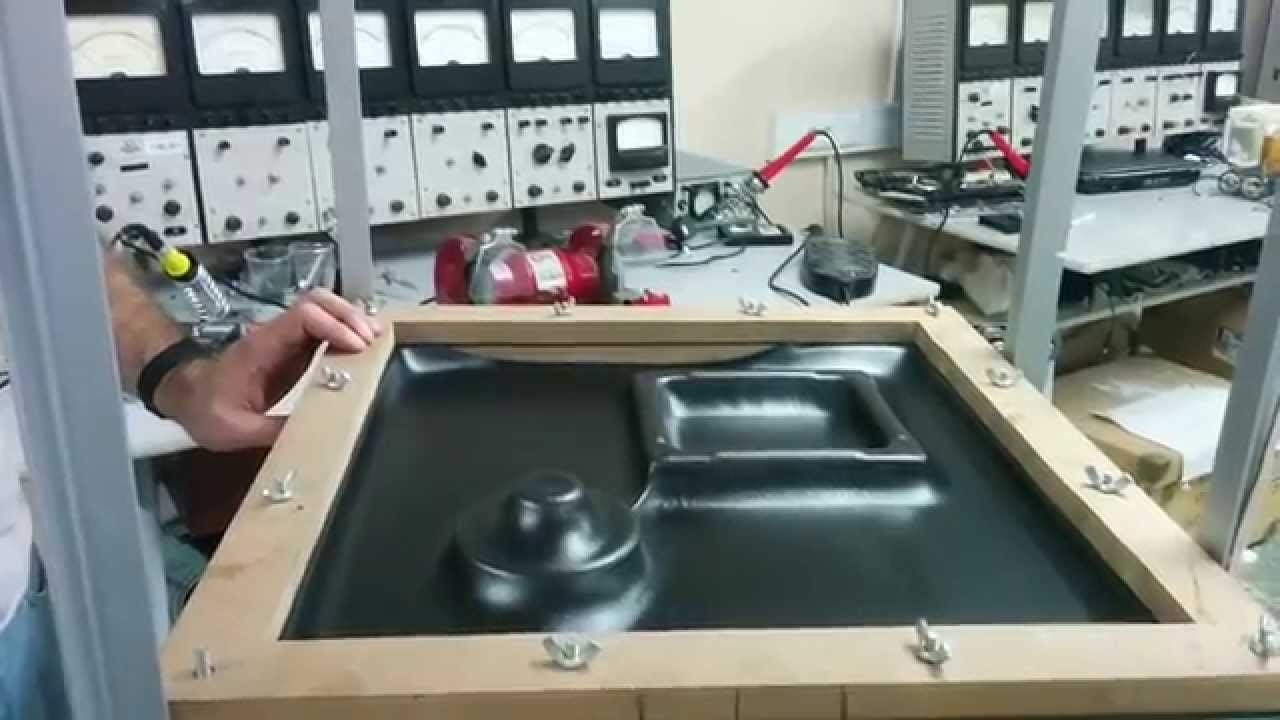
Vacuum forming uses a vacuum system to remove air between the heated plastic sheet and the mold. Atmospheric pressure then pushes the sheet against the mold surface.
This process is commonly used for:
- Food packaging trays.
- Disposable plastic containers.
- Product packaging inserts.
- Industrial protective packaging.
- Large plastic covers and housings.
Vacuum forming machines are available in different configurations, from basic semi-automatic systems to fully automatic production lines.
Pressure Forming
Pressure forming uses compressed air in addition to vacuum pressure to push the heated sheet against the mold.
This process can achieve more detailed surface features and sharper product definition, making it suitable for applications that require improved appearance or more complex geometries.
Combined Forming Solutions
Some thermoforming machines combine vacuum and pressure systems to improve forming performance across different product designs.
When evaluating a manufacturer, ask whether its equipment supports the forming technology required for your products.
The manufacturer should also explain the available forming area, maximum sheet dimensions, forming depth, heating configuration, and compatible materials.
4. Assess Machine Quality and Engineering Standards
High-quality thermoforming machines require well-designed mechanical structures, reliable electrical systems, precise temperature control, and stable operating components.
The overall machine construction affects operating stability, forming accuracy, maintenance requirements, and equipment service life.
Inspect the Mechanical Structure
Check the following machine components:
- Machine frame and structural strength.
- Mold clamping and movement systems.
- Sheet feeding mechanisms.
- Heating stations.
- Vacuum pumps and pressure systems.
- Cooling equipment.
- Hydraulic or servo-driven systems.
- Cutting and stacking units.
A rigid machine frame helps maintain alignment during repeated production cycles.
The manufacturer should be able to explain the materials, structural design, and engineering methods used in its equipment.
Check Heating and Temperature Control
Uniform heating is essential for consistent thermoforming results.
Uneven heating can cause thin areas, excessive material stretching, poor forming details, and product deformation.
Ask whether the machine uses infrared ceramic heaters, quartz heaters, or other heating technologies.
Also examine whether the heating system supports independent temperature adjustment across different zones.
A well-designed heating system allows operators to adjust processing conditions according to the material type, sheet thickness, and product geometry.
Review Electrical and Control Systems
Modern thermoforming machines often use PLC control systems, touchscreen interfaces, servo motors, and automated production monitoring.
When evaluating equipment, check:
- PLC and touchscreen control configuration.
- Temperature monitoring and adjustment.
- Servo drive performance.
- Production parameter storage.
- Alarm and fault detection functions.
- Safety interlocks and emergency stops.
- Availability of replacement electrical components.
A clear control interface can reduce operator training time and make production adjustments easier.
5. Check Material Compatibility and Product Applications
A thermoforming machine should be compatible with the plastic materials required by your production process.
Different thermoplastics have different heating characteristics, forming temperatures, stretching behavior, and cooling requirements.
Common thermoforming materials include:
| Plastic Material | Typical Applications |
|---|---|
| PET | Food trays, packaging containers, clear product packaging |
| PP | Food containers, microwaveable packaging, industrial trays |
| PS | Disposable cups, trays, and packaging |
| PVC | Blister packaging and industrial packaging |
| HIPS | Food packaging, refrigerator liners, and product housings |
| ABS | Automotive components, equipment covers, and industrial parts |
| PC | Transparent protective components and technical parts |
Not every machine can process every material equally well.
Before purchasing, provide the manufacturer with your intended material types, sheet thicknesses, product dimensions, and forming requirements.
Ask for confirmation of the machine's material compatibility and whether any modifications are required for your application.
For businesses producing multiple product types, material flexibility can improve equipment utilization and provide more options for future product development.
6. Investigate Customization and Mold Capabilities
Standard thermoforming machines may not meet every production requirement.
Businesses manufacturing products with unusual dimensions, complex geometries, or specialized forming requirements may need customized equipment.
A capable manufacturer should be able to evaluate your product drawings and recommend an appropriate machine configuration.
Evaluate Customization Options
Depending on the application, customization may include:
- Customized forming dimensions.
- Special mold configurations.
- Multi-station production layouts.
- Additional heating zones.
- Automatic sheet feeding systems.
- Integrated cutting and trimming units.
- Automatic stacking and conveying systems.
- Customized PLC control functions.
Examine Mold Design and Manufacturing
Mold quality directly affects product dimensions, surface appearance, forming consistency, and production efficiency.
Ask whether the manufacturer designs and produces molds internally or works with external mold suppliers.
You should also confirm:
- Mold materials and manufacturing methods.
- Number of cavities.
- Mold replacement procedures.
- Cooling channel design.
- Mold maintenance requirements.
- Availability of spare molds and replacement parts.
A supplier with strong mold engineering capabilities can help reduce setup difficulties and improve production consistency.
7. Evaluate Automation and Production Efficiency
Automation can reduce manual operations, improve production consistency, and support higher manufacturing output.
However, the appropriate automation level depends on production volume, labor costs, product complexity, and available factory space.
Compare Different Automation Levels
Semi-automatic thermoforming machines may be suitable for smaller production volumes or applications requiring frequent product changes.
Fully automatic thermoforming machines are generally more suitable for continuous production and larger manufacturing operations.
Typical automation functions include:
- Automatic sheet loading and feeding.
- Automatic heating control.
- Servo-driven forming systems.
- Automatic cutting.
- Product conveying.
- Automatic stacking.
- Integrated production monitoring.
When assessing automation, consider how well the different machine stations work together.
A high-speed forming station cannot achieve its full production potential if cutting, conveying, or stacking becomes a bottleneck.
Ask the manufacturer to explain the complete production workflow rather than focusing only on the forming station's maximum cycle speed.
8. Compare Total Cost of Ownership Instead of Purchase Price
The initial machine price is only one part of the total investment.
A cost-effective thermoforming machine should provide a reasonable balance between purchase price, production capacity, energy consumption, maintenance expenses, labor requirements, and expected service life.
Understand the Main Operating Costs
Consider the following expenses:
| Cost Category | What to Evaluate |
|---|---|
| Purchase cost | Machine price, molds, and optional equipment |
| Energy consumption | Electricity used by heaters, motors, and vacuum pumps |
| Labor cost | Number of operators required per shift |
| Material waste | Scrap generated during forming and trimming |
| Maintenance | Routine servicing and component replacement |
| Spare parts | Availability, price, and delivery time |
| Downtime | Production losses caused by equipment failures |
Calculate Long-Term Production Value
A machine with a higher purchase price may offer better long-term value if it provides higher output, lower material waste, reduced labor requirements, and more stable operation.
For an accurate comparison, request information about:
- Average electricity consumption.
- Expected production output.
- Material utilization.
- Maintenance intervals.
- Recommended spare parts.
- Estimated operating requirements.
Avoid relying on general claims such as low energy consumption or high production efficiency without supporting technical information.
9. Review Quality Control and Manufacturing Capabilities
A thermoforming machine manufacturer's internal production and quality control processes can provide useful information about its manufacturing standards.
A professional supplier should have defined procedures for component inspection, mechanical assembly, electrical installation, machine testing, and final acceptance.
Inspect the Manufacturing Facility
If possible, visit the manufacturer's factory to examine its production environment and manufacturing capabilities.
Pay attention to:
- Mechanical processing equipment.
- Assembly areas.
- Electrical installation procedures.
- Component storage and management.
- Machine testing facilities.
- Finished equipment inspection.
A factory visit can help you distinguish between a manufacturer with its own engineering and assembly capabilities and a trading company that mainly resells equipment.
Request Factory Acceptance Testing
Before shipment, ask whether the manufacturer can conduct a factory acceptance test (FAT).
A practical FAT should include relevant operating tests based on the agreed machine specifications.
Depending on the equipment, testing may cover:
- Machine movement and operating stability.
- Heating temperature control.
- Vacuum and pressure performance.
- Forming quality.
- Production speed.
- Automatic feeding and stacking.
- Safety functions.
- Finished product dimensions.
Whenever possible, use your actual production materials and molds during testing.
This provides a more realistic assessment than testing the machine with an unrelated sample product.
10. Evaluate After-Sales Service and Technical Support
After-sales service is an important consideration because thermoforming equipment is often used in continuous industrial production.
Technical problems, component failures, or incorrect operating parameters can interrupt production and increase manufacturing costs.
Before placing an order, understand what technical support the manufacturer provides.
Installation and Commissioning
Ask whether the supplier provides:
- On-site installation.
- Machine commissioning.
- Operator training.
- Production parameter adjustment.
- Mold installation guidance.
- Operating and maintenance manuals.
For overseas customers, confirm whether installation engineers can travel to your factory and whether remote commissioning is available.
Spare Parts Availability
Check whether commonly replaced components are readily available.
Ask the manufacturer to provide a recommended spare parts list, including part numbers and replacement intervals where applicable.
The availability of electrical components, sensors, heating elements, pneumatic parts, and mechanical components can affect future maintenance costs.
Remote Technical Support
Remote support through video calls, online communication, and troubleshooting documentation can help resolve some technical issues without waiting for an engineer to travel.
However, also clarify how the manufacturer handles major equipment failures and whether on-site service is available under the purchase agreement.
11. Check International Export Experience and Communication
For overseas buyers, evaluating a manufacturer's export experience is also important.
International equipment purchases involve more than machine manufacturing. They may require export documentation, transportation coordination, installation planning, electrical compatibility, and technical communication.
Consider the following points:
- Experience exporting thermoforming machines to your country.
- Familiarity with international shipping procedures.
- Availability of English technical documentation.
- Electrical voltage and frequency compatibility.
- Export packaging and transportation protection.
- Installation and commissioning arrangements.
- Communication efficiency during the sales process.
A manufacturer that understands international customer requirements can make equipment purchasing and installation more straightforward.
12. Ask the Right Questions Before Choosing a Manufacturer
Before requesting a quotation, prepare a list of technical and commercial questions.
The quality of a manufacturer's answers can reveal how well it understands your application.
| Evaluation Area | Questions to Ask |
|---|---|
| Experience | How many years have you manufactured thermoforming machines? |
| Applications | Have you supplied equipment for similar products? |
| Production speed | What is the actual cycle speed under my production conditions? |
| Machine capacity | What is the maximum forming area and sheet thickness? |
| Materials | Which plastic materials can the machine process? |
| Heating | How is temperature controlled across different heating zones? |
| Automation | Which feeding, cutting, and stacking functions are included? |
| Molds | Can you design and manufacture customized molds? |
| Quality control | Do you provide factory acceptance testing? |
| Energy consumption | What is the machine's installed power and typical operating consumption? |
| Installation | Do you provide overseas installation and commissioning? |
| Spare parts | How quickly can replacement components be supplied? |
| Warranty | What are the warranty period and service conditions? |
A reliable manufacturer should provide clear, specific answers and be willing to explain technical limitations.
Be cautious of suppliers that promise extremely high production speeds without asking about product dimensions, material thickness, mold design, or forming requirements.
13. Compare Thermoforming Machine Manufacturers Using a Structured Evaluation
When comparing several suppliers, using the same evaluation criteria makes the purchasing decision more objective.
The following example provides a practical comparison framework.
| Evaluation Criteria | Suggested Weight |
|---|---|
| Manufacturing experience and industry references | 10% |
| Machine quality and engineering capabilities | 20% |
| Production speed and efficiency | 15% |
| Material compatibility and forming technology | 10% |
| Customization and mold capabilities | 10% |
| Automation and control systems | 10% |
| Quality control and testing | 10% |
| After-sales service and spare parts | 10% |
| Total cost of ownership | 5% |
| Total | 100% |
You can score each manufacturer from 1 to 5 for every category.
Weighted score = Evaluation score / 5 × Category weight
For example, if a manufacturer receives a score of 4 out of 5 for machine quality, with a category weight of 20%, its weighted result is:
4 / 5 × 20 = 16 points.
This method helps buyers compare manufacturers beyond their quoted prices.
The weighting should also be adjusted according to your application. For example, a high-volume packaging factory may assign more weight to production speed and automation, while a manufacturer producing specialized industrial components may prioritize forming accuracy and customization.
14. Common Mistakes to Avoid When Selecting a Thermoforming Machine Manufacturer
Even experienced buyers can overlook important details when comparing equipment suppliers.
Choosing a Manufacturer Based Only on Price
A low quotation does not necessarily represent a cost-effective investment.
Compare machine specifications, included equipment, mold costs, warranty terms, installation services, and expected operating expenses.
Focusing Only on Maximum Cycle Speed
Maximum cycle speed may represent an ideal operating condition rather than normal production performance.
Always request actual production data based on your product and material specifications.
Ignoring Product Quality
A fast machine that produces inconsistent products can increase scrap rates and material consumption.
Evaluate finished product quality at different operating speeds.
Overlooking Future Production Requirements
Your current production volume may increase over time.
Consider whether the machine can accommodate additional molds, different product sizes, new materials, or higher automation requirements.
Failing to Confirm After-Sales Support
Before signing a contract, clarify warranty coverage, spare parts availability, response times, installation services, and technical support responsibilities.
Clear agreements can help prevent misunderstandings after delivery.
Frequently Asked Questions
1. How do I choose a reliable thermoforming machine manufacturer?
Look for a manufacturer with proven industry experience, in-house engineering capabilities, reliable machine construction, relevant customer references, and comprehensive after-sales support. Evaluate actual production performance, material compatibility, customization capabilities, and quality control procedures before purchasing.
2. How many years of experience should a thermoforming machine manufacturer have?
There is no fixed minimum number of years. However, manufacturers with several years of specialized experience may have more practical knowledge of machine design, mold development, material processing, and production challenges. More importantly, verify their experience through completed projects, customer references, and operating machines.
3. What should I check when comparing thermoforming machine cycle speeds?
Check the number of cycles per minute, products produced per cycle, material thickness, forming area, heating time, cooling time, and actual production output. Also confirm whether the quoted speed represents theoretical maximum performance or stable production under normal operating conditions.
4. What is the difference between vacuum forming and pressure forming?
Vacuum forming uses vacuum pressure to draw heated plastic sheets against a mold. Pressure forming uses compressed air to provide additional forming pressure, allowing more detailed surface features and sharper product definition. The appropriate process depends on product geometry, material, and quality requirements.
5. Which plastic materials can thermoforming machines process?
Common materials include PET, PP, PS, PVC, HIPS, ABS, and PC. The actual material compatibility depends on the machine's heating system, forming configuration, sheet thickness range, and process parameters. Always confirm compatibility with the manufacturer before purchasing.
6. Does a higher-speed thermoforming machine always mean higher production efficiency?
No. Production efficiency also depends on forming quality, heating uniformity, cooling performance, material utilization, automatic stacking, machine downtime, and rejection rates. A machine with stable operating performance may deliver better overall output than a faster machine with frequent interruptions.
7. How much does a thermoforming machine cost?
The price varies according to machine size, automation level, forming area, heating configuration, production speed, mold requirements, and additional equipment. Semi-automatic machines generally have lower initial costs than fully automatic production lines. Buyers should compare the complete machine configuration rather than the headline quotation.
8. Can a thermoforming machine manufacturer customize equipment?
Yes. Many manufacturers offer customized machine configurations based on product dimensions, material types, sheet thickness, mold design, production capacity, and automation requirements. Customization may include special forming areas, heating systems, automatic feeding, cutting units, and stacking systems.
9. Why is after-sales service important when buying thermoforming equipment?
After-sales service helps maintain production stability and reduce downtime. Installation, commissioning, operator training, spare parts supply, troubleshooting, and technical support can all affect the long-term operating performance of the equipment.
10. What documents should I request before purchasing a thermoforming machine?
Request a detailed technical specification sheet, machine layout, equipment configuration list, electrical information, quotation, warranty terms, installation instructions, spare parts list, and relevant operating documentation. You should also ask for production videos, sample products, and factory acceptance testing arrangements.
11. How can I verify whether a thermoforming machine manufacturer is a real factory?
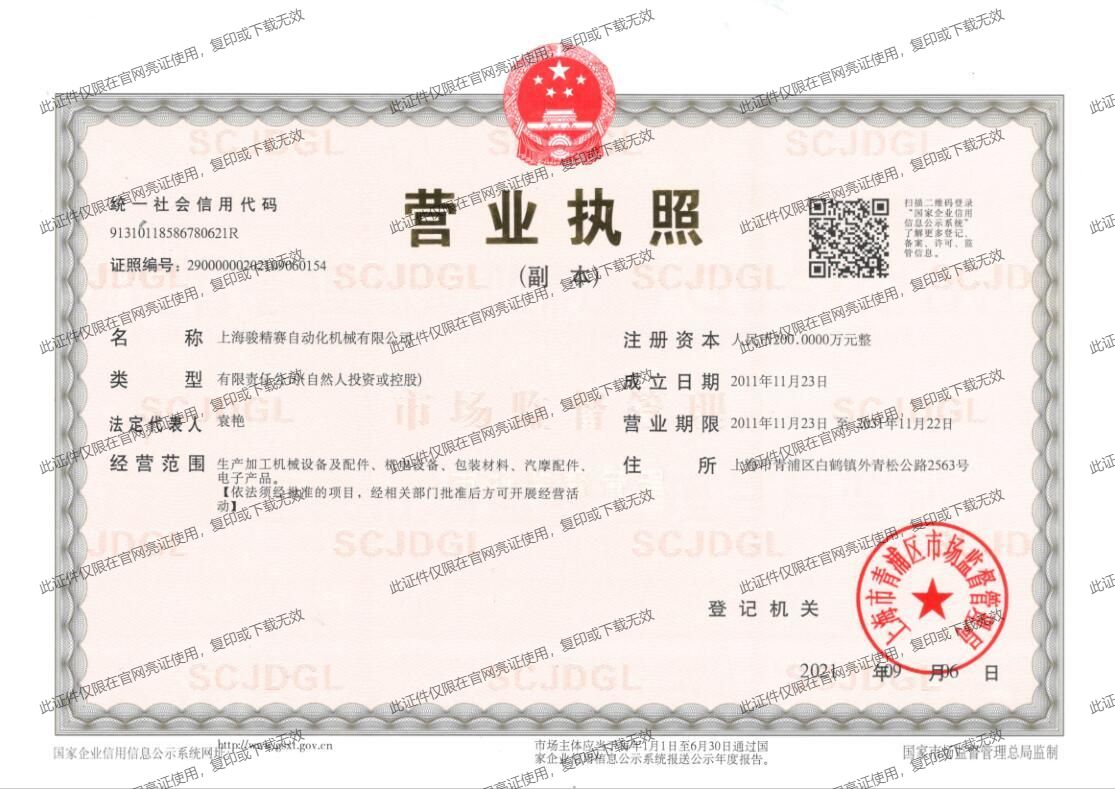
Request a live factory video tour or arrange an on-site visit. Examine its mechanical processing equipment, assembly workshops, electrical installation facilities, testing areas, and finished machines. You can also ask for company registration information, manufacturing references, and evidence of previous equipment installations.
12. What information should I provide when requesting a thermoforming machine quotation?
Provide the product drawings or photographs, product dimensions, plastic material, sheet thickness, required production capacity, mold cavity requirements, and preferred automation level. If available, also provide your factory's electrical specifications and installation requirements. These details help the manufacturer recommend a suitable machine configuration and prepare a more accurate quotation.
Conclusion: Choose a Manufacturer That Understands Your Production Needs
Evaluating a thermoforming machine manufacturer requires a comprehensive understanding of machine performance, manufacturing capabilities, production requirements, and long-term operating costs.
Years of experience, high-speed operation, reliable vacuum forming technology, consistent product quality, automation capabilities, and professional technical support should all be considered when comparing suppliers.
Rather than selecting equipment based on one specification or the lowest quotation, focus on whether the manufacturer can provide a complete solution that matches your materials, product designs, production targets, and future business plans.
A dependable thermoforming machine manufacturer should be able to demonstrate its engineering capabilities, explain actual machine performance, provide relevant customer references, and support your equipment throughout its operating life.
Before making a final decision, request a detailed technical proposal, compare machine configurations, and arrange a production demonstration using your actual materials whenever possible.