





Purchasing a vacuum forming machine is a significant investment for manufacturers producing plastic packaging, automotive components, industrial housings, medical trays, display products, and other thermoformed parts. Choosing the right equipment requires more than comparing machine prices or checking the maximum forming area. Buyers need to understand how the machine handles different plastic sheet materials, whether its heating and vacuum systems meet production requirements, and how consistently it can produce high-quality finished products.
A machine that looks suitable in a product catalog may not perform as expected under actual production conditions. Insufficient heating capacity, an undersized vacuum system, unsuitable mold dimensions, or limited automation can affect product quality, production speed, and operating costs.
Before placing an order, buyers should ask manufacturers specific questions about machine specifications, material compatibility, forming capabilities, mold design, production capacity, maintenance, and technical support.
This guide presents the most important questions to ask before buying a vacuum forming machine, explains why each question matters, and provides practical advice for comparing equipment suppliers.
What Should You Ask Before Buying a Vacuum Forming Machine?
Before buying a vacuum forming machine, ask the manufacturer about its maximum forming area, compatible plastic sheet materials, sheet thickness range, heating system, vacuum pump capacity, forming depth, production speed, mold compatibility, automation level, and after-sales support.
You should also request a live production demonstration using your actual plastic sheet material and product mold whenever possible.
The most suitable machine is one that matches your product dimensions, material characteristics, required output, and quality standards. A machine with a higher advertised speed or lower purchase price is not necessarily the best option if it cannot maintain consistent forming results during continuous production.
What Is a Vacuum Forming Machine?
A vacuum forming machine is a type of thermoforming equipment that shapes heated thermoplastic sheets over a mold by using vacuum pressure.
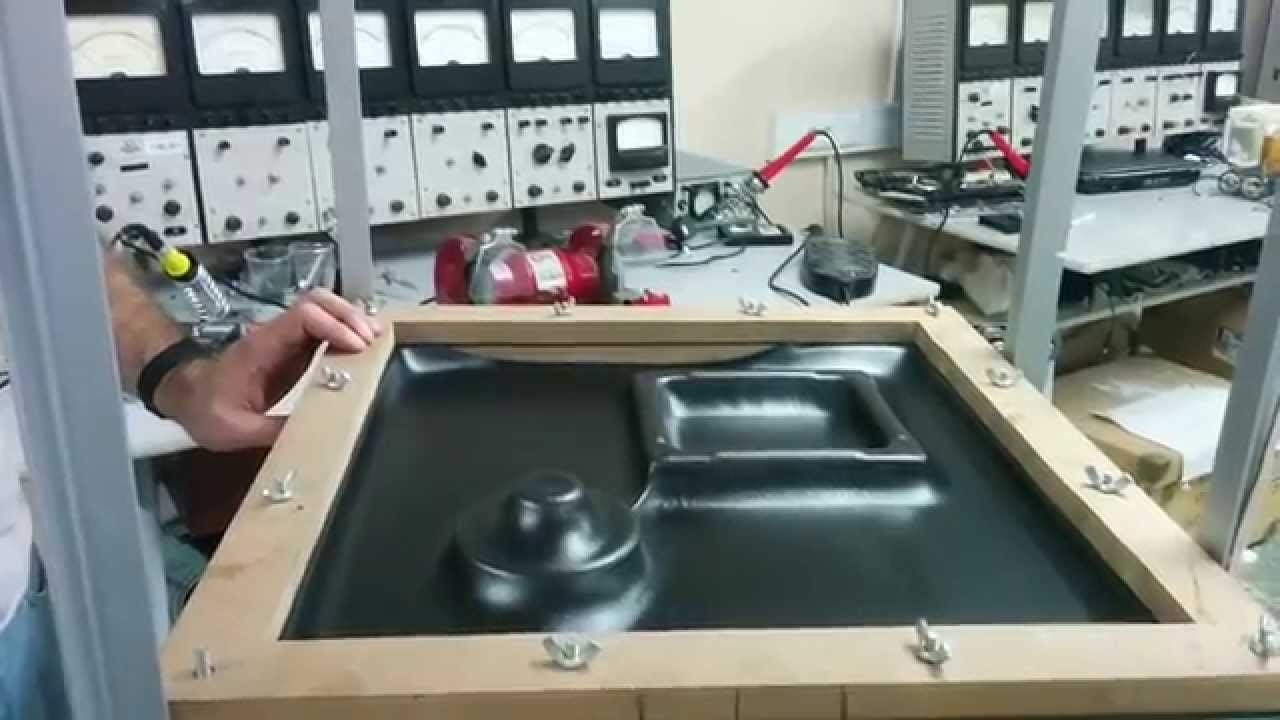
During the process, a plastic sheet is clamped and heated until it becomes sufficiently flexible. The heated sheet is then positioned over or against a mold, and air is evacuated from the space between the sheet and the mold. Atmospheric pressure pushes the softened plastic against the mold surface, allowing it to take the required shape.
After forming, the plastic part is cooled, released from the mold, and transferred for trimming or other finishing operations.
Vacuum forming machines are commonly used to manufacture plastic trays, food containers, packaging inserts, equipment covers, automotive interior components, protective housings, and large industrial plastic products.
The machine configuration depends on the plastic sheet material, sheet thickness, product dimensions, forming depth, mold design, and production volume.
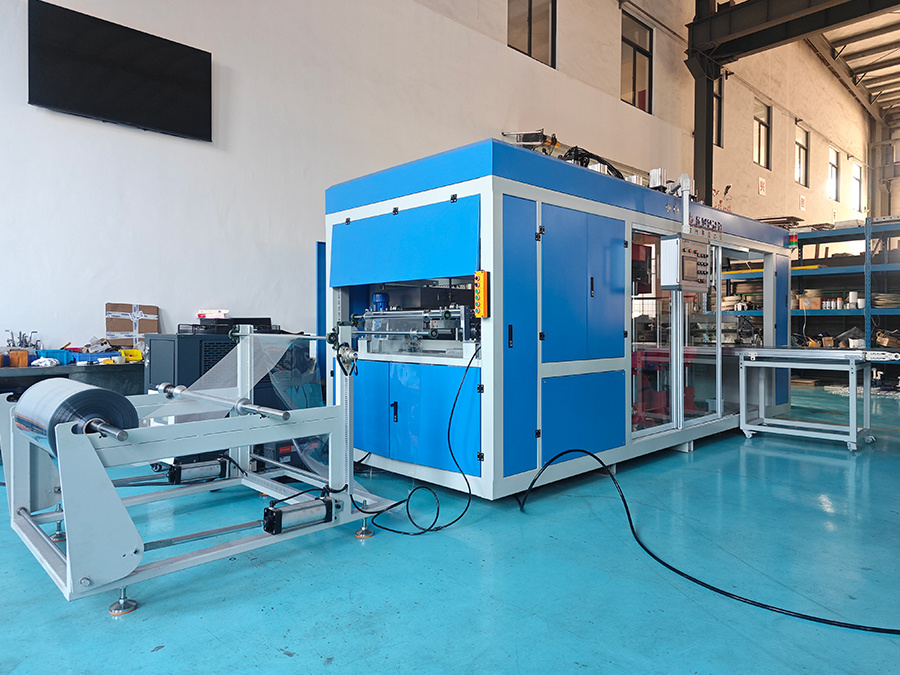
1. What Is the Maximum Forming Area of the Machine?
The first question to ask is whether the machine can accommodate your largest plastic product and the additional material required during forming.
The forming area determines the maximum working dimensions of the plastic sheet and mold. However, buyers should not assume that the finished product footprint and required forming area are identical.
When a heated plastic sheet is drawn over a mold, the material stretches around the sides and corners of the product. Deep-draw parts may require additional material to achieve acceptable wall thickness and avoid excessive stretching.
Ask the manufacturer:
- What is the maximum forming area?
- What is the usable forming area after accounting for the clamping frame?
- What are the maximum sheet length and width?
- What is the maximum forming depth?
- Can the machine accommodate multiple molds in one cycle?
- Is the forming area adjustable for smaller products?
For example, a manufacturer producing large equipment covers may need a machine with a substantially larger working area than a company manufacturing small packaging inserts.
Request a machine layout drawing and compare its usable dimensions with your product drawings before confirming the order.
2. Which Plastic Sheet Materials Can the Machine Process?
Material compatibility should be confirmed before purchasing any vacuum forming equipment.
Different plastic sheet materials have different softening temperatures, thermal characteristics, stretching behavior, and cooling requirements. A machine suitable for one material may require adjustments or additional heating capacity to process another.
Common vacuum forming materials include:
| Plastic Sheet Material | Typical Applications |
|---|---|
| ABS | Automotive panels, equipment housings, protective covers |
| PET / PETG | Packaging trays, transparent covers, display products |
| HIPS | Food trays, refrigerator liners, packaging components |
| PVC | Blister packaging, industrial covers |
| PP | Food containers, industrial trays, reusable components |
| PC | Protective covers, transparent industrial components |
| Acrylic (PMMA) | Display products, transparent covers, decorative panels |
| HDPE | Industrial containers, protective liners, equipment components |
Ask the manufacturer:
- Which plastic sheet materials can the machine process?
- What material thickness ranges are supported?
- Can the machine handle different materials without major modifications?
- Does the heating system support different processing temperatures?
- Are special heating configurations required for particular materials?
- Can the manufacturer test your selected material before delivery?
Do not rely solely on a general statement that a machine supports all thermoplastics. Request specific information about the materials and thicknesses you intend to use.
3. What Sheet Thickness Can the Machine Handle?
Plastic sheet thickness affects heating time, forming behavior, material distribution, and finished product strength.
Thin plastic sheets generally require less heating energy and can be processed relatively quickly. Thicker sheets need sufficient heating capacity to achieve a suitable temperature throughout the material.
Ask the supplier to confirm:
- Minimum plastic sheet thickness.
- Maximum plastic sheet thickness.
- Whether single-sided or double-sided heating is available.
- Whether heating time can be adjusted.
- Whether the machine supports different thicknesses in one production program.
- Whether additional heating elements are required for thicker sheets.
For example, a machine designed for thin packaging materials may not be suitable for manufacturing thick automotive panels or large industrial covers.
If your production involves several sheet thicknesses, provide the manufacturer with the complete thickness range rather than specifying only your most frequently used material.
4. How Does the Heating System Work?
The heating system determines how efficiently and evenly the plastic sheet reaches its forming temperature.
Uneven heating can cause several production problems, including excessive stretching, inconsistent wall thickness, surface defects, incomplete forming, and material deformation.
Ask the manufacturer:
- What type of heating elements are installed?
- Is the heating system single-sided or double-sided?
- How many independently controlled heating zones are available?
- Can operators adjust the temperature of individual zones?
- How is temperature monitored?
- Is the heating system suitable for different plastic materials?
- How long does the machine take to heat a particular sheet thickness?
Common heating technologies include ceramic infrared heaters, quartz heaters, and other industrial heating elements.
For larger forming areas, independently controlled heating zones can help operators adjust heat distribution according to product geometry.
For example, areas of a plastic sheet that stretch more during forming may require different heating settings from areas that experience less material movement.
Ask the manufacturer to demonstrate the heating process using your actual plastic sheet. Observe whether the sheet reaches a consistent forming condition across the working area.
5. What Is the Vacuum Pump Capacity?
The vacuum system creates the pressure difference required to form the heated plastic sheet against the mold.
Its performance affects how quickly air is removed, how accurately the sheet follows the mold surface, and whether the machine can reproduce fine product details.
Ask the supplier:
- What type of vacuum pump is installed?
- What is the pump's rated capacity?
- What vacuum level can the system achieve?
- Is a vacuum reservoir or receiver included?
- How quickly can the system reach the required vacuum level?
- Does the machine support adjustable vacuum timing?
- How frequently does the vacuum pump require maintenance?
It is useful to distinguish between ultimate vacuum level and pumping speed.
Ultimate vacuum describes the lowest pressure the system can achieve under specified conditions, while pumping speed indicates how quickly the system can remove air.
Both parameters affect forming performance.
A vacuum pump with a high rated capacity does not automatically guarantee good results. The vacuum receiver volume, pipe dimensions, valves, mold venting, and overall system design also influence performance.
Ask the manufacturer to explain how the complete vacuum system is configured for your product dimensions and forming requirements.
6. Can the Machine Produce the Required Forming Depth and Product Details?
Not all vacuum forming machines can handle deep-draw products or complicated geometries equally well.
Products with deep cavities, narrow corners, complex contours, and detailed surface features require suitable forming capabilities and mold designs.
Ask the manufacturer:
- What is the maximum forming depth?
- Can the machine handle deep-draw applications?
- Is plug assist available?
- Does the machine support pre-stretching?
- Can it form products with detailed surface features?
- What mold configurations are supported?
- Can sample products be produced for evaluation?
Plug assist is a mechanical forming aid that pushes heated plastic toward the mold before or during vacuum forming. It can help improve material distribution in suitable deep-draw applications.
Pre-stretching can also help distribute material before the sheet contacts the mold.
These functions are not necessary for every product. Their suitability depends on part geometry, material behavior, and the desired wall-thickness distribution.
Request sample parts that demonstrate the machine's ability to reproduce your product design.
7. What Is the Actual Production Speed?
Production speed directly affects manufacturing capacity and the cost of producing each finished part.
However, buyers should distinguish between advertised machine speed and actual production output.
A complete forming cycle may include:
- Plastic sheet loading and positioning.
- Heating.
- Vacuum forming.
- Cooling.
- Mold opening and product release.
- Part removal and transfer.
- Trimming and stacking, where applicable.
Ask the manufacturer:
- How many cycles can the machine complete per hour?
- What is the average cycle time for my product?
- How many products can be formed in one cycle?
- How long are the heating and cooling stages?
- Can the machine maintain stable production during continuous operation?
- Which operations are automated?
- What is the expected actual output per shift?
For example, if a machine completes 8 cycles per hour and produces 4 parts per cycle, its theoretical output is:
8 cycles/hour × 4 parts/cycle = 32 parts/hour.
Actual production output will depend on loading time, material changes, trimming, downtime, and rejected products.
For an accurate quotation, ask the manufacturer to estimate production capacity using your actual mold and plastic sheet specifications.
8. What Types of Molds Are Compatible With the Machine?
Mold compatibility affects product dimensions, forming accuracy, surface finish, and production flexibility.
Vacuum forming machines can work with different mold materials and configurations depending on production volume, product complexity, and temperature requirements.
Common mold materials include:
- Aluminum.
- Wood.
- Epoxy resin.
- Cast tooling materials.
- Other application-specific tooling materials.
Ask the manufacturer:
- What mold dimensions can the machine accommodate?
- What is the maximum mold weight?
- Can the machine use single-cavity and multi-cavity molds?
- Can molds be manufactured according to custom product drawings?
- Does the manufacturer provide mold design services?
- Are cooling channels and vacuum venting included where required?
- How long does mold replacement take?
You should also clarify mold ownership, maintenance responsibilities, storage arrangements, and the cost of future modifications.
If you plan to manufacture several products using one machine, make sure the mold-changing process is convenient and that the machine can accommodate all planned configurations.
9. Is the Machine Manual, Semi-Automatic, or Fully Automatic?
Automation requirements depend on production volume, labor availability, product complexity, and investment budget.
A manual machine may be suitable for product development, prototypes, and small production batches.
Semi-automatic equipment can reduce repetitive manual operations while maintaining flexibility for different product types.
Fully automatic vacuum forming systems may include automatic sheet feeding, heating, forming, cooling, part release, and material handling.
Ask the manufacturer:
- Which operations are automated?
- Does the machine support automatic sheet loading?
- Is mold opening and closing automated?
- Can finished products be removed automatically?
- Are cutting and stacking systems integrated?
- Does the machine use PLC control?
- Can production parameters be stored for different products?
- How many operators are required?
When comparing automation options, consider the complete production workflow.
A highly automated forming station may still require considerable manual work if product trimming, material handling, or stacking is not integrated.
10. How Does the Machine Maintain High Product Quality?
High-quality finished products require stable heating, accurate forming, suitable mold design, controlled cooling, and repeatable machine operation.
Ask the manufacturer how it maintains product consistency throughout production.
Specific questions include:
- How is sheet temperature controlled?
- How is heating uniformity maintained?
- How is vacuum pressure monitored?
- Can forming parameters be adjusted and stored?
- How is product thickness distribution evaluated?
- What quality inspections are performed?
- Can the manufacturer produce samples for approval?
During a machine demonstration, inspect finished products for:
- Dimensional accuracy.
- Surface appearance.
- Wall-thickness consistency.
- Corner and edge definition.
- Warping or deformation.
- Incomplete forming.
- Surface marks and other defects.
Do not evaluate a machine based on one successful sample. Ask to observe several consecutive production cycles and compare the finished parts.
This provides a better indication of repeatability under actual manufacturing conditions.
11. What Are the Machine's Energy Consumption and Operating Costs?
The initial purchase price does not represent the complete cost of owning a vacuum forming machine.
Operating expenses may include electricity, compressed air, cooling systems, labor, mold maintenance, spare parts, and routine servicing.
Ask the manufacturer:
- What is the installed electrical power?
- What is the typical electricity consumption during production?
- What type of compressed air supply is required?
- Is an external cooling system needed?
- How many operators are required?
- What are the recommended maintenance intervals?
- Which components require regular replacement?
Also consider material utilization.
Excessive sheet stretching, trimming waste, and rejected products can increase production costs even when the machine itself has a relatively low purchase price.
A suitable machine should provide a reasonable balance between production capacity, finished product quality, material consumption, and operating expenses.
12. What Safety Features Are Included?
Vacuum forming machines operate with high temperatures, moving mechanical components, vacuum systems, and electrical equipment.
Safety functions should be reviewed before purchasing.
Ask whether the machine includes:
- Emergency stop buttons.
- Protective covers and guards.
- Safety interlocks.
- Over-temperature protection.
- Electrical protection systems.
- Safe mold movement controls.
- Operator access protection.
- Appropriate warning labels.
Also confirm which safety standards and certifications apply to the machine and whether supporting documentation is available.
For international purchases, check the electrical requirements and applicable safety regulations in your destination country.
13. Does the Manufacturer Provide Installation, Training, and After-Sales Support?
The quality of technical support can affect how quickly a new machine becomes operational and how efficiently production problems are resolved.
Before purchasing, clarify the manufacturer's service arrangements.
Ask:
- Is installation included in the quotation?
- Does the manufacturer provide commissioning?
- Is operator training available?
- Are operation and maintenance manuals supplied?
- Is remote troubleshooting available?
- Can engineers provide on-site technical support?
- Are replacement parts readily available?
- What is the warranty period?
- How are technical service requests handled?
For overseas buyers, confirm whether the manufacturer can provide English-language documentation, remote support, and installation assistance.
You should also request a recommended spare parts list to help prepare for routine maintenance and unexpected repairs.
14. Can the Manufacturer Provide a Real Production Demonstration?
A production demonstration provides practical evidence of machine performance.
Brochures and technical specifications are useful, but they cannot fully demonstrate how a machine performs with your material, mold, and product design.
Ask the manufacturer to arrange a factory demonstration or a factory acceptance test (FAT).
Whenever possible, provide your own plastic sheet and mold specifications.
During the demonstration, evaluate:
- Sheet feeding and clamping.
- Heating uniformity.
- Vacuum response.
- Forming accuracy.
- Cooling performance.
- Mold release.
- Finished product quality.
- Production cycle consistency.
- Operator requirements.
Request several consecutive production samples rather than accepting a single finished product.
You should also agree on the machine acceptance criteria before the order is finalized. These may include forming dimensions, material thickness, production output, and acceptable product appearance.
15. What Information Should You Prepare Before Requesting a Quotation?
Manufacturers can provide more accurate machine recommendations when buyers supply detailed production information.
Before contacting suppliers, prepare the following details:
| Information | Details to Provide |
|---|---|
| Product design | Drawings, photographs, or 3D files |
| Product dimensions | Length, width, height, and forming depth |
| Plastic material | ABS, PET, PETG, HIPS, PP, PVC, PC, or other materials |
| Sheet thickness | Minimum, maximum, and standard thickness |
| Sheet format | Pre-cut sheets or continuous plastic rolls |
| Production volume | Required output per hour, shift, or month |
| Mold requirements | Single-cavity or multi-cavity configuration |
| Forming requirements | Vacuum forming, plug assist, or other functions |
| Automation | Manual, semi-automatic, or automatic |
| Factory conditions | Electrical supply, compressed air, and available floor space |
| Quality standards | Dimensional tolerances and appearance requirements |
The more information you provide, the easier it is for the manufacturer to recommend a suitable configuration and prepare a realistic quotation.
16. How to Compare Different Vacuum Forming Machine Suppliers
After collecting quotations, compare suppliers using consistent evaluation criteria rather than focusing only on the purchase price.
The following table provides a practical comparison framework.
| Evaluation Criteria | What to Compare |
|---|---|
| Machine specifications | Forming area, sheet thickness, and forming depth |
| Material compatibility | Supported plastic sheet materials |
| Heating system | Heater type, power, and temperature control |
| Vacuum system | Pump capacity, vacuum level, and reservoir |
| Production capacity | Actual cycle time and output |
| Mold capabilities | Mold dimensions, customization, and changeover |
| Automation | Feeding, forming, cooling, and product handling |
| Product quality | Sample results and production consistency |
| Energy efficiency | Electricity and compressed air consumption |
| Technical support | Installation, training, warranty, and spare parts |
| Commercial terms | Price, lead time, payment, and delivery conditions |
Request the same information from every shortlisted supplier.
This makes it easier to identify differences in machine configurations and determine whether a lower quotation excludes equipment or services that other suppliers include.
The best supplier is one that understands your application and can demonstrate that its equipment meets the agreed technical requirements.
17. Common Mistakes to Avoid When Buying a Vacuum Forming Machine
Choosing a Machine Based Only on Purchase Price
A cheaper machine may have limited heating capacity, insufficient vacuum performance, or fewer automation functions. Compare the complete configuration and long-term operating costs before making a decision.
Ignoring Plastic Sheet Thickness
A machine designed for thin plastic sheets may not provide sufficient heating performance for thicker materials. Confirm the full thickness range before ordering.
Overlooking the Forming Depth
Large products are not necessarily easy to form. Deep cavities and complex geometries may require additional forming functions, specialized molds, or different machine configurations.
Accepting Advertised Production Speed Without Testing
Maximum cycle speed does not always represent achievable production output. Request actual production data based on your product and material.
Failing to Test the Finished Product
A machine may operate correctly but still produce parts with inconsistent thickness, surface defects, or dimensional deviations. Always evaluate actual samples.
Ignoring Maintenance and Spare Parts
Limited spare parts availability can extend downtime. Confirm service arrangements and replacement component lead times before purchasing.
Frequently Asked Questions
1. What should I check before buying a vacuum forming machine?
Check the maximum forming area, plastic sheet thickness range, compatible materials, heating system, vacuum pump capacity, forming depth, production speed, mold compatibility, automation level, energy consumption, and after-sales support. Request a production demonstration before confirming the order.
2. Which plastic sheet materials are suitable for vacuum forming?
Common materials include ABS, PET, PETG, HIPS, PP, PVC, PC, HDPE, and acrylic. The appropriate material depends on the product's strength, flexibility, transparency, chemical resistance, operating temperature, and appearance requirements.
3. How do I choose the right vacuum forming machine size?
Start with your largest product dimensions, forming depth, mold arrangement, and the additional material required for stretching. Compare these requirements with the machine's usable forming area rather than relying only on its advertised maximum dimensions.
4. What is the maximum plastic sheet thickness a vacuum forming machine can handle?
The maximum thickness varies by machine design, heating capacity, clamping structure, and forming configuration. Buyers should provide their intended thickness range and ask the manufacturer to confirm production-tested capabilities.
5. How powerful should a vacuum pump be for vacuum forming?
The required pump capacity depends on the forming area, product geometry, cavity volume, target cycle time, and vacuum level. Pump capacity should be evaluated together with vacuum reservoir volume, valves, pipe dimensions, and mold venting.
6. How can I improve the quality of vacuum formed plastic products?
Improve heating uniformity, select suitable plastic sheet materials, optimize vacuum timing, use properly designed molds, and maintain appropriate cooling conditions. Regularly inspect product dimensions, wall thickness, and surface appearance.
7. Is a fully automatic vacuum forming machine better than a semi-automatic machine?
Not necessarily. Fully automatic machines are generally suitable for larger production volumes and repetitive manufacturing operations. Semi-automatic machines may offer greater flexibility and lower initial investment for smaller batches and frequent product changes.
8. What is the difference between vacuum forming and pressure forming?
Vacuum forming uses vacuum pressure to draw heated plastic against a mold. Pressure forming adds compressed air to increase forming pressure and reproduce finer surface details. The appropriate process depends on product design and appearance requirements.
9. How much does a vacuum forming machine cost?
Pricing depends on forming area, sheet thickness capacity, heating technology, vacuum system specifications, automation level, mold requirements, and additional equipment. Request a quotation based on your actual product and production specifications.
10. Can one vacuum forming machine process different plastic sheet materials?
Yes, provided that the machine's heating system, clamping arrangement, vacuum capacity, and forming configuration are suitable for the selected materials. Different plastics may require different temperatures, heating times, and forming parameters.
11. Should I request a sample test before buying a vacuum forming machine?
Yes. A sample test helps verify material compatibility, forming accuracy, surface appearance, wall-thickness distribution, and production repeatability. Testing with your actual plastic sheet and mold specifications provides more useful results than relying on general demonstration samples.
12. What after-sales services should a vacuum forming machine manufacturer provide?
A professional manufacturer should clearly explain installation, commissioning, operator training, technical documentation, warranty coverage, spare parts supply, troubleshooting, and remote or on-site technical assistance.
13. What is the difference between sheet-fed and roll-fed vacuum forming machines?
Sheet-fed machines process individual pre-cut plastic sheets and are suitable for various product sizes, material thicknesses, and smaller or mixed production batches. Roll-fed systems process continuous plastic material from rolls and are commonly used for high-volume, thin-gauge packaging production.
14. How long does a vacuum forming machine last?
Service life depends on machine construction, component quality, operating conditions, maintenance, and production intensity. Regular inspection, proper lubrication, timely replacement of worn components, and suitable operating parameters help extend equipment service life.
Conclusion
Buying a vacuum forming machine requires a clear understanding of your products, plastic sheet materials, production requirements, and long-term manufacturing costs.
Before placing an order, ask the manufacturer about forming area, sheet thickness, heating performance, vacuum pump capacity, forming depth, mold compatibility, production speed, automation, and after-sales support.
More importantly, request a real production demonstration using your intended material and product specifications. This helps you evaluate whether the equipment can produce high-quality parts consistently under practical operating conditions.
A suitable vacuum forming machine should match your current manufacturing requirements while providing enough flexibility for future production needs. Comparing suppliers through technical specifications, sample testing, and service arrangements will help you make a more informed investment decision.