Quote now
EN

Junjingsai manufactures thermoforming machines for businesses that need consistent plastic forming, reliable production performance, and efficient processing of thermoplastic sheets. With more than 20 years of experience in plastic forming equipment, Shanghai Junjingsai Automation Machinery Co., Ltd. provides machine solutions for food packaging, automotive components, medical equipment housings, and a wide range of industrial plastic products.
Automatic thermoforming machines integrate sheet feeding, heating, forming, cooling, and part handling into a coordinated production process. Compared with equipment that relies on extensive manual handling, an appropriately configured automatic system can help manufacturers maintain consistent processing conditions, reduce repetitive labor, and improve production efficiency.
The right machine depends on the plastic material, product dimensions, mold design, required production volume, processing times, and factory conditions. Junjingsai works with manufacturers to evaluate these requirements and configure thermoforming equipment for their intended applications.
An automatic thermoforming machine is a production system that heats plastic sheets until they become formable, shapes them against a mold using vacuum, pressure, or a compatible forming method, and coordinates subsequent operations such as cooling, demolding, and part transfer.
Depending on the machine design, automation may include sheet loading, temperature control, mold movement, forming pressure regulation, product removal, trimming integration, and stacking. The purpose is to make the sheet forming process more consistent and reduce unnecessary manual operations between production stages.
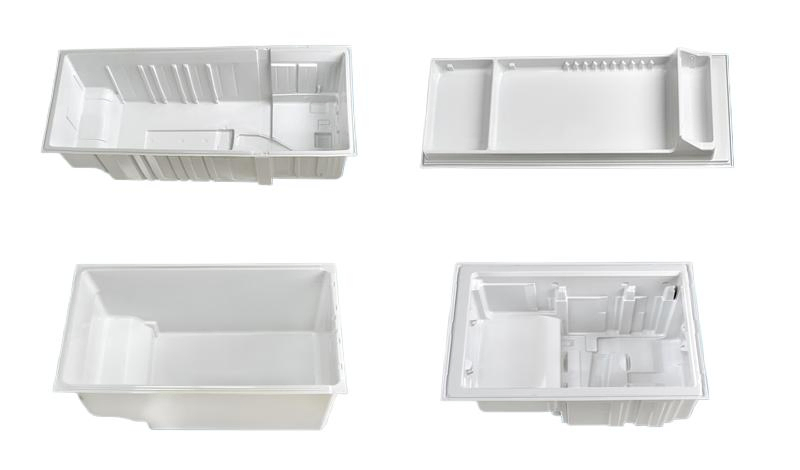
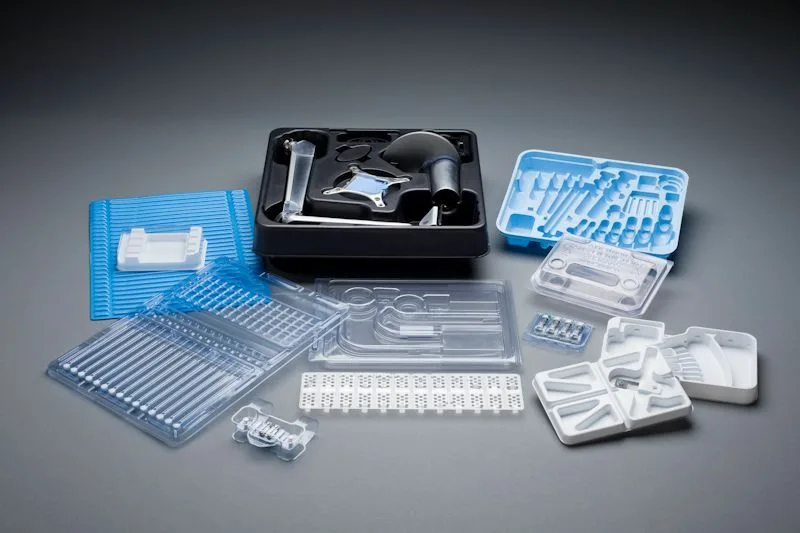
Automatic thermoforming machines are widely used to manufacture food packaging trays, containers, protective covers, automotive components, equipment housings, and other formed plastic products.
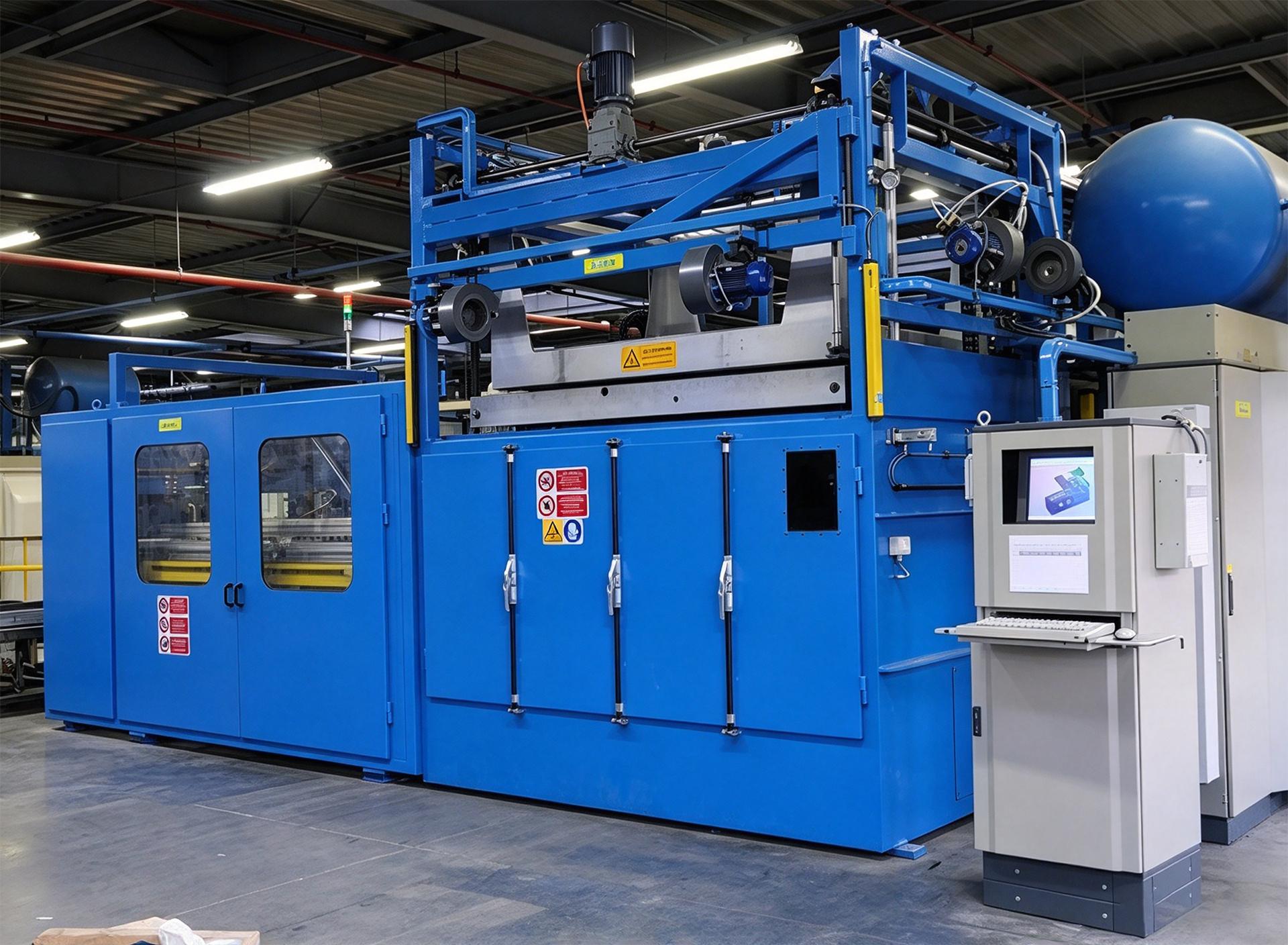
Production requirements vary between manufacturers. A packaging plant producing large quantities of similar trays has different needs from a factory making large automotive panels or industrial enclosures. Machine configuration should reflect the product, plastic material, required output, and degree of automation.
Automatic sheet feeding transfers plastic sheets into the heating and forming stations with less manual intervention. Depending on the equipment design, feeding mechanisms can be configured around sheet dimensions, material thickness, and the intended production cycle.
Stable sheet positioning helps maintain alignment between the plastic sheet and the mold. This can reduce setup variation and support repeatable forming when the material and machine parameters are properly controlled.
For applications involving different product sizes or materials, manufacturers should consider sheet-loading arrangements, changeover procedures, and the space required for material storage and movement.
Heating prepares plastic sheets for forming. The sheet must reach a suitable temperature range for the selected material and product geometry before the forming operation begins.
Uneven heating may cause inconsistent wall thickness, incomplete mold definition, surface defects, or deformation. Automatic heating systems can help operators maintain repeatable settings through temperature monitoring and controlled heating zones, where provided by the machine design.
The required heating arrangement depends on sheet thickness, plastic composition, forming depth, production speed, and the distribution of material across the mold.
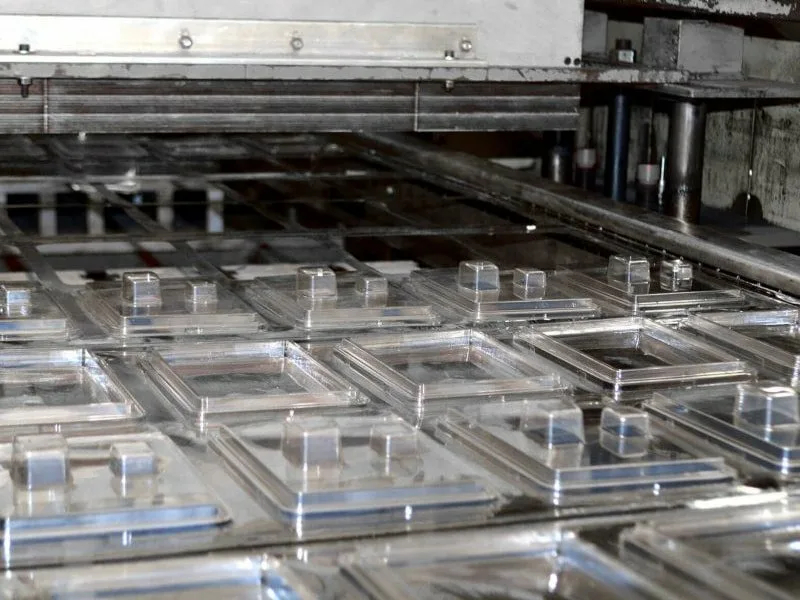
The forming station shapes the heated sheet into the required plastic product. Depending on the application, the machine may use vacuum forming, pressure forming, or another compatible thermoforming configuration.
Mold movement, clamping, and forming pressure must be coordinated with the sheet's temperature and the product's geometry. Correct synchronization helps maintain forming consistency and reduces process variation.
For complex products, mold design and machine configuration should be assessed together rather than selected independently.
After forming, the plastic must cool sufficiently to retain its intended shape. The product is then released from the mold and transferred for trimming, stacking, inspection, or further processing.
Cooling requirements vary according to material type, sheet thickness, part dimensions, and geometry. Removing products too early may lead to distortion, while excessive cooling time can reduce production output.
An automatic system should balance cooling time with product stability and the required production cycle.
The performance of a thermoforming machine depends on how its key components work together. Component selection should match the forming process, operating conditions, maintenance requirements, and target production volume.
The heating system brings plastic sheets to a suitable forming temperature. Heater arrangement, temperature control, heating-zone configuration, and energy use should be evaluated for the intended material and product.
Consistent heating can help reduce defects and material variation, particularly when a production line processes sheets with specific thickness or temperature requirements.
The forming station supports the mold and provides the movements and forming conditions needed to shape the heated sheet. Mold design affects product geometry, surface detail, material distribution, and demolding behavior.
Manufacturers should confirm the forming area, maximum mold dimensions, forming depth, clamping arrangement, and compatibility with planned tooling before purchasing a machine.
Guide rails and related motion components help guide moving assemblies and maintain alignment during machine operation. Depending on the equipment design, these components may be used in mold movement, sheet transfer, or other positioning mechanisms.
Suitable rail selection, installation accuracy, lubrication, and maintenance can affect movement consistency and service life. Buyers should ask about component specifications, maintenance access, and replacement procedures when evaluating equipment.
Vacuum systems draw heated plastic sheets against the mold, while pressure-forming configurations may use compressed air to help reproduce mold details. The required system depends on the material, product geometry, surface finish, and forming method.
Vacuum capacity, pressure control, sealing, and cycle synchronization should be considered alongside mold design and heating performance.
The control system coordinates heating, sheet movement, forming, cooling, and other automated operations. Depending on the machine, sensors and programmed parameters may help monitor temperature, position, timing, and operating status.
Clear controls and repeatable process settings can simplify changeovers and help operators identify variations during production. The required control features should be matched to the factory's operating procedures and maintenance capabilities.
The machine frame supports the forming station, heating equipment, mold assembly, and moving components. Structural rigidity and suitable mechanical design help maintain alignment under the machine's operating loads.
For large products or heavy molds, buyers should confirm the machine's specified capacity, forming area, and tooling requirements with the manufacturer.
Different plastic sheets respond differently to heat, vacuum, pressure, and cooling. Material compatibility should therefore be assessed before selecting an automatic thermoforming machine.
Common materials used in thermoforming include ABS, PP, PET, PVC, and PE. Selected engineering plastics may also be suitable when the machine's heating system, tooling, and forming process meet their processing requirements.
| Plastic material | Typical applications | Considerations for thermoforming |
|---|---|---|
| ABS | Automotive trim, equipment housings, protective covers | Heating uniformity, surface finish, and product geometry |
| PP | Trays, containers, industrial products | Material-specific heating behavior and cooling |
| PET | Food packaging, display trays, protective packaging | Sheet grade, clarity requirements, and forming conditions |
| PVC | Packaging and selected industrial components | Material grade and appropriate processing conditions |
| PE | Containers, protective components, industrial products | Sheet behavior, part dimensions, and dimensional stability |
| Engineering plastics | Specialized industrial components | Specific processing temperatures and material properties |
The best material depends on product strength, appearance, flexibility, chemical resistance, operating conditions, and applicable regulations. For food packaging, the selected material grade must meet the relevant food-contact requirements for the intended market.
Before finalizing the machine specification, manufacturers should provide the sheet type, thickness range, sheet dimensions, and any material-specific processing requirements.
Production volume affects the machine configuration, automation level, mold arrangement, and expected return on equipment investment. A suitable system should meet actual production needs without creating unnecessary complexity or capacity.
When evaluating production volume, consider the number of finished parts required per shift, the number of cavities in the mold, the forming cycle, material loading, and downstream operations.
The theoretical output of a thermoforming machine may differ from its actual output. Changeovers, material preparation, trimming, stacking, quality checks, and scheduled maintenance all affect usable production time.
Manufacturers should compare expected output under realistic operating conditions rather than relying only on a stated maximum cycle speed.
Processing times include sheet heating, forming, cooling, demolding, transfer, and any required finishing operations. These stages interact, so shortening one stage does not necessarily improve the overall production cycle.
For example, reducing heating time without maintaining suitable sheet temperature may increase forming defects. Shortening cooling time without adequate product stability may cause warping or dimensional variation.
A practical optimization process evaluates the entire cycle and identifies the stage that limits production. The appropriate adjustments depend on the material, mold, product design, and machine configuration.
High efficiency comes from coordinating machine operations, material handling, process control, and downstream production. Automatic loading and transfer can reduce repetitive manual work, while consistent heating and forming settings can help reduce variation.
Useful performance indicators include:
Tracking these measures provides a more complete view of production performance than cycle speed alone.
Manufacturers often need consistent product dimensions, predictable wall thickness, acceptable surface quality, and efficient use of plastic sheets. These goals depend on the complete forming process rather than a single machine feature.
High precision in thermoforming means producing parts within the specified dimensional and quality requirements. Results depend on sheet temperature, material properties, mold design, forming pressure or vacuum, cooling, and the way the finished part is removed and measured.
Machine alignment, repeatable motion, stable temperature control, and appropriate tooling can help reduce process variation. Product drawings should define the relevant dimensions and tolerances so that machine capability can be assessed against measurable requirements.
Where tight tolerances are required, the project may need additional process trials, inspection methods, or adjustments to the mold and forming parameters.
Minimal waste is achieved by managing sheet layout, material distribution, forming parameters, and downstream trimming. The amount of material removed after forming depends on the product shape, mold arrangement, sheet dimensions, and edge-trimming requirements.
Waste reduction measures may include optimizing the mold layout, matching sheet size to the forming area, maintaining stable heating conditions, and reducing defects caused by inconsistent forming.
Scrap can also result from setup changes, material variation, equipment downtime, and improper handling. Tracking the causes of scrap helps manufacturers determine which improvements will have the greatest effect.
Material efficiency should be evaluated together with product quality. A process that uses less material but produces unacceptable parts does not deliver a reliable manufacturing advantage.
Food packaging is a common application for automatic thermoforming equipment. Typical products include trays, containers, inserts, and other formed plastic packaging components.
Packaging production may require repeated cycles, consistent dimensions, controlled trimming, and reliable stacking. The machine configuration should match the package geometry, sheet material, target output, and downstream packing process.
For food-contact applications, manufacturers must verify that the selected plastic sheet and finished packaging comply with the applicable requirements in the target market. Equipment configuration should also support the required cleaning, handling, and production procedures.
Depending on the package design, the system may incorporate automatic sheet feeding, forming, trimming integration, product transfer, and stacking. The required features should be determined by the complete packaging workflow.
Automatic thermoforming machines can be configured for a broad range of plastic forming applications.
Automotive applications include interior panels, door components, instrument-panel parts, trunk components, decorative pieces, and protective covers. Machine selection should account for part dimensions, forming depth, material characteristics, surface finish, and handling requirements.
Thermoformed plastics can be used for equipment covers, protective housings, and selected packaging applications. Requirements vary according to the finished product and its intended use. Medical or regulated applications may require specific material documentation, traceability, validation, and process controls.
Industrial products include machine covers, equipment housings, protective panels, storage components, and large plastic enclosures. Consumer products may require specific shapes, surface appearance, and functional features.
The machine should be selected according to the product drawing, sheet specifications, production targets, and any required finishing operations.
The service life of an automatic thermoforming machine depends on component quality, machine design, operating conditions, maintenance practices, and production workload. No single service-life figure applies to every configuration.
Preventive maintenance helps keep equipment operating within its specified conditions and can reduce unexpected downtime.
A maintenance program should follow the machine manufacturer's instructions and address the components fitted to the specific model. Depending on the equipment, routine checks may include:
The inspection interval should reflect operating hours, production conditions, and the manufacturer's recommendations.
Before purchasing equipment, buyers should ask about spare-parts availability, maintenance documentation, operator training, troubleshooting support, and warranty coverage.
Junjingsai provides thermoforming equipment and support services for industrial customers. Project-specific arrangements for installation, training, spare parts, and technical assistance should be confirmed in the quotation and purchase agreement.
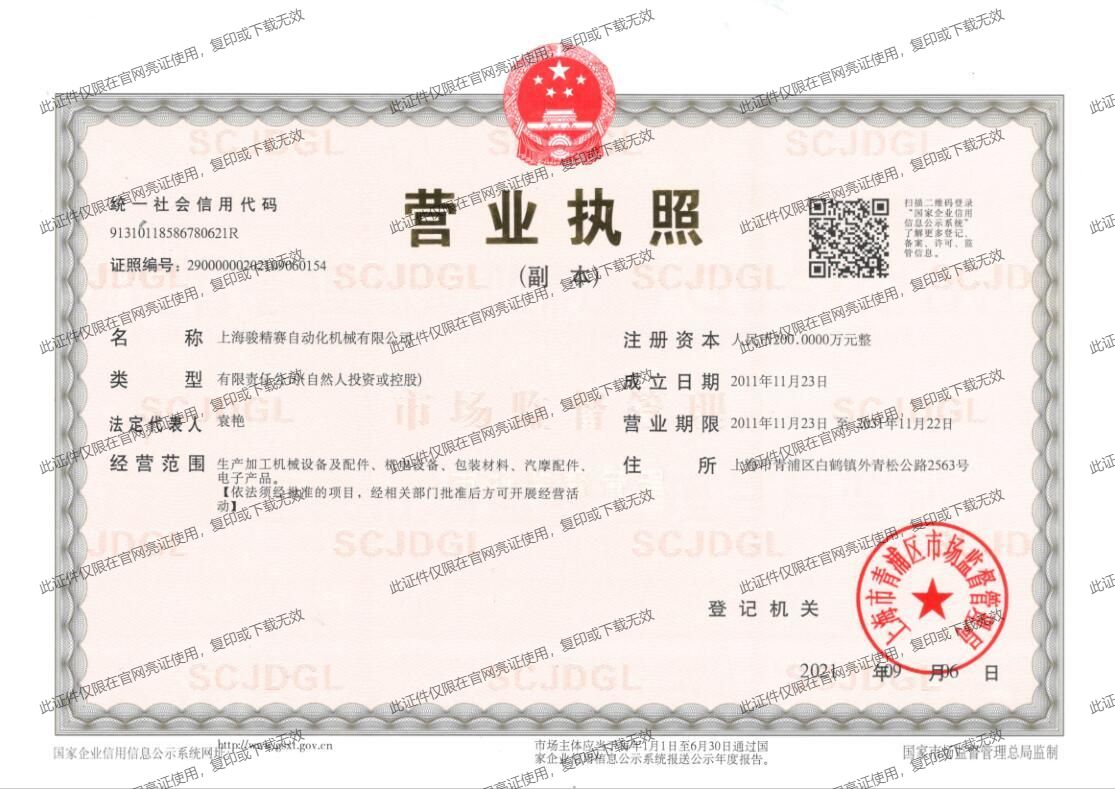
Shanghai Junjingsai Automation Machinery Co., Ltd. specializes in thermoforming machines, vacuum forming machines, and customized plastic forming automation.
The company was established in 2002 and has more than 20 years of experience in plastic forming machinery. Its manufacturing facilities are located in Shanghai, Chongqing, Jiangsu, and Guangdong, with approximately 29,000 square meters of combined facility space.
Company information states that the thermoforming division has more than 150 employees, including 30 R&D engineers, and an annual capacity exceeding 500 thermoforming machines and automation systems. These resources support equipment manufacturing, engineering coordination, assembly, and testing.
Junjingsai reports ISO 9001 certification and CE-related credentials. Buyers should request current documentation and confirm the applicable scope for the machine and destination market. ISO 9001 concerns a quality management system; it does not independently guarantee the performance of every machine.
The company also reports exports to more than 35 countries and regions. For each project, machine selection should be based on the intended product, plastic material, forming process, production volume, factory conditions, and required support arrangements.
Choosing equipment begins with the product and the production process. A clear technical brief helps the manufacturer assess the required machine configuration.
Before requesting a quotation, prepare the following information:
The manufacturer can use this information to review machine capacity, heating requirements, forming methods, automation options, and production integration. The final specification should clearly define the agreed machine configuration, expected output conditions, acceptance criteria, and after-sales support.
An automatic thermoforming machine heats plastic sheets and forms them into products using vacuum, pressure, or another compatible method. Depending on its configuration, it can coordinate sheet feeding, heating, forming, cooling, demolding, and transfer. Typical applications include food packaging, automotive components, equipment housings, and industrial plastic products.
Common materials include ABS, PP, PET, PVC, and PE. Selected engineering plastics may also be suitable if their processing requirements match the machine's heating system, forming method, and tooling. Material type, sheet thickness, and product geometry should be confirmed before selecting equipment.
Automation can reduce manual handling between production stages, maintain repeatable operating sequences, and coordinate sheet feeding, forming, cooling, and part transfer. Actual efficiency depends on the complete production process, including material preparation, trimming, stacking, changeovers, and downtime.
Estimate the required number of acceptable parts per shift, then account for the forming cycle, mold layout, number of cavities, changeovers, scheduled stops, scrap, and downstream processing. The resulting target should reflect realistic operating conditions rather than the machine's theoretical maximum speed.
High precision depends on consistent sheet heating, suitable mold design, stable forming conditions, machine alignment, controlled cooling, and appropriate inspection. Dimensional tolerances should be defined in the product specification and verified through testing under the intended production conditions.
Waste can be reduced by optimizing sheet dimensions and mold layout, maintaining stable forming conditions, controlling material distribution, and reducing defective parts. Trimming waste should also be measured. The best approach depends on product geometry, sheet specifications, and the manufacturing process.
Guide rails and motion components help maintain the alignment and movement of machine assemblies. Their suitability, installation, lubrication, inspection, and replacement procedures can affect operating consistency and service life. Buyers should review component specifications and maintenance requirements with the manufacturer.
Service life depends on equipment design, component quality, operating hours, production conditions, maintenance, and the handling of faults. Following the manufacturer's maintenance schedule, training operators, and keeping suitable spare parts available can support long-term operation.
Yes. They are commonly used to form trays, containers, inserts, and other packaging products. The machine must match the material, package dimensions, output target, and downstream process. Food-contact suitability depends on the material grade and compliance with the applicable regulations, not solely on the machine itself.
Provide product drawings or samples, plastic sheet specifications, product dimensions, forming depth, target production volume, required forming method, mold information, automation needs, factory conditions, and delivery destination. These details help the manufacturer recommend a suitable configuration and define the project scope.
If your business needs automatic thermoforming equipment for food packaging, automotive components, industrial housings, or other plastic products, Junjingsai can review your production requirements and discuss a suitable machine configuration.
Share your product drawings, plastic sheet specifications, target production volume, and automation requirements to begin the technical evaluation.
Visit the official website to learn more about Junjingsai's thermoforming machines and plastic forming solutions: