Quote now
EN

Junjingsai manufactures custom thermoforming machines for businesses that need reliable plastic forming equipment tailored to their products, materials, and production requirements. With more than 20 years of industry experience, the company provides thermoforming equipment, custom plastic forming solutions, and manufacturing support for automotive components, food packaging, medical equipment housings, and industrial plastic products.
From machine configuration and mold compatibility to heating systems, forming pressure, and automated handling, each project can be planned around the intended application. Whether you need heavy gauge thermoforming for large structural parts or high-speed sheet thermoforming for repeatable production, Junjingsai works with manufacturers to develop equipment suited to their production goals.
Custom thermoforming machines are machines designed or configured to heat a plastic sheet until it becomes formable, shape it against a mold using vacuum, pressure, or a combination of forming methods, and cool it into a finished plastic product. Unlike standard equipment designed for general applications, custom thermoforming machines can be adapted to specific sheet sizes, material types, forming areas, mold designs, production speeds, and automation requirements.
They are used by manufacturers that need a particular combination of forming capacity, product geometry, process control, and production efficiency. Customization may involve the machine structure, heating zones, pressure-forming system, mold interface, loading and unloading equipment, and integration with downstream trimming or handling processes.
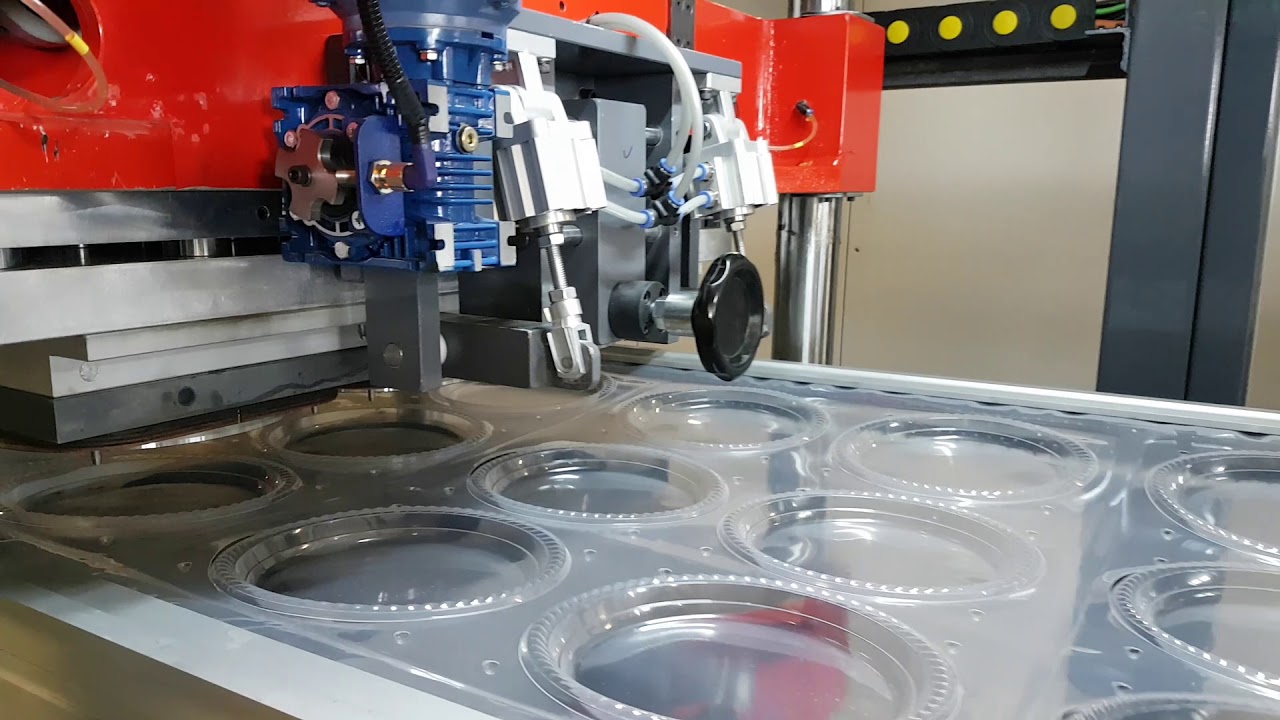
A suitable thermoforming machine should match the product design, plastic material, required output, and manufacturing environment. Junjingsai provides equipment solutions for a range of plastic forming applications, from thin-sheet packaging to large, heavy-gauge components.
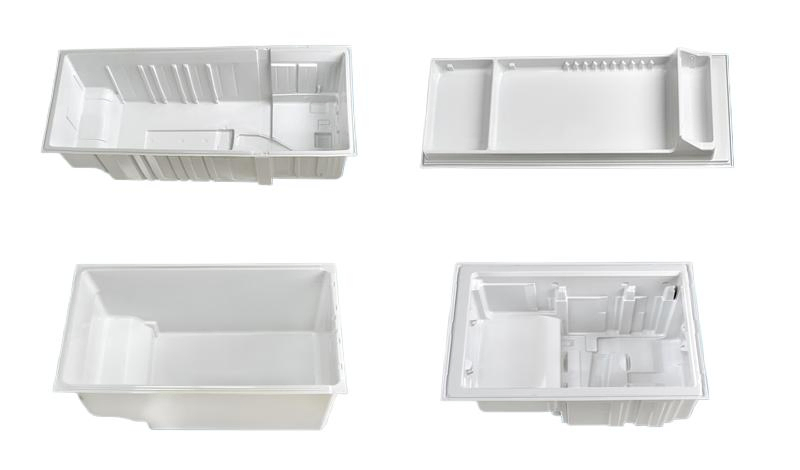
Heavy gauge thermoforming is used to manufacture relatively thick plastic parts that require structural strength, dimensional stability, or a large formed surface. Typical applications include automotive interior and exterior components, equipment covers, industrial housings, and large protective panels.
When configuring heavy-gauge thermoforming equipment, manufacturers should consider sheet thickness, heating uniformity, mold dimensions, forming depth, cooling time, and part-removal requirements. The forming area and machine structure must also accommodate the size and weight of the mold and the finished product.
Custom machine configurations can be developed around the part geometry and material requirements rather than relying on a general-purpose machine specification.
Pressure forming uses air pressure, often combined with vacuum, to press a heated plastic sheet against a mold. The additional pressure can help reproduce surface details and defined features, making the process suitable for plastic products that require a more refined appearance or detailed geometry.
Pressure forming may be considered for appliance housings, automotive trim, branded enclosures, and other formed components where surface definition matters. The correct pressure range, mold design, heating arrangement, and cooling process depend on the plastic material and product specifications.
Junjingsai can evaluate pressure-forming requirements as part of a custom machine project, including the desired product finish, production cycle, and automation level.
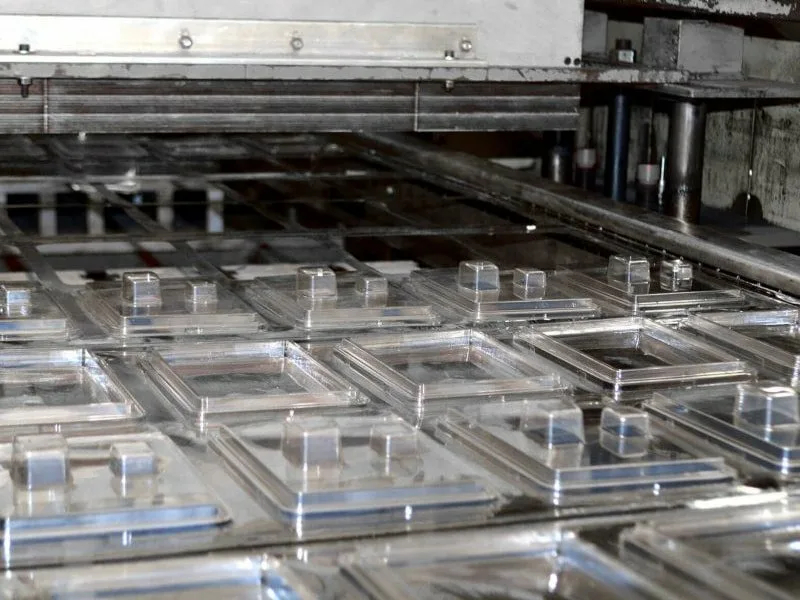
High-speed thermoforming equipment is designed for production environments that require frequent forming cycles and consistent output. It is commonly considered for packaging and other applications where the same or similar plastic products are manufactured in large quantities.
Actual production speed depends on several factors, including sheet thickness, material behavior, heating time, mold design, forming depth, cooling requirements, and part handling. A machine's advertised cycle speed alone does not determine its practical output.
For high-volume projects, machine planning should assess the entire process, including sheet feeding, heating, forming, cooling, trimming, stacking, and material handling. This helps manufacturers identify bottlenecks and select a configuration suited to their target production rate.
Sheet thermoforming shapes a thermoplastic sheet by heating it and forming it over or into a mold. Depending on the application, the process may use vacuum forming, pressure forming, or other compatible forming methods.
The machine configuration depends on sheet dimensions, plastic material, thickness, product depth, mold layout, and the required production cycle. A custom sheet thermoforming solution may include adjustable heating zones, a specified forming area, mold-change arrangements, and automated sheet handling.
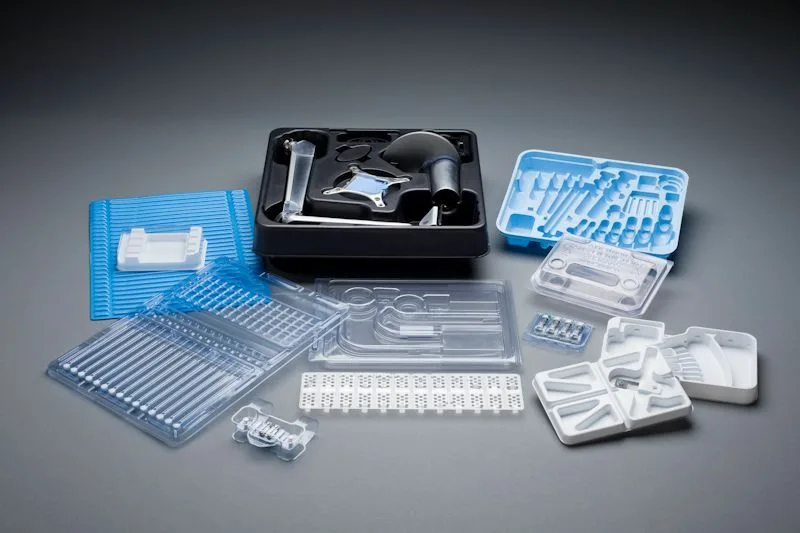
Sheet thermoforming is used for packaging trays, protective covers, equipment housings, automotive components, and a broad range of industrial plastic products.
Automatic thermoforming machines coordinate multiple production stages to reduce manual handling and support repeatable manufacturing. Depending on the system design, automation may cover sheet loading, heating, forming, demolding, transfer, and integration with trimming or stacking equipment.
The right level of automation depends on production volume, labor availability, product variety, factory layout, and the complexity of the finished part. Some manufacturers benefit from a focused semi-automatic configuration, while others require a more integrated production line.
Junjingsai can assess the production process and recommend a machine arrangement based on the intended application and operating conditions.
Plastic material selection affects heating behavior, forming temperature, wall distribution, surface finish, cooling time, and the stability of the finished part. The machine should therefore be configured around the selected material and the product's design requirements.
Common thermoplastics used in thermoforming include ABS, PP, PET, PVC, and PE. Selected engineering plastics may also be suitable, depending on their processing requirements and the machine configuration.
| Plastic material | Common applications | Machine-planning considerations |
|---|---|---|
| ABS | Automotive trim, equipment housings, protective covers | Heating uniformity, surface finish, and formed-part geometry |
| PP | Industrial containers, trays, selected packaging products | Material-specific heating behavior and cooling |
| PET | Food packaging, display packaging, trays | Sheet grade, forming temperature, and product clarity requirements |
| PVC | Packaging and selected industrial components | Material grade, processing conditions, and application requirements |
| PE | Protective components, containers, industrial products | Sheet behavior, part geometry, and dimensional requirements |
| Engineering plastics | Specialized industrial components | Specific processing temperatures and material properties |
The suitable material depends on the required strength, appearance, chemical resistance, operating environment, and applicable industry requirements. Food-contact applications may also require material grades and production controls that meet the relevant regulations in the destination market.
Thermoforming and injection molding are different plastic manufacturing processes. In thermoforming, a plastic sheet is heated and shaped over or into a mold. In injection molding, molten plastic is injected into a mold cavity and solidifies into the required shape.
Thermoforming may be suitable for large parts, relatively shallow geometries, sheet-based production, and applications where tooling and production requirements favor forming from plastic sheet. Injection molding is often used for detailed three-dimensional components, complex features, and repeat production of parts formed from injected molten plastic.
| Comparison factor | Thermoforming | Injection molding |
|---|---|---|
| Starting material | Plastic sheet | Plastic pellets or other compatible feedstock |
| Forming method | Heated sheet shaped using vacuum, pressure, or related methods | Molten plastic injected into a mold |
| Typical products | Trays, panels, covers, large housings | Detailed housings, fittings, clips, and complex molded parts |
| Tooling considerations | Depends on mold design, material, geometry, and production needs | Depends on mold complexity, cavity design, and injection requirements |
| Part design | Often well suited to sheet-based parts and large surfaces | Often suited to complex features and detailed molded geometry |
| Material waste | May include trimmed sheet and skeleton material | Depends on runner design, process setup, and material handling |
An injection molded part is not automatically interchangeable with a thermoformed part. The appropriate process depends on geometry, tolerances, material properties, expected volume, surface requirements, tooling investment, and the overall cost of manufacturing.
Junjingsai can help manufacturers assess whether a custom thermoforming machine is appropriate for their product and production plan.
Successful custom plastic manufacturing starts with a clear understanding of the finished part and the process required to produce it consistently. Design engineering connects product specifications with machine configuration, mold design, material behavior, and production workflow.
When planning a custom thermoforming machine, the engineering review may cover the following areas:
The forming area must accommodate the sheet, mold layout, and required part dimensions. Deep draws, large surface areas, tight radii, and complex contours can affect material distribution and forming performance.
Product drawings, CAD files, and physical samples help the manufacturer assess whether the proposed machine configuration fits the application.
Plastic sheets must reach a suitable forming temperature before shaping. Uneven heating can contribute to inconsistent wall thickness, surface defects, and dimensional variation.
The heating system should be evaluated against the material, sheet thickness, forming area, and production cycle. Zoned heating may be appropriate where different regions of the sheet require different heat levels.
Mold dimensions, mounting arrangements, cooling provisions, and product-removal requirements affect machine design. Manufacturers producing multiple product models may also need practical mold-change procedures and repeatable setup parameters.
The forming method should be selected according to the product geometry, surface detail, and material characteristics. Vacuum forming, pressure forming, or a combined approach may be appropriate for different applications.
The machine's pressure and vacuum systems must be specified to match the actual process rather than selected solely by a general machine category.
Loading, unloading, trimming, stacking, inspection, and material movement can affect total production efficiency. Design engineering should consider how the thermoforming machine fits into the existing manufacturing line and how operators will access controls, molds, and service points.
Junjingsai develops thermoforming equipment for manufacturers across several application areas. The required machine configuration depends on the product, production volume, plastic material, and factory requirements.
Food packaging applications include trays, containers, inserts, and other formed packaging products. Machine selection should account for packaging dimensions, sheet material, forming cycle, trimming requirements, and downstream stacking or packing operations.
Where products contact food, the material grade and production process must meet the relevant food-contact requirements. Machine specifications alone do not establish regulatory compliance for the finished packaging.
Automotive thermoforming applications may include interior trim, door panels, instrument-panel components, trunk parts, decorative pieces, and protective covers. These products can require relatively large forming areas, consistent surface appearance, and controlled part geometry.
Machine planning should account for sheet thickness, mold design, product depth, dimensional requirements, and the handling of large formed parts.
Thermoformed plastic components can be used for medical equipment housings, device covers, protective enclosures, and packaging applications. The specific requirements depend on whether the part is an equipment component, a protective cover, or medical packaging.
For regulated applications, manufacturers should define material specifications, cleanliness requirements, traceability, and applicable validation procedures before selecting the equipment.
Industrial products may include machine covers, equipment housings, protective panels, storage components, and large plastic enclosures. Consumer products may require specific visual finishes, shapes, and handling characteristics.
A custom machine can be configured around the part size, material, production cycle, and finishing process required by the application.
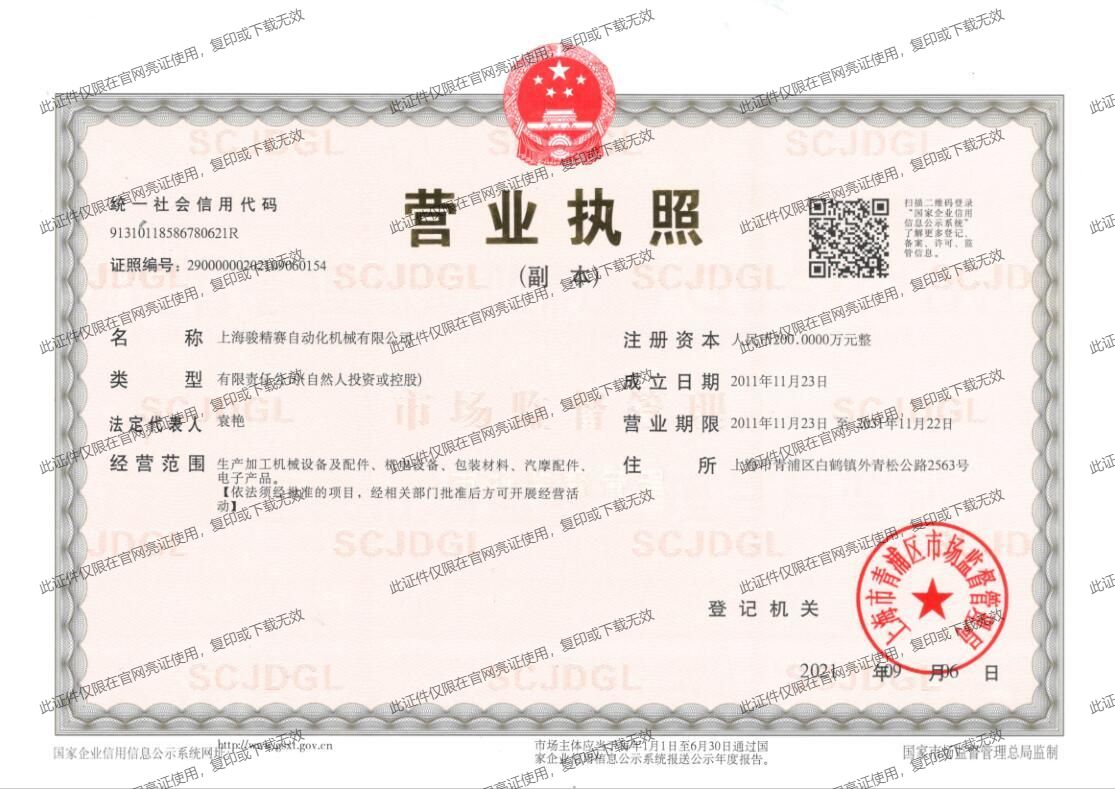
Shanghai Junjingsai Automation Machinery Co., Ltd. specializes in thermoforming equipment, vacuum forming machines, and customized plastic forming automation.
The company's manufacturing background and engineering resources support projects that require equipment configured for a particular product or production environment.
Junjingsai was established in 2002 and has more than 20 years of experience in plastic forming machinery. Its work covers thermoforming machine development, manufacturing, equipment configuration, and support for different industrial applications.
The company's manufacturing facilities are located in Shanghai, Chongqing, Jiangsu, and Guangdong, with approximately 29,000 square meters of combined facility space. The thermoforming division has more than 150 employees, including 30 R&D engineers, according to company information.
These resources support machine manufacturing, assembly, customization, and engineering coordination.
Quality management should extend across component inspection, machining, mechanical assembly, electrical testing, machine debugging, and final acceptance. Junjingsai reports ISO 9001 certification and CE-related compliance credentials for its equipment.
Buyers should request the relevant certificates and confirm their scope, validity, and applicability to the proposed machine and destination market. ISO 9001 relates to a quality management system; it does not, by itself, certify that every finished product or machine meets every market-specific requirement.
Every custom plastic forming project has different requirements. Junjingsai can evaluate machine structure, forming area, sheet specifications, mold layout, automation, electrical configuration, and factory conditions as part of the project discussion.
The company also reports experience exporting equipment to more than 35 countries and regions. Installation, training, spare parts, and technical support should be discussed during quotation so the project scope is clear before ordering.
To receive a suitable machine recommendation, provide the manufacturer with enough information to understand the intended product and production process.
Useful project details include:
Based on these details, the manufacturer can assess the machine configuration, identify open technical questions, and prepare a quotation for the proposed solution.
Junjingsai reports a typical production lead time of approximately 30 days for standard arrangements. Actual lead time for a custom thermoforming machine depends on machine design, component availability, tooling, automation scope, and approval of the final specifications. Confirm the schedule and delivery terms in the project quotation.
A custom thermoforming machine is designed or configured to form heated plastic sheets into products that meet specific dimensions, material, production, and automation requirements. Customization may include the heating system, forming area, pressure or vacuum system, mold interface, and material-handling equipment.
Vacuum forming uses vacuum to draw a heated plastic sheet against a mold. Pressure forming uses additional air pressure, often together with vacuum, to press the sheet more closely against the mold surface. Pressure forming may be suitable for products requiring more defined surface details, depending on the material and mold design.
Common materials include ABS, PP, PET, PVC, and PE. Selected engineering plastics may also be processed when the machine's heating system, temperature range, forming method, and tooling are suitable for the material. The exact material grade and sheet thickness should be confirmed during machine selection.
Junjingsai offers thermoforming equipment solutions for different product and production requirements. For a heavy-gauge project, buyers should provide sheet thickness, product dimensions, forming depth, mold specifications, and target output so the manufacturer can confirm the appropriate machine configuration.
Yes. Thermoforming is widely used to produce trays, containers, and other formed packaging. The machine should be selected according to the sheet material, package dimensions, forming cycle, trimming, and stacking requirements. Food-contact material suitability and regulatory compliance must be verified separately for the intended market.
Compare part geometry, material requirements, production volume, tooling costs, surface finish, dimensional tolerances, and expected unit cost. Thermoforming can suit sheet-based products and large formed surfaces, while injection molding may suit parts with complex features and detailed three-dimensional geometry. A product-specific engineering review is the best basis for choosing the process.
Junjingsai provides thermoforming machine and customized plastic forming equipment solutions. The scope of customization may include machine structure, heating configuration, forming systems, mold arrangements, material handling, and integration with related production equipment. Confirm the available options against your drawings and process requirements.
Junjingsai reports approximately 30 days as a typical production lead time for standard arrangements. Custom projects may require additional time for engineering, tooling, automation, component procurement, testing, and approval. Request a project-specific schedule before placing an order.
Provide product drawings or samples, material type and thickness, product dimensions, forming depth, expected production volume, mold requirements, automation needs, factory conditions, and delivery destination. More complete technical information helps the manufacturer recommend a suitable machine and define the quotation scope.
ISO 9001 specifies requirements for a quality management system. It can indicate that an organization operates a documented quality management framework within the certified scope, but it does not guarantee the performance of every individual machine. Buyers should also review machine specifications, factory acceptance tests, inspection records, warranty terms, and the applicable certificate.
If your production requires a high-quality thermoforming machine, heavy gauge thermoforming equipment, pressure forming capability, or a custom plastic forming solution, share your product specifications with Junjingsai.
The engineering team can review the plastic material, product geometry, forming area, production target, and automation requirements to determine a suitable machine configuration.
Contact Junjingsai to discuss your application, request technical information, and obtain a quotation for custom thermoforming equipment.