Quote now
EN

Junjingsai manufactures thermoforming machines for industrial applications that require the forming of thick plastic sheets into large, durable, and accurately shaped components. With more than 20 years of experience in plastic forming equipment, Shanghai Junjingsai Automation Machinery Co., Ltd. provides machinery solutions for automotive components, industrial enclosures, equipment covers, protective housings, and other heavy-duty plastic products.
Heavy gauge thermoforming is suited to products that need greater material thickness, structural strength, and larger formed surfaces than many thin-sheet applications. Machine configuration depends on the plastic material, sheet dimensions, forming depth, mold design, production volume, and required finished-part quality.
Junjingsai works with manufacturers to evaluate these requirements and develop suitable thermoforming equipment for their production processes, including vacuum forming, pressure forming, and customized automation where appropriate.
Heavy gauge thermoforming machines are industrial machines designed to heat relatively thick thermoplastic sheets and shape them into three-dimensional parts using vacuum forming, pressure forming, or other compatible forming methods. Once the sheet reaches the required forming temperature, it is drawn or pressed against a mold, cooled, removed, and trimmed to produce the finished part.
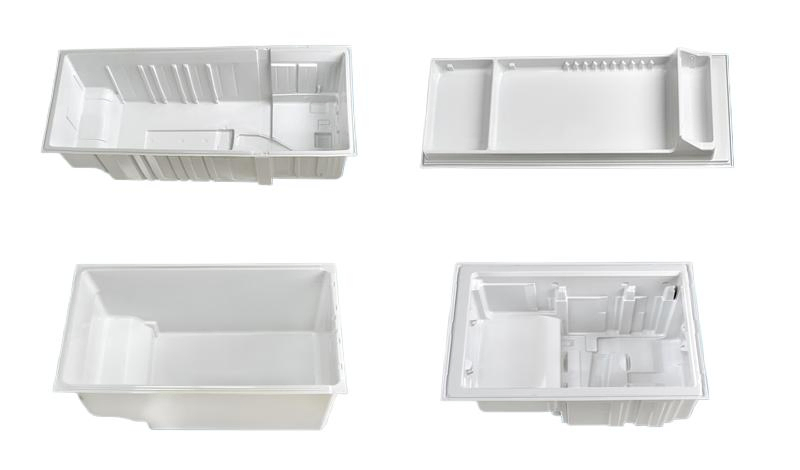
Compared with thin-gauge thermoforming equipment commonly used for high-volume packaging, heavy gauge thermoforming machines are typically configured for thicker materials, larger components, deeper shapes, and more demanding handling requirements. Applications include automotive panels, machine guards, industrial housings, equipment covers, and protective plastic parts.
The appropriate machine depends on the material type, sheet thickness, product geometry, forming area, heating capacity, mold requirements, cooling process, and target production rate.
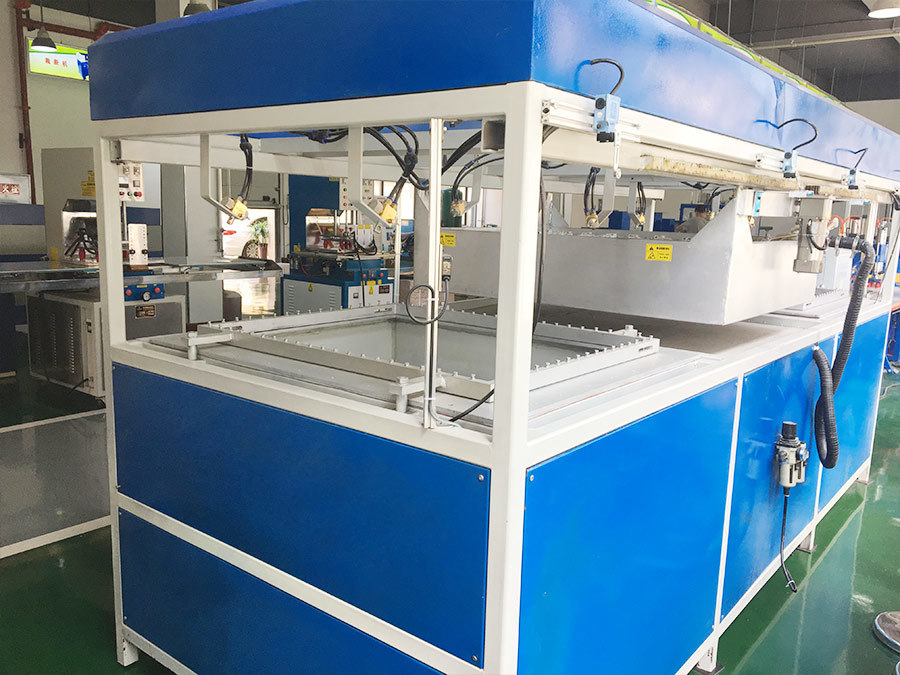
Heavy gauge thermoforming is one of several manufacturing processes used to produce shaped components from plastic sheet. It is particularly suitable when a product design benefits from large formed surfaces, relatively thick plastic walls, and tooling suited to sheet-based production.
The manufacturing processes used for plastic products may also include injection molding, machining, fabrication, and assembly. The best choice depends on the part's shape, material properties, expected volume, dimensional requirements, and manufacturing budget.
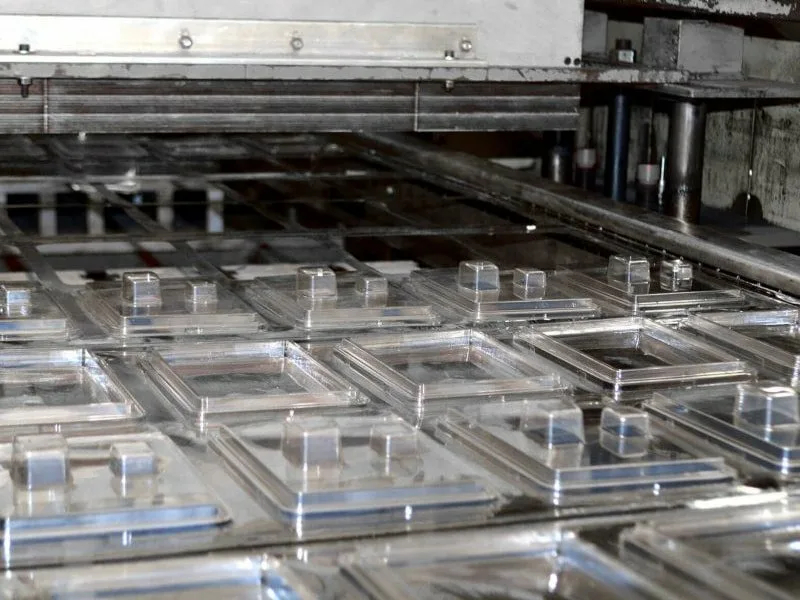
Vacuum forming is a widely used forming technique for heavy gauge plastic components. The machine heats a plastic sheet until it becomes pliable, positions it over or against a mold, and applies vacuum to draw the sheet into the required shape.
This process can produce large covers, housings, panels, trays, and protective components. It may be suitable for products with broad surfaces and geometries that can be formed effectively from sheet material.
For thick plastic sheets, heating uniformity, vacuum distribution, mold design, and cooling time require careful evaluation. The machine must bring the material to a suitable forming temperature without creating unacceptable surface defects or uneven material distribution.
Pressure forming uses compressed air, often combined with vacuum, to press a heated plastic sheet against the mold surface. Depending on the material and tooling, this approach can improve the reproduction of surface details, edges, and defined features.
Pressure forming may be considered for industrial housings, automotive interior components, appliance covers, and other plastic parts where appearance and surface definition matter.
The required pressure system, mold design, sheet thickness, and heating arrangement should be selected according to the product specifications. Pressure forming is not automatically suitable for every heavy gauge application; the decision should be based on part geometry and process trials where necessary.
Large-format thermoforming machines are configured for products with substantial dimensions or broad forming areas. Typical applications include equipment enclosures, large protective panels, vehicle components, and industrial covers.
When selecting a machine for large parts, manufacturers should assess the maximum sheet size, forming area, mold dimensions, machine structure, heating coverage, and finished-part removal process.
The ability to accommodate a large mold is only one consideration. Heating and forming conditions must also be suitable across the entire sheet so the finished component meets its specified quality requirements.
Heavy gauge thermoforming and sheet metal forming both shape flat sheets into finished components, but they use different materials and forming mechanisms.
A sheet metal forming process changes the shape of metal through operations such as bending, rolling, stamping, and deep drawing. Thermoforming softens thermoplastic sheet through heating and shapes it against a mold using vacuum, pressure, or a compatible forming method.
| Comparison factor | Heavy gauge thermoforming | Sheet metal forming |
|---|---|---|
| Starting material | Thermoplastic sheet | Metal sheet or metal blank |
| Forming mechanism | Heated plastic shaped against a mold | Metal deformed through mechanical force |
| Common processes | Vacuum forming and pressure forming | Bending, rolling, stamping, and deep drawing |
| Typical products | Plastic panels, housings, covers, and enclosures | Metal brackets, panels, shells, and structural components |
| Tooling requirements | Molds suited to plastic forming and cooling | Dies, punches, rollers, and other metal-forming tools |
| Material characteristics | Depends on the selected polymer and sheet thickness | Depends on the metal grade, thickness, and mechanical properties |
| Finishing | May require trimming, drilling, machining, or assembly | May require trimming, deburring, welding, coating, or assembly |
Formed sheet metal can provide high strength and stiffness when the metal grade, thickness, and geometry are appropriate. Heavy gauge plastic components can offer different benefits, including corrosion resistance, design flexibility, and reduced component weight in suitable applications.
Neither process is universally better. Engineers should compare performance requirements, material costs, tooling, production volume, finishing operations, and the intended service environment before selecting a manufacturing route.
Although heavy gauge thermoforming is a plastic forming process, product designers sometimes compare it with metal-forming methods when evaluating alternative component designs.
Common sheet metal manufacturing processes include bending, rolling, deep drawing, and other operations that transform flat sheets into three-dimensional shapes.
Bending changes the angle of a sheet, while rolling curves or forms sheet material through rollers. These processes are widely used to manufacture metal brackets, panels, cylindrical sections, and structural components.
In sheet metal design, the bending radius affects strain distribution and the likelihood of cracking or distortion. Material strength, sheet thickness, tooling, and bend geometry influence the minimum practical radius.
Plastic thermoforming follows a different mechanism. Instead of mechanically bending a metal sheet, the machine heats plastic until it can be formed against a mold. Product geometry, material behavior, heating conditions, and cooling determine the suitability of the design.
Deep drawing is a metal-forming process in which a punch draws a metal blank into a die cavity to produce a cup-shaped or deeper hollow component. The process is commonly used for metal containers, shells, housings, and other drawn parts.
Thermoforming can also produce deep plastic shapes, including hollow or shell-like components, but it does not use the same mechanical process as metal deep drawing. The plastic sheet is heated and formed through vacuum or pressure against a mold.
For both processes, part depth, material distribution, geometry, and tooling influence the finished component. Designers should select the process according to the material and the required mechanical and dimensional properties.
Thermoforming can produce hollow-shaped or shell-like components, such as equipment covers, protective housings, and large enclosures. However, a single formed sheet does not automatically create a fully enclosed, sealed hollow product.
Where an application requires a closed enclosure, manufacturers may need two formed sections, joining operations, fasteners, welding, adhesive bonding, or additional components. The required assembly method should be included in the initial product design and machine-planning process.
Material selection affects forming temperature, wall distribution, impact performance, surface finish, chemical resistance, and the service life of the finished product.
Common thermoplastics used in thermoforming include ABS, PP, PET, PVC, and PE. Selected engineering plastics may also be suitable when their processing requirements match the machine, mold, and heating system.
| Plastic material | Potential applications | Selection considerations |
|---|---|---|
| ABS | Equipment housings, automotive components, protective covers | Surface finish, impact requirements, and forming behavior |
| PP | Industrial components, containers, selected protective parts | Material grade, stiffness, and temperature behavior |
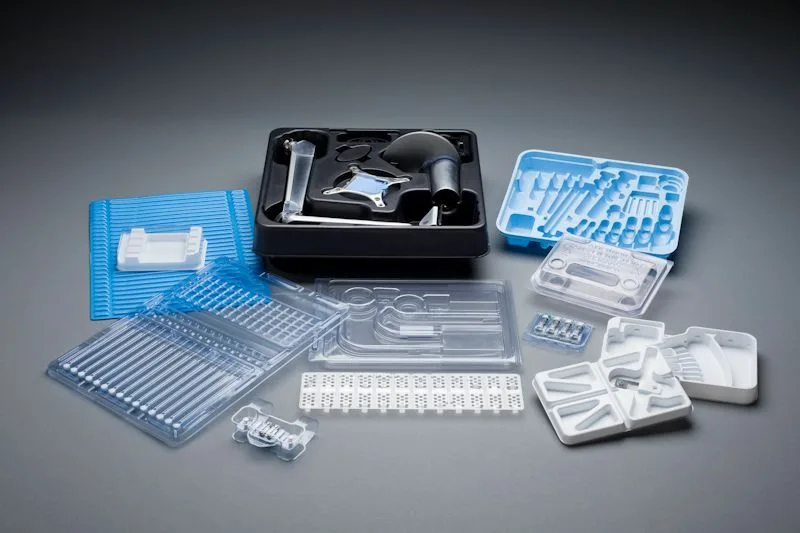
| PET | Trays, packaging components, protective products | Sheet grade, forming conditions, and appearance |
| PVC | Selected enclosures, covers, and industrial products | Material grade and application-specific requirements |
| PE | Protective components, containers, industrial products | Flexibility, stiffness, and dimensional stability |
| Engineering plastics | Specialized industrial components | Processing temperature and required material performance |
The material should be selected according to the product's operating environment, expected loads, appearance, chemical exposure, and regulatory requirements. Material grades within the same polymer family may behave differently during forming.
For demanding applications, the machine manufacturer should review the actual sheet specifications rather than relying only on the generic material name.
Heavy gauge sheets generally require a controlled heating process to reach a suitable forming condition. The sheet must be heated sufficiently for the intended shape while avoiding overheating, surface damage, or excessive material degradation.
Heating performance affects how the sheet stretches and distributes across the mold. Uneven temperature can contribute to variations in wall thickness, incomplete detail reproduction, and inconsistent finished-part dimensions.
Heating zones, sheet thickness, material properties, forming depth, and production cycle should be considered together when selecting the equipment.
The required vacuum or pressure capacity depends on the mold design, part geometry, sheet material, and forming method. The machine must provide appropriate forming conditions for the intended application.
Deep shapes, detailed surfaces, and large forming areas may require additional engineering review to determine a suitable combination of mold design, heating, vacuum, and pressure.
Cooling allows the formed plastic to retain its intended shape. Thick sections and large components may require longer cooling periods than thinner or smaller parts.
The part-removal method should prevent unnecessary deformation and accommodate the dimensions and weight of the finished product. Cooling and demolding should be considered as part of the overall cycle, not as separate afterthoughts.
Selecting heavy gauge thermoforming equipment requires more than comparing maximum sheet size or nominal forming pressure. The machine should be evaluated as an integrated system.
The forming area must accommodate the required sheet dimensions, mold layout, and product geometry. Buyers should confirm mold mounting dimensions, available space, forming depth, and the process used to change tooling.
The heating system should suit the material, sheet thickness, forming area, and required cycle. Consistent temperature control can help improve repeatability and reduce forming defects.
The machine structure must support the mold and operating loads specified for the application. Motion systems should provide the positioning and movement required by the forming process, with maintenance access appropriate for routine servicing.
Control systems coordinate heating, forming, cooling, and other machine operations. Depending on the configuration, operators may be able to adjust process settings and monitor operating conditions to support repeatable production.
Heavy gauge thermoformed parts often require trimming, drilling, machining, assembly, or other finishing steps. These operations affect the total manufacturing cycle and the cost of the finished part.
Where necessary, manufacturers should assess whether the thermoforming machine can be integrated with separate trimming or handling equipment.
A cost-effective manufacturing solution considers more than the initial machine purchase price. The total cost of producing an acceptable part depends on material usage, tooling, processing times, labor, energy, finishing, maintenance, and production volume.
The expected production volume influences the choice of mold, machine configuration, and automation level. For products made in smaller batches, tooling flexibility and changeover time may be significant considerations. Higher-volume applications may benefit from more integrated material handling and repeatable production settings.
A cost comparison should include both the initial tooling investment and the expected cost per acceptable finished part over the intended production period.
Material costs can represent a substantial part of the cost of a thermoformed product. Sheet dimensions, mold layout, product geometry, and trimming allowances affect how much material becomes part of the finished component.
Stable heating and forming conditions can help reduce defective parts, while effective trimming and scrap management can improve material utilization. The target should be to reduce waste without compromising product strength, dimensions, or appearance.
Total processing times include sheet loading, heating, forming, cooling, demolding, trimming, inspection, and material movement. The slowest stage may limit the output of the overall process.
Manufacturers should assess the complete production workflow before setting output targets. A shorter forming cycle does not necessarily improve productivity if it leads to more defects, additional rework, or longer downstream processing.
Heavy gauge thermoforming equipment is used where manufacturers need formed plastic parts with specific dimensions, surfaces, and functional properties.
Applications may include interior panels, trim components, protective covers, and selected exterior parts. Machine selection depends on the part's dimensions, surface requirements, material, and production volume.
Thermoformed plastic housings and covers protect machinery, equipment, and internal assemblies. The design should account for the operating environment, impact requirements, mounting features, and any additional reinforcement or assembly needs.
Large protective panels and enclosures can be formed from plastic sheets where the selected material meets the application's mechanical and environmental requirements. Product design should consider wall distribution, mounting points, trimming, and joining.
Thermoformed plastic components may be used for equipment covers, device housings, and protective enclosures. For regulated applications, buyers should define material documentation, cleanliness, traceability, and validation requirements separately from the machine specification.
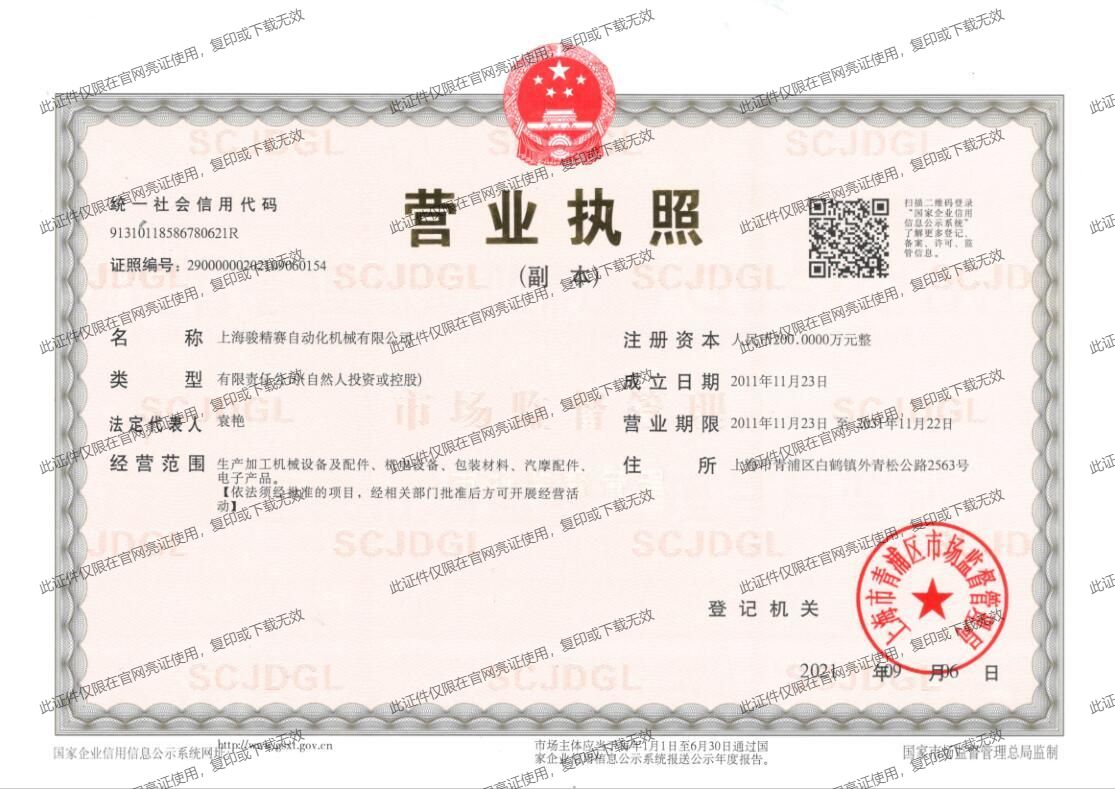
Shanghai Junjingsai Automation Machinery Co., Ltd. manufactures thermoforming machines, vacuum forming machines, and customized plastic forming automation equipment.
The company was established in 2002 and has more than 20 years of experience in plastic forming machinery. Its manufacturing facilities are located in Shanghai, Chongqing, Jiangsu, and Guangdong, with approximately 29,000 square meters of combined facility space.
Company information states that the thermoforming division has more than 150 employees, including 30 R&D engineers, and an annual capacity exceeding 500 thermoforming machines and automation systems.
Junjingsai reports ISO 9001 certification and CE-related credentials. Buyers should request current documentation and confirm the scope and applicability of the relevant certificates for the proposed machine and destination market.
For heavy gauge applications, equipment selection should be based on the actual sheet material, thickness, part dimensions, forming depth, mold design, production volume, and required finishing operations. A project-specific review helps establish whether the proposed machine configuration is appropriate.
Before requesting a quotation, prepare the information needed to assess the machine and manufacturing process.
These details help the manufacturer evaluate machine size, heating capacity, forming method, mold compatibility, cooling, and automation options. The final quotation should specify the agreed configuration, acceptance criteria, delivery schedule, warranty, and support arrangements.
A heavy gauge thermoforming machine heats relatively thick thermoplastic sheets and forms them against a mold using vacuum, pressure, or a compatible forming method. It is used to manufacture products such as industrial housings, protective covers, automotive panels, and large plastic components.
Heavy gauge thermoforming generally focuses on thicker sheets and larger or more durable components, while thin gauge thermoforming is commonly used for high-volume products such as packaging trays and containers. The exact boundary depends on the material, machine configuration, and industry application.
It can produce shell-like components, housings, and formed sections. A fully enclosed hollow part may require two or more formed sections and additional joining or assembly operations, depending on the design.
Vacuum forming draws a heated plastic sheet against a mold by removing air from the space between the sheet and mold. Pressure forming uses additional air pressure, often together with vacuum, to press the sheet against the mold surface. The suitable method depends on the product geometry, material, and required surface detail.
Thermoforming shapes heated plastic sheets, while sheet metal forming deforms metal through processes such as bending, rolling, and deep drawing. The best process depends on material properties, part geometry, strength requirements, tooling, production volume, and total manufacturing cost.
Cost depends on the forming area, sheet thickness, heating system, forming method, mold requirements, automation level, control system, and any integrated finishing equipment. Buyers should evaluate these factors alongside operating costs and expected production volume.
Depending on the machine and application, materials may include ABS, PP, PET, PVC, PE, and selected engineering plastics. The material must meet the product's mechanical, thermal, chemical, and environmental requirements, and its processing conditions should be confirmed with the manufacturer.
Waste can be reduced by optimizing sheet dimensions and mold layout, controlling heating and forming conditions, minimizing defects, and planning trimming operations carefully. Material utilization should be measured alongside finished-part quality to ensure that waste reduction does not compromise performance.
Provide product drawings or samples, material type and thickness, product dimensions, forming depth, mold details, target production volume, forming method, finishing requirements, factory conditions, and delivery destination. This information helps the manufacturer recommend an appropriate configuration.
If your business needs equipment for large plastic housings, protective panels, automotive components, or other heavy gauge applications, Junjingsai can review your product requirements and discuss suitable thermoforming configurations.
Share your drawings, plastic sheet specifications, forming depth, production targets, and finishing requirements to begin the technical evaluation.
Visit the official website to learn more about Junjingsai's thermoforming equipment and customized plastic forming solutions: