Quote now
EN

A custom thermoforming machine is designed around a manufacturer's specific product geometry, plastic sheet material, production target, tooling requirements, and factory layout. Unlike standard thermoforming equipment, a customized system can combine the required forming technology, heating configuration, mold arrangement, trimming method, automation, and downstream handling into a coordinated production solution.
For manufacturers producing packaging, industrial housings, protective covers, trays, and other plastic components, selecting the right equipment involves more than comparing machine specifications. The project must account for the complete thermoforming process, from raw plastic sheet loading and heating to forming, cooling, trimming, inspection, and finished products handling.
This guide explains how to plan a custom thermoforming machine project, evaluate design options, integrate equipment into existing production lines, and define the technical requirements needed for reliable production.
When designing a custom thermoforming machine, define the finished part dimensions, plastic sheet material and thickness, forming method, mold design, required output, quality standards, automation level, factory utilities, and downstream operations. The machine should be configured around the actual thermoforming processes required by the product, rather than selecting equipment based only on advertised speed or forming area. A successful project also includes tooling validation, safety requirements, installation planning, operator training, and production acceptance testing.
A custom thermoforming machine is a forming system engineered or configured to meet specific manufacturing requirements that may not be fully addressed by a standard machine. Customization can involve the forming area, heating system, vacuum or pressure capacity, mold mounting, plug assistance, clamping mechanism, trimming arrangement, material handling, controls, and integration with auxiliary equipment.
The machine heats a thermoplastic sheet until it becomes formable, shapes the heated sheet over or into a mold using vacuum, air pressure, mechanical assistance, or a combination of methods, and then cools the formed part before removal and finishing.
The degree of customization varies by project. Some manufacturers need only a modified mold interface or larger forming area. Others require a complete automated production line that connects sheet feeding, forming, trimming, stacking, inspection, and packaging.
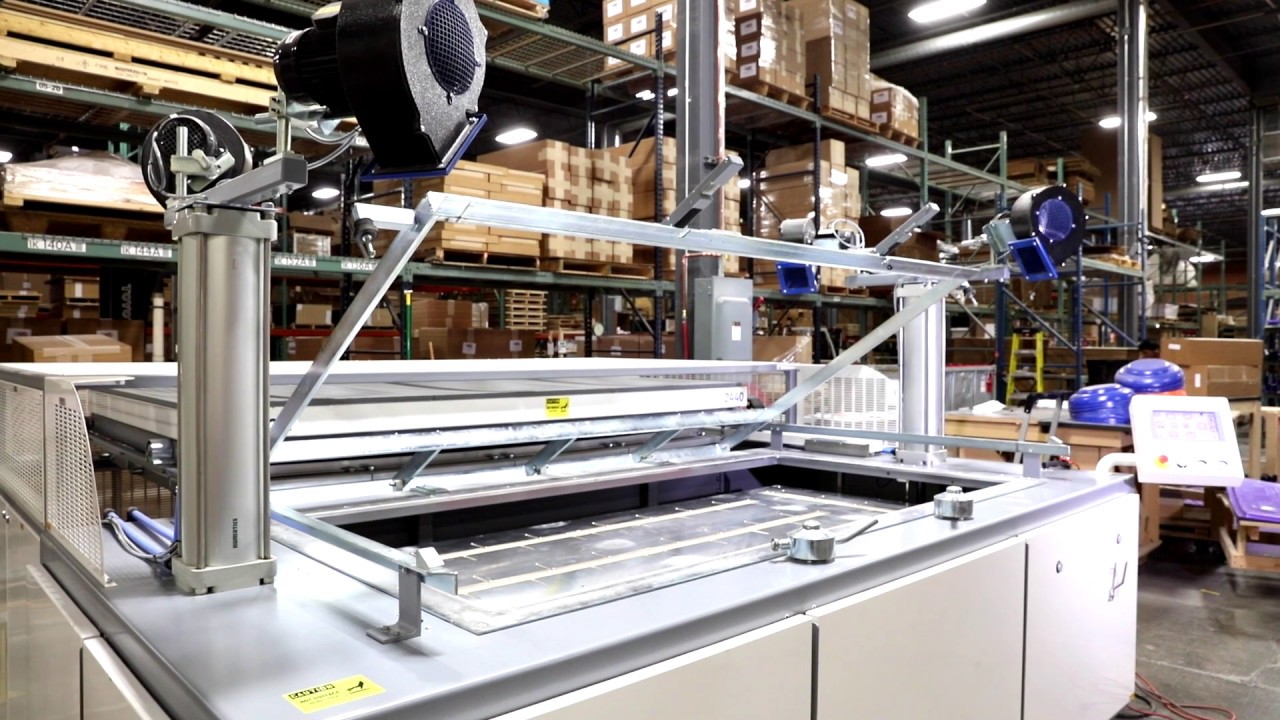
Standard thermoforming machines serve many applications, but production requirements vary considerably across industries. A machine suitable for thin plastic packaging may not be the best choice for a large, heavy-duty enclosure. Likewise, equipment designed for a simple vacuum forming process may need substantial changes to produce deeper parts with detailed surface features.
Custom thermoforming equipment helps align the machine configuration with the actual manufacturing task.
The shape, dimensions, depth, wall thickness, surface finish, and dimensional tolerances of a formed part influence the machine design. Large products may require a wider forming area and greater clamping capacity. Deep-drawn components may need plug assistance, carefully controlled heating, and additional cooling time.
For products with detailed surface features, pressure forming may be more suitable than basic vacuum forming, depending on the required definition and material.
A custom machine may need to connect with an existing sheet feeder, mold-handling system, trimming machine, robot, conveyor, or packaging station. The mechanical interfaces, electrical controls, production timing, and safety signals must be compatible with the surrounding equipment.
A machine that operates well on its own can still create production problems if its output does not match the capacity of the next process.
A wide range of thermoplastics can be used in thermoforming, but each material has its own processing characteristics. Sheet thickness, stiffness, forming temperature, shrinkage, and cooling behavior affect the heating system, forming method, mold design, and handling equipment.
Custom design allows these requirements to be considered together instead of relying on a standard configuration that may require extensive adjustment after installation.
The first step in a custom machine project is to define what the finished products must do and how they will be manufactured. A detailed product specification gives the machine supplier a practical basis for selecting the forming method, heating capacity, mold arrangement, automation, and control system.
Provide engineering drawings or 3D CAD files showing the overall dimensions, forming depth, corner radii, draft angles, openings, ribs, mounting points, and any other features that affect forming or trimming.
The supplier should identify areas where the plastic sheet may stretch significantly. Thermoforming stretches the sheet over or into a mold, so the finished wall thickness is not necessarily equal to the original sheet thickness. Deep features and large surface-area changes can create thinner sections that need to be assessed during design.
For parts that must fit into an assembly, identify the dimensions that require the closest control. These may include mounting holes, edges, mating surfaces, sealing areas, or locations where the part connects with metal or plastic components.
The project specification should state the material grade, nominal sheet thickness, acceptable thickness range, color, surface finish, and any requirements for recycled content or protective film.
Different plastics respond differently to heating and stretching. Material selection influences the forming temperature, heating time, cooling behavior, mold release, and final product performance. The machine should be designed for the materials that will actually be used rather than a general material category alone.
Estimate annual demand, required output per shift, planned operating hours, and expected product changeovers. A machine designed for long production runs may use dedicated tooling and automatic material handling, while a line producing many product variants may need adjustable fixtures and quick-change tooling.
The project brief should also identify whether the machine will manufacture one product or a family of related parts. This decision affects mold mounting, control recipes, clamping arrangements, gripper design, and storage for interchangeable tooling.
Define acceptable surface appearance, dimensional tolerances, minimum wall thickness, impact resistance, and any special testing required for the finished products.
For high quality production, it is helpful to specify how each requirement will be inspected. For example, dimensional measurements may be taken at selected reference points, while wall thickness may be checked at known thin areas. A clear inspection plan makes acceptance testing more objective.
The forming method affects machine structure, mold design, air and vacuum systems, part detail, and cycle time. The most appropriate process depends on the product geometry, material, quality target, and expected production volume.
Process overview: heating the sheet, placing it over or into a mold, applying vacuum, cooling, and removing the part.
Vacuum forming uses a vacuum to draw heated plastic against the mold surface. The pressure difference between the surrounding air and the evacuated mold cavity pushes the sheet into the required shape.
It is commonly used for large covers, equipment housings, protective panels, display components, and other products where the geometry and surface requirements are compatible with the process.
When designing a vacuum forming machine, evaluate:
Vacuum forming can support a wide range of product sizes, but complex geometry and demanding surface-detail requirements may call for additional process features or another forming method.
Pressure forming uses compressed air to push heated plastic against the mold, often combined with vacuum on the opposite side. The additional forming force can help reproduce finer surface details, textures, lettering, and sharper features when the mold and material are properly designed.
This process may be suitable for high quality housings, appliance components, equipment panels, and products that need a more defined surface appearance than basic vacuum forming can provide.
A pressure forming machine may require a pressure chamber, suitable clamping structure, compressed-air capacity, mold venting, and additional safety provisions. The required pressure should be determined from the process and equipment design rather than assumed from a general specification.
For deep-drawn products, plug assistance can help pre-stretch the heated sheet before or during forming. The plug pushes material into the mold cavity, helping manage material distribution and reduce excessive thinning in selected areas.
Plug geometry, travel, timing, surface finish, and temperature can affect the final wall thickness and product appearance. If plug assistance is required, it should be included in the initial machine specification because it affects mold clearance, actuators, controls, and cycle sequence.
Some applications require two formed sheets to be joined into a hollow component. Twin-sheet forming, for example, can produce double-wall parts where the two sheets are formed and joined during a coordinated cycle.
The machine design must accommodate the two forming operations, sheet positioning, mold alignment, and joining requirements. Other specialized processes may need dedicated heating arrangements, mold movement, or auxiliary equipment.
The supplier should explain why the proposed forming process suits the part and what limitations remain for geometry, tolerances, material distribution, and output.
Heating performance is one of the main factors governing part consistency and production rate. The plastic sheet must reach a suitable forming temperature across the intended forming area without overheating or leaving areas too stiff to form correctly.
Depending on the material and application, thermoforming machines may use ceramic, quartz, infrared, or other suitable heating technologies. The right choice depends on the material's response to heat, sheet thickness, forming area, and required production rate.
For a custom system, evaluate:
A zoned heating system can help compensate for differences in sheet geometry and local forming requirements. However, the number of zones alone does not establish heating quality. Temperature distribution should be verified using the actual material and production settings.
The forming station holds the mold and brings the heated sheet into the correct position for shaping. Its dimensions and mechanical arrangement must accommodate the mold, clamping frame, plug assistance if used, and any movements needed to form or release the product.
Consider the following design factors:
| Design factor | Why it matters |
|---|---|
| Forming area | Determines the usable sheet and mold footprint |
| Draw depth | Influences material stretching, mold clearance, and tooling requirements |
| Clamping force | Keeps the sheet securely positioned during forming |
| Mold movement | Must provide sufficient stroke and repeatable alignment |
| Vacuum and pressure capacity | Supports the selected forming process |
| Cooling arrangement | Helps the formed part retain its shape before removal |
| Access and guarding | Supports safe operation, cleaning, and maintenance |
The cycle includes sheet loading, heating, forming, cooling, mold opening, part removal, and any additional transfer or trimming operations performed within the machine.
Not every step can be shortened independently. For example, reducing heating time without checking temperature uniformity may lead to defects, while removing a part before sufficient cooling can cause deformation.
The machine supplier should identify the expected cycle time for the target product and explain which operations occur sequentially and which can run in parallel. Actual production trials should confirm the result.
Tooling affects how the plastic sheet stretches, how accurately details are reproduced, and how easily the formed part can be removed. A machine and mold should be engineered as a compatible system.
The mold must fit the forming area and support the required geometry. Material choice depends on expected production volume, heat transfer, surface requirements, mold complexity, and maintenance needs.
Depending on the application, tooling may be made from machined metals, cast materials, composite materials, or other suitable tool materials. The project team should consider mold weight, mounting points, cooling arrangements, vacuum passages, and expected service life.
Tooling recommendations should be based on the actual part and production target. A low-volume prototype mold may not be suitable for long, high-volume production runs.
Air trapped between the heated sheet and mold can prevent the plastic from reproducing certain features. Appropriate venting allows air to escape as the sheet contacts the mold.
Draft angles, surface finish, part geometry, and cooling conditions also influence release. If a part sticks to the mold, the result may be surface damage, deformation, or a longer cycle.
For custom forming machines, review part-release requirements during the tooling design stage. The unloading method should be considered at the same time, especially for large parts or components with flexible walls.
Many thermoformed products require trimming to remove the surrounding sheet and achieve the final outline. Depending on the product, finishing may involve CNC trimming, die cutting, drilling, edge finishing, or other secondary operations.
The project specification should state whether trimming is integrated into the machine, performed at a separate station, or handled by another production cell.
The choice affects the overall footprint, fixture design, transfer method, and production capacity. It also determines whether the forming machine must deliver parts in a specific orientation or with a consistent reference edge.
A custom thermoforming machine should meet the required production rate under normal operating conditions, not only during a short demonstration. Rated machine speed, actual cycle time, number of parts per mold, changeover frequency, and downstream capacity all influence output.
For a machine that produces one set of parts per forming cycle:
Theoretical cycles per hour = 3,600 ÷ Cycle time in seconds
Theoretical parts per hour = Cycles per hour × Parts per cycle
For example, a machine with a 30-second cycle and six parts per cycle has a theoretical output of:
3,600 ÷ 30 = 120 cycles per hour
120 × 6 = 720 parts per hour
This calculation assumes continuous operation without interruptions or rejected parts. Actual output will be lower when the line requires material replenishment, mold changes, cleaning, maintenance, or quality checks.
The forming machine may not be the only factor limiting output. Heating, cooling, trimming, part removal, stacking, inspection, and packaging can each restrict the production rate.
If the forming station produces parts faster than the trimming station can process them, the complete line will not achieve the forming machine's theoretical output. For this reason, evaluate the capacity of every connected operation.
High-speed production requires coordinated movements and stable process conditions. Heating, clamping, mold movement, vacuum or pressure application, cooling, and unloading must occur in the correct sequence.
A high-speed machine should also provide repeatable positioning, suitable sensors, clear fault messages, and practical access for maintenance. Faster movement is useful only when the system can maintain the required quality and operate reliably.
If the machine will make different products, include the time needed to change molds, adjust guides, select a process recipe, and verify the first acceptable parts.
Quick-change mold interfaces, stored settings, accessible connections, and standardized fixtures can reduce changeover time. The project should specify whether the supplier's quoted output includes normal product changes or assumes a single uninterrupted run.
The design of a custom thermoforming machine should consider how material enters the machine and how formed parts leave it. Depending on the application, the complete line may include automatic sheet loading, robotic part removal, conveyors, trimming equipment, stackers, inspection devices, and packaging systems.
Automatic loading may use a sheet magazine, vacuum pick-and-place mechanism, transfer carriage, or roll-feed system. The correct arrangement depends on whether the machine processes pre-cut sheets or continuous plastic roll stock.
The system must separate and position sheets reliably across the intended material and thickness range. Sheet curl, static electricity, protective film, surface texture, and sheet weight can affect pickup performance.
Robots can transfer formed parts between stations, place components in a specific orientation, or stack products into defined patterns. Conveyor systems move material between processes and can provide buffering when the operations have different cycle times.
The gripper should be designed for the part's shape and stiffness. Excessive gripping force can mark or distort the product, while insufficient grip can lead to dropped parts or transfer errors.
The machine controller should coordinate heating, forming, mold movement, loading, unloading, and downstream equipment. Where separate machines are connected, the control interface should define when each station is ready, when a transfer can begin, and what happens if an operation fails.
Project teams should confirm:
The exact integration scope should be agreed before manufacturing begins. Otherwise, equipment may arrive with incompatible interfaces or require additional engineering during installation.
Material selection affects the machine's heating requirements, forming behavior, finished part performance, and operating cost. The supplier should know the intended material grades before finalizing the machine configuration.
Common thermoforming materials include ABS, HIPS, PETG, acrylic, polycarbonate, polypropylene, and other thermoplastics supplied in sheet form. Their suitability depends on the required strength, stiffness, impact resistance, clarity, chemical resistance, appearance, and operating environment.
For example, a protective equipment housing may require impact resistance and dimensional stability, while a transparent cover may prioritize optical appearance. Food packaging applications may have additional material and regulatory requirements.
Do not select a material based only on whether it can be formed. The finished part must also satisfy its performance and service requirements.
As a plastic sheet stretches over or into a mold, material distribution changes. Deep features, tight corners, and large draw ratios can lead to thinner areas. The design should identify the minimum acceptable wall thickness and the locations where it must be verified.
Tooling geometry, sheet temperature, pre-stretching, plug assistance, and forming pressure can all influence material distribution. These variables should be evaluated through engineering analysis and practical trials.
A production specification should explain how the finished part will be checked. Depending on the application, quality control may include dimensional inspection, wall-thickness measurements, surface inspection, fit checks, impact testing, or other performance tests.
If the product is assembled into a larger system, confirm the fit and function of representative parts rather than inspecting dimensions in isolation.
A repeatable quality plan gives the machine supplier and buyer a shared basis for evaluating sample parts during commissioning and acceptance.
A custom machine project may require changes to the factory layout, utilities, material flow, and operator access. These requirements should be reviewed before the machine is shipped.
The available area must accommodate the machine, mold loading, raw material storage, finished product handling, maintenance access, and any connected equipment.
The layout should also allow operators and maintenance personnel to reach service points without obstructing material movement. If a crane or lifting device is required to change heavy molds, confirm the lifting route and capacity.
The machine supplier should provide the required electrical supply, connected load, compressed-air demand, vacuum requirements, cooling-water needs, exhaust provisions, and other utility specifications applicable to the configuration.
Do not estimate utility requirements from machine size alone. Heating capacity, pressure forming, cooling systems, and auxiliary equipment can change the overall demand.
The project plan should identify who is responsible for transport, unloading, positioning, utility connections, safety checks, control integration, and production testing.
For overseas installations, also consider local electrical standards, documentation language, spare-parts logistics, and the availability of qualified service support.
The purchase price is only one part of a custom thermoforming machine project. The long-term value depends on operating costs, serviceability, spare parts, uptime, product quality, and the machine's ability to meet production requirements.
The machine design should address hot surfaces, moving platens, clamping mechanisms, mold movements, pneumatic or hydraulic systems, and any robotic handling areas.
Depending on the configuration and applicable regulations, safeguards may include fixed guards, interlocked access doors, emergency stops, pressure protection, and safe maintenance procedures. The safety requirements should be agreed during design and verified before production begins.
Check access to heaters, vacuum pumps, filters, valves, sensors, motors, and other components that need routine inspection. The supplier should provide maintenance schedules, lubrication requirements, troubleshooting instructions, and recommended spare parts.
Clear fault diagnostics can reduce troubleshooting time. However, maintenance access and spare-parts availability should be assessed directly rather than assumed from the control system's capabilities.
A practical cost evaluation should include the following items:
| Cost category | What to evaluate |
|---|---|
| Machine and auxiliaries | Forming equipment, heaters, vacuum or pressure systems, and handling units |
| Tooling | Mold manufacture, trimming fixtures, and interchangeable tools |
| Installation | Transport, rigging, utility work, and commissioning |
| Energy | Electricity, compressed air, cooling, and other operating utilities |
| Labor | Operators, setup, inspection, and maintenance |
| Consumables and spares | Filters, seals, vacuum cups, sensors, and replacement parts |
| Scrap and rework | Material loss, rejected parts, and process adjustments |
| Downtime | Fault recovery, maintenance, and production interruptions |
| Changeovers | Time and resources required to switch products |
A lower-cost machine may be suitable for a straightforward application, while a more automated system may be justified when it reduces handling labor, increases accepted output, or improves repeatability. The decision should be based on realistic production assumptions.
A structured project process helps reduce misunderstandings between the buyer, machine manufacturer, tooling supplier, and factory team.
Document the finished part, material, sheet thickness, required output, forming process, quality standards, factory conditions, and intended level of automation.
Identify open questions early, especially where product geometry, tolerances, or material specifications have not been finalized.
The supplier should propose the machine configuration, tooling approach, heating arrangement, control architecture, and downstream interfaces.
Review the technical drawings, mold dimensions, service access, safety provisions, and utility requirements before approving the design for manufacturing.
Where possible, use the intended material and representative tooling to test forming feasibility. Trial results can reveal issues with wall thickness, mold release, heating, surface finish, and trimming.
A prototype or pilot trial is especially useful when the product has deep draws, complex geometry, demanding cosmetic requirements, or an unfamiliar material.
Before shipment, agree on the tests that will demonstrate machine performance. These may include:
Acceptance criteria should be measurable and agreed in advance. A brief demonstration without the intended material or representative production conditions may not show how the machine will perform in normal operation.
After installation, verify utility connections, control integration, production settings, and operator training. Run the agreed production trial and document output, downtime, quality results, and outstanding issues.
The project should define who resolves identified issues, how corrections are verified, and what documents are handed over at final acceptance.
A high rated speed does not guarantee the required output for a particular product. The actual cycle depends on heating, forming, cooling, unloading, trimming, and other operations.
Better approach: Ask for a demonstrated cycle using the intended material, mold, and product requirements.
Changes to part geometry after tooling or machine design has begun can lead to extra costs, delays, and rework.
Better approach: Confirm the product drawings, material, critical dimensions, and minimum wall thickness before design approval.
A forming machine may produce more parts than the trimming or stacking station can process.
Better approach: Evaluate the entire production line and identify the expected bottleneck at each stage.
Different sheet grades or thicknesses can require changes to heating, forming settings, and handling arrangements.
Better approach: Define the acceptable material range and test representative materials during commissioning.
If output, quality, safety, and documentation requirements are not agreed early, buyer and supplier may interpret successful delivery differently.
Better approach: Include measurable acceptance conditions in the technical specification and purchase agreement.
A custom thermoforming machine is designed or configured for specific product dimensions, materials, forming methods, output requirements, tooling, and automation needs. Customization may range from a modified forming station to a complete integrated production line.
Custom equipment is worth considering when standard machines cannot meet the required forming area, part geometry, material range, automation level, production rate, or factory integration requirements without substantial modification.
Provide product drawings or 3D CAD files, material type, sheet thickness, part dimensions, forming depth, target output, quality requirements, preferred forming process, automation needs, and available factory utilities. Also specify any trimming, stacking, or downstream equipment that must be integrated.
Vacuum forming uses a vacuum to draw heated plastic against a mold. Pressure forming applies compressed air to push the sheet against the mold, often with vacuum assistance. Pressure forming can provide more detailed surface definition for suitable applications, depending on mold design and process conditions.
Yes, if the machine's heating, forming, tooling, and handling systems are designed for the intended materials. Each material should be evaluated for forming temperature, thickness, stretch behavior, cooling, and finished-part performance. Material changes may require new process settings or tooling adjustments.
Sheet thickness affects heating time, material stiffness, forming behavior, cooling requirements, and handling. The machine should accommodate the specified thickness range and provide sufficient control to achieve the required wall thickness and product quality.
Theoretical cycles per hour equal 3,600 divided by cycle time in seconds. Multiply this figure by the number of parts produced per cycle to estimate theoretical parts per hour. Actual accepted output is lower when downtime, changeovers, scrap, and downstream limitations are included.
Yes. Depending on project requirements, a system can integrate automatic sheet feeding, heating, forming, robotic unloading, trimming, stacking, inspection, and conveyor transfer. The required automation level depends on production volume, product variation, labor needs, and investment budget.
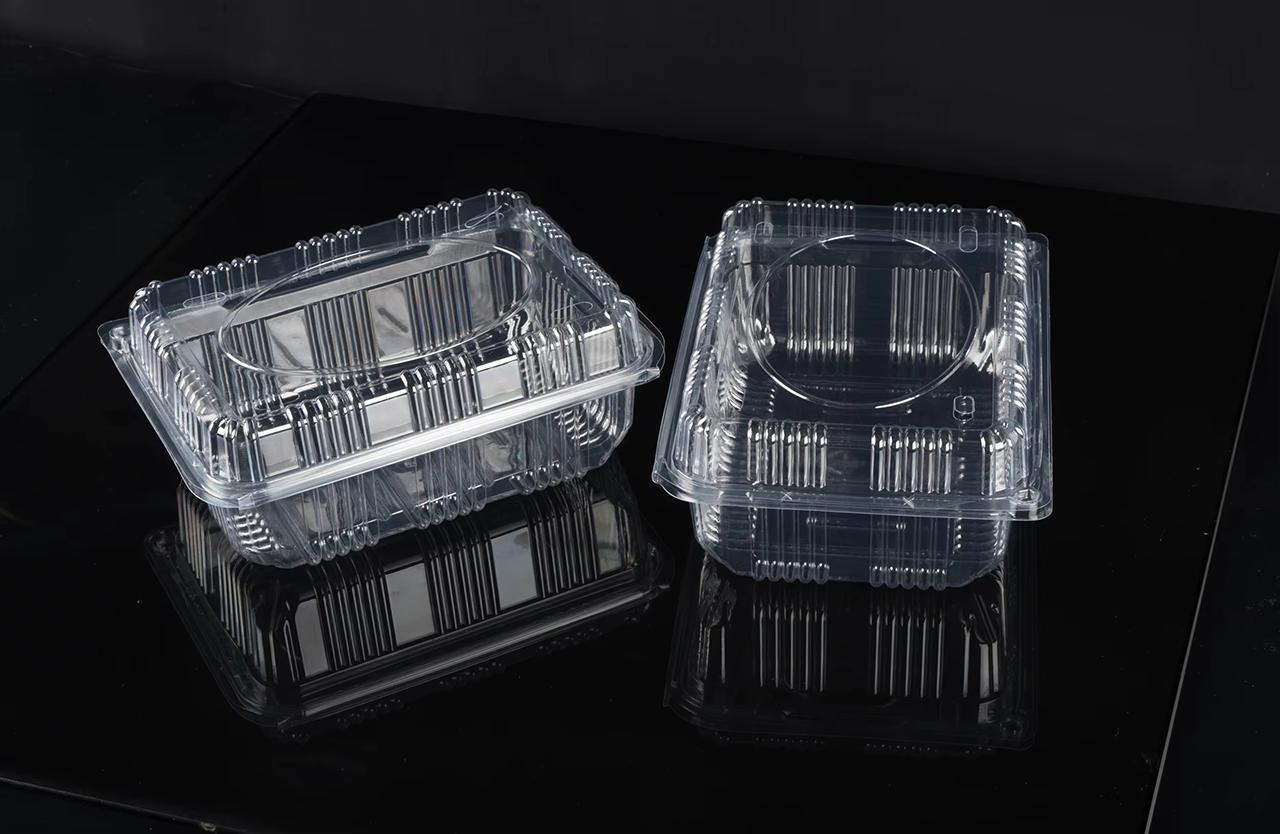
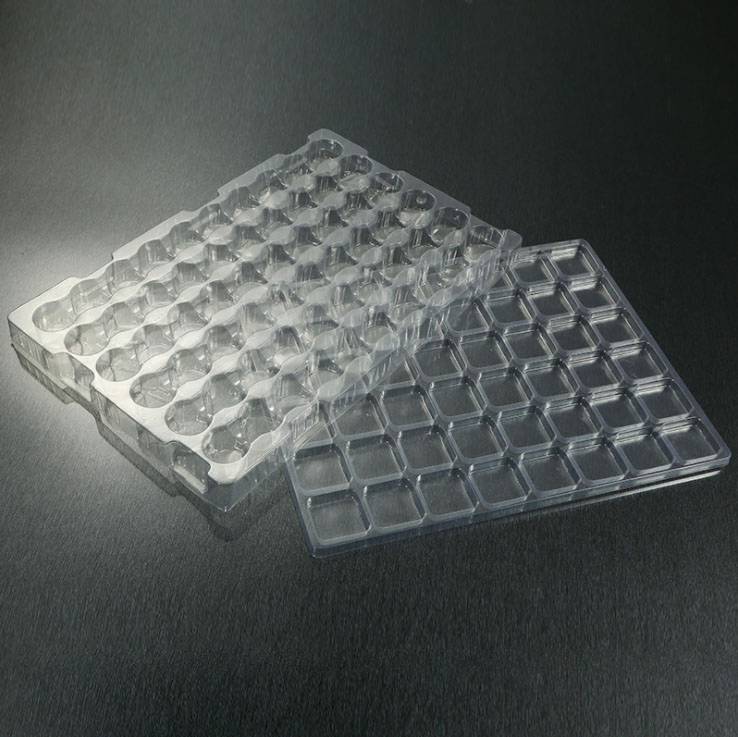
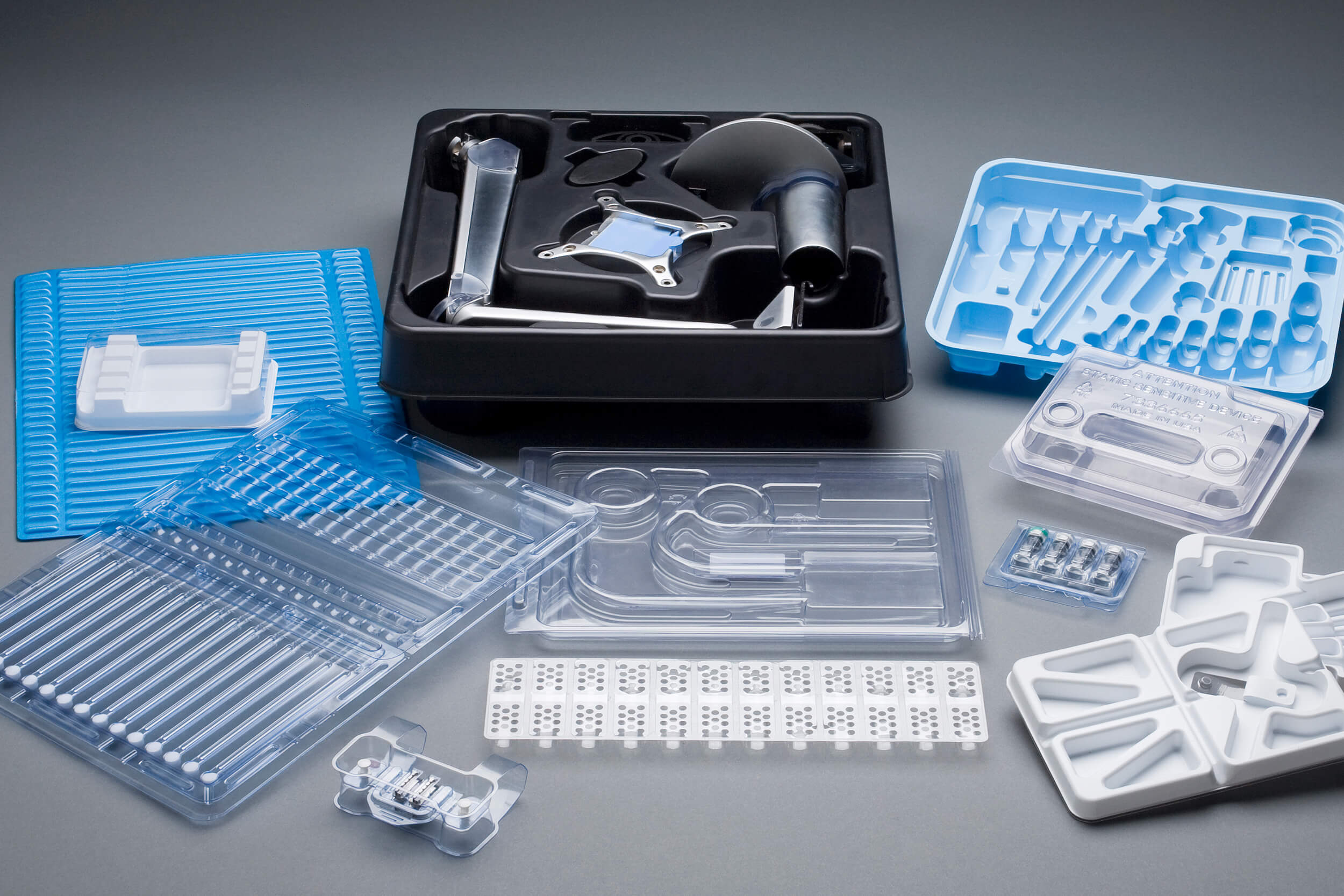
Applications include plastic trays, packaging components, equipment housings, protective covers, appliance panels, vehicle interior components, industrial enclosures, and other formed plastic products. The suitable process depends on the product geometry, material, performance requirements, and production target.
Consider part geometry, draft angles, corner radii, draw depth, material distribution, mold venting, cooling, release, surface finish, and trimming requirements. Tooling should be compatible with the machine and validated using the intended plastic sheet.
Yes. Integration may include material feeders, robots, conveyors, trimming machines, inspection equipment, and packaging stations. Mechanical interfaces, controls, safety signals, production timing, and downstream capacity should be reviewed before installation.
Define measurable product requirements, control sheet heating, use suitable tooling and forming settings, and verify wall thickness and dimensions at specified locations. Production trials using the intended material and mold help establish repeatable settings and confirm that the machine meets the quality target.
A factory acceptance test may cover machine functions, safety devices, loading and unloading, operation with the agreed material and tooling, sample-part quality, production rate, alarms, documentation, and maintenance procedures. The buyer and supplier should agree on measurable acceptance criteria before the test.
The timeline depends on design complexity, tooling development, component availability, automation, factory integration, and testing requirements. A project involving new molds and robotic handling generally requires more engineering and validation than a standard machine with minor modifications. Ask the supplier for a project schedule with design approval, manufacturing, testing, shipment, installation, and acceptance milestones.
Compare the initial machine and tooling investment with operating costs, labor requirements, energy consumption, scrap, maintenance, downtime, and expected accepted output. Include the costs and benefits of downstream equipment and product changeovers to evaluate the complete production system.
A custom thermoforming machine should be designed around the finished part, the selected plastic material, the required production rate, and the complete manufacturing workflow. Heating, forming, mold design, cooling, trimming, automation, and material handling must work together to produce consistent parts at the expected cost.
For manufacturers seeking high quality products and reliable thermoforming production, the most effective approach is to define technical requirements before selecting equipment, validate the forming process with representative materials and tooling, and evaluate the complete production line rather than a single machine specification.
A well-planned project also accounts for installation, operator training, maintenance, safety, and measurable acceptance criteria. These requirements give both the buyer and the equipment supplier a clear basis for delivering a machine that meets the intended production needs.