Quote now
EN

Thermoforming machines for automotive interior components heat a thermoplastic plastic sheet until it becomes flexible, shape it over or into a mold using vacuum forming, pressure forming, or mechanical assistance, and then cool and trim it to achieve the required dimensions. This manufacturing method is widely used for interior door panels, dashboard components, instrument panel covers, center consoles, pillar trims, headliner substrates, luggage compartment liners, and other molded interior parts.
The right thermoforming equipment depends on the selected plastic sheet material, component geometry, surface finish, production volume, dimensional tolerances, and downstream assembly requirements. Manufacturers evaluating a thermoforming machine should consider heating uniformity, mold compatibility, forming pressure, cycle time, trimming accuracy, material utilization, and automation capabilities.
Automotive interior thermoforming is a plastic manufacturing process in which a thermoplastic sheet is heated to a suitable forming temperature and shaped using a mold. After the material takes the required shape, it is cooled, released from the mold, and trimmed to produce the finished component or a semi-finished part for further assembly.
Unlike injection molding, which forces molten plastic into a closed mold, thermoforming typically starts with a pre-manufactured plastic sheet. The process is well suited to components with broad surfaces, curved profiles, textured finishes, and relatively large dimensions.
Vacuum forming is one of the most common thermoforming methods. A vacuum draws the softened plastic sheet against the mold surface, allowing it to reproduce the mold's contours. Pressure forming uses additional air pressure to improve material contact with the mold, which can help produce sharper details and more defined surface features.
For automotive manufacturers, thermoforming offers flexibility in part design, material selection, tooling development, and production planning. Its suitability depends on the part's structural requirements, appearance specifications, and expected manufacturing volume.
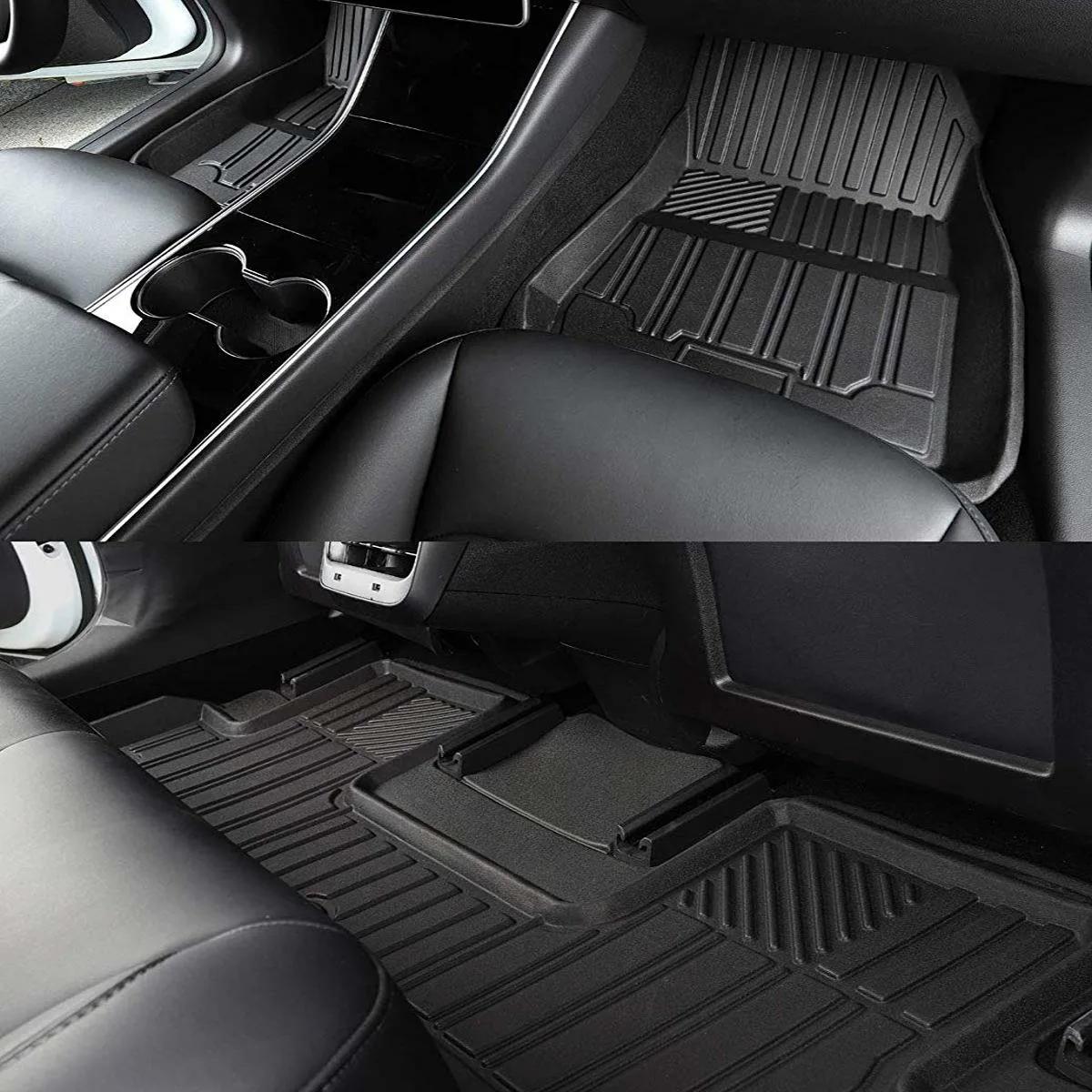
Automotive interiors combine functional surfaces with visual and tactile requirements. A molded component may need to match the vehicle's design language, accommodate mounting points, withstand regular handling, and maintain its shape under expected operating conditions.
Thermoforming machines can produce large, contoured plastic parts without requiring the entire component to be manufactured in a complex injection mold. This makes the process worth considering for interior applications that involve broad panels, relatively shallow shapes, or formed sheet structures.
Door panels, instrument panel covers, and luggage compartment liners often include curved surfaces, recessed sections, and transitions between different geometric features. A properly designed thermoforming system can shape these features when the material thickness, mold geometry, heating conditions, and forming method are compatible.
For parts with deep draws, narrow recesses, or complex corners, the mold and heating system must be designed to control material distribution. Plug assists, pressure forming, or other forming aids may be needed to reduce excessive thinning.
Automotive interior manufacturers use different thermoplastic materials according to the part's appearance, flexibility, durability, weight, and cost requirements. Common options include ABS, HIPS, polypropylene (PP), and selected thermoplastic elastomers or multilayer sheet constructions.
The selected plastic sheet may have a smooth, grained, matte, colored, or laminated surface. Some components use a decorative film or textile layer to achieve the required interior finish.
Not every material is suitable for every application. Material selection must account for forming behavior, adhesion between layers, temperature exposure, emissions requirements, scratch resistance, and compatibility with the vehicle manufacturer's specifications.
Thermoforming can be attractive when manufacturers need to produce several part designs, develop new interior components, or adjust tooling without investing in a dedicated injection mold for every application.
Depending on the machine design, manufacturers can change molds, adjust heating zones, modify forming parameters, and introduce different sheet formats. These capabilities can support product development and production flexibility, although changeover time and tooling costs still need to be evaluated.
The forming operation is only one stage in automotive interior production. After molding, components may require CNC trimming, drilling, cutting, edge finishing, surface inspection, and installation of clips or other mounting features.
A thermoforming production line can be designed around these downstream operations. Automated sheet loading, robotic part handling, in-line inspection, and coordinated trimming equipment can reduce manual handling and improve process consistency when properly integrated.
Thermoforming equipment can manufacture a range of automotive interior parts, provided the material and component design are appropriate for the process.
| Automotive interior component | Typical application | Main manufacturing considerations |
|---|---|---|
| Door panel substrates | Interior door structure or decorative panel support | Surface contours, mounting features, stiffness, and trimming accuracy |
| Dashboard and instrument panel covers | Decorative or protective interior surfaces | Dimensional stability, surface appearance, and integration with other components |
| Center console panels | Console covers and formed storage surfaces | Recess depth, edge quality, and geometric consistency |
| A-pillar, B-pillar, and other trim substrates | Interior pillar coverings and trim supports | Complex contours, fit, edge trimming, and attachment points |
| Headliner substrates | Formed interior roof support structures | Large surface area, material distribution, and dimensional stability |
| Luggage compartment liners | Trunk and cargo-area coverings | Wear resistance, shape retention, and impact requirements |
| Seat-back covers and protective panels | Rear seat surfaces or molded protective components | Surface finish, stiffness, and mounting geometry |
| Interior storage and protective covers | Compartments, covers, and non-structural housings | Draw depth, detail reproduction, and trimming |
The final manufacturing method depends on the specific component. For example, some dashboard and door-panel assemblies combine a thermoformed substrate with a separate decorative skin, foam layer, or structural reinforcement. A single forming process does not necessarily produce the complete finished assembly.
A typical automotive thermoforming process includes sheet preparation, heating, forming, cooling, demolding, trimming, and inspection. The exact sequence varies with the machine configuration, material, mold, and required production rate.
Production begins with a thermoplastic sheet selected for the component's functional and appearance requirements. Sheet thickness, material composition, color, surface texture, and dimensional consistency influence the forming result.
The sheet must be compatible with the machine's clamping system and heating arrangement. For multilayer materials, the different layers must also tolerate the forming temperature without unacceptable delamination, discoloration, or surface defects.
The plastic sheet passes into the heating station, where heaters soften the material until it reaches a suitable forming range.
Heating uniformity is one of the main factors affecting part quality. If one area becomes too hot while another remains too cool, the formed component may develop uneven thickness, wrinkles, poor surface reproduction, or inconsistent dimensions.
Modern thermoforming equipment may use zoned infrared heaters or other controlled heating systems to adjust the temperature distribution across the sheet. The appropriate setup depends on material thickness, sheet composition, forming depth, and production speed.
Once the sheet reaches the required forming condition, the machine brings it into contact with the mold.
In vacuum forming, air is evacuated from the space between the sheet and mold so that atmospheric pressure pushes the softened plastic against the mold surface. This allows the material to reproduce the mold's overall shape.
Pressure forming introduces additional air pressure to improve contact with the mold. Depending on the tooling and process, this can help reproduce fine textures, sharper corners, and more detailed surface features.
Deep-draw automotive components may require plug assists or other material-distribution techniques. These methods help guide the softened sheet into the mold and can reduce excessive stretching in selected areas.
The formed sheet must cool sufficiently to retain its intended geometry after removal from the mold.
Cooling may occur through mold cooling circuits, controlled airflow, or other methods suited to the production system. Insufficient or uneven cooling can contribute to warpage, dimensional variation, and changes in the shape of large panels.
Cooling conditions should be established for the actual material and component rather than selected only to minimize cycle time.
After cooling, the formed part is released from the mold and transferred to the next production stage.
The demolding system must account for draft angles, undercuts, material flexibility, and the component's geometry. Poor release conditions can damage the surface, distort the part, or increase handling time.
Depending on the machine, part removal may be manual, semi-automatic, or fully automated.
Thermoformed components normally retain excess material around their edges. Trimming removes this material and establishes the final part outline.
CNC routers, dedicated trimming fixtures, cutting tools, or robotic trimming systems may be used according to the required accuracy and production volume.
For automotive applications, trimming accuracy affects fit, gaps, mounting alignment, and assembly efficiency. The finished part may also require holes, slots, clips, or other features before it can be installed in the vehicle.
The finished component should be inspected against defined product specifications. Typical checks include dimensions, wall-thickness distribution, surface appearance, warpage, edge quality, mounting-hole positions, and consistency between production batches.
Where necessary, manufacturers can also evaluate material performance, heat resistance, odor and emissions, flammability, scratch resistance, and other requirements specified by the vehicle manufacturer or applicable standards.
Vacuum forming and pressure forming are related processes, but they do not produce identical results in every application.
| Comparison factor | Vacuum forming | Pressure forming |
|---|---|---|
| Forming mechanism | Vacuum draws the sheet against the mold | Vacuum and additional air pressure help shape the sheet |
| Surface detail | Suitable for many general contours and textures | Can reproduce finer details with suitable tooling |
| Tooling considerations | Often uses relatively straightforward mold arrangements | May require tooling designed for higher pressure and more detailed features |
| Typical applications | Liners, covers, substrates, and broad formed panels | Decorative trim and components requiring sharper detail |
| Equipment requirements | Vacuum system, heating system, mold, and cooling arrangement | Pressure-capable forming system, suitable mold, and controlled heating |
| Process selection | Based on geometry, material, surface finish, and production targets | Based on the same factors, with additional attention to pressure capability and tooling |
Vacuum forming is not automatically the best choice for every large panel, and pressure forming is not always necessary for detailed parts. The appropriate process should be selected after reviewing the component drawing, surface requirements, material, expected production volume, and acceptable tooling cost.
Selecting the right thermoforming machine involves more than comparing advertised machine dimensions or maximum forming areas. The equipment must support the actual production process, from heating the sheet to delivering a trimmed component that meets the required specifications.
Start with the largest component dimensions, projected forming area, maximum draw depth, and mold layout.
The machine's forming area must accommodate the component and its surrounding clamping margins. Manufacturers should also check mold installation space, platen dimensions, opening height, and clearance for loading and removing the part.
For deep or uneven geometries, confirm that the machine can provide the necessary forming stroke and accommodate any plug-assist or pressure-forming equipment.
Different plastic sheet materials respond differently to heat and stretching. ABS, HIPS, PP, and multilayer sheet constructions may require different heating profiles, forming temperatures, cooling conditions, and mold designs.
Ask the equipment supplier to confirm that the machine can process the intended materials and thickness range. Trials using the actual production sheet are preferable to relying solely on general machine specifications.
Heating performance affects thickness distribution, appearance, and dimensional consistency. A machine with suitable heating zones allows the operator to adjust heat distribution according to the component's geometry.
When evaluating equipment, review heater control, temperature monitoring, repeatability, and the ability to reproduce established production settings.
The required forming system depends on the part's geometry and surface-detail requirements.
For vacuum forming, review vacuum capacity, evacuation time, sealing arrangements, and mold connections. For pressure forming, confirm the rated operating pressure, pressure-control system, tooling compatibility, and safety provisions.
Machine specifications should be evaluated under realistic operating conditions rather than judged only by the highest stated vacuum or pressure value.
Production capacity depends on the complete manufacturing cycle, not just the forming stage.
Sheet loading, heating, forming, cooling, demolding, trimming, inspection, and material handling all contribute to throughput. Automated loading or unloading may reduce labor requirements, but the benefits depend on part geometry, cycle balance, and downstream equipment.
Manufacturers should estimate the expected number of acceptable finished parts per shift and account for mold changes, maintenance, material waste, and planned downtime.
Automotive interior components often require consistent edges and accurately positioned mounting features. A machine supplier should be able to explain how the forming equipment will interface with trimming systems and downstream handling.
Depending on production needs, the line may include automatic sheet feeding, robotic transfer, CNC trimming, vision inspection, or integrated production monitoring.
Automation should be selected according to the required output, part variety, labor availability, and return on investment.
Mold design affects part quality, material distribution, cooling, release, and cycle time. The mold must also match the machine's mounting system and forming method.
If the production program includes several component designs, evaluate mold-change procedures, setup time, stored process recipes, and the availability of interchangeable tooling.
For automotive supply chains, the ability to reproduce approved part specifications is as important as initial sample quality.
Ask about temperature and pressure controls, parameter storage, maintenance procedures, process monitoring, inspection records, and support for customer-specific quality systems.
A machine supplier should also clarify which functions are standard, which require optional equipment, and which must be provided by the mold or trimming-system supplier.
Material selection affects the finished part's weight, appearance, flexibility, durability, and processing requirements.
| Material | General characteristics | Potential interior applications |
|---|---|---|
| ABS | Good impact resistance and surface finish options | Trim substrates, covers, and formed panels |
| HIPS | Easy to process and often economical | General-purpose interior covers and liners |
| PP | Low density and good chemical resistance | Selected interior panels, storage components, and liners |
| TPO and selected thermoplastic elastomers | Flexible material options with useful impact and surface characteristics | Selected decorative skins and interior trim structures |
| Multilayer thermoplastic sheets | Can combine a structural layer with a decorative or functional surface | Laminated interior panels and specialty trim components |
These are general material characteristics rather than universal performance guarantees. Actual suitability depends on the formulation, sheet construction, thickness, processing conditions, and vehicle manufacturer's specifications.
For example, a decorative interior surface may require good scratch resistance and a consistent grain pattern, while a luggage compartment liner may place greater emphasis on wear resistance, stiffness, and shape retention.
Manufacturers should verify the finished part's performance through material data, forming trials, and application-specific testing.
Thermoforming defects often result from a combination of material behavior, heating conditions, mold geometry, forming parameters, and cooling.
| Defect | Possible causes | Practical measures |
|---|---|---|
| Uneven wall thickness | Uneven heating, excessive stretching, unsuitable material distribution | Adjust heating zones, review mold geometry, and consider plug assists |
| Wrinkles or folds | Excess material accumulation, poor clamping, unsuitable forming sequence | Review sheet positioning, clamping, and forming conditions |
| Incomplete surface detail | Insufficient mold contact, inadequate vacuum or pressure, unsuitable temperature | Check forming conditions, mold venting, and surface contact |
| Warpage | Uneven cooling, residual stress, or premature demolding | Improve cooling uniformity and verify release temperature |
| Surface discoloration | Excessive heating, material degradation, or incompatible surface layers | Adjust heating profiles and confirm material temperature limits |
| Dimensional variation | Changes in heating, cooling, material thickness, or trimming setup | Standardize process settings and verify trimming fixtures |
| Edge defects | Inaccurate trimming, worn cutting tools, or unstable part positioning | Maintain cutting tools and improve part location during trimming |
Troubleshooting should begin with measurement rather than guesswork. Recording sheet temperature, heating time, forming pressure or vacuum, cooling time, and part dimensions can help identify which process variables are associated with a defect.
Thermoforming and injection molding serve different manufacturing needs. The more suitable process depends on component geometry, material, production volume, tooling budget, and required dimensional precision.
| Factor | Thermoforming | Injection molding |
|---|---|---|
| Starting material | Pre-manufactured thermoplastic sheet | Plastic pellets or granules melted before injection |
| Typical part geometry | Broad surfaces, curved panels, and formed sheet structures | Parts with more complex three-dimensional features and integrated details |
| Tooling approach | Forming mold, often with separate trimming tools | Injection mold with runners, gates, cavities, and associated mechanisms |
| Material distribution | Sheet stretches during forming, changing wall thickness | Material fills the mold cavity, with thickness determined by part design and molding behavior |
| Secondary operations | Trimming and drilling are often required | Many features can be molded directly, although finishing may still be needed |
| Production economics | Can suit large panels, selected low-to-medium volumes, and applications requiring sheet-based tooling | Often attractive for high-volume production and parts requiring detailed molded features |
| Design flexibility | Tooling and setup changes can support selected product variations | Design changes may involve more extensive mold modifications |
Neither process is universally cheaper or better. Thermoforming can be suitable for relatively large sheet-based interior components, while injection molding may be preferable for parts requiring complex ribs, bosses, clips, or integrated structural features.
A meaningful cost comparison should include material usage, tooling, trimming, cycle time, labor, scrap, assembly, and expected lifetime production volume.
Manufacturers can improve production performance by treating the thermoforming machine, mold, sheet material, and trimming system as one coordinated process.
First, establish repeatable heating profiles for each approved material and component. Avoid relying on a single general heating setting for different sheet thicknesses or mold geometries.
Second, monitor wall thickness in areas that experience substantial stretching. Thickness measurements help identify whether changes to heating zones, mold geometry, or plug-assist movement are needed.
Third, balance forming and downstream operations. A fast forming cycle provides limited benefit if trimming, inspection, or part removal creates a bottleneck.
Fourth, track material yield and scrap causes. Sheet layout, clamping margins, trimming paths, and rework requirements all affect the cost of each acceptable component.
Finally, maintain consistent process records. Documented settings, inspection results, tooling maintenance, and material-batch information make it easier to investigate defects and reproduce successful production runs.
A thermoforming machine shapes heated thermoplastic sheets into components such as door-panel substrates, dashboard covers, pillar trims, headliner substrates, center console panels, and luggage compartment liners. The actual applications depend on the material, component design, and required performance.
Thermoforming is the broader manufacturing process of heating and shaping thermoplastic sheet material. Vacuum forming is one type of thermoforming that uses a vacuum to draw the softened sheet against a mold. Other thermoforming methods include pressure forming and processes that use mechanical assistance.
ABS, HIPS, PP, selected thermoplastic elastomers, and multilayer plastic sheets may be suitable, depending on the application. The final selection should consider forming behavior, surface finish, heat resistance, durability, emissions requirements, and the vehicle manufacturer's specifications.
Vacuum forming can produce certain dashboard covers, substrates, and related interior components when their geometry and performance requirements are compatible with the process. Parts requiring intricate surface details, integrated structural features, or demanding dimensional tolerances may need pressure forming, additional operations, or a different manufacturing method.
Yes. Thermoforming can be suitable for large panels and broad curved surfaces because the process starts with a plastic sheet rather than requiring molten plastic to fill an entire injection mold. Machine forming area, sheet thickness, draw depth, heating uniformity, and trimming accuracy must be considered during equipment selection.
They can review heating-zone settings, sheet temperature distribution, mold geometry, material positioning, and forming speed. Plug assists or other forming aids may improve material distribution in deep-draw areas. Wall-thickness measurements should be used to verify whether process adjustments improve the finished part.
Cycle time depends on sheet thickness, material type, heating time, mold temperature, forming method, cooling requirements, demolding, and automation. Trimming and inspection may also limit overall production throughput, even when the forming machine itself has a short cycle.
The price depends on machine size, forming technology, heating system, automation level, mold requirements, trimming equipment, and production capacity. A basic forming machine and a fully integrated automated production line have different investment requirements. Manufacturers should compare total installed cost and cost per acceptable part rather than purchase price alone.
Buyers should confirm the forming area, supported sheet materials and thicknesses, heating uniformity, vacuum or pressure capability, cycle time, mold compatibility, trimming accuracy, automation options, maintenance requirements, and technical support. A forming trial using the actual material and representative component geometry provides a more reliable assessment than specifications alone.
The answer depends on the component. Thermoforming may suit large panels and sheet-based covers, while injection molding may suit high-volume parts with integrated ribs, bosses, clips, and complex three-dimensional features. A cost and process comparison should account for tooling, material waste, finishing, production volume, and required part performance.
Yes, selected machines can process decorative, textured, coated, or multilayer thermoplastic sheets. The material construction must tolerate the forming temperature and stretching without unacceptable discoloration, cracking, surface distortion, or separation between layers. Trials are recommended for appearance-sensitive parts.
Requirements vary by vehicle manufacturer, component, material, and destination market. Depending on the application, manufacturers may need to assess dimensional accuracy, heat aging, flammability, odor, volatile emissions, scratch resistance, impact behavior, and surface appearance. The applicable customer specifications and regulations should be confirmed before production begins.
Thermoforming machines provide a practical manufacturing option for many automotive interior components, particularly large panels, covers, liners, and formed substrates made from thermoplastic sheet. The process combines controlled heating, mold forming, cooling, and trimming to produce components that meet defined design and quality requirements.
Choosing suitable equipment requires a clear understanding of the component geometry, plastic sheet material, required surface finish, production volume, and downstream manufacturing operations. Vacuum forming may suit many general-purpose applications, while pressure forming or additional forming aids may be appropriate for components with more demanding surface details or draw depths.
For automotive manufacturers, the most reliable equipment decision comes from evaluating the complete production process and validating the machine with representative materials and parts. This approach helps establish realistic cycle times, improve dimensional consistency, and control manufacturing costs.
When evaluating thermoforming equipment for automotive interior components, begin with the part drawing, material specification, annual production target, and required quality criteria.