Quote now
EN

Thermoforming and injection molding are two widely used plastic manufacturing processes, but they differ in how they shape plastic materials, their tooling requirements, and the types of products they produce most economically.
Thermoforming is often suitable for large, shell-shaped plastic parts, prototypes, and low-to-medium production volumes because tooling costs are generally lower. Injection molding is often better for complex parts, integrated features, consistent dimensions, and high production volumes because molten plastic is injected directly into a precision mold cavity.
The right process depends on the product's geometry, material requirements, expected production volumes, dimensional tolerances, surface finish, and total manufacturing cost. A large equipment cover may be more economical to thermoform from plastic sheets, while a small component with clips, ribs, and detailed features may be better suited to injection molding.
Neither process is universally better. The goal is to select the method that meets the product's requirements while keeping tooling, material, production, and finishing costs under control.
Thermoforming is a plastic manufacturing process in which a thermoplastic sheet is heated until it becomes pliable, shaped over or into a mold using vacuum, air pressure, or mechanical assistance, and cooled before trimming and finishing. Vacuum forming and pressure forming are two common thermoforming methods.
Injection molding is a manufacturing process in which plastic pellets are heated until molten and injected under pressure into a closed mold cavity. The material cools and solidifies inside the mold, producing a molded part that can be ejected for inspection or further processing.
The main difference is the starting material and the way the part is shaped. Thermoforming starts with a sheet and stretches it over a mold, while injection molding starts with plastic pellets and fills a closed mold cavity. This distinction affects tooling costs, design flexibility, wall-thickness distribution, finishing requirements, and the production volumes each process can support economically.
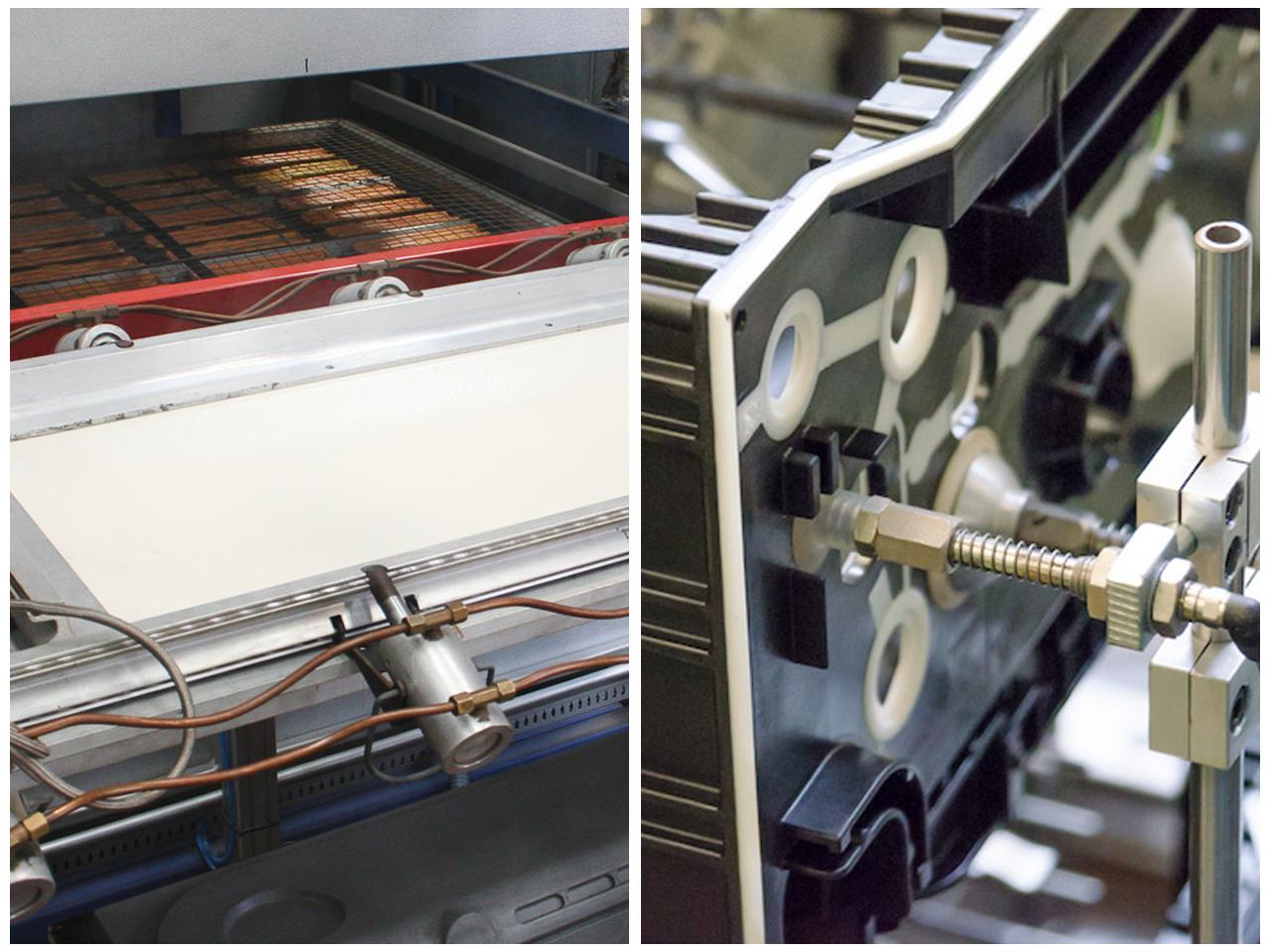
Thermoforming is commonly used to create large or medium-sized plastic components with broad surfaces, curved contours, and shell-like structures. It can be suitable for prototypes and production runs, particularly when lower initial tooling investment is desirable.
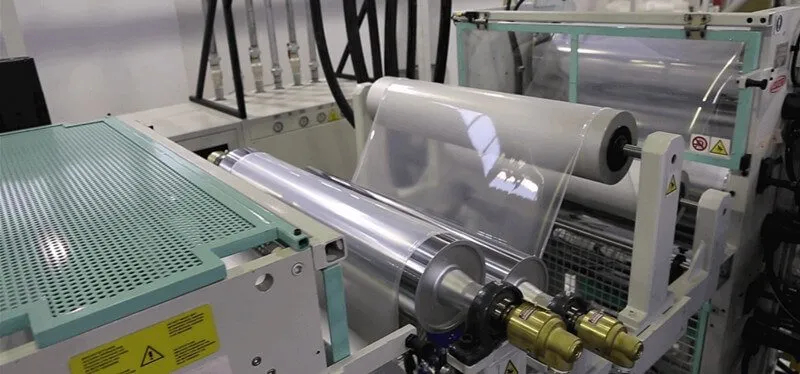
The manufacturer selects suitable plastic materials based on the product's intended use, required thickness, appearance, flexibility, impact resistance, chemical exposure, and operating temperature.
Common sheet materials include ABS, PETG, HIPS, polycarbonate, acrylic, PVC, and polypropylene. Each material has different forming characteristics and performance limits, so the selection should reflect the finished product's requirements.
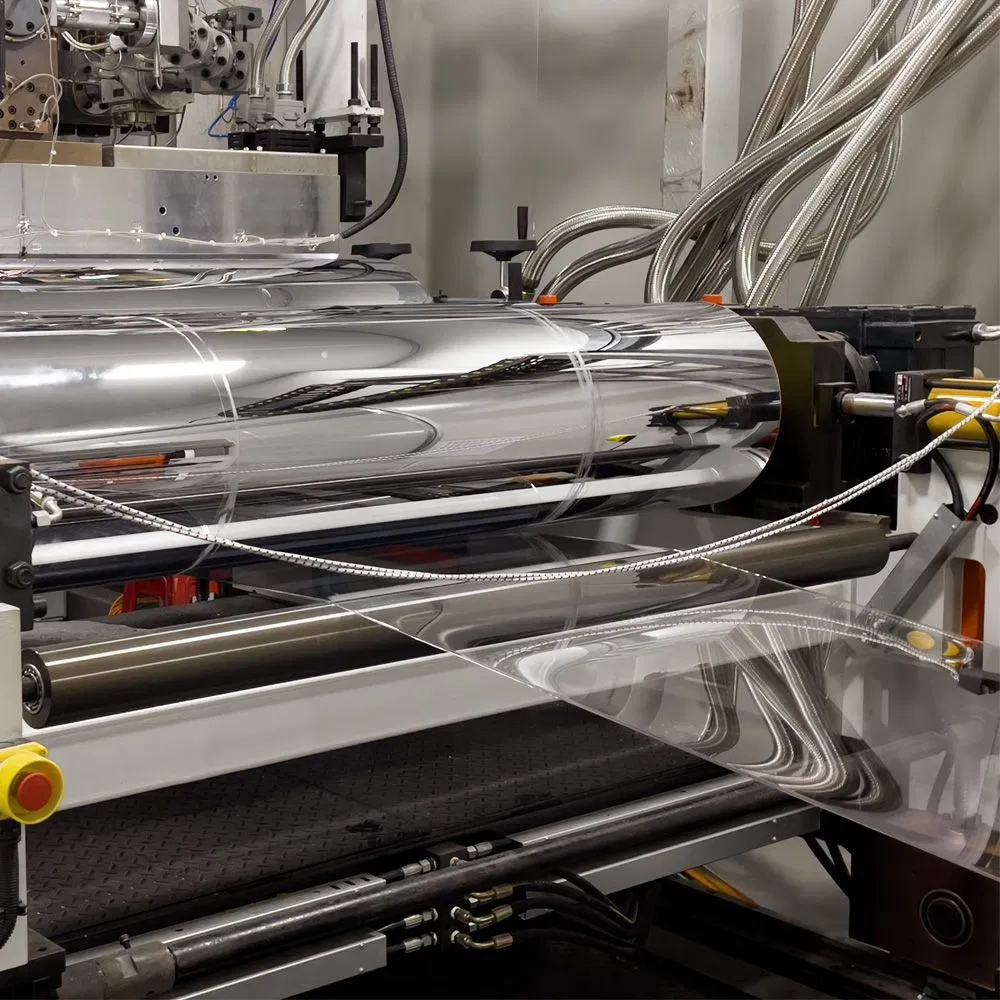
The plastic sheet is placed in a forming machine and heated until it reaches its recommended forming temperature. The sheet must become flexible enough to conform to the mold without overheating, discoloring, or sagging excessively.
Heating conditions depend on the polymer, sheet thickness, heater design, and production setup.
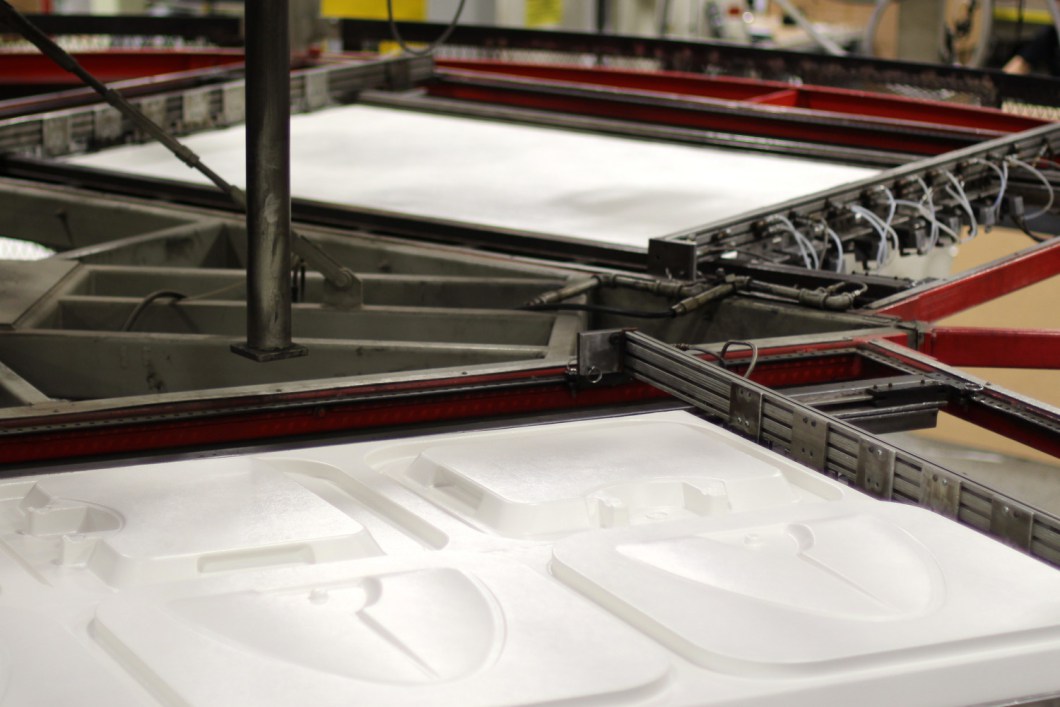
The heated sheet is positioned over or into a mold. Vacuum forming removes air between the sheet and mold, allowing atmospheric pressure to draw the plastic against the tool. Pressure forming adds compressed air to help reproduce more detailed contours. Other thermoforming configurations may use mechanical assistance or matched tooling.
The formed plastic cools until it can retain its shape. The component is then removed from the mold. Mold design, draft angles, and cooling conditions influence how easily the part can be released without distortion.
Unlike many injection-molded components, thermoformed parts commonly need trimming to remove excess sheet material. Depending on the design, the part may also be drilled, routed, bonded, machined, or fitted with mounting hardware.
These post-processing steps affect both manufacturing time and the final cost per part. They should be included when comparing thermoforming and injection molding.
Injection molding is widely used when manufacturers need repeatable plastic components with detailed geometry, integrated features, and consistent dimensions. It is particularly suitable for medium-to-high and high production volumes, although its economics depend on part size, mold design, and material selection.
The process starts with plastic pellets made from a selected thermoplastic resin. Depending on the material, the pellets may need drying before processing to reduce moisture-related defects.
Common injection molding materials include polypropylene (PP), polyethylene (PE), ABS, polycarbonate (PC), polyamide (PA), and other engineering plastics. Material selection depends on strength, stiffness, chemical resistance, heat resistance, appearance, and the product's intended use.
An injection molding machine feeds plastic pellets into a heated barrel. A rotating screw conveys, mixes, and melts the material until it is ready for injection.
Processing temperatures and screw settings depend on the resin grade and machine configuration.
The machine injects molten plastic under pressure into a closed mold cavity. The mold typically consists of two main halves that create the part's external surfaces and internal geometry.
This process allows manufacturers to create features such as ribs, bosses, mounting points, clips, and other details that may be difficult to form directly from a flat sheet.
The plastic cools inside the mold and solidifies into the required shape. Cooling time affects the production cycle, dimensional stability, surface quality, and the risk of defects such as warpage or sink marks.
Once the part has cooled sufficiently, the mold opens and an ejection system releases the component. The molded part may need gate removal, deburring, inspection, or other post-processing, depending on the design and mold configuration.
Although injection molding can produce parts close to their final geometry, quality checks and secondary operations may still be necessary.
The following table summarizes the main differences between these two manufacturing processes.
| Comparison factor | Thermoforming | Injection molding |
|---|---|---|
| Starting material | Plastic sheets | Plastic pellets |
| Basic process | Heats and forms a sheet over or into a mold | Melts plastic and injects it into a closed mold cavity |
| Tooling costs | Generally lower for suitable part designs | Generally higher because of precision mold requirements |
| Best-suited geometry | Large covers, panels, trays, and shell-like parts | Complex parts with detailed three-dimensional geometry |
| Wall thickness | Often varies as the sheet stretches over the mold | Can be designed and controlled more directly, depending on geometry and processing |
| Integrated features | Some features require machining, bonding, or added hardware | Ribs, bosses, clips, and other features can often be molded directly into the part |
| Production volumes | Attractive for prototypes and many low-to-medium-volume projects | Often advantageous when high volumes spread tooling costs across many parts |
| Material choices | Suitable thermoplastic sheet grades | Suitable thermoplastic pellet grades |
| Finishing | Trimming is commonly required | May require gate removal, deburring, or other finishing |
| Part size | Particularly useful for large, lightweight components | Depends on machine capacity, mold size, and clamping requirements |
| Design changes | Tool changes may be relatively straightforward with suitable tooling | Mold modifications can be expensive, particularly for complex molds |
| Unit cost | Can be attractive at lower quantities or for large parts | Can become more economical per unit as production volume rises |
These are general tendencies rather than fixed rules. A large injection-molded part may be practical with suitable equipment, while certain thermoformed parts can be produced economically at substantial volumes. A reliable comparison should use the actual part design, supplier quotations, and expected lifetime demand.
Tooling costs are often one of the first considerations when choosing between thermoforming and injection molding.
Thermoforming commonly uses a mold that shapes one side of a heated sheet. For suitable products, this can reduce mold complexity and initial investment. Injection molding usually requires a closed mold with carefully engineered cavities, cooling channels, alignment features, and an ejection system.
However, the lowest initial investment does not always produce the lowest total cost.
Thermoforming may be attractive when a product is still being developed, the expected order quantity is limited, or the part has a large surface area. Lower-cost tooling can make design revisions easier to accommodate, depending on the tool material and construction.
Injection molding generally requires more investment in applications where the mold needs complex geometry, moving cores, slides, or multiple cavities. This investment may be worthwhile when the same part will be manufactured repeatedly over a long period.
The cost of a finished plastic part includes more than raw material and machine time. A useful comparison accounts for:
Thermoforming often has lower tooling costs but can require more trimming and finishing. Injection molding can involve a larger initial investment while reducing the unit cost for some high-volume products.
There is no universal break-even quantity. A small, complex component may favor injection molding at relatively modest volumes, while a large enclosure may remain attractive for thermoforming at much higher quantities.
For a meaningful comparison, request quotations for both tooling and recurring production at several quantities, such as the prototype batch, first production order, annual demand, and estimated lifetime volume.
This approach helps determine whether the higher initial investment is justified by expected savings over the product's life.
The geometry of the product often matters as much as production quantity.
Thermoforming is well suited to many parts with broad surfaces and relatively open geometry. Typical applications include:
Vacuum forming and pressure-forming methods can create contoured surfaces without requiring a conventional injection mold. Pressure forming can reproduce finer surface features than basic vacuum forming in suitable applications.
However, thermoforming stretches a sheet, so the material becomes thinner in areas that undergo greater deformation. Features such as solid bosses, enclosed ribs, and complex internal details may need to be machined, bonded, or added separately.
Injection molding is often better suited to a complex part that requires integrated features, intricate contours, repeatable dimensional accuracy, or features on multiple surfaces.
Typical examples include:
The mold can incorporate many of these features directly, reducing the need for separate assembly operations. The trade-off is greater mold-design complexity and potentially higher tooling costs.
A practical rule: If the product is mainly a large formed shell, evaluate thermoforming first. If it needs many integrated three-dimensional features, evaluate injection molding first. Both options should still be assessed against material, tolerance, quality, and cost requirements.
Material selection should follow the requirements of the finished product, not simply the manufacturing process.
| Material | Thermoforming applications | Injection molding applications |
|---|---|---|
| ABS | Covers, panels, equipment housings | Housings, brackets, appliance parts |
| Polypropylene (PP) | Trays and selected industrial components | Containers, clips, hinges, functional parts |
| Polyethylene (PE) | Liners, protective covers, selected formed products | Containers, closures, utility components |
| Polycarbonate (PC) | Transparent guards and protective covers | Impact-resistant housings and detailed components |
| PET / PETG | Packaging, transparent covers, display components | Selected packaging and molded components, depending on grade |
| Polyamide (PA) | Selected sheet-forming applications where appropriate | Engineering components requiring suitable mechanical or thermal properties |
| HIPS | Packaging and liners | Packaging and general-purpose components |
The same polymer family may be available in different grades, additives, colors, and forms. A material grade intended for sheet extrusion is not automatically interchangeable with a pellet grade intended for injection molding.
When comparing plastic materials, consider mechanical performance, temperature limits, chemical exposure, appearance, regulatory requirements, and processing behavior. For demanding applications, use supplier data and product-level testing rather than relying on general material descriptions.
Blow molding is another common plastic manufacturing process, but it serves a different purpose.
| Process | How it works | Typical applications |
|---|---|---|
| Thermoforming | Heats plastic sheets and forms them over or into a mold | Panels, trays, enclosures, covers |
| Injection molding | Injects molten plastic pellets into a closed mold cavity | Detailed components, connectors, housings, closures |
| Blow molding | Expands a heated plastic tube or preform against the inside of a mold using air pressure | Bottles, hollow containers, ducts, tanks |
Blow molding is generally a natural starting point for hollow containers that need enclosed internal volumes. Injection molding is well suited to complex components where the mold can create the required geometry. Thermoforming is often a strong candidate for large, sheet-based parts.
The best process depends on the intended shape and functional requirements, not merely on whether all three processes can use thermoplastics.
Production volumes can change the economics of a manufacturing decision, but quantity should be considered alongside part size and complexity.
Thermoforming can be a practical choice when the product design is still evolving or only a limited number of parts are needed. Its tooling requirements can make it easier to test a large enclosure or panel before committing to more expensive production tooling.
Injection molding can also be used for prototypes and lower-volume production, but the mold investment may be harder to justify unless the component's geometry or material requirements favor molding.
At medium volumes, the decision becomes more dependent on the actual design. A large, relatively simple part may remain economical to thermoform, while a small part with integrated details may favor injection molding.
Manufacturers should compare tooling amortization, cycle time, material costs, and finishing requirements rather than applying a fixed production-volume threshold.
Injection molding often becomes more attractive when demand is high and stable because a suitable multi-cavity mold and automated production system can produce many consistent parts over time.
Thermoforming can still be competitive for large components, packaging, and products whose geometry suits sheet forming. High volume alone does not automatically rule it out.
The finished part must meet its functional and appearance requirements regardless of the process used.
Injection molding can provide close dimensional control when the part, mold, material, and process are properly designed and controlled. Shrinkage, warpage, cooling differences, and material behavior still need to be managed.
Thermoformed parts can also meet defined dimensional requirements, but sheet stretching and trimming introduce different sources of variation. Deep draws and complex contours may need particular attention during design and validation.
Both processes can produce attractive surfaces. The final result depends on mold finish, material, process settings, and whether the surface is formed directly against the tool.
Pressure forming can improve the reproduction of certain textures and fine details compared with basic vacuum forming. Injection molding can create detailed surfaces on multiple sides of a part when the mold is designed for that purpose.
Thermoformed parts commonly require trimming after forming. Additional work may include drilling, routing, bonding, assembly, or installing inserts.
Injection-molded parts may require gate removal, flash removal, surface treatment, or assembly, depending on the mold and product design.
The total cost comparison should include every operation needed to deliver a finished, usable plastic product. Comparing an unfinished thermoformed part with a fully finished molded part can produce a misleading result.
Before choosing a supplier or investing in tooling, define the following requirements.
Part geometry: Is the product a large shell or panel, or does it contain many integrated three-dimensional features?
Material performance: What are the requirements for impact resistance, stiffness, temperature, chemical exposure, transparency, and durability?
Production quantity: How many parts are needed for the initial order, annual demand, and expected product life?
Dimensional requirements: Which dimensions and features require tight tolerances? Which surfaces are cosmetic or functional?
Tooling budget: Can the project support a larger initial mold investment, or is lower-cost tooling preferable during development?
Finishing requirements: Will the component need trimming, machining, bonding, assembly, painting, or other secondary operations?
Future design changes: Is the design stable, or are dimensions and features likely to change after testing?
Supplier capability: Can the manufacturer demonstrate experience with the required material, part size, process, tolerances, and quality controls?
A useful next step is to request a design-for-manufacturing review. Ask the supplier to identify process limitations, likely finishing operations, tooling assumptions, and the cost at several production quantities before finalizing the design.
Thermoforming heats a plastic sheet and shapes it over or into a mold. Injection molding melts plastic pellets and injects the material into a closed mold cavity. Thermoforming often suits large, shell-like parts, while injection molding often suits complex components with integrated features.
Thermoforming often has lower initial tooling costs for suitable parts, particularly large components and lower-volume projects. Injection molding may offer a lower unit cost at higher production volumes. The actual result depends on part geometry, material, tooling, finishing, and total demand.
Injection molding is often better for parts requiring integrated ribs, bosses, clips, detailed contours, or features on multiple surfaces. Thermoforming can produce complex curved shells, but features that cannot be formed from a sheet may need additional machining or assembly.
Thermoforming starts with plastic sheets, while injection molding typically starts with plastic pellets. The material grade must be suitable for the selected process and the finished product's operating requirements.
Yes. Thermoforming is widely used for large panels, covers, housings, liners, and other shell-like components. The maximum part size depends on the forming machine, sheet dimensions, mold design, and handling equipment.
An injection mold generally needs two mating halves, a precision mold cavity, alignment features, cooling provisions, and an ejection system. More complex designs may require slides, lifters, or other moving components. The final tooling cost depends on mold size, material, cavity count, complexity, and required service life.
Usually, yes. Excess material is commonly trimmed after the sheet has been formed. Depending on the part, further operations may include drilling, routing, bonding, machining, or installing hardware.
No. Injection molding is often economical for high-volume production, particularly for small or complex parts. Thermoforming can remain competitive for large components and products well suited to sheet forming. A cost comparison should use actual production and tooling estimates.
Thermoforming shapes a heated plastic sheet over a mold. Blow molding expands a heated tube or preform against a mold's interior using air pressure. Thermoforming is commonly used for panels and trays, while blow molding is common for hollow containers and bottles.
Injection molding often offers closer dimensional control for suitably designed parts and validated processes. Thermoforming can meet defined tolerances too, but material stretching and trimming can cause dimensional variation. The required tolerance should be assessed for each feature and product application.
Sometimes, but not every grade is suitable for both. Thermoforming requires a sheet with appropriate forming characteristics, while injection molding requires a resin grade that can melt and flow into the mold. The selected grade should meet both processing and end-use requirements.
Cost can be reduced by selecting an appropriate process, simplifying unnecessary features, designing for efficient material use, minimizing avoidable finishing, and choosing tooling that matches expected production volumes. Early design-for-manufacturing discussions can identify cost drivers before the mold is made.
Thermoforming and injection molding can both produce high-quality plastic parts, but their strengths differ.
Thermoforming is often the first process to evaluate for large, shell-shaped products, projects with lower initial tooling budgets, and production runs where flexibility matters. Injection molding is often the stronger candidate for complex parts, integrated features, repeatable dimensions, and high-volume manufacturing.
Blow molding may be more appropriate for hollow containers, while other manufacturing methods can suit specialized geometries or material requirements.
The most reliable decision comes from comparing the actual part design, suitable plastic materials, tooling costs, expected production volumes, quality requirements, and all necessary post-processing. By evaluating the complete manufacturing process rather than focusing on one cost or feature, product teams can select a method that fits both the technical requirements and the commercial goals.