Quote now
EN

Thermoforming is a plastic manufacturing process in which a thermoplastic sheet is heated until it becomes pliable, shaped over or into a mold, and cooled to retain its final shape. Vacuum forming is a type of thermoforming that uses vacuum pressure to pull the heated sheet against a mold.
The main difference is that thermoforming is the broader manufacturing category, while vacuum forming is one specific forming method within it. Other methods, such as pressure forming, use additional air pressure to achieve finer details and sharper features.
Both methods are widely used to manufacture plastic parts for packaging, the automotive industry, medical devices, equipment housings, and other applications. The best choice depends on part geometry, surface finish, material requirements, production volume, tooling budget, and cost effectiveness. For some applications, 3D printing or injection molding may be a better fit.
Thermoforming is a plastic manufacturing process that shapes a heated thermoplastic sheet using a mold and a controlled forming method. After the material reaches the required forming temperature, it is shaped, cooled, and trimmed to produce the finished component.
Vacuum forming is a common method of thermoforming in which air is removed from between the heated plastic sheet and the mold. The pressure difference draws the sheet against the mold surface, allowing it to reproduce the mold's basic contours.
In practical terms, all vacuum forming is thermoforming, but not all thermoforming is vacuum forming. Pressure forming and other sheet-forming techniques also fall under the wider thermoforming category.
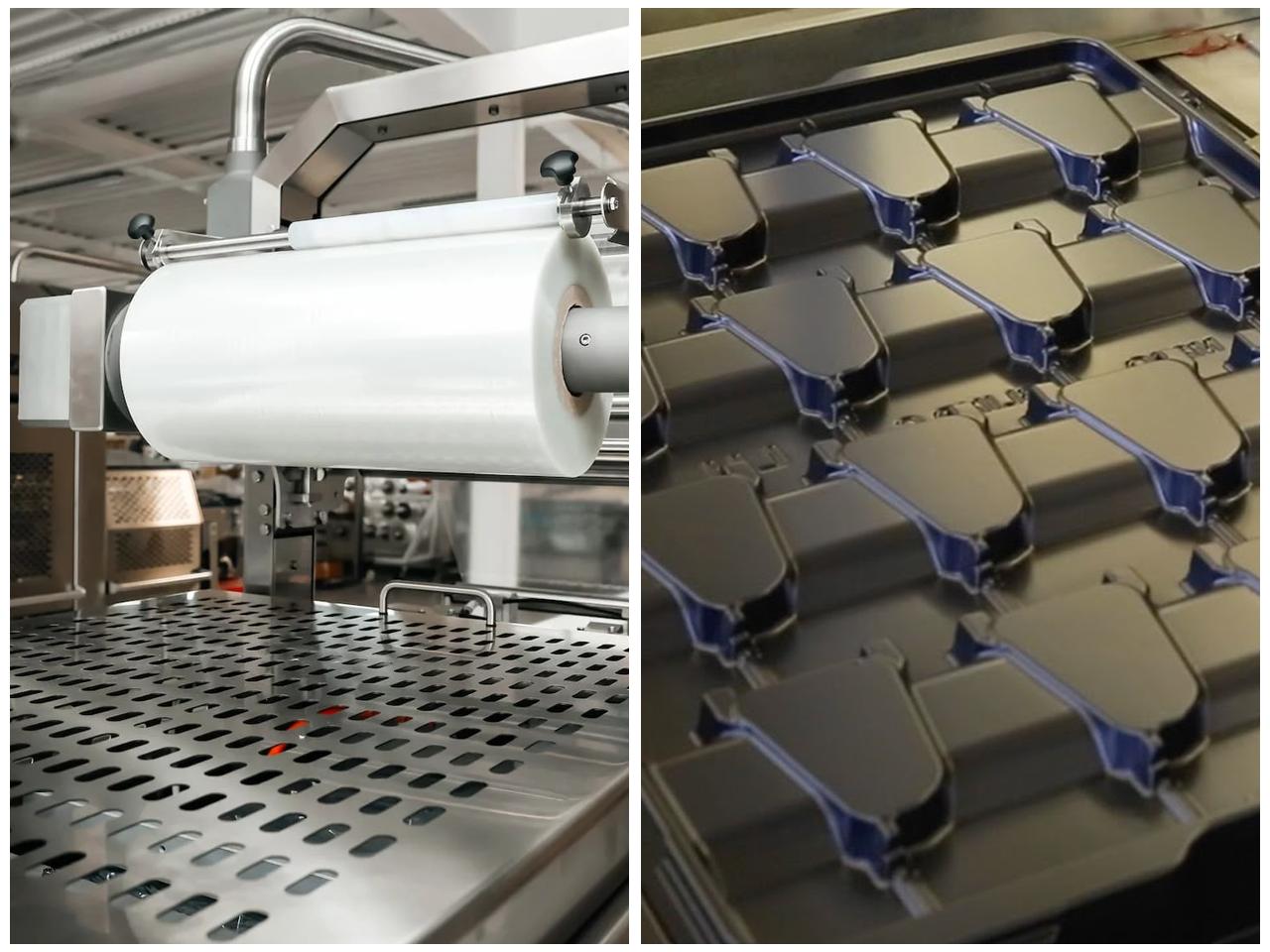
Thermoforming is used to produce lightweight, relatively large, or geometrically varied plastic components from sheet materials. It can accommodate a wide range of thermoplastics, sheet thicknesses, part dimensions, and mold designs.
The process generally follows these stages.
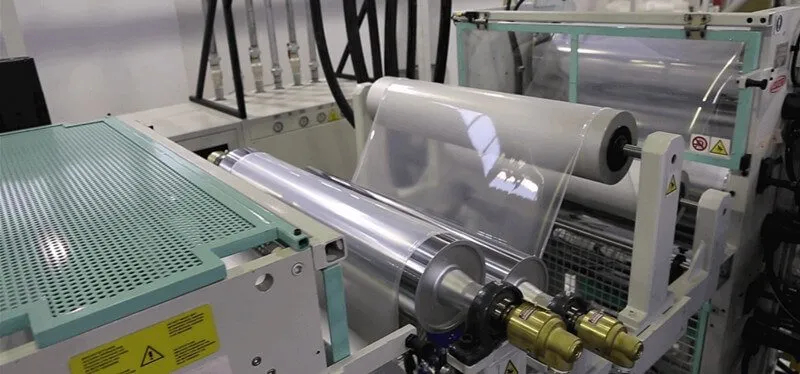
The manufacturer chooses a thermoplastic sheet based on the product's intended use. Relevant properties include impact resistance, stiffness, transparency, chemical resistance, heat tolerance, and surface appearance.
Common thermoplastics include ABS, HIPS, PET, PETG, PVC, polycarbonate, and polypropylene. Each has different forming characteristics and performance limits, so material selection should reflect the operating environment and the finished part's requirements.
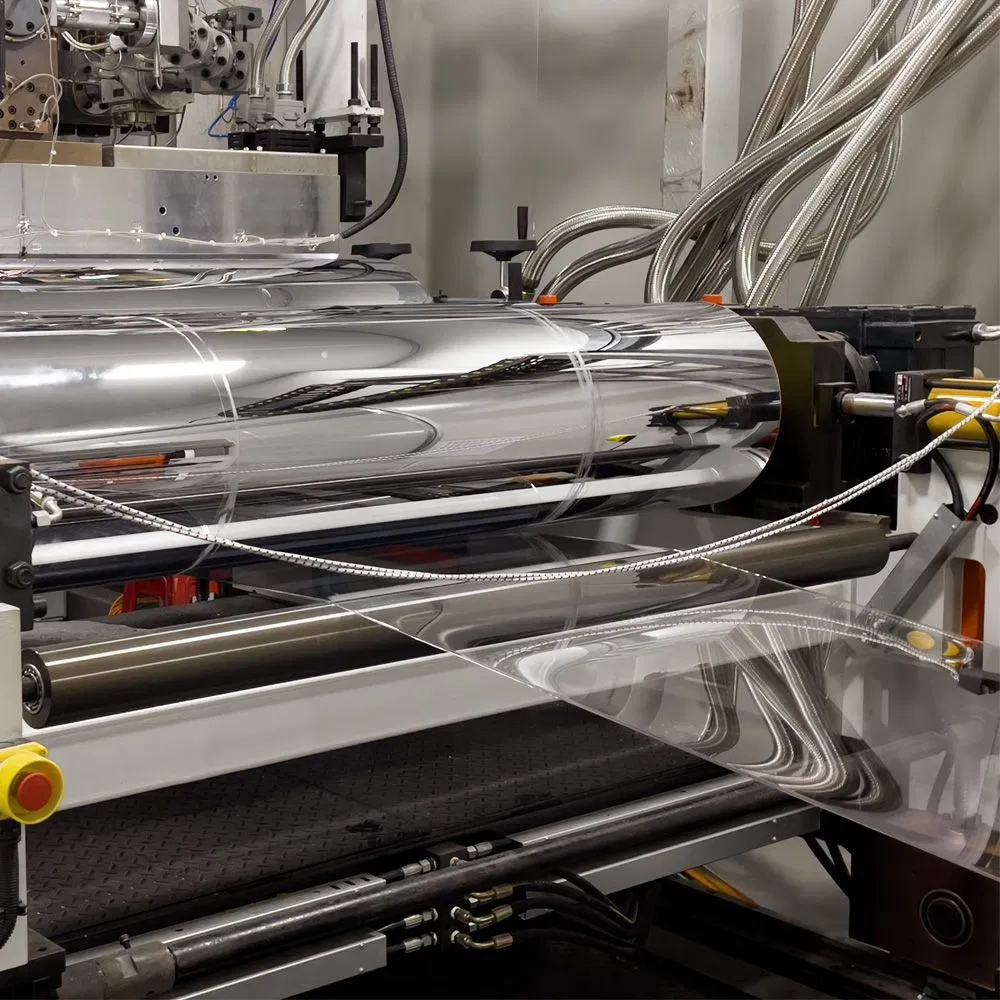
The plastic sheet is heated evenly until it reaches its recommended forming temperature. Temperature control matters because an underheated sheet may not conform to the mold, while overheating can cause excessive sagging, surface defects, discoloration, or material degradation.
Heating equipment and cycle settings depend on the polymer, sheet thickness, and machine configuration.
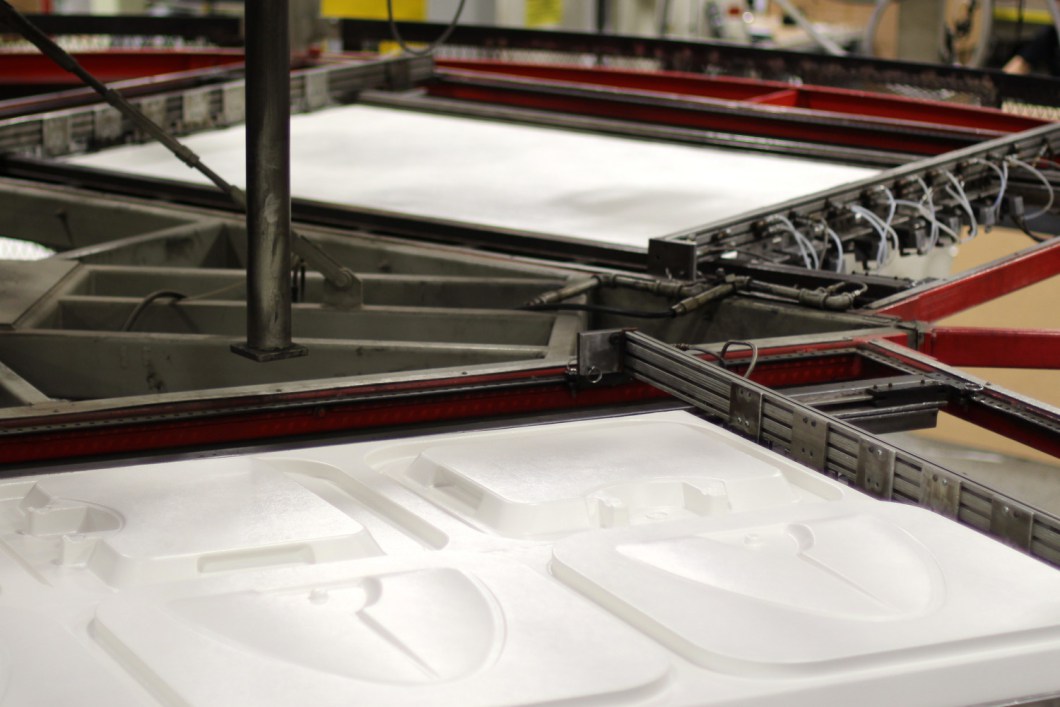
Once the material is pliable, the forming machine brings it into contact with the mold. The exact method depends on the process being used. Vacuum forming relies on vacuum pressure; pressure forming adds compressed air to help shape the sheet; other thermoforming configurations may use mechanical assistance or different combinations of forming forces.
The shaped plastic is cooled until it can retain the intended geometry. The part is then removed from the mold, with suitable draft angles and mold-release considerations helping prevent damage during demolding.
Excess material is trimmed away to achieve the final shape and required dimensions. Depending on the product, finishing may include drilling, cutting, machining, joining, printing, or other secondary operations.
The resulting component can be checked for dimensional accuracy, wall thickness, surface finish, and other quality requirements.
Vacuum forming uses the same basic heating and cooling principles as thermoforming, but its forming force comes from the pressure difference created when air is evacuated from the mold area.
Typical vacuum forming sequence: heat the sheet → position it over the mold → apply vacuum → cool the part → remove and trim.
During production, the machine heats a thermoplastic sheet until it becomes flexible. The sheet is positioned over or around the mold, and a vacuum system removes air between the sheet and the mold surface. Atmospheric pressure then pushes the sheet against the mold, allowing it to take on the mold's contours.
After cooling, the formed component is removed and trimmed.
Vacuum forming is often selected for parts with relatively simple geometries, broad surfaces, and moderate detail requirements. Depending on the mold design, material, and machine capability, it can produce trays, covers, housings, protective panels, packaging inserts, and equipment enclosures.
However, vacuum forming does have limits. Fine surface details, deep draws, and tight dimensional tolerances may require more careful tooling design, specialized equipment, or an alternative forming method. Wall thickness can also vary as the sheet stretches, especially around corners and deep features.
The most important distinction is the relationship between the two terms. Thermoforming describes the overall process family; vacuum forming describes one specific technique. Comparing them as if they were two entirely separate manufacturing technologies can be misleading.
| Comparison factor | Thermoforming | Vacuum forming |
|---|---|---|
| Meaning | A family of plastic sheet-forming processes | One method within thermoforming |
| Forming method | Vacuum, positive air pressure, mechanical force, or combinations, depending on the method | Vacuum draws the heated sheet against a mold |
| Design flexibility | Depends on the selected thermoforming method | Well suited to many open, single-sided shapes |
| Surface detail | Pressure forming and matched-mold techniques can reproduce finer details | Detail depends on vacuum, mold surface, material, and venting |
| Tooling | Ranges from relatively simple to complex | Often uses comparatively simple, lower-cost tooling |
| Typical parts | Packaging, panels, enclosures, trays, and formed components | Covers, liners, trays, panels, and protective housings |
| Cost efficiency | Varies with the specific process and production setup | Often attractive when simpler tooling and large surface areas are involved |
| Material options | A wide range of suitable thermoplastic sheet materials | Many of the same thermoplastics can be used |
| Limitations | Performance varies with process, tooling, and material | Deep draws, tight corners, and fine detail can require additional process control |
These are general comparisons rather than absolute rules. A well-designed vacuum-forming system can make complex parts, and a thermoforming line using a more advanced process may have substantially different tooling and operating costs.
Formlabs+2
Pressure forming is often a more useful direct comparison with vacuum forming because both are specific thermoforming methods.
Vacuum forming removes air between the heated sheet and the mold. Atmospheric pressure pushes the material against the tool. Since the forming force is limited by the available pressure difference, reproducing very fine details may be difficult in some designs.
Typical advantages include relatively straightforward tooling, practical production of large components, and good cost efficiency for many low- to medium-volume industrial projects.
Pressure forming uses vacuum on the mold side and additional compressed air on the opposite side of the sheet. The extra forming force can help reproduce sharper edges, molded textures, defined contours, and finer surface details.
It is useful when the visible surface needs a more refined appearance or when the design includes features that are difficult to reproduce with vacuum alone. The equipment, mold, and process setup may be more involved, so the additional detail should justify the extra cost.
Thermoforming Mfg+1
Neither method automatically guarantees high quality. The result depends on mold accuracy, sheet temperature, material properties, vacuum or pressure performance, wall-thickness distribution, cooling, and trimming accuracy.
Vacuum forming can produce durable, attractive components when the design suits the process. Pressure forming is worth evaluating when surface definition and finer details are more demanding.
Both processes can work with a wide range of plastic materials, provided the sheet can be heated and formed within the material's processing limits.
Common thermoplastics include:
| Material | Typical characteristics | Common applications |
|---|---|---|
| ABS | Good toughness, rigidity, and impact resistance | Equipment covers, automotive panels, machine housings |
| HIPS | Easy to form and often economical | Packaging, liners, display components |
| PET and PETG | Transparency options, good formability, and useful toughness depending on grade | Packaging, transparent guards, display parts |
| Polycarbonate (PC) | High impact resistance and good toughness | Protective covers, machine guards, demanding enclosures |
| PVC | Available in rigid formulations with varied chemical and mechanical properties | Panels, housings, selected industrial components |
| Polypropylene (PP) | Low density and good chemical resistance | Trays, containers, industrial components |
| Acrylic (PMMA) | Optical clarity and weatherability in suitable grades | Display covers, transparent panels, light covers |
These are general material tendencies, not universal performance guarantees. The grade, sheet thickness, additives, forming conditions, and service environment all affect the finished product.
Material selection should start with the requirements of the finished part rather than the forming method alone. Consider:
For medical devices and equipment, material suitability and process validation should be assessed against the intended use and applicable regulatory requirements. Selecting a thermoplastic simply because it forms easily is not sufficient.
Thermoforming and vacuum forming are used across industries because they can turn flat plastic sheets into large, lightweight components without requiring every part to be injection molded.
Automotive manufacturers and suppliers use formed plastics for interior panels, luggage-area liners, wheel-arch liners, trim components, protective covers, and selected exterior or aftermarket parts.
The right method depends on part size, surface appearance, mechanical requirements, environmental exposure, and production volume. Components with broad surfaces and relatively simple contours may suit vacuum forming, while parts with more demanding cosmetic details may benefit from pressure forming.
Thermoformed plastics are used in selected medical equipment housings, instrument trays, protective covers, packaging, and equipment interiors. Vacuum forming can be suitable for components with relatively straightforward geometry, while pressure forming may help with defined edges or more detailed surfaces.
However, a formed plastic component intended for medical use must meet the requirements of its specific application. Sterilization compatibility, biocompatibility where relevant, cleanability, traceability, and dimensional consistency may all need evaluation. The forming process alone does not establish medical suitability.
Machine guards, equipment enclosures, control-panel covers, protective shrouds, and large housings are common applications. Thermoforming can offer a practical route when parts need broad surfaces, relatively low weight, and manageable tooling costs.
Trays, inserts, blisters, protective packaging, and product holders are made using thermoforming methods. Material choice and forming technique depend on the required stiffness, visibility, product protection, cycle time, and packaging regulations.
Display housings, point-of-sale components, appliance covers, recreational equipment parts, and other consumer-facing products may be produced by vacuum forming or another thermoforming method.
Across these applications, the process should be matched to the part's geometry and performance requirements rather than selected on tooling price alone.
Formlabs+2
Cost effectiveness depends on more than the price of the forming machine or mold. Manufacturers should compare the total cost of producing acceptable parts over the expected production life.
Vacuum forming often uses relatively simple molds, which can make it attractive for prototypes, product launches, large panels, and lower-volume production. Depending on the part, molds may be made from machined materials, cast tooling materials, or other suitable tool substrates.
Other thermoforming methods may require more complex tooling, additional pressure equipment, or tighter process controls. Those costs may be justified if the design requires sharper details, more consistent wall distribution, or a particular cosmetic finish.
For early development or limited production runs, vacuum forming can provide a practical balance between tooling cost and part size. As volume increases, the best process depends on cycle time, automation, material utilization, finishing operations, and quality requirements.
There is no single production-volume threshold at which one method always becomes cheaper. Each project needs a comparison based on actual quotations and expected yield.
A formed part may require trimming, drilling, machining, assembly, or surface finishing. Scrap rates and nesting efficiency also affect the cost per usable component.
A process with cheaper tooling may not deliver the lowest total cost if it requires extensive finishing or produces too many rejected parts. Conversely, a more capable process may be worthwhile if it reduces downstream operations and improves consistency.
A useful comparison includes tooling, machine setup, material, labor, cycle time, trimming, secondary operations, inspection, scrap, and maintenance. Manufacturers should also account for design revisions: a process that makes mold changes easier may reduce development costs while the product is still evolving.
Thermoforming and vacuum forming are not the only options for producing plastic parts. Injection molding and 3D printing are also widely used, but they address different manufacturing needs.
| Factor | Vacuum forming | Other thermoforming methods | Injection molding | 3D printing |
|---|---|---|---|---|
| Starting material | Thermoplastic sheet | Usually thermoplastic sheet | Plastic pellets or resin, depending on process | Filament, resin, powder, or another printable feedstock |
| Basic process | Heat sheet and draw it against a mold using vacuum | Heat sheet and shape it using pressure, mechanical force, or other methods | Inject molten plastic into a mold cavity | Build a part layer by layer |
| Tooling | Often relatively inexpensive | Varies by method and mold complexity | Usually requires a purpose-built injection mold | Often requires little or no dedicated part tooling |
| Part size | Well suited to many large, shell-like parts | Depends on equipment and forming method | Depends on machine, mold, and clamping capacity | Depends on printer build volume |
| Fine detail | Moderate, depending on the design and mold | Can be high with suitable methods | Can reproduce complex details and features | Depends on printer technology and material |
| Typical development use | Large prototypes and formed parts | Prototypes and production components with specific surface requirements | Products designed for repeatable mass production | Rapid prototyping, design checks, and customized parts |
| Cost considerations | Attractive tooling costs for suitable parts | Higher process capability may add cost | Higher initial tooling investment, often offset at sufficient volume | Low tooling investment, but part cost and production speed vary |
Vacuum forming is often worth evaluating when a product has a large surface area, a shell-like geometry, and a production quantity that does not justify the initial cost of an injection mold.
Injection molding may be more suitable for smaller components with complex three-dimensional features, integrated clips, ribs, bosses, and consistent high-volume production requirements. It can also offer greater freedom for features that are difficult to create by stretching a sheet.
The decision should account for part geometry, annual demand, material requirements, tolerances, and secondary operations. Vacuum forming is not automatically cheaper for every low-volume part, just as injection molding is not always the most economical choice for large quantities.
3D printing is useful during rapid prototyping because designers can evaluate shape, fit, and assembly without first building a production mold. It is also suitable for customized components and complex geometries that would be difficult to form from a sheet.
However, printed parts may have different surface characteristics, mechanical properties, production rates, and material costs from thermoformed parts. For a large, thin-walled plastic cover, vacuum forming may be more practical once the design is stable. For a one-off bracket or a highly customized prototype, 3D printing may be the better starting point.
A common product development strategy is to use 3D printing for early design checks, then evaluate thermoforming, vacuum forming, or injection molding for production.
The forming process can only reproduce the intended design if the material, mold, and processing conditions work together.
Deep or narrow shapes require the sheet to stretch farther, increasing the risk of local thinning. Rounded transitions, suitable wall geometry, and careful draw-depth planning can improve material distribution.
Draft angles allow the finished part to separate from the mold more easily. Insufficient draft can cause sticking, distortion, or damage during removal. The appropriate angle depends on the material, part depth, mold surface, texture, and process.
A thermoplastic sheet becomes thinner as it stretches over a mold. The amount of thinning varies across the part, particularly around deep corners and areas that contact the mold early.
If impact resistance or structural performance is important, designers should consider the thinnest areas rather than relying only on the original sheet thickness. Material testing and part-level validation may be needed for demanding applications.
Vacuum forming requires air to escape from between the sheet and the mold. Properly positioned vacuum holes, suitable vent paths, and appropriate mold surfaces help the plastic reproduce the intended contours.
Tooling design should also account for trimming allowances, mounting features, dimensional tolerances, and the intended method of assembly.
Applying heat evenly helps the sheet stretch predictably. Uneven heating may cause inconsistent wall thickness, surface defects, sagging, or incomplete forming.
The appropriate forming temperature depends on the polymer grade, sheet thickness, heating system, and forming cycle. Manufacturers should establish process settings through material guidance and production trials rather than using one temperature for every plastic sheet.
The selection process should begin with the finished product's requirements.
Choose vacuum forming when:
Consider pressure forming when:
Consider other thermoforming methods when:
Consider injection molding when:
Consider 3D printing when:
Before committing to a process, manufacturers should review the part drawing, material specification, expected production quantity, quality criteria, and finishing requirements with their manufacturing supplier.
Thermoforming is the broader plastic manufacturing process of heating and shaping a thermoplastic sheet. Vacuum forming is one type of thermoforming that uses vacuum pressure to draw the heated sheet against a mold.
Yes. Vacuum forming is a thermoforming method. Other methods include pressure forming, matched-mold forming, and twin-sheet forming. The methods differ in how the heated plastic is shaped and the features they can produce.
The comparison is not strictly like-for-like because vacuum forming is part of thermoforming. Vacuum forming often has lower tooling costs than more complex forming methods, but total cost depends on the part design, materials, production quantity, finishing, and quality requirements.
Vacuum forming uses vacuum to remove air between the plastic sheet and mold. Pressure forming adds compressed air on the opposite side of the sheet, increasing the forming force. Pressure forming can reproduce finer details and textures in suitable designs.
Common materials include ABS, HIPS, PET, PETG, polycarbonate, PVC, polypropylene, and acrylic. The best material depends on formability, impact resistance, transparency, chemical exposure, operating temperature, and the finished component's intended use.
Yes. Vacuum forming can produce high-quality parts when the material, mold, heating profile, vacuum system, cooling cycle, and trimming process are properly controlled. Parts requiring exceptionally fine details or tight tolerances may need a different process or additional engineering.
Thermoforming can be suitable for selected medical equipment housings, trays, covers, and packaging components. The material and manufacturing process must be appropriate for the intended application, including any applicable requirements for biocompatibility, sterilization, cleanability, and regulatory compliance.
Applications include interior trim, protective panels, liners, equipment covers, and selected aftermarket components. The process is particularly useful for some large, lightweight parts where sheet-based forming offers a practical balance of tooling cost, appearance, and production flexibility.
Vacuum forming shapes a heated thermoplastic sheet over a mold, while 3D printing builds a part layer by layer. Vacuum forming is often suitable for large, shell-like production components; 3D printing is useful for rapid prototyping, customized parts, and complex geometries without dedicated forming molds.
Injection molding is worth considering when parts require complex integrated features, repeatable dimensions, or high production volumes that can justify the initial tooling investment. Vacuum forming may be more cost-effective for certain large, sheet-based components with simpler geometry.
Yes. The heated sheet stretches as it conforms to the mold, so wall thickness usually varies across the part. Deep draws, sharp corners, and uneven heating can increase local thinning. Material selection, mold design, sheet temperature, and forming assistance can help manage the variation.
The main factors include mold cost, sheet material, part size, production quantity, cycle time, material waste, trimming, labor, and quality control. The most cost-effective solution is the one that produces acceptable parts reliably at the required total cost.
Thermoforming and vacuum forming are closely related rather than competing processes. Thermoforming covers a family of methods for shaping heated plastic sheets, while vacuum forming uses suction to draw the material against a mold.
For large covers, panels, trays, and many industrial housings, vacuum forming can provide an appealing combination of tooling economy, design flexibility, and production efficiency. When a component needs finer details, more demanding surface definition, or other specialized features, pressure forming or another thermoforming method may be more appropriate.
Injection molding and 3D printing remain useful alternatives for different production and design requirements. Comparing the part geometry, material properties, quality targets, production volume, and total manufacturing cost will help identify the process that fits the application.
Ultimately, high-quality plastic manufacturing starts with a clear understanding of the finished part—not simply the name of the forming process.