Quote now
EN

A vacuum forming machine is a type of plastic forming equipment that heats a thermoplastic sheet until it becomes flexible, then uses vacuum pressure to draw the softened material against a mold. After the plastic cools and retains its shape, the formed component is removed and trimmed to its required dimensions.
Vacuum forming is widely used to manufacture plastic covers, packaging trays, equipment housings, automotive interior components, protective enclosures, and other industrial products. Compared with some alternative plastic manufacturing methods, it can offer lower tooling costs, design flexibility, and practical production economics for large components and short-to-medium production runs.
The performance of a vacuum forming machine depends on several factors, including heating uniformity, vacuum capacity, forming temperature, mold design, plastic material, and cooling time. Understanding these factors helps manufacturers select suitable equipment, improve part quality, and achieve consistent production results.
A vacuum forming machine is a thermoforming machine that shapes heated plastic sheets by removing air between the sheet and a mold. Atmospheric pressure pushes the softened plastic against the mold surface, allowing it to reproduce the required shape. The formed part is then cooled, released, and trimmed. A typical machine includes a heating system, sheet clamping frame, mold station, vacuum system, cooling arrangement, and control system. Vacuum forming is commonly used for packaging, industrial covers, trays, enclosures, and large plastic parts where flexible design and cost effectiveness are important.
A vacuum forming machine is industrial equipment designed to convert flat thermoplastic sheets into three-dimensional plastic components using heat and a pressure difference. Unlike injection molding, which injects molten plastic into a mold cavity, vacuum forming starts with a pre-manufactured sheet of plastic. The sheet is heated, brought into contact with a mold, and drawn against the mold using vacuum pressure.
Vacuum forming equipment is available in different configurations, from compact manual machines used for prototyping to automated industrial vacuum forming machines designed for continuous production. Machine size, heating capacity, vacuum performance, automation level, and mold dimensions determine which products can be manufactured efficiently. The technology is particularly suitable for components with broad surfaces, relatively shallow or moderate draw depths, and geometries that can be formed from a single sheet. More demanding shapes may require plug assistance, specialized tooling, or a different forming process.
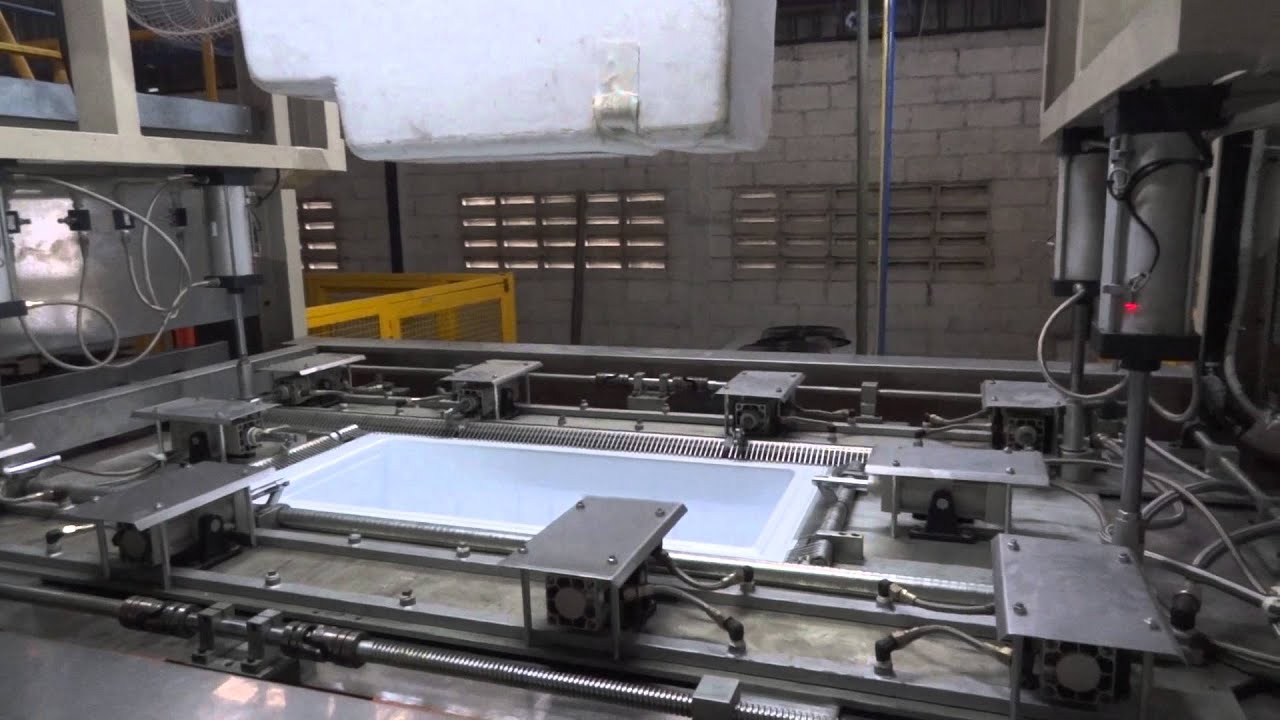
The vacuum forming process involves several coordinated stages. Each stage affects material distribution, surface appearance, dimensional accuracy, and the final manufacturing cost.
The process begins with a thermoplastic sheet, such as ABS, PETG, HIPS, polycarbonate, polypropylene, or another suitable forming material.
The sheet is placed into a clamping frame that holds it securely during heating and forming. Depending on the machine configuration, the material may be loaded manually, fed from a roll, or transferred automatically between stations.
The sheet thickness and dimensions must match the product requirements and machine capacity. If the starting material is too thin, the finished part may not provide the required strength. If it is unnecessarily thick, material consumption, heating time, and production costs may increase.
The clamped sheet moves into the heating station, where infrared heaters or other heating elements soften the plastic.
The forming temperature depends on the material grade, sheet thickness, heater configuration, and desired part geometry. The entire sheet must reach a suitable processing range without overheating or developing excessive temperature differences.
If the sheet is underheated, it may resist stretching and fail to reproduce mold details. If it is overheated, it may sag excessively, discolor, degrade, or develop uneven wall thickness.
For this reason, industrial equipment often uses zoned heating and adjustable temperature controls. Operators can adjust individual heating areas to accommodate products with different shapes and draw depths.
Once the sheet reaches the required forming temperature, it is positioned over or into the vacuum forming mold.
Two common mold configurations are male molds and female molds. A male mold has a projecting shape that the plastic is drawn over, while a female mold has a recessed cavity into which the plastic is drawn.
The choice affects the dimensions of the finished part, surface definition, material distribution, and demolding behavior. Mold design must also account for vent holes, draft angles, corner radii, shrinkage, and the areas that will be trimmed after forming.
The vacuum system removes air from the space between the softened plastic sheet and the mold. As the pressure beneath the sheet decreases, atmospheric pressure pushes the plastic against the mold surface.
The sheet stretches to follow the mold's contours. Proper venting helps air escape from small recesses and detailed areas, allowing the plastic to reproduce the intended geometry.
Vacuum performance depends on pump capacity, plumbing, seals, mold venting, leakage, and the size of the forming area. A larger mold or a product with extensive surface details may require a carefully designed vacuum distribution system.
Although the process uses vacuum, the forming force comes primarily from the pressure difference across the sheet. The vacuum system therefore needs to be designed around the machine's actual forming area and operating conditions.
After the sheet conforms to the mold, the plastic must cool sufficiently to retain its shape.
Cooling may occur through contact with the mold, forced air, or dedicated cooling systems. The appropriate cooling time depends on the material, sheet thickness, mold temperature, and product geometry.
Insufficient cooling can cause deformation during removal. Uneven cooling may produce warping or dimensional variation, particularly in large panels and components with different wall thicknesses.
A well-designed cooling stage helps maintain repeatability while avoiding unnecessarily long production cycles.
Once the plastic has stabilized, the vacuum is released and the formed component is removed from the mold.
Suitable draft angles help the finished part separate without excessive force or surface damage. Deep cavities, undercuts, textured surfaces, and shrinkage around male molds can make release more difficult.
Some products require mechanical assistance or specialized mold features to support consistent demolding.
The formed component usually contains excess material around its perimeter. This material is removed using trimming presses, CNC routers, cutting tools, or other suitable equipment.
Depending on the application, further operations may include drilling, punching, machining, bonding, printing, assembly, and surface finishing.
The trimming process defines the final outline and mounting features of the plastic part. Accurate trimming is especially important for components that must fit into an existing assembly.
The final inspection checks dimensions, appearance, wall thickness, and other application-specific characteristics.
Depending on the product, manufacturers may also evaluate impact resistance, stiffness, chemical resistance, heat performance, or other mechanical properties.
Monitoring the forming process and inspecting finished products helps identify problems before they affect larger production runs.
A vacuum forming machine combines heating, sheet handling, mold positioning, vacuum generation, cooling, and control into a coordinated production system.
The heating system raises the plastic sheet to the required forming temperature. Zoned heaters allow operators to adjust heat distribution across different areas of the sheet.
The heating system should be suitable for the materials and sheet thicknesses used in production.
The clamping frame holds the sheet securely throughout heating and forming. It must provide reliable retention without damaging the material or allowing air leakage around the forming area.
The forming station positions the mold and sheet relative to each other. Depending on the machine design, the mold table may move vertically or horizontally to bring the mold into contact with the heated sheet.
Machine travel, available forming depth, and mold dimensions determine the range of products that can be accommodated.
The vacuum pump removes air from beneath the sheet. Pipes, valves, reservoirs, seals, and mold vent channels distribute vacuum across the forming area.
A well-designed system helps the sheet conform consistently to the mold without excessive delays or incomplete forming.
Cooling equipment reduces the temperature of the formed plastic before demolding. Depending on the application, this may include fans, air nozzles, mold cooling channels, or other cooling arrangements.
The control system coordinates heating time, temperature settings, vacuum application, machine movement, cooling, and other operating parameters.
Manual machines may use relatively simple controls, while automated equipment can integrate programmable recipes, sensors, material feeding, and downstream handling.
Different types of vacuum forming machines serve different production requirements. The most suitable option depends on product dimensions, material thickness, complexity, production volume, and automation needs.
Manual machines require operators to load sheets, position molds, and perform some or most process steps manually.
They are suitable for prototypes, product development, educational applications, custom components, and small production runs. Their relatively simple configuration can reduce initial equipment investment.
However, production speed and repeatability may depend heavily on operator experience.
Semi-automatic machines automate selected operations, such as heating cycles, table movement, or vacuum control, while retaining some manual handling.
They are useful for manufacturers that need more consistent production than a manual system provides but do not require a fully automated line.
Automatic vacuum forming machines coordinate multiple stages through programmed controls. Depending on the configuration, they may include automatic sheet loading, heating, forming, cooling, demolding, and transfer to trimming equipment.
Automation can reduce manual handling and improve production consistency, particularly for repeat orders.
The appropriate automation level depends on production demand, product variety, labor requirements, and the cost of integrating downstream equipment.
Industrial vacuum forming machines are designed for demanding production environments, larger forming areas, thicker sheets, and components with more substantial dimensional requirements.
Applications may include automotive panels, industrial equipment covers, machine enclosures, large trays, and protective housings.
When evaluating industrial vacuum forming machines, manufacturers should review the usable forming area, maximum sheet thickness, heating capacity, vacuum performance, forming depth, mold compatibility, cooling capability, and integration options.
A machine with a larger forming area is not automatically the best choice. The complete system must match the size and shape of the intended product.
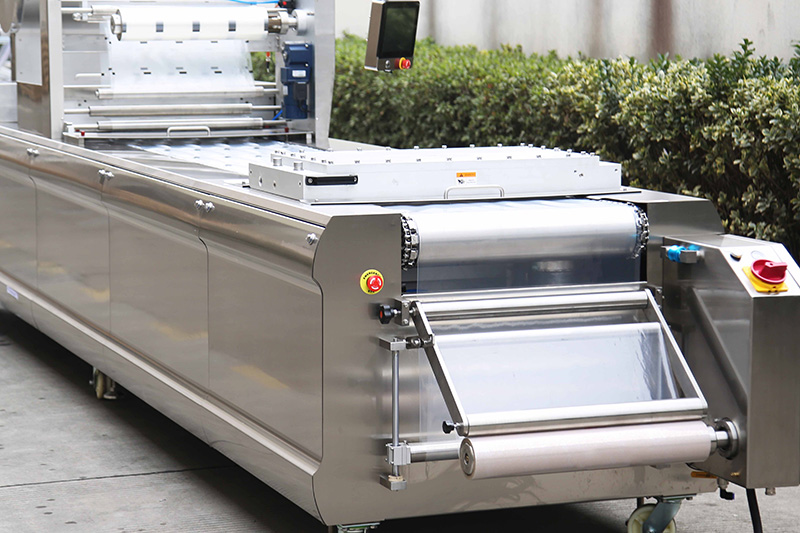
Roll-fed machines process plastic film or thin sheet supplied from a roll. They are commonly used for packaging trays, blister packaging, and other products that require repeated forming at high production rates.
These systems often combine material feeding, heating, forming, cutting, and stacking within a continuous production line.
They are generally suited to different applications from heavy-gauge machines used for large industrial components.
Vacuum forming is one of several methods used to shape heated thermoplastic sheets. Understanding the differences helps manufacturers select equipment that matches their product specifications.
| Comparison factor | Vacuum forming | Pressure forming | Plug-assisted thermoforming |
|---|---|---|---|
| Forming force | Vacuum and atmospheric pressure difference | Vacuum plus positive air pressure | Mechanical plug assistance, usually combined with vacuum |
| Surface detail | Suitable for many simple and moderately detailed surfaces | Often produces finer surface definition | Depends on mold and forming configuration |
| Material distribution | Depends on sheet stretching and mold geometry | Still subject to stretching and thinning | Plug can help distribute material before final forming |
| Tooling requirements | Often relatively simple | May require more specialized tooling | Requires a suitable plug and forming arrangement |
| Typical applications | Covers, trays, liners, housings | Detailed enclosures and cosmetic panels | Deep-draw containers and selected complex parts |
| Cost considerations | Often attractive for straightforward designs | Higher equipment or tooling costs may be justified by detail requirements | Added tooling and process control must be considered |
The right process depends on the balance between appearance, geometry, wall thickness, production volume, and budget. Some parts that appear suitable for vacuum forming may need pressure assistance or a different manufacturing method to meet their specifications.
Material selection influences forming behavior, strength, appearance, chemical resistance, and cost. The following plastics are commonly considered for vacuum forming applications.
Acrylonitrile butadiene styrene (ABS) offers a useful balance of toughness, rigidity, surface quality, and processability.
It is used for equipment housings, automotive interior panels, protective covers, and consumer product components.
High-impact polystyrene (HIPS) is frequently used for packaging, appliance liners, trays, and other cost-sensitive parts.
It is generally easy to form, although its temperature resistance and mechanical properties must match the intended use.
PET and PETG are used in transparent packaging, protective covers, display products, and selected medical-related applications.
Material grade and regulatory suitability should be checked for products that require food-contact compliance, sterile packaging, or other controlled performance.
Polycarbonate is selected for applications that need high impact resistance and, in suitable grades, transparency.
Potential uses include protective equipment covers, machine guards, and industrial windows. Processing requirements and chemical compatibility must be considered.
Polypropylene offers low density and good resistance to many chemicals. It is used for containers, trays, and industrial components.
Its semi-crystalline structure affects shrinkage and forming behavior, so heating and cooling settings require appropriate control.
Polyvinyl chloride (PVC) is available in rigid and flexible grades for different applications.
Processing conditions must be controlled to avoid thermal degradation. The material formulation, additives, ventilation requirements, and applicable regulations should be evaluated before production.
The best material is the one that meets the finished product's mechanical, thermal, chemical, appearance, and cost requirements. Material selection should take place alongside mold design and machine selection rather than as an isolated purchasing decision.
Mold design affects part geometry, material distribution, surface finish, demolding, and production efficiency. A suitable vacuum forming mold must allow the heated plastic to contact the required surfaces while providing paths for trapped air to escape.
A male mold projects outward, allowing the heated sheet to stretch over its external surfaces. A female mold contains a cavity into which the sheet is drawn.
Male molds can be suitable for large external panels and covers, while female molds may be selected when internal dimensions or particular surface features require a different forming arrangement.
The correct choice depends on the required finished dimensions, surface appearance, draw depth, and wall-thickness distribution.
Draft angles are slight tapers on mold walls that help the formed part release after cooling.
Insufficient draft can cause sticking, surface damage, or difficulty removing the product. A preliminary design may consider draft angles in the range of approximately 3° to 5° for many applications, but the appropriate angle depends on mold type, depth, material shrinkage, surface texture, and geometry.
Textured surfaces and deep parts may require additional draft. Final values should be established through engineering review and, where necessary, forming trials.
Sharp corners concentrate stretching and can lead to excessive thinning or webbing. Generous corner radii generally improve material flow and reduce localized stress.
Because the sheet stretches during forming, the wall thickness of the finished part is not necessarily uniform. Deep recesses and corners may become thinner than flatter regions.
The starting sheet thickness should therefore be selected according to the minimum required finished thickness, draw depth, material properties, and forming method.
Small vent holes or channels allow trapped air to escape from areas between the sheet and mold.
Insufficient venting can cause incomplete forming, rounded details, or inconsistent surface contact. Vent locations must be designed to support air evacuation without leaving unacceptable marks on the finished product.
Vacuum forming molds can be manufactured from materials such as wood, machining board, epoxy tooling materials, cast materials, or aluminum.
The choice depends on tooling life, part dimensions, surface requirements, cooling needs, production quantity, and budget.
Lower-cost tooling may suit prototypes and limited production, while aluminum tooling may be preferred for repeat production, better thermal management, and longer service life.
A vacuum forming machine can only produce consistent parts when its process parameters are matched to the material, mold, and product geometry.
The forming temperature determines how readily the plastic sheet stretches and conforms to the mold.
The correct temperature varies by polymer grade and sheet thickness. It should be established from material supplier guidance and verified through controlled forming trials.
Uneven heating can cause one area of the sheet to stretch more than another. This may lead to thin spots, surface marks, sagging, or incomplete forming.
Zoned heating, suitable heater positioning, and consistent sheet movement help control temperature distribution.
The vacuum system must remove air quickly enough to form the sheet before it cools excessively.
Vacuum leakage, restricted plumbing, insufficient pump capacity, or poor venting may prevent the plastic from reaching the required mold surfaces.
Cooling time affects cycle length, dimensional stability, and demolding quality.
Removing the part too early can cause deformation. Excessively long cooling can reduce production output without providing additional benefits once the component has stabilized.
Deep-draw products stretch the sheet more than shallow products. This can produce greater wall-thickness variation, particularly around corners and at the deepest areas.
Depending on the size and geometry of the part, a plug-assisted process, pre-stretching, revised mold geometry, or thicker starting material may be necessary.
The forming stage creates the basic shape, but trimming establishes the final product outline.
Accurate fixtures, appropriate cutting tools, and consistent part positioning help achieve repeatable dimensions and reliable assembly.
Vacuum forming equipment is used across a wide range of industries because it can produce lightweight plastic parts in different sizes, shapes, and thicknesses.
Applications include food trays, blister packs, clamshell packaging, protective inserts, display components, and product organizers.
Roll-fed vacuum forming production is particularly suitable for high-volume packaging when the material, forming cycle, and cutting arrangement are optimized.
Automotive applications include interior panels, luggage-area liners, protective covers, trim components, and selected large body-related parts.
Design requirements may include impact performance, surface appearance, dimensional stability, temperature resistance, and compatibility with adjacent components.
Industrial manufacturers use vacuum forming for machine covers, protective guards, equipment enclosures, storage trays, control-panel housings, and liners.
The technology can be attractive when a component has a large surface area but does not require the complex internal geometry of an injection-molded part.
Vacuum forming can produce equipment housings, instrument organizers, protective covers, and selected medical packaging components.
For regulated products, the material grade, cleanliness controls, traceability, and validation requirements must match the intended use. A thermoformed component should not be assumed suitable for patient contact or sterile packaging without the necessary evaluation.
Vacuum-formed plastic covers and enclosures can protect equipment and support product packaging.
Material selection should account for temperature exposure, electrical properties, flame requirements, chemical compatibility, and the conditions under which the component will be used.
Applications include selected equipment covers, protective housings, storage products, and construction-related panels.
Outdoor products may require UV resistance, weatherability, impact performance, and stable dimensions across temperature changes.
Vacuum forming can be cost-effective when the product design, tooling requirements, material consumption, and production volume suit the process.
One of its main advantages is that tooling for many vacuum-formed products can be simpler and less expensive than the molds required for injection molding. This can make product development more accessible, particularly for large components and projects with moderate demand.
However, tooling price alone does not determine overall cost effectiveness.
The mold must be designed around the part's dimensions, draw depth, material, surface requirements, and expected production life.
A simple mold may be economical for a small product or prototype. More complex parts may need additional tooling, plug assistance, cooling provisions, or precision trimming equipment.
For prototypes and short production runs, vacuum forming may reduce the initial investment required to bring a product to market.
For larger production volumes, automation, cycle time, material utilization, and tool life become increasingly important. Injection molding or another process may provide a lower unit cost when high volumes and complex geometry justify the investment.
The amount of plastic used depends on the starting sheet dimensions, part layout, draw depth, and excess material removed during trimming.
Improved sheet utilization and suitable scrap recovery can reduce material costs. Recycling options depend on the polymer, contamination, additives, and available recycling infrastructure.
Trimming, drilling, finishing, and assembly contribute to the final component cost.
Automated handling and CNC trimming can improve consistency and reduce manual labor, but the investment must be justified by the production requirements.
Machine capacity, setup time, mold changeover, energy consumption, maintenance, and cycle time affect production economics.
A complete cost comparison should include equipment, tooling, materials, labor, finishing, inspection, scrap, and logistics.
Selecting the right forming machine begins with a clear definition of the product and its manufacturing requirements.
Product dimensions: Determine the maximum length, width, height, and draw depth. Machine capacity should accommodate the mold and sheet, including the necessary clamping area.
Material and thickness: Confirm that the machine's heating system and forming configuration suit the selected plastic grade and thickness range.
Required production volume: Estimate daily, monthly, and annual demand. The expected output helps determine whether manual, semi-automatic, or fully automatic equipment is appropriate.
Forming method: Establish whether conventional vacuum forming is sufficient or whether plug assistance, pressure forming, or another technique is needed.
Mold compatibility: Check mold mounting arrangements, available table travel, vacuum connections, and the ability to accommodate future products.
Automation requirements: Consider sheet loading, unloading, trimming, stacking, inspection, and integration with existing production equipment.
Quality requirements: Define dimensional tolerances, appearance standards, minimum wall thickness, and any material or regulatory requirements.
Service and maintenance: Review spare-parts availability, technical support, operator training, maintenance requirements, and long-term equipment reliability.
A machine should be evaluated against the complete production process rather than one specification in isolation. The largest machine or the one with the highest rated output may not be the most economical choice for the intended product.
Understanding common defects helps manufacturers improve the forming process and reduce rejected parts.
Uneven wall thickness usually results from excessive or inconsistent stretching. Potential solutions include adjusting the heating profile, revising mold geometry, using plug assistance, or selecting a more suitable starting sheet thickness.
Incomplete forming may result from insufficient vacuum, blocked vent holes, air leakage, inadequate heating, or unsuitable mold design.
Inspecting the vacuum system and checking the sheet's temperature distribution can help identify the source of the problem.
Webbing occurs when excess plastic folds or gathers in an unwanted area. It may be associated with sharp corners, poor material flow, unsuitable sheet temperature, or part geometry.
Improving corner radii, changing part layout, adjusting heating, and reviewing mold design can reduce this defect.
Warping may occur when the part is removed before adequate cooling or when the material cools unevenly.
Consistent cooling conditions, suitable mold temperature, and an appropriate demolding sequence help improve dimensional stability.
Insufficient draft angles, undercuts, surface texture, and shrinkage around the mold can make demolding difficult.
Reviewing draft, surface finish, and mold geometry early in the design process can reduce the risk of damaged parts and production delays.
A vacuum forming machine heats a thermoplastic sheet and uses vacuum pressure to draw it against a mold. After cooling, the sheet retains the mold's shape and is trimmed into a finished plastic component.
The process includes loading and clamping a plastic sheet, heating it to the forming temperature, positioning the mold, applying vacuum, cooling the formed material, removing the part, and trimming it to its final dimensions.
Common materials include ABS, HIPS, PET, PETG, polycarbonate, polypropylene, polyethylene, PVC, and acrylic. Material compatibility depends on the machine's heating capability, sheet thickness, product design, and required performance.
Thermoforming is the broader category of processes that shape heated thermoplastic sheets. Vacuum forming is one type of thermoforming that uses vacuum pressure to draw the softened sheet against a mold. Pressure forming and plug-assisted forming are other approaches used for specific product requirements.
Industrial vacuum forming machines can manufacture large plastic covers, automotive panels, equipment enclosures, protective guards, storage trays, liners, and other sheet-based components. The maximum product size depends on the machine's forming area, mold dimensions, sheet size, and forming depth.
Yes. Vacuum forming can be suitable for prototypes, custom components, and small production runs because the tooling for many products is relatively economical. Manual or semi-automatic equipment may be appropriate when output requirements are limited.
Draft angles allow the formed plastic part to release more easily from the mold. Insufficient draft may cause sticking, surface damage, or difficulty during demolding. The required angle depends on mold type, part depth, texture, shrinkage, and geometry.
The forming temperature depends on the polymer grade, sheet thickness, heating method, and required geometry. The correct processing range should be established using material supplier recommendations and verified through forming trials.
Vacuum forming often has lower initial tooling costs for large or relatively simple parts. Injection molding may be more economical for complex parts manufactured in high volumes. The preferred process depends on annual demand, tooling, material usage, cycle time, finishing, and required tolerances.
Manufacturers can improve quality by controlling sheet temperature, maintaining consistent heating, optimizing vacuum performance, designing suitable molds, providing adequate draft angles and venting, and allowing sufficient cooling before demolding.
Start with the product's dimensions, sheet material, thickness, draw depth, required output, and quality specifications. Then compare machine capacity, heating performance, vacuum system, mold compatibility, automation, maintenance, and total ownership cost.
Yes. A properly designed vacuum forming machine and mold can produce high-quality plastic parts with consistent dimensions and good surface appearance. The achievable quality depends on material selection, process control, mold design, equipment capability, and secondary finishing.
A vacuum forming machine transforms heated thermoplastic sheets into three-dimensional components by using vacuum pressure to draw the material against a mold. The process offers a practical manufacturing option for packaging, automotive components, equipment housings, protective covers, and a wide range of industrial plastic products.
The best results depend on the coordination of heating, vacuum performance, mold design, cooling, and finishing. Draft angles, sheet thickness, forming temperature, venting, and draw depth should all be considered during product development.
For manufacturers planning new production runs or upgrading existing equipment, selecting a vacuum forming machine based on actual part requirements, expected output, tooling costs, and long-term operating expenses helps establish a more reliable and cost-effective production process.