Quote now
EN

Oven-type thermoforming machines use controlled heating to soften plastic sheets before forming them into products with a specified shape, size, and surface finish. They are used in plastic processing applications where sheet temperature, forming depth, mold design, and material behavior must be coordinated to produce consistent parts.
An oven-type thermoforming machine typically includes a heating oven, sheet support or transport system, forming station, mold, control system, and cooling arrangements. Depending on the machine design, the sheet may be heated and transferred to a separate forming station, or the heating and forming functions may be integrated into one production system.
For manufacturers processing ABS, PP, PET, PVC, and other suitable thermoplastics, the right oven heating forming equipment depends on sheet dimensions, material thickness, required forming method, product geometry, and expected production volume. Selecting a suitable plastic sheet heating machine helps establish repeatable processing conditions and supports consistent finished-part quality.
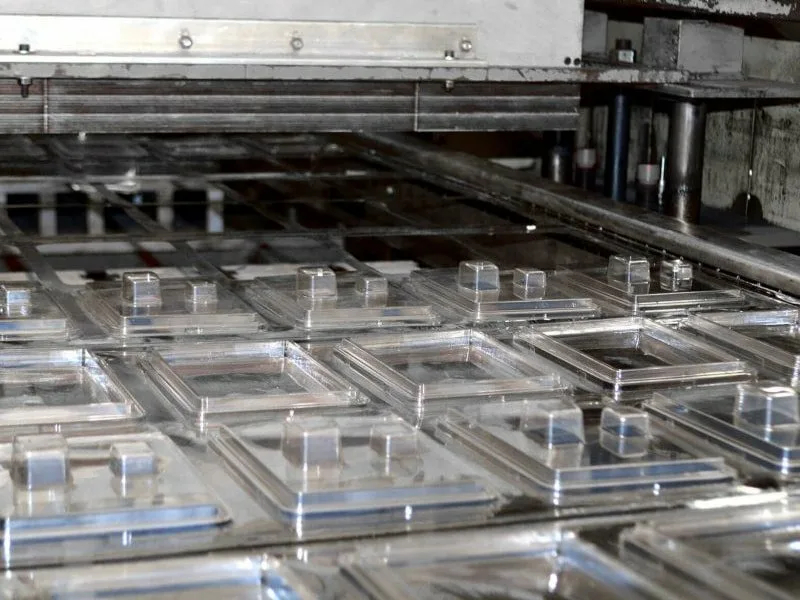
An oven-type thermoforming machine is an industrial machine that heats thermoplastic sheet material in an oven until it becomes pliable, then forms the softened sheet over or into a mold. The formed plastic is cooled until it can retain the required shape, after which it may be trimmed and finished.
The heating oven controls the temperature profile across the sheet. The forming system then uses a suitable method, such as vacuum forming, pressure forming, or mechanical assistance, depending on the product and machine configuration.
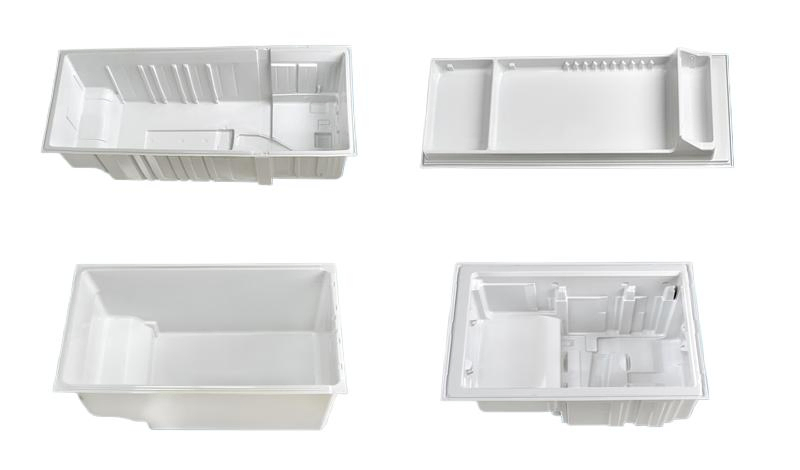
Oven-type thermoforming equipment is commonly used for large, deep, or custom-shaped plastic components. It can be configured for prototype work, small-batch manufacturing, or repeat production, depending on the machine's working area, automation level, tooling, and material-handling system.
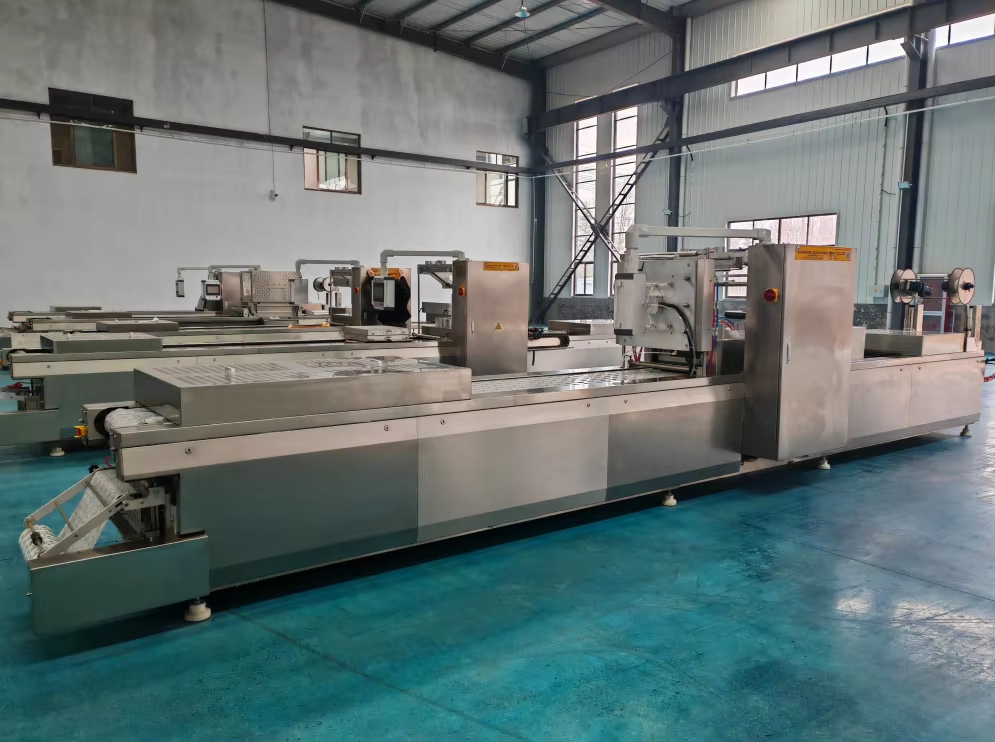
The thermoforming process consists of several stages. The exact sequence varies with the equipment design, plastic material, and product requirements.
The operator or an automated feeding system positions the plastic sheet in the machine. The sheet may be loaded manually or moved using a frame, rails, clamps, or other sheet-handling equipment.
Before heating, manufacturers should confirm the sheet's material grade, thickness, dimensions, surface condition, and suitability for the intended forming process. Variations in sheet thickness or material properties can affect heating and finished-part consistency.
The plastic sheet enters the heating oven, where controlled heat raises the material to its forming temperature. Heating may use electric resistance elements, infrared heaters, or another arrangement specified by the machine design.
A well-configured plastic sheet heating machine should provide a suitable temperature distribution across the working area. Uneven heating can lead to excessive sagging, incomplete forming, inconsistent wall thickness, or surface defects.
The required heating time depends on the plastic type, sheet thickness, heater output, oven layout, and target temperature. Operators should establish material-specific heating parameters through testing rather than relying on one setting for every plastic.
Once the sheet reaches the required forming condition, it is positioned over or within the mold. Depending on the equipment, the sheet may move automatically or require an operator to transfer it to the forming station.
Transfer time should be controlled because the sheet begins cooling after it leaves the oven. Delays can change its forming behavior and cause inconsistent results between production cycles.
The softened plastic is shaped using the selected forming method.
The appropriate method depends on part geometry, surface detail, material behavior, and the required dimensional accuracy.
The formed sheet is cooled until the component can retain its shape when removed from the mold. Cooling may rely on the mold, forced air, or other arrangements suited to the process.
Insufficient or uneven cooling can cause warping, shrinkage variation, or dimensional changes after demolding. The required cooling time depends on the material, part thickness, mold temperature, and component geometry.
Excess plastic is removed to achieve the finished dimensions. Trimming may be manual, carried out with a dedicated cutting station, or integrated into a larger automated line.
Inspection can cover dimensions, wall thickness distribution, surface appearance, edge quality, and repeatability. Recording process settings and inspection results helps manufacturers identify the cause of defects and maintain consistent production.
The machine configuration determines how heating, transfer, forming, and cooling work together.
| Component | Function | Selection considerations |
|---|---|---|
| Heating oven | Raises the plastic sheet to its forming temperature | Heater type, temperature range, heating area, and temperature uniformity |
| Heating elements | Supply thermal energy to the sheet | Material compatibility, output, service access, and control method |
| Sheet frame or clamping system | Holds the sheet during heating and forming | Sheet dimensions, thickness, and handling requirements |
| Guide rails or transfer system | Moves the sheet between process stations | Travel distance, positioning accuracy, and automation level |
| Forming station | Shapes the softened sheet against a mold | Forming area, mold dimensions, and vacuum or pressure capability |
| Vacuum or pressure system | Applies the force needed for forming | Required forming method, response, and operating capacity |
| Cooling arrangement | Helps the part retain its shape | Part geometry, material, cooling time, and cycle requirements |
| Control system | Manages temperatures, timing, movement, and process settings | Ease of operation, repeatability, and monitoring requirements |
The components should be specified as a coordinated system. For example, increasing the heating capacity alone may not improve overall output if sheet transfer, forming, or cooling remains the limiting stage.
Oven-type thermoforming machines can process a range of thermoplastics, provided the machine and tooling are suitable for the selected material.
| Plastic material | General characteristics | Potential applications |
|---|---|---|
| ABS | Available in grades with good impact resistance and rigidity | Equipment covers, housings, automotive components |
| PP (polypropylene) | Low density and useful chemical resistance in suitable grades | Trays, covers, industrial components |
| PET and PET-based sheet | Certain grades offer clarity and packaging suitability | Packaging components, covers, formed trays |
| PVC | Available in rigid and flexible formulations | Selected panels, covers, and formed components |
| PE (polyethylene) | Available in different grades with varying flexibility and toughness | Liners, trays, and industrial parts |
Not every grade of these materials is suitable for every thermoforming application. Forming temperature, shrinkage, sheet thickness, mold geometry, and the required finished-part properties should be assessed before production.
For engineering plastics or specialty sheet materials, manufacturers should confirm processing limits with the material supplier and machine manufacturer. The heating oven must provide a suitable operating range and a controllable temperature profile for the selected sheet.
Oven heating prepares the plastic sheet for forming, while the forming method determines how the softened sheet conforms to the mold.
Vacuum forming removes air between the sheet and mold, allowing the pressure difference to draw the plastic against the mold surface. It is suitable for many covers, housings, trays, panels, and formed plastic components.
The quality of the result depends on mold venting, sheet temperature, material distribution, and vacuum performance.
Pressure forming applies compressed air to push the heated plastic against the mold. It may reproduce finer surface details than vacuum forming in suitable applications, depending on the material, tooling, and process conditions.
Pressure forming requires equipment designed to handle the specified pressure and provide suitable sealing and control.
For some deep-draw products, a plug or mechanical pre-stretching tool helps distribute the softened sheet before vacuum or pressure is applied. This can improve material distribution in selected designs, although the result depends on plug geometry, temperature, timing, and mold design.
The forming method should be selected according to the finished part rather than the heating system alone. Oven heating is one stage of the process; it does not determine whether vacuum, pressure, or plug-assisted forming is the best option.
Oven-type thermoforming equipment is used across industries that need shaped plastic parts from flat sheets.
Suitable machines can produce selected interior and exterior plastic components, panels, covers, and trim parts. The required material, surface finish, dimensional tolerance, and production volume influence the machine and mold configuration.
Protective covers, machine enclosures, equipment panels, and formed housings may be manufactured using oven heating and mold-based forming. Part dimensions and rigidity requirements should guide material selection and mold design.
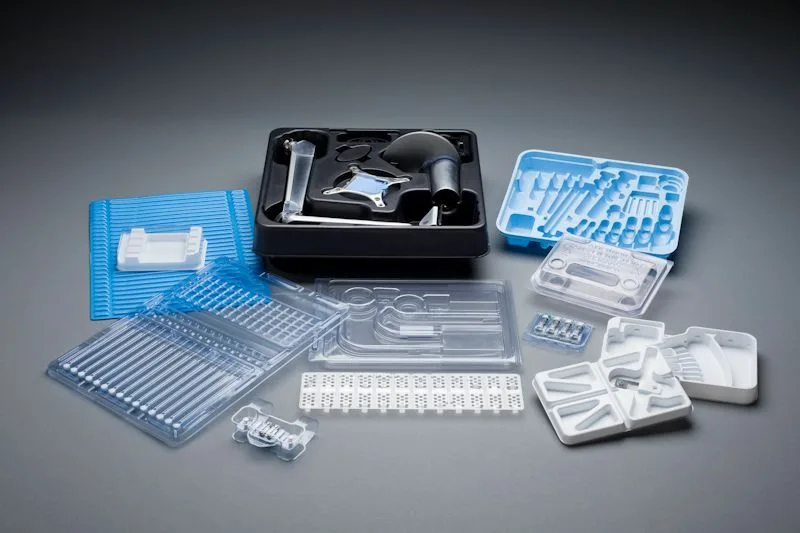
Thermoforming may be used for selected equipment housings, protective covers, trays, and non-implantable plastic components. Medical applications may require additional material documentation, cleanliness controls, traceability, and regulatory compliance according to the intended use.
Depending on the sheet format and machine configuration, oven-type equipment can produce selected trays, display parts, covers, and protective packaging components. High-volume packaging applications may require different feeding and automation arrangements from large-format sheet processing.
Manufacturers may use oven-type forming equipment for specialized enclosures, shaped panels, covers, and prototype parts. Custom projects benefit from early evaluation of the part drawing, sheet material, mold design, and expected production volume.
The main differences between machine types relate to how the sheet is heated, transported, and formed.
| Equipment type | Main characteristic | Suitable considerations |
|---|---|---|
| Oven-type thermoforming machine | Uses an oven to heat sheet material before forming | Suitable for applications requiring controlled sheet heating and mold-based shaping |
| Inline thermoforming machine | Integrates heating and forming stations into a continuous production arrangement | Often considered for repeat production and automated material handling |
| Vacuum forming machine | Uses vacuum as the forming force | Suitable for many formed covers, housings, panels, and trays |
| Pressure forming machine | Uses compressed air to form the sheet against a mold | Considered when more defined surface details are required |
| Industrial plastic sheet heating machine | Focuses on bringing sheet material to a specified temperature | May be a standalone heating station or part of a larger forming line |
These categories can overlap. An oven-type thermoforming machine may also use vacuum or pressure forming, while a plastic sheet heating machine may be only one component of a complete thermoforming line.
Selecting equipment starts with the part and production requirements.
Determine the maximum sheet width, length, thickness, and forming area. The machine must accommodate the sheet and mold while allowing suitable clamping, transfer, and trimming.
Confirm the plastic material's forming-temperature range and the required heating uniformity. Review the heater arrangement, temperature-control zones, adjustment range, and access for maintenance.
Establish whether the part requires vacuum forming, pressure forming, plug assistance, or another compatible process. Mold dimensions, draft angles, venting, surface finish, and forming depth affect both equipment selection and part quality.
Estimate the required output and assess each stage of the cycle, including loading, heating, transfer, forming, cooling, and trimming. For repeat production, evaluate whether automated transfer or integrated handling would reduce manual work and improve consistency.
Define dimensional tolerances, acceptable wall thickness variation, surface appearance, and edge quality. Where the component has complex geometry, sample trials can help confirm whether the proposed machine and mold can meet the requirements.
Check floor space, electrical supply, ventilation, operator access, and any vacuum or compressed-air requirements. Also confirm the availability of spare parts, training, maintenance instructions, and technical support.
Consistent results depend on matching the heating profile to the material and part design.
First, establish suitable heating parameters for each plastic grade and sheet thickness. If the sheet becomes too hot in one area and remains too cool in another, material distribution may vary during forming. Temperature zones and heater settings should be adjusted based on measured results and part inspection.
Second, minimize unnecessary transfer delays between the oven and forming station. The sheet should reach the mold within a controlled time window so that forming conditions remain repeatable.
Third, maintain the mold, vacuum or pressure system, and cooling arrangement. Blocked vents, worn seals, uneven cooling, or damaged tooling can affect product appearance and dimensions even when the heating stage is stable.
Finally, track production results. Record sheet material, thickness, heating settings, transfer time, forming conditions, cooling time, and defect rates. This information helps operators repeat successful settings and diagnose process variation.
| Problem | Possible cause | What to check |
|---|---|---|
| Uneven sheet heating | Heater distribution or settings are unsuitable | Heating zones, sheet position, and temperature uniformity |
| Excessive sheet sagging | Sheet is overheated or unsupported for too long | Heating duration, material properties, and sheet support |
| Incomplete forming | Sheet temperature, vacuum, pressure, or mold venting is inadequate | Forming temperature, system performance, and mold vents |
| Uneven wall thickness | Excessive stretching or unsuitable forming sequence | Mold geometry, plug assistance, and sheet temperature |
| Warping after demolding | Cooling is insufficient or uneven | Cooling time, mold temperature, and part design |
| Surface marks or discoloration | Excessive heating, contamination, or material incompatibility | Heater settings, sheet condition, and handling practices |
Troubleshooting should proceed one change at a time wherever practical. Recording the initial conditions and the result of each adjustment makes it easier to identify the cause of a defect.
Shanghai Junjingsai Automation Machinery Co., Ltd. provides thermoforming and plastic forming equipment for different industrial applications. An oven-type thermoforming project should be evaluated against the product's material, sheet dimensions, mold design, required forming method, and target production volume.
Depending on the application, the proposed equipment may include an oven heating section, sheet frame or transfer system, forming station, vacuum or pressure equipment, cooling arrangements, and downstream trimming or handling equipment. The final design should be confirmed against actual product drawings, sample parts, factory conditions, and quality requirements.
When requesting a machine quotation, provide the plastic material and grade, sheet thickness and dimensions, product drawings or samples, required forming depth, target output, mold details, and preferred automation level. These details help the manufacturer assess the required heating area, forming capacity, and production configuration.
An oven-type thermoforming machine heats thermoplastic sheets in an oven until they become pliable, then forms them over or into a mold. The part is cooled, removed from the mold, and trimmed as required.
The heating oven raises the plastic sheet to its forming temperature and helps prepare the material for shaping. Suitable temperature distribution helps reduce incomplete forming, excessive sagging, and inconsistent material thickness.
Depending on the machine configuration, suitable materials may include ABS, PP, PET, PVC, PE, and other thermoformable plastics. The allowable materials and thickness range should be confirmed with the machine manufacturer.
An oven-type thermoforming machine typically combines sheet heating with a forming process. A plastic sheet heating machine may refer only to the heating stage, which can operate as a standalone unit or as part of a complete thermoforming line.
Yes. An oven-type thermoforming system can be configured with vacuum forming equipment. After heating, the softened sheet is drawn against the mold using a pressure difference. The mold and machine must be suitable for the required product geometry.
They can be designed for large parts when the heating area, sheet-handling system, forming station, and mold dimensions support the required size. Maximum part dimensions depend on the specific machine model and configuration.
Use material-specific temperature settings, check heater zones and sheet positioning, and establish suitable heating times through testing. Regular inspection and consistent operating conditions also help maintain repeatable results.
Cycle time depends on sheet material and thickness, heating duration, transfer time, forming method, cooling requirements, part geometry, and trimming or handling operations. The complete production cycle should be assessed when estimating output.
Machine configurations may be tailored to sheet dimensions, material requirements, mold design, forming method, automation needs, and target output. The final specification should be confirmed using product drawings or sample parts and the factory's operating conditions.
Oven-type thermoforming machines provide a controlled way to heat and shape thermoplastic sheets into custom plastic components. Machine selection should account for heating uniformity, sheet dimensions, forming method, mold design, cooling, and production volume. Matching the heating oven and forming system to the material and finished-part requirements helps manufacturers establish repeatable processing conditions and reliable product quality.