Quote now
EN

A high pressure forming machine is a type of thermoforming equipment that uses compressed air to press a heated thermoplastic sheet against a mold, producing plastic parts with detailed surface textures, sharp edges, defined contours, and consistent appearance. Depending on the machine configuration, vacuum may also be applied to remove trapped air between the sheet and the mold.
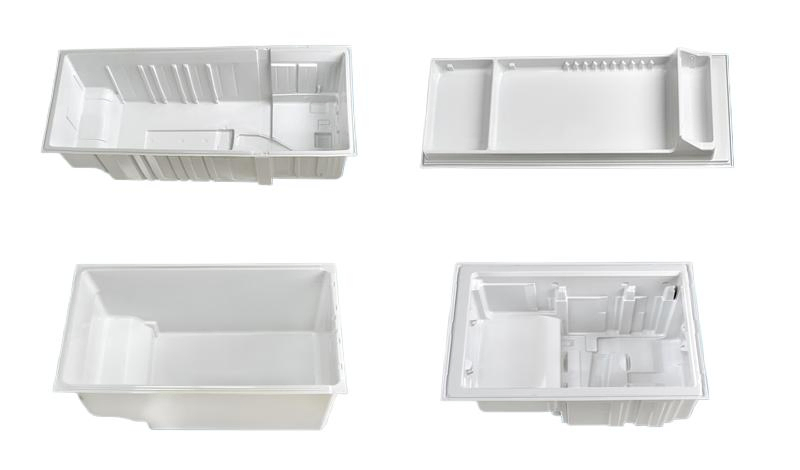
High pressure forming is suitable for plastic components that require more surface detail than conventional vacuum forming can provide. It can be used for equipment housings, automotive interior panels, medical equipment covers, industrial enclosures, and other molded components where appearance and dimensional consistency matter.
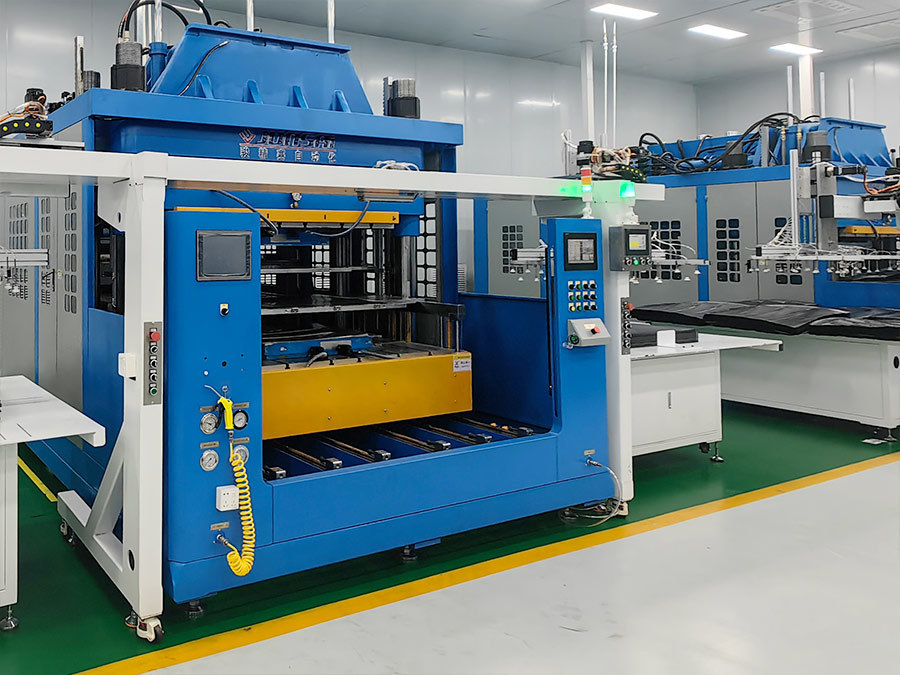
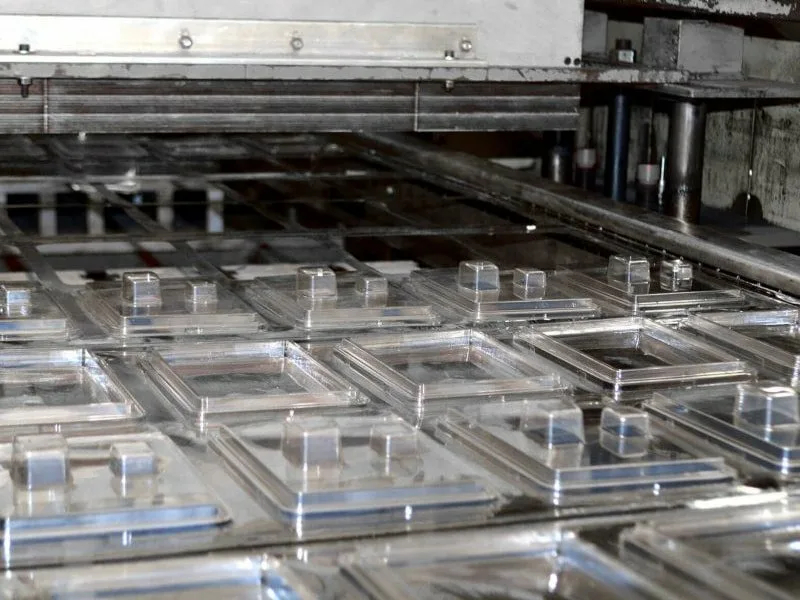
A high pressure forming machine heats a thermoplastic sheet until it becomes formable, positions the sheet over a mold, and applies compressed air to force the material against the mold surface. The part is then cooled, released, and trimmed to its final dimensions. Compared with vacuum forming, pressure forming can reproduce finer textures, sharper corners, and more defined details. It can also offer lower tooling costs than injection molding for suitable large or medium-volume plastic components, depending on part geometry and production requirements.
The pressure forming process combines controlled sheet heating, mold preparation, positive air pressure, and cooling. Each stage affects the appearance, wall thickness, dimensional accuracy, and repeatability of the finished part.
The process begins with a thermoplastic sheet selected for the part's dimensions, mechanical properties, color, surface finish, and operating environment. The sheet is secured in a clamping frame to keep it stable during heating and forming.
Sheet thickness, material grade, and sheet size should be confirmed before production. These factors determine the required heating capacity, clamping arrangement, mold design, and machine configuration.
The clamped sheet moves into a heating station, where controlled heat softens the material. The sheet must reach a suitable forming temperature across the required forming area.
Uneven heating can cause excessive sagging, inconsistent wall thickness, surface defects, or incomplete mold detail. Heater zoning, temperature settings, heating time, sheet thickness, and material properties should therefore be considered together.
Once the heated plastic sheet reaches its forming condition, it is positioned over the mold. The machine closes or seals the forming area as required by its design.
The mold includes the required contours, surface texture, and provisions for air evacuation. Mold geometry and vent placement affect how closely the material follows detailed areas, corners, and recessed features.
Compressed air is introduced above the heated sheet to force it against the mold. The pressure differential helps the softened material reproduce features that may be difficult to achieve using vacuum alone.
In many systems, vacuum is also applied through the mold to remove trapped air and improve contact with the mold surface. The forming pressure, vacuum level, timing, and temperature must be matched to the material and part design rather than set independently.
The formed plastic is cooled until it can retain its shape during removal. Cooling may take place through mold contact, controlled airflow, mold temperature management, or other methods supported by the machine design.
The part is then released from the mold. Adequate draft angles, suitable mold surfaces, and a controlled release sequence help prevent deformation and surface damage.
Excess sheet material is removed using an appropriate trimming method, such as CNC routing, die cutting, or another process suited to the component.
Finished parts are checked for dimensions, wall thickness, surface texture, edge quality, warpage, and other customer specifications. Where required, additional operations such as drilling, machining, finishing, or assembly can follow.
Pressure forming offers manufacturers a way to produce detailed thermoplastic components without the same tooling and processing requirements as conventional injection molding. Its suitability depends on the part design, material, production volume, and required finish.
The added air pressure helps the heated sheet reproduce fine mold features, including textured surfaces, raised lettering, recessed lettering, defined edges, and sharper corners.
This makes pressure forming technology useful for visible plastic components where the finish needs to resemble the appearance of a molded product.
Pressure forming can produce complex shapes within the limits of thermoforming. It is especially useful for large, thin-wall parts with detailed contours, controlled transitions, and decorative features.
However, thermoforming does not offer the same design freedom for every geometry as injection molding. Deep recesses, tight radii, undercuts, and significant thickness changes must be evaluated during design.
Compared with injection molding, pressure forming can reduce initial tooling costs for certain large components or projects that do not justify an expensive injection mold.
Pressure forming still requires suitable molds and pressure-capable equipment. Its tooling may cost more than tooling for basic vacuum forming because the mold and pressure system must accommodate higher loads and more demanding details.
Thermoforming equipment can be configured for large plastic panels, equipment covers, enclosures, and interior components. For applications where a large, relatively thin-wall plastic part is required, pressure forming may be more economical than producing the same geometry through injection molding.
Actual part size depends on the machine's forming area, heating capacity, clamping system, mold dimensions, and handling requirements.
When material preparation, heating, forming pressure, cooling, and trimming are controlled, pressure forming can deliver repeatable appearance and dimensional results.
Process validation should include the actual material grade and mold design. Parts with tight tolerances or demanding assembly interfaces may require additional fixtures, machining, or inspection.
Pressure forming can serve prototype development, customized manufacturing, and volume production runs. Its economic value depends on how tooling, material, machine cycle time, trimming, and inspection costs are distributed across the order quantity.
It is worth evaluating when a project needs more detail than vacuum forming provides but does not require the full capabilities or initial tooling investment of injection molding.
Pressure forming and vacuum forming are related thermoforming processes. Both heat thermoplastic sheet material and shape it against a mold. The main difference is how the forming force is generated.
Vacuum forming removes air from between the heated sheet and the mold. The pressure difference draws the sheet against the tool. Pressure forming adds compressed air on the opposite side of the sheet, increasing the force that pushes the material into the mold's details. Vacuum assistance may be used in both processes.
| Comparison factor | Pressure forming | Vacuum forming |
|---|---|---|
| Forming method | Compressed air pushes the sheet against the mold; vacuum may assist | Vacuum draws the sheet against the mold |
| Surface detail | Better suited to fine textures and sharply defined features | Suitable for simpler textures and less demanding detail |
| Edge definition | Can produce sharper, more defined edges | Depends on mold design and achievable vacuum contact |
| Tooling | Usually more complex and costly than basic vacuum-forming tooling | Often simpler and less expensive |
| Equipment | Requires a suitable pressure system and sealed forming arrangement | Requires an appropriate vacuum system |
| Typical applications | Detailed enclosures, decorative panels, and visible components | Covers, trays, liners, panels, and other suitable formed parts |
| Best selection factor | Detail, appearance, and geometry requirements | Simpler part designs and cost-sensitive tooling requirements |
The choice between pressure forming and vacuum forming should be based on the actual component. If a basic vacuum forming machine can achieve the required appearance and dimensions, the additional cost of pressure forming may not be justified. If fine textures, defined lettering, or sharper corners are required, pressure forming may offer a better fit.
Injection molding and pressure forming both manufacture plastic parts, but they use different materials and processing methods.
Injection molding melts plastic resin and injects it into a closed mold. Pressure forming heats a pre-extruded thermoplastic sheet and shapes it using positive air pressure, often with vacuum assistance. This distinction affects tooling, material use, design options, cycle time, and production economics.
| Factor | Pressure forming | Injection molding |
|---|---|---|
| Starting material | Thermoplastic sheet | Plastic resin, usually pellets |
| Manufacturing process | Heats and shapes a sheet over a mold | Melts and injects resin into a mold cavity |
| Tooling investment | Often lower for suitable large parts | Can be high, especially for complex metal molds |
| Large components | Well suited to many large, thin-wall parts | Possible, but machine size and mold costs can increase substantially |
| Fine detail | Good surface texture and detail within thermoforming limits | Suitable for complex integrated features and detailed three-dimensional geometry |
| Wall thickness | Varies with sheet stretching and part geometry | Controlled through mold design and injection parameters, subject to design limits |
| Integrated features | May require secondary machining or assembly | Can integrate bosses, ribs, clips, and other features into the molded design |
| Production economics | Often attractive for custom work and suitable low-to-medium volumes | Often attractive for high volumes where tooling cost is spread across many parts |
Pressure forming is not a universal replacement for injection molding. Injection molding may be the better choice for small components with complex internal geometry, integrated fastening features, tight dimensional requirements, or very high annual demand.
For large covers, housings, panels, and other sheet-based designs, pressure forming can offer a useful balance of appearance, part size, and tooling investment. The decision should be based on a comparison of the full manufacturing cost, not tooling costs alone.
The material must be available in a suitable sheet grade and thickness and must tolerate the heating and forming conditions required by the component design.
| Material | Typical characteristics | Potential applications |
|---|---|---|
| ABS | Good impact resistance and surface finish options | Equipment housings, covers, and interior panels |
| PC | High impact resistance and heat performance, depending on grade | Protective covers and technical components |
| PETG | Good formability and transparency options | Covers, displays, and selected packaging components |
| HIPS | Easy processing and economical sheet options | Housings, liners, and general-purpose parts |
| PMMA / Acrylic | Optical clarity and surface appearance | Transparent covers and decorative components |
| PVC | Available in grades with varied chemical and mechanical properties | Selected industrial covers and enclosures |
| PP | Low density and chemical resistance, depending on grade | Industrial components and selected packaging applications |
Material selection should account for operating temperature, impact requirements, chemical exposure, UV exposure, flammability requirements, color, surface texture, and any industry-specific standards. Not every grade of these materials is suitable for every pressure forming machine or application.
Pressure formed parts are used where a sheet-based manufacturing process can deliver the required size, shape, surface detail, and performance.
Potential applications include interior trim, instrument-panel covers, door panels, console components, seat-back panels, and decorative parts. The selected material and manufacturing process must meet the project's appearance, dimensional, flammability, and durability specifications.
Industrial applications may include machine covers, control-panel housings, protective guards, equipment enclosures, and large formed panels. Pressure forming can reproduce surface details while supporting a range of part sizes.
Suitable applications include equipment housings, instrument covers, and protective panels. Medical or laboratory use requires careful selection of materials and manufacturing controls. Any requirements for cleaning agents, biocompatibility, sterilization, or regulatory compliance must be evaluated for the specific application.
Pressure forming can produce visible housings, appliance covers, display components, recreational product panels, and custom plastic parts. Mold texture, color, edge definition, and post-forming operations can be specified according to the product design.
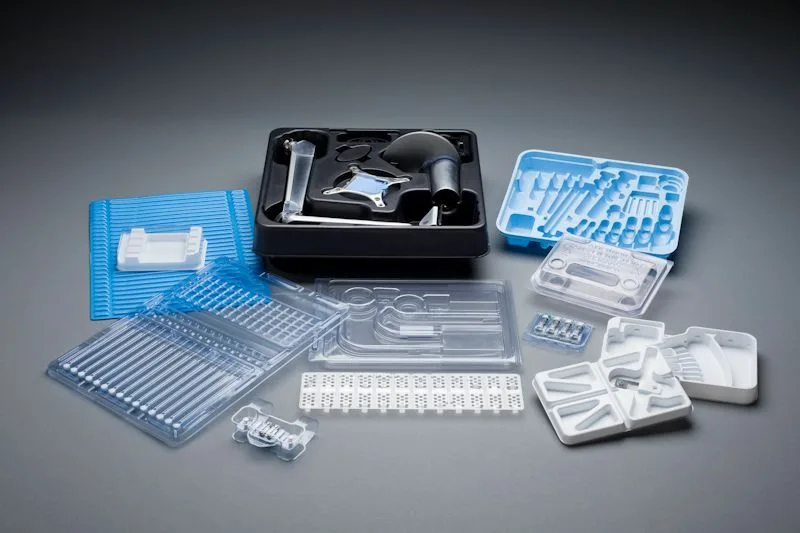
For suitable packaging designs, pressure forming can reproduce defined contours and surface features. However, conventional vacuum forming or other thermoforming processes may be more economical for simpler trays and inserts that do not require the extra detail pressure forming provides.
A high pressure forming machine needs coordinated heating, forming, pressure control, cooling, and handling systems. The required configuration depends on sheet size, material, part geometry, target output, and the degree of automation.
The heating system brings the sheet to a controlled forming temperature. Zoned heating and adjustable settings can help accommodate different materials, sheet thicknesses, and forming areas.
The clamping system holds the sheet securely during heating and forming. Depending on the machine design, loading and transfer may be manual, semi-automatic, or fully automatic.
The pressure system supplies and regulates compressed air for forming. It may include an air reservoir, pressure regulation, valves, sensors, and a pressure chamber or box designed for the operating conditions.
The system must be engineered for its intended pressure and protected with appropriate controls. Operating pressure should follow the machine manufacturer's specifications and the requirements established during process validation.
Where the process uses vacuum, a suitable vacuum system helps evacuate air between the sheet and mold. Vacuum delivery, mold venting, and the timing of vacuum application influence mold contact and the reproduction of fine details.
The mold defines the final shape and surface finish. Cooling arrangements must allow the part to retain its shape before removal. Mold material, venting, draft, temperature management, and release strategy should be considered during tooling design.
The control system coordinates heating, transfer, pressure, vacuum, forming, and cooling sequences. Safety provisions should address hot surfaces, moving parts, compressed air, access to the forming area, and the machine's specified operating conditions.
High quality pressure formed parts depend on a controlled manufacturing process, suitable tooling, and clear product specifications.
Sheet temperature: Material that is too cold may not reproduce mold details. Excessive heating can cause sagging, degradation, or uneven material distribution.
Air pressure and timing: The pressure profile must match the sheet's forming condition and mold geometry. Applying pressure at the wrong time can cause incomplete detail or inconsistent wall thickness.
Mold design: Draft angles, corner radii, vent locations, surface texture, and mold geometry affect formability and part release.
Material distribution: Deep draws and complex shapes can stretch the sheet unevenly. Part design and process setup should account for the minimum required wall thickness.
Cooling and release: Removing a part before it has stabilized can cause warpage or dimensional changes. Cooling conditions and release timing should be validated for the material and part.
Trimming and inspection: Final dimensions may depend on trimming fixtures, CNC programming, reference points, and inspection methods. These operations should be included in the production plan.
A repeatable process should be established using production-representative materials and tooling. Sample parts should be inspected against agreed specifications before volume production begins.
Tooling costs are a major consideration when comparing pressure forming with vacuum forming and injection molding. Pressure forming usually needs more capable tooling than basic vacuum forming because the mold and forming arrangement must withstand the added pressure and reproduce finer features.
Even so, its initial tooling investment can be lower than injection molding for certain large plastic components. The advantage is most relevant when the part geometry suits sheet forming and the project does not require complex integrated features that are better made through injection molding.
A practical cost comparison should include:
Pressure forming offers a cost-effective option when its tooling and part-production costs align with the required output and quality. For very high production volumes, injection molding may become more economical because its tooling investment can be spread across a large number of parts and the process can incorporate complex features.
There is no single production quantity at which one process always becomes cheaper. The correct choice depends on part dimensions, design complexity, material, cycle time, tooling life, and total production requirements.
Before choosing a pressure forming machine, define the component and production requirements. This information helps establish the necessary forming area, heating capacity, pressure system, mold configuration, and automation level.
Provide the maximum part dimensions, draw depth, wall-thickness requirements, corner radii, surface textures, and any undercuts or integrated features. These details help determine whether pressure forming is suitable or whether another manufacturing process should be considered.
Identify the material grade and sheet thickness, including any color, finish, performance, or regulatory requirements. Material properties affect heating time, forming temperature, pressure settings, and cooling behavior.
Estimate the initial order quantity and expected annual demand. Include possible future design changes, product variants, and the required production rate. These factors help compare tooling investment with long-term manufacturing costs.
Specify the required dimensional tolerances, surface finish, texture, lettering, color consistency, and inspection criteria. If the part must fit with other components, identify the interfaces and dimensions that require closer control.
Determine whether the project needs manual loading, automated sheet transfer, integrated trimming, or downstream handling. Available floor space, electrical supply, compressed air capacity, operator access, and maintenance requirements should also be considered.
A CAD model or engineering drawing is useful, but a preliminary assessment can begin with part photographs, dimensions, material, estimated thickness, and annual demand. A manufacturer can then evaluate the process, mold concept, machine configuration, and sample-production requirements.
Shanghai Junjingsai Automation Machinery Co., Ltd. develops and manufactures thermoforming equipment and customized plastic forming automation for industrial applications.
When evaluating a high pressure forming project, the equipment configuration should be matched to the actual part rather than selected from machine size alone. Relevant factors include sheet dimensions, heating requirements, mold design, pressure control, forming detail, production targets, and downstream finishing.
Junjingsai can discuss project requirements for customized thermoforming equipment, including:
The final machine specification should be confirmed through technical review and, where appropriate, sample testing. This helps establish whether the proposed equipment can meet the part's quality, output, and operating requirements.
A high pressure forming machine heats thermoplastic sheet and uses compressed air to press it against a mold. The process can reproduce fine textures, sharper corners, defined edges, and other detailed surface features. Vacuum assistance may also be used to remove trapped air between the sheet and mold.
Vacuum forming uses a vacuum to draw a heated plastic sheet against a mold. Pressure forming adds compressed air on the opposite side of the sheet, increasing the forming force. Pressure forming is generally better suited to finer surface detail, while vacuum forming often has simpler tooling and lower initial costs.
Neither process is better for every application. Pressure forming can be attractive for large, thin-wall components, visible surfaces, and projects where lower initial tooling investment is desirable. Injection molding is often more suitable for very high production volumes and parts requiring complex integrated features, such as bosses, clips, and internal ribs.
Depending on machine capability and material grade, pressure forming can process thermoplastic sheets such as ABS, polycarbonate, PETG, HIPS, acrylic, PVC, and polypropylene. The correct material depends on forming temperature, part geometry, impact requirements, surface finish, and the product's operating environment.
Pressure forming may reduce initial tooling investment compared with injection molding for suitable large or sheet-based parts. However, its molds are usually more complex than basic vacuum-forming molds. A meaningful comparison should include tooling, material, trimming, cycle time, finishing, and expected production quantity.
Pressure forming can produce complex contours, defined corners, textured surfaces, and detailed features within the limits of thermoforming. Very deep draws, tight undercuts, integrated internal structures, and demanding thickness requirements need careful design review. Some geometries may be better suited to injection molding or a combination of manufacturing processes.
Many pressure forming systems use both. Compressed air pushes the heated sheet toward the mold, while vacuum assistance removes air trapped between the sheet and mold surface. The combination can improve mold contact and detail reproduction, depending on the equipment and tooling design.
Yes. Pressure forming can support repeated production when the machine, mold, material, and process parameters are designed for the target output. Its economic suitability depends on cycle time, tool life, material utilization, trimming requirements, inspection costs, and the total order quantity.
Start with the part dimensions, material and sheet thickness, required surface detail, production volume, tolerances, and downstream operations. Then evaluate forming area, heating capacity, pressure and vacuum systems, mold compatibility, automation, safety features, and service requirements with the equipment manufacturer.
Looking for a pressure forming machine for detailed plastic enclosures, panels, covers, or other custom components? Share your part drawings or samples, material specifications, sheet thickness, target production volume, and required surface finish.
Junjingsai can review these requirements to help determine a suitable thermoforming approach, machine configuration, and tooling plan. A project-specific assessment is the best starting point for balancing part quality, production efficiency, and manufacturing cost.