Quote now
EN

Thermoforming laminating machines are designed to combine plastic forming and lamination processes to produce formed components with a decorative, protective, functional, or surface-finish layer. Depending on the product design and production requirements, the equipment may integrate sheet heating, forming, film or sheet application, pressure control, cooling, and trimming into a coordinated manufacturing process.
For manufacturers producing plastic panels, automotive interior components, equipment housings, appliance parts, and decorative formed products, the right laminating equipment can help achieve consistent surface quality and repeatable part geometry. Machine selection depends on the substrate material, laminating film, product shape, required finish, production volume, and whether forming and lamination need to take place in one integrated line.
Thermoforming laminating machines are industrial systems that combine the shaping of thermoplastic sheets with the application or bonding of a surface layer. The plastic sheet is heated and formed to the required geometry, while a decorative film, protective layer, or functional laminate is applied according to the process design.
Depending on the equipment configuration, lamination may occur before forming, during forming, or after the plastic component has been shaped. The suitable sequence depends on film stretchability, adhesive characteristics, surface geometry, temperature resistance, and the required bond quality.
Unlike office laminators that seal documents inside laminating pouches, industrial thermoforming laminating machines are built for manufacturing formed plastic parts. They use production tooling, controlled heating, forming systems, and material-handling equipment to meet the dimensional and surface requirements of industrial products.
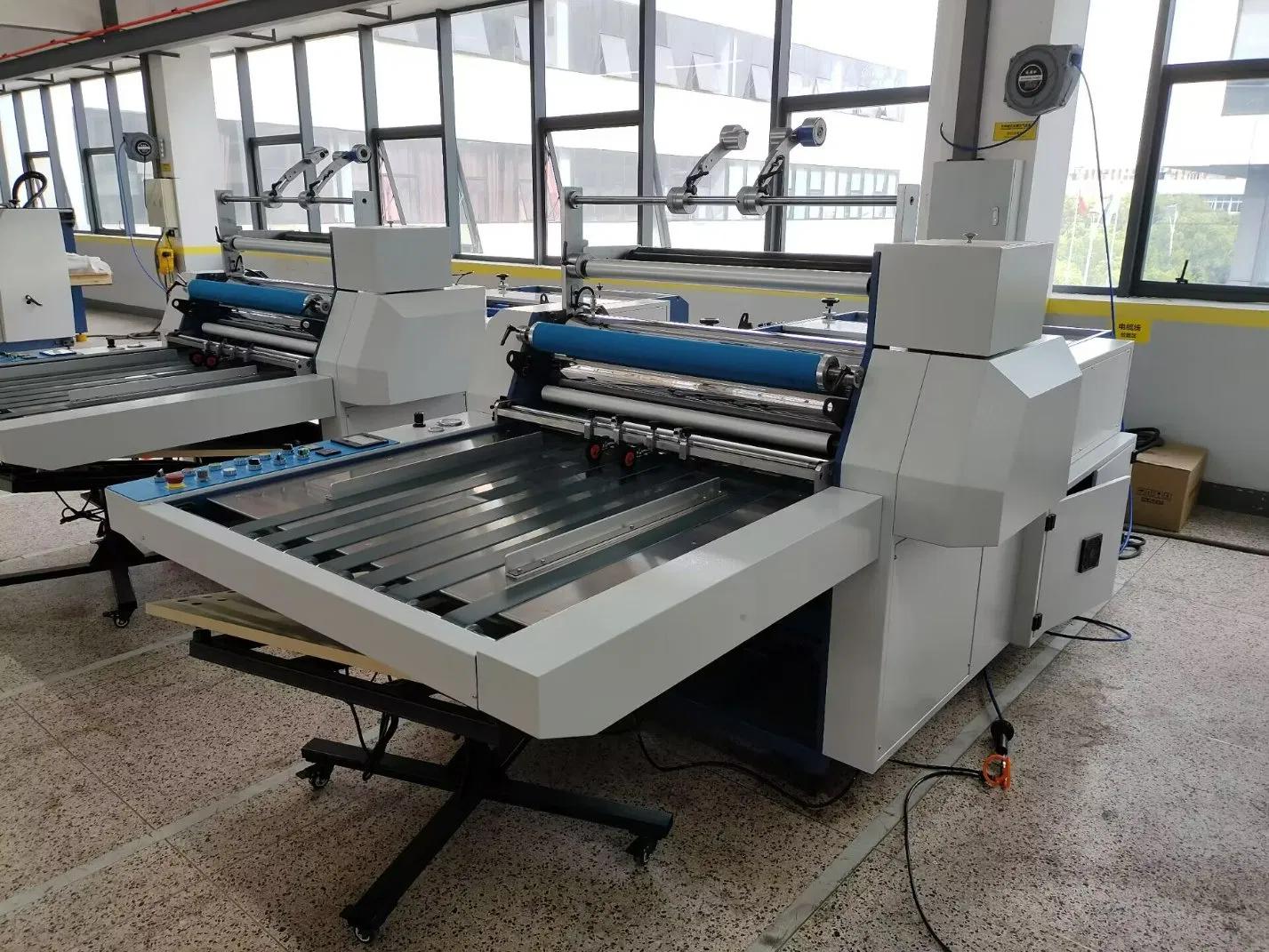
The manufacturing process varies by machine design, but most systems follow several basic stages.
The process begins with a suitable plastic sheet or molded substrate and the selected decorative or functional film. Material specifications should be checked for thickness, surface condition, temperature resistance, compatibility, and intended use.
The film may be supplied in rolls or as pre-cut sheets. A laminator roll system can feed continuous film into the production line, while sheet-fed arrangements may be better suited to certain product sizes or material formats.
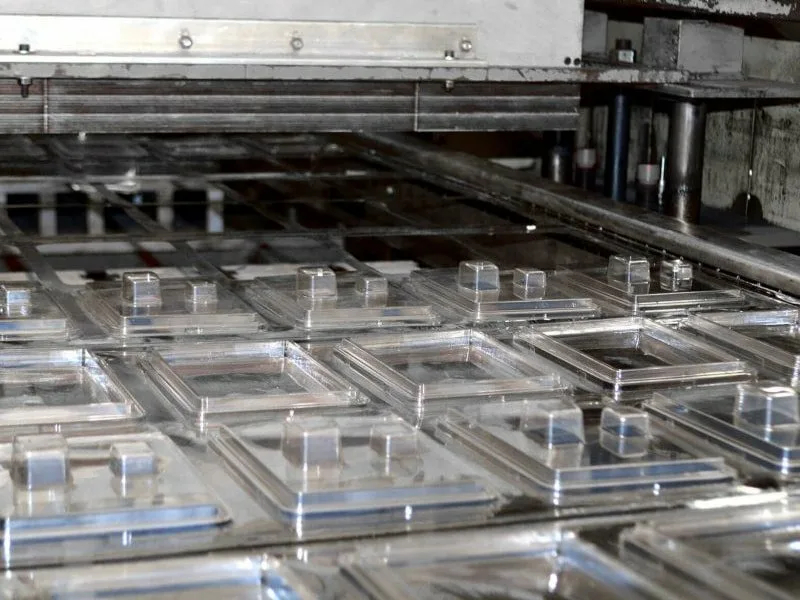
When thermoforming is required, the plastic sheet is heated until it becomes sufficiently pliable for shaping. The sheet is then formed over or into a mold using an appropriate forming method, such as vacuum forming or pressure forming.
Heating conditions must suit both the substrate and the selected surface film. Excessive heat can cause discoloration, shrinkage, surface defects, or changes in film properties. Insufficient heat may result in poor forming, weak contact, or incomplete surface reproduction.
The decorative or protective film is brought into contact with the substrate or formed component. Depending on the system, bonding may use heat, pressure, a compatible adhesive, or a combination of these methods.
The process must provide sufficient contact across the surface while managing wrinkles, trapped air, bridging, and uneven film tension. Complex shapes may require a film with suitable elongation and a forming sequence that prevents excessive stretching.
The laminated component is cooled under suitable conditions to help maintain its shape and surface finish. Cooling requirements depend on the substrate, film, adhesive system, part thickness, and forming geometry.
Where the process uses heat-activated adhesives, the operating temperature and pressure must follow the material supplier's specifications. Stable process conditions help reduce peeling, bubbles, and dimensional variation.
Excess material is trimmed to achieve the required finished dimensions. Depending on the production line, trimming may be integrated into the machine or carried out at a separate station.
Inspection can cover surface appearance, film alignment, adhesion, wrinkles, bubbles, dimensional accuracy, and edge quality. Production records help operators identify recurring defects and maintain consistent output.
Different laminating machines serve different production needs. Choosing equipment based only on the word “laminator” can lead to a mismatch between the machine and the intended product.
| Machine type | Main function | Typical applications |
|---|---|---|
| Thermoforming laminating machine | Combines plastic forming with film or surface-layer application | Formed plastic panels, automotive trim, decorative components |
| Roll laminating machine | Feeds material through rollers to apply a film or laminate | Flat sheets, panels, continuous materials |
| Heat laminating machine | Uses controlled heat and pressure to bond compatible layers | Decorative films, protective surfaces, laminated sheets |
| Vacuum laminating system | Uses vacuum to help draw film into contact with a substrate or shaped surface | Selected curved panels and components with complex contours |
| Cold laminator | Applies pressure-sensitive films or adhesives without relying on heat activation | Graphics, labels, protective films, flat surfaces |
| Pouch laminator | Encloses documents or small flat items in a laminating pouch | Office documents, cards, menus, identification materials |
A cold laminator or pouch laminator is generally designed for graphics, documents, and other relatively flat items. These machines should not be treated as substitutes for industrial thermoforming laminating equipment unless the application falls within their specified operating range.
The differences between industrial forming systems and conventional laminators are mainly related to product geometry, material format, heating, pressure, and production requirements.
These systems are designed for formed plastic parts. They may integrate heating, mold-based forming, film application, cooling, and trimming. The equipment must accommodate the part's three-dimensional geometry and the behavior of both the substrate and surface layer.
Roll laminators typically move a flat sheet, print, or panel between rollers that apply pressure and, in some systems, heat. A laminator roll may refer to a film roll used to supply laminate material or to a roller component within the machine. The exact meaning depends on the equipment and supplier terminology.
Roll laminators are useful for continuous material feeding and flat-surface lamination, but standard roll systems may not be suitable for forming deep contours or complex three-dimensional components.
A cold laminator generally applies pressure-sensitive film without heat being used to activate the bonding process. These systems are common in sign making, graphics, and surface protection where heat-sensitive prints or materials must be protected.
Cold lamination is different from thermoforming lamination because it normally does not involve heating a plastic sheet to form a new three-dimensional shape.
A pouch laminator feeds a document or flat item enclosed in laminating pouches through heated or pressure-controlled rollers. The pouch film bonds around the item to provide a protective finish.
Laminating pouches are designed for the pouch laminator's specified format and temperature range. They are not equivalent to industrial thermoforming films and should not be assumed suitable for forming plastic components in a production mold.
Material compatibility determines whether the substrate and surface layer can be processed together successfully. The selected materials must tolerate the forming temperature, pressure, stretching, and cooling conditions.
| Material or layer | Typical characteristics | Considerations |
|---|---|---|
| ABS sheet | Commonly used where stiffness and impact resistance are required | Check forming temperature, surface compatibility, and application requirements |
| PP sheet | Available in grades with useful chemical resistance and low density | Adhesion may require a compatible film, adhesive, or surface treatment |
| PVC sheet | Available in rigid formulations with varied properties | Confirm temperature limits and compatibility with the film or adhesive |
| PET or PET-based sheet | Used in applications where clarity or packaging performance is required | Evaluate the specific grade, forming behavior, and temperature requirements |
| Decorative film | Provides a visual finish, pattern, or color | Must tolerate the forming conditions without excessive stretching or distortion |
| Protective film | Helps protect a surface from handling or environmental exposure | Confirm whether the film is intended to remain on the finished part or be removed |
| Functional laminate | Adds selected surface properties or a specialized layer | Performance depends on the material construction and intended application |
Not every film can be stretched over every part geometry. Before production, manufacturers should confirm film elongation, thickness, adhesion method, surface compatibility, and resistance to the process temperature.
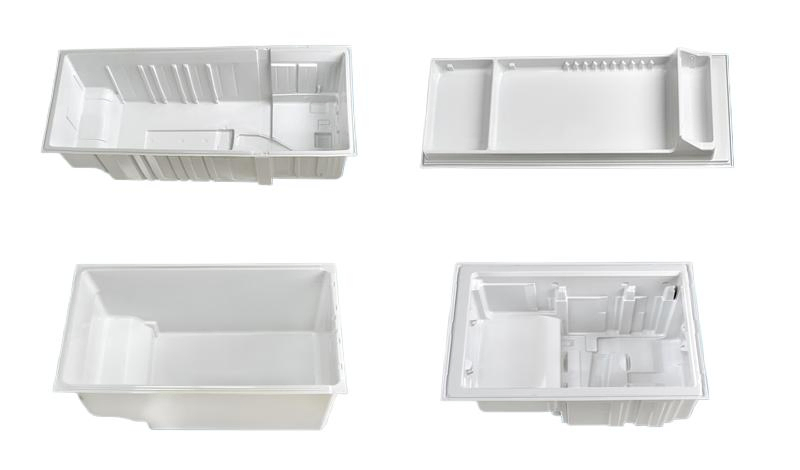
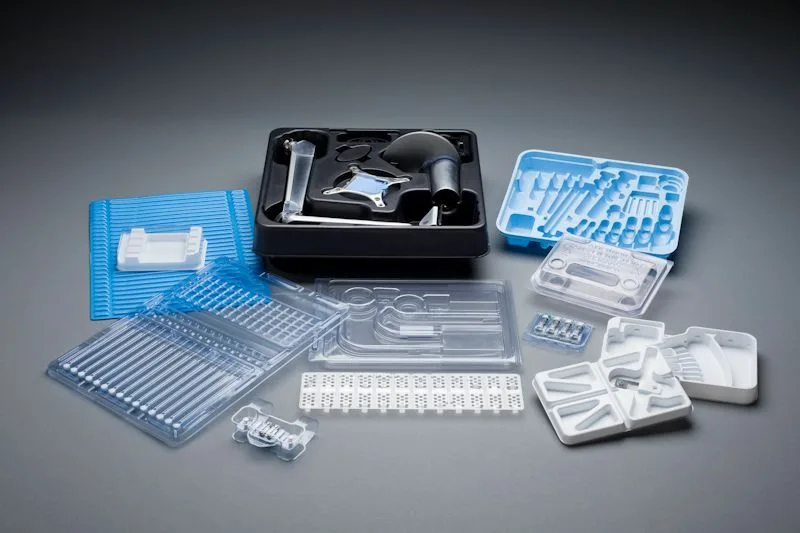
Laminated thermoformed parts may be used for selected interior trim, decorative panels, covers, and shaped plastic components. The substrate, surface film, and bonding system should meet the product's appearance, durability, and environmental requirements.
Manufacturers may use laminated plastic sheets to produce panels, covers, and housings with a consistent color, texture, or protective finish. The selected film must remain bonded during forming and throughout the product's expected service conditions.
Decorative surface layers can be applied to suitable plastic components to create particular colors, textures, or visual effects. The process must account for the shape of the part and the surface finish expected after forming.
Thermoforming lamination may be used where formed plastic components need a particular surface appearance or an additional functional layer. The required resistance to chemicals, abrasion, heat, or outdoor exposure should be confirmed against the actual operating environment.
Selected consumer products combine formed plastic shapes with decorative or protective surfaces. Product design, material compatibility, appearance standards, and production volume determine whether integrated forming and lamination is suitable.
The appropriate machine depends on the finished part and the complete production process rather than one specification alone.
Provide product drawings or samples showing the overall dimensions, contours, forming depth, and surface areas that require lamination. Deep draws and compound curves can place greater demands on film stretchability and forming control.
Identify the plastic material, sheet thickness, film type, adhesive system, and required surface finish. The supplier should confirm that the combination can withstand the process temperature and pressure without unacceptable distortion or adhesion problems.
Decide whether the film should be applied before forming, during the forming operation, or after the substrate has been shaped. This decision affects tooling, heating, material handling, film tension, and process control.
For higher-volume production, evaluate sheet feeding, film unwinding, heating, forming, cooling, trimming, and product handling as a complete line. Automation can reduce manual handling, but its value depends on part variety, changeover frequency, and the required output.
Define acceptable limits for wrinkles, bubbles, film misalignment, peeling, surface marks, and dimensional variation. These requirements should be used when evaluating sample parts and establishing the process parameters.
Review access to heating elements, rollers, vacuum or pressure systems, control components, and tooling. Confirm operator training, spare parts availability, maintenance procedures, and support arrangements before purchasing the equipment.
| Defect | Possible causes | Areas to review |
|---|---|---|
| Wrinkles in the film | Uneven film tension, poor positioning, or unsuitable forming sequence | Film feeding, alignment, tension, and tooling |
| Air bubbles | Incomplete contact, trapped air, or unsuitable bonding conditions | Vacuum performance, pressure, surface preparation, and adhesive compatibility |
| Film peeling | Poor adhesion, incompatible materials, or unsuitable process settings | Film and substrate compatibility, surface treatment, temperature, and pressure |
| Distorted surface pattern | Excessive film stretching or unsuitable material temperature | Film elongation, heating profile, mold geometry, and forming sequence |
| Inconsistent part dimensions | Temperature variation, cooling differences, or tooling issues | Heating uniformity, mold condition, cooling, and process repeatability |
| Surface discoloration | Excessive heat or incompatible material combinations | Temperature settings, heating duration, and supplier recommendations |
Troubleshooting should begin with a review of the material specifications and current process settings. Changing one variable at a time and recording the results makes it easier to identify the source of a defect.
Shanghai Junjingsai Automation Machinery Co., Ltd. develops thermoforming and plastic forming equipment for industrial production requirements. For projects involving lamination, the machine configuration should be assessed against the product geometry, plastic substrate, decorative or functional film, bonding method, and downstream finishing operations.
Depending on the application, a production line may require sheet feeding, controlled heating, vacuum or pressure forming, film handling, cooling, trimming, and automated material transfer. Not every application requires all these functions, so the final configuration should be based on the actual production process.
When requesting a machine proposal, prepare product drawings or samples, substrate and film specifications, target output, surface-finish requirements, forming depth, and details of existing equipment or factory utilities. These details help establish whether an integrated thermoforming laminating machine or a separate forming and lamination arrangement is more appropriate.
A thermoforming laminating machine combines the shaping of thermoplastic material with the application or bonding of a film or surface layer. Depending on the configuration, lamination may take place before, during, or after forming.
A thermoforming laminator is designed to work with formed plastic components and three-dimensional geometry. A roll laminator typically applies film to flat sheets, panels, or graphics using rollers and pressure, sometimes with heat.
A standard cold laminator is generally designed to apply pressure-sensitive film to flat surfaces. It does not normally heat and shape plastic sheets in a mold, so it is not a direct substitute for industrial thermoforming equipment.
A pouch laminator seals documents or other flat items inside laminating pouches to protect them and improve their finish. It is intended for relatively small, flat items rather than industrial three-dimensional plastic parts.
Laminating pouches are pre-formed film sleeves used with compatible pouch laminators. They are available in different sizes and thicknesses, and their suitability depends on the laminator specifications and the item being protected.
A laminator roll may refer to a roll of film that supplies laminate material to a machine or to a roller that applies pressure during lamination. The term should be interpreted according to the machine design and supplier documentation.
Suitable combinations may include thermoplastic substrates such as ABS, PP, PVC, or PET-based sheets with compatible decorative, protective, or functional films. Material selection depends on forming temperature, stretchability, adhesion, and finished-part requirements.
Wrinkles and bubbles can be reduced by controlling film alignment and tension, selecting compatible materials, optimizing heating and pressure conditions, ensuring appropriate surface preparation, and matching the forming sequence to the part geometry.
Provide product drawings or samples, substrate material and thickness, film specifications, forming depth, required surface quality, production volume, lamination sequence, and trimming or automation requirements. Sample trials can help confirm process suitability.
Thermoforming laminating machines combine plastic forming and surface-layer application for manufacturing shaped components with defined appearance or functional requirements. The right equipment depends on material compatibility, film behavior, part geometry, bonding method, production volume, and finishing requirements. Distinguishing industrial thermoforming lamination from roll laminators, cold laminators, pouch laminators, and laminating pouches helps manufacturers choose equipment suited to their actual production needs.