Quote now
EN

A thermoforming machine is industrial equipment that heats a thermoplastic sheet until it becomes pliable, forms the softened material over or into a mold using vacuum, pressure, or mechanical assistance, and then cools it into the required shape. Depending on the machine configuration, the forming process may include plug assist, automated material handling, trimming, and forming cutting to produce finished products with consistent dimensions.
Thermoforming equipment is used to manufacture plastic trays, protective covers, automotive interior and exterior components, appliance housings, medical packaging components, and other molded plastic products. The appropriate machine depends on the type of plastic, sheet thickness, product geometry, forming area, required output, and downstream processing needs.
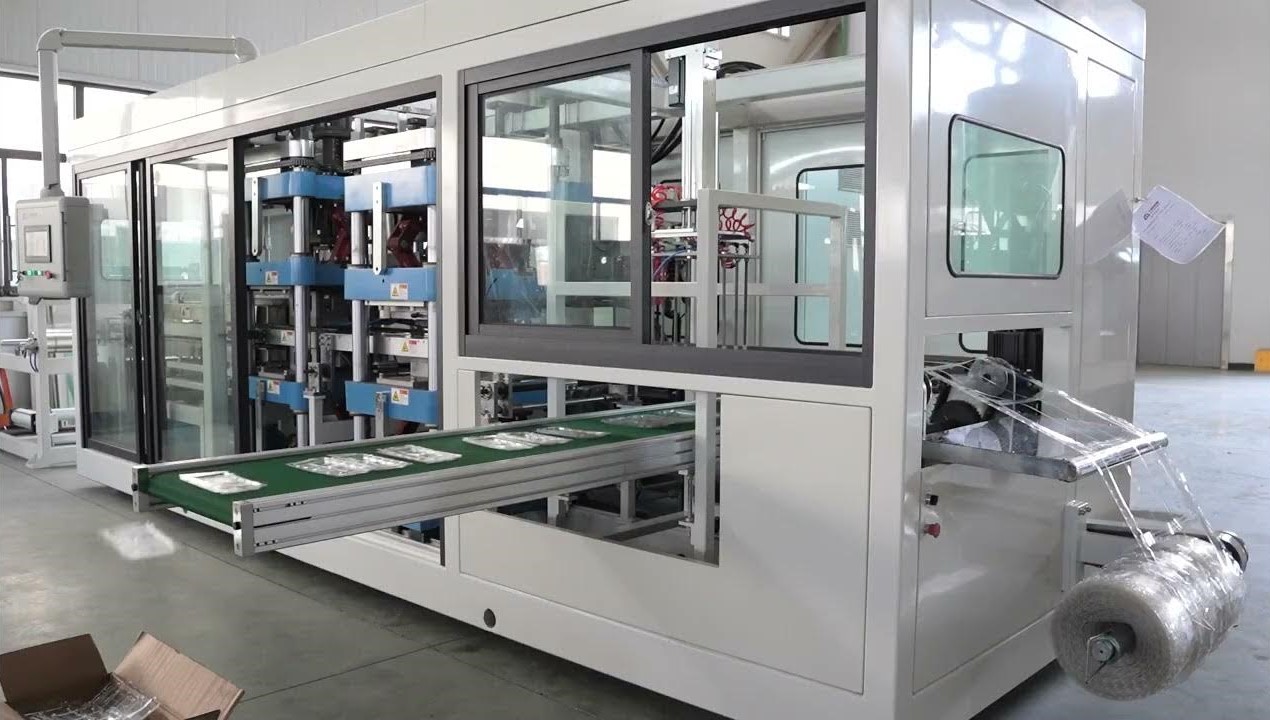
Junjingsai offers a wide range of thermoforming equipment designed for different sheet materials, product sizes, forming methods, and manufacturing environments. From compact forming systems to large-format automated machinery, the equipment portfolio supports both standard production requirements and customized applications.
Automatic thermoforming machines integrate selected production operations to reduce manual handling and support repeatable manufacturing. Depending on the configuration, a production line can include sheet feeding, heating, forming, cooling, trimming, and automatic loading or unloading.
These systems are suitable for manufacturers seeking consistent output across repeated production runs. Automation requirements can be evaluated according to product geometry, cycle-time targets, labor arrangements, and the degree of integration required with existing production equipment.
Vacuum thermoforming uses negative pressure to draw a heated thermoplastic sheet against a mold. The method is suitable for producing large or detailed plastic components, protective shells, trays, housings, and other formed products.
Junjingsai provides vacuum forming and vacuum thermoforming solutions for different sheet thicknesses and product specifications. Machine selection depends on the mold design, material characteristics, forming depth, surface requirements, and the size of the component.
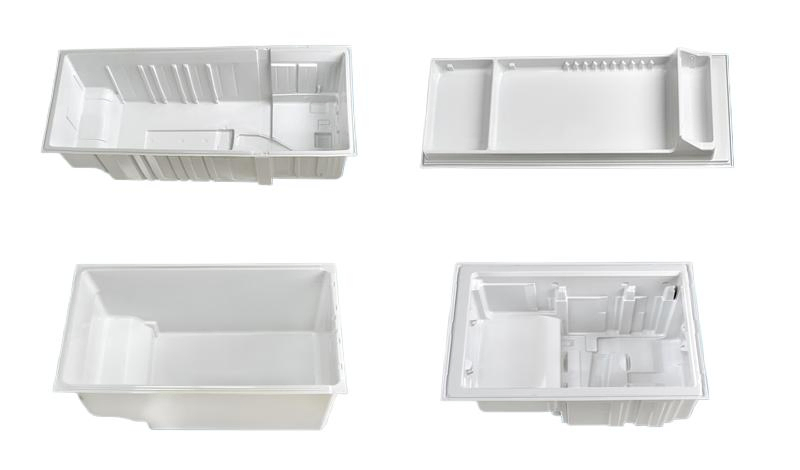
Heavy-gauge thermoforming machines process thicker plastic sheets used for rigid, durable, or large-format products. Typical applications include automotive interior components, fender liners, equipment covers, luggage shells, appliance liners, and industrial plastic housings.
For these applications, the machine design must account for sheet heating uniformity, forming pressure, mold dimensions, cooling requirements, and part removal. Automatic loading and unloading can also be considered when production volume or component weight makes manual handling less practical.
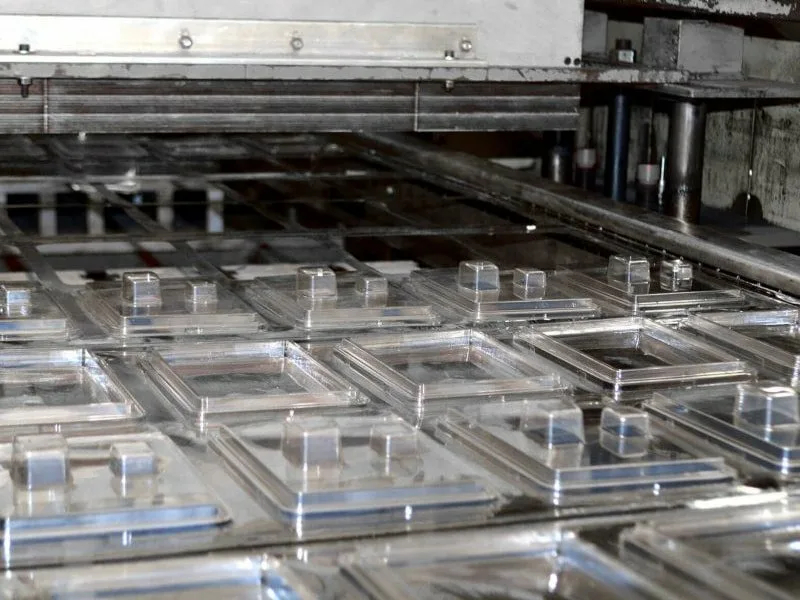
Thin-gauge thermoforming equipment is commonly used to manufacture lightweight packaging and smaller plastic products from relatively thin sheets. Depending on the machine configuration and tooling, applications may include food trays, blister packaging, disposable containers, and selected medical packaging components.
Material thickness, sheet feeding, heating control, forming speed, and trimming accuracy should be assessed together to achieve the required product quality and production efficiency.
Oven-type thermoforming machines use a heating oven to soften plastic sheets before forming. They can be configured for different sheet sizes, product shapes, and mold arrangements, making them suitable for a range of custom plastic forming applications.
Semi-automatic and fully automatic configurations can be evaluated according to production volume, material handling requirements, and the complexity of the forming process.
Thermoforming laminating machines combine forming with a lamination process for applications that require shaped plastic components with an additional surface layer or material. The appropriate setup depends on the substrate, decorative or functional layer, bonding requirements, and final product specifications.
Junjingsai also offers vacuum activation and hot-press lamination equipment for specialized manufacturing applications.
Thermoforming prototyping machines support product development, mold trials, sample production, and process evaluation before full-scale manufacturing. They allow manufacturers to assess material behavior, part geometry, forming depth, and tooling performance during early-stage development.
Prototype trials can help identify adjustments to mold design, heating conditions, and forming parameters before investing in a production system.
Selecting the right forming process is essential for achieving the intended product geometry, surface finish, dimensional consistency, and production output. Different applications may require vacuum forming, positive-pressure forming, mechanical assistance, or a combination of forming technologies.
During vacuum forming, a thermoplastic sheet is heated to its forming temperature and brought into contact with a mold. Vacuum pressure removes air between the sheet and mold, allowing atmospheric pressure to push the softened plastic against the mold surface.
The resulting component takes the shape of the mold after cooling. Mold design, vent placement, material distribution, heating uniformity, and forming depth all affect the finished part.
Vacuum forming is widely used for automotive trim, equipment covers, plastic packaging, appliance components, and large-format molded products.
Plug assist is a mechanical forming technique in which a plug helps push a heated plastic sheet into the mold before or during the application of vacuum or pressure. This method can improve material distribution in deep-draw products and reduce excessive thinning in selected areas.
The plug's geometry, dimensions, movement, temperature, and timing must be matched to the material and mold. Plug assist is especially worth evaluating when the product has deep cavities, complex contours, or areas where maintaining wall thickness is a concern.
Not every product requires plug assist. The final choice should be based on mold geometry, material behavior, thickness requirements, and trial results.
Vacuum forming uses negative pressure, while pressure forming applies positive air pressure to help push the heated sheet against the mold. Some equipment combines positive and negative pressure to improve material conformity and reproduce more detailed surface features.
The appropriate process depends on the product's surface definition, dimensional tolerances, forming depth, material, and tooling design. Junjingsai offers positive and negative pressure forming equipment for applications that require different forming conditions.
Forming cutting is the process of separating a formed component from the surrounding sheet or web. Depending on the product and equipment configuration, cutting may take place in an integrated station or on a separate trimming machine.
Integrated forming and cutting can help reduce intermediate handling and simplify production flow. Tooling design, cutting tolerances, edge quality, part layout, and scrap removal should be considered when specifying the equipment.
For high-volume packaging, automated cutting and material handling can support consistent product dimensions and more predictable production cycles.
Thermoforming serves industries that require repeatable plastic components, protective packaging, lightweight structures, and custom-shaped products. Junjingsai develops equipment solutions for a range of manufacturing applications.
Food packaging is a common application for thin-gauge thermoforming. Depending on the material and machine configuration, manufacturers can produce food trays, compartments, blister-style containers, and other formed packaging components.
When selecting a thermoforming machine for food packaging, evaluate:
A machine's ability to form a package does not by itself establish food-contact compliance. The selected material, manufacturing environment, finished package, and applicable regulations must also be evaluated.
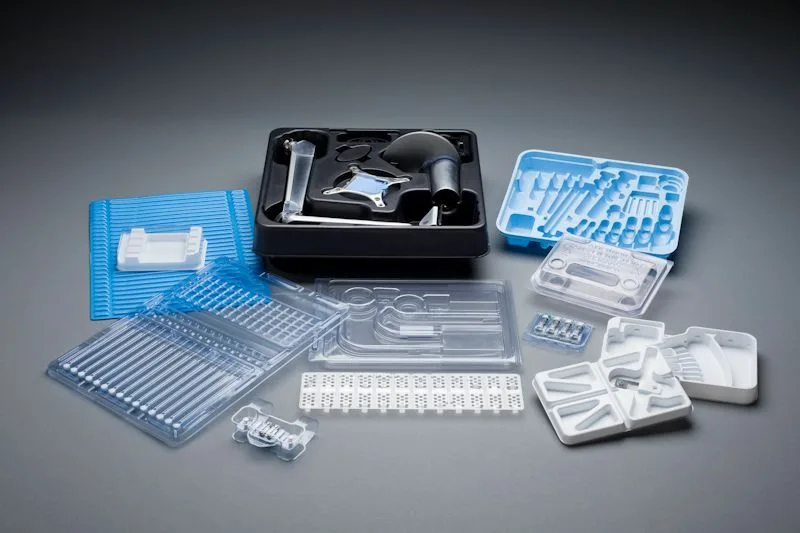
Thermoforming equipment can manufacture selected medical packaging components, protective trays, device holders, and medical equipment housings. The specific machine configuration depends on the material, product geometry, dimensional tolerances, and intended use.
For medical packaging, buyers should also consider cleanliness requirements, traceability, material qualification, process validation, and applicable regulatory standards. Sterile barrier packaging, for example, may require additional testing and a validated packaging system beyond the forming machine itself.
Junjingsai's thermoforming equipment portfolio supports medical-related manufacturing applications. The required machine configuration and compliance responsibilities should be confirmed for each project.
Automotive manufacturers use thermoforming to produce interior trim, door panels, instrument panel components, trunk components, fender liners, floor mats, air-duct parts, and other shaped plastic components.
Large automotive parts may require heavy-gauge processing, a large forming area, specialized molds, controlled heating, and automated handling. Product-specific tooling and process trials help determine the suitable machine arrangement.
Thermoforming can also produce luggage shells, refrigerator liners, protective covers, appliance housings, storage products, industrial packaging, and customized plastic components.
For these products, the machine should be selected according to sheet size, forming depth, material properties, surface finish, product weight, and production volume. Large or unusually shaped parts may require customized mold structures and non-standard automation.
A thermoforming machine must be matched to the material it will process. Different polymers have different forming-temperature ranges, shrinkage behavior, stiffness, impact resistance, and cooling requirements.
Junjingsai's stated material range includes ABS, PP, PET, PVC, PE, and engineering plastic sheets. The exact grades and thicknesses that can be processed should be confirmed during machine selection and testing.
| Plastic material | Typical characteristics | Potential thermoforming applications |
|---|---|---|
| ABS | Impact resistance and surface-finish options | Automotive components, appliance housings, protective covers |
| PP | Low density and chemical resistance | Selected food trays, packaging, industrial components |
| PET | Transparency and packaging versatility, depending on grade | Packaging trays, blister packaging, selected food containers |
| PVC | Available in rigid and flexible formulations | Selected packaging and industrial components |
| PE | Toughness and chemical resistance, depending on grade | Industrial trays, protective components, selected formed products |
| Engineering plastics | Properties vary by polymer and grade | Specialized industrial and technical components |
Material suitability cannot be determined by polymer name alone. Sheet grade, thickness, additives, moisture sensitivity, forming temperature, and the intended end use all affect the process. Buyers should provide actual material specifications or representative sheets when requesting a machine recommendation.
The best machine is not necessarily the largest or most automated model. It is the system that meets the product's technical requirements and expected production volume without adding unnecessary complexity.
Start with the dimensions, shape, forming depth, wall-thickness requirements, surface finish, and dimensional tolerances of the finished products. Product drawings, 3D models, or physical samples help the manufacturer assess the forming process and mold arrangement.
Specify the plastic type, grade, sheet thickness, and sheet dimensions. If multiple materials will be used, provide the full range so the heating system and process configuration can be evaluated accordingly.
The forming area determines the usable mold layout and the maximum practical product arrangement within a cycle. It should be large enough for the product and mold while accounting for spacing, clamping, sheet movement, and trimming requirements.
For multi-cavity packaging, the forming area also affects how many products can be made per cycle. A larger area alone does not guarantee higher output; heating capacity, cycle time, cutting speed, and material handling must be considered together.
Determine whether the application requires vacuum forming, positive-pressure forming, combined positive and negative pressure, or plug assist. Complex shapes, detailed surfaces, and deep cavities may require a different approach from simple trays or shallow components.
Consider whether the process needs manual loading, automatic sheet feeding, automatic unloading, integrated cutting, robotic handling, or connection to downstream equipment. Automation should match actual production needs and the available factory space.
Define acceptable tolerances, surface requirements, target cycle time, production volume, and inspection procedures. Request representative samples or forming trials where practical, particularly for complex parts or new materials.
Evaluate installation, operator training, spare parts, remote technical assistance, warranty coverage, and the availability of maintenance support. These factors affect the practical cost of operating the equipment over time.
Standard equipment may not fit every product or production line. Junjingsai provides OEM and ODM services for customers requiring custom thermoforming machines and non-standard plastic forming automation.
Customization can be evaluated using product samples, engineering drawings, material specifications, production capacity targets, automation requirements, and factory conditions.
Depending on the project, customization may cover:
For a more accurate proposal, provide the product's length, width, depth, material, sheet thickness, expected output, and any special surface or dimensional requirements. Junjingsai can then assess the appropriate machine type and identify the technical details that need confirmation.
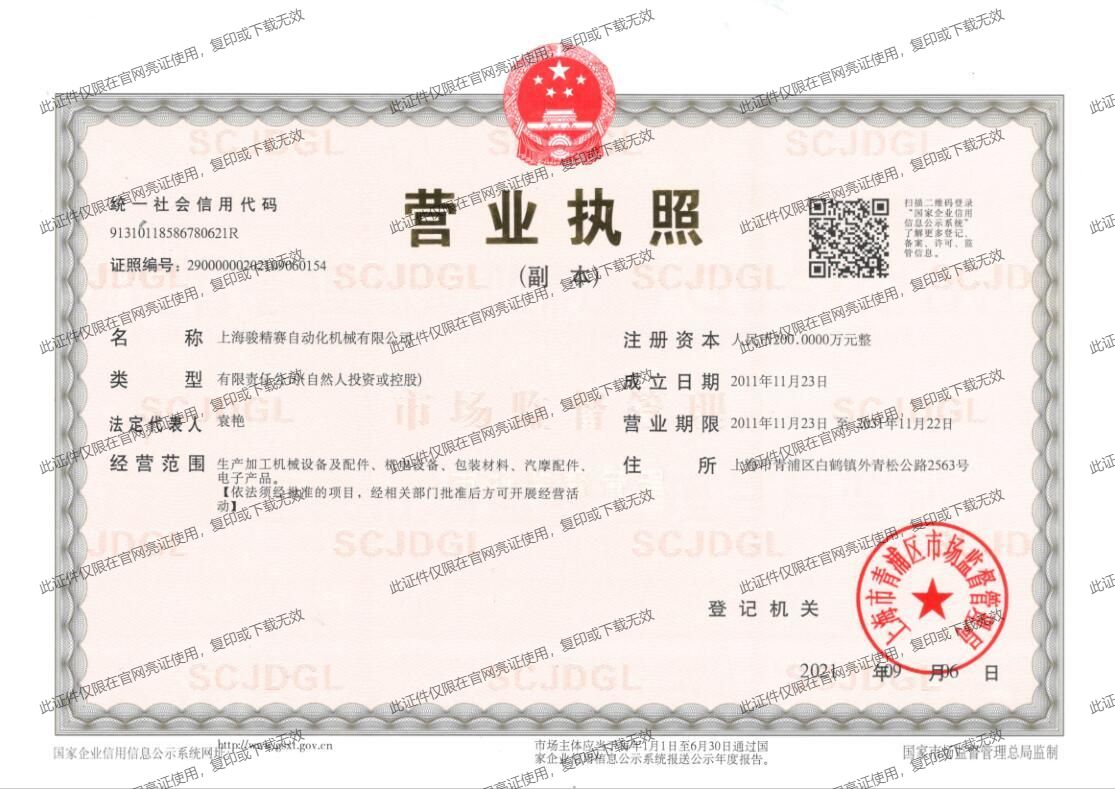
Shanghai Junjingsai Automation Machinery Co., Ltd. has developed thermoforming and plastic forming equipment for industrial customers since 2002. Its manufacturing resources, product range, and engineering capabilities support projects ranging from individual machines to customized automated systems.
Founded in 2002, Junjingsai has more than 20 years of experience in machinery manufacturing, plastic forming technology, and automation equipment. This background supports the evaluation of different product structures, materials, and forming requirements.
Junjingsai operates manufacturing facilities in Shanghai, Chongqing, Jiangsu, and Guangdong, with a combined production area of approximately 29,000 square meters.
The facilities support machining, sheet-metal fabrication, mechanical assembly, electrical installation, equipment debugging, and performance testing.
The Thermoforming Machine Division has more than 150 employees, including 30 R&D engineers. Its annual production capacity exceeds 500 thermoforming machines and automation systems.
The manufacturing system includes CNC machining centers, laser cutting machines, sheet-metal bending equipment, assembly lines, and machine-testing systems.
Quality control extends across incoming materials, component processing, mechanical assembly, electrical testing, machine debugging, and final factory acceptance testing. Each machine is tested before shipment.
Junjingsai reports 25 patents, ISO 9001 quality management system certification, CE certification, and 3A Credit Certification. Buyers should confirm the relevant certificate scope, validity, and applicability to the specific machine being purchased.
Junjingsai reports supplying equipment to customers including Volkswagen, BYD, Yanfeng, Faurecia, WEGO, and Chen Guang. Its equipment exports cover more than 35 countries and regions.
These relationships span automotive manufacturing, medical equipment, packaging, and consumer products. Specific project references and application details can be discussed when relevant to a buyer's requirements.
The company states a standard production lead time of approximately 30 days and a minimum order quantity of one machine. Actual lead time depends on the machine configuration, customization scope, and order schedule.
After-sales services include a one-year warranty, remote technical assistance, on-site installation, operator training, spare parts supply, and production support. Warranty terms and installation arrangements should be confirmed in the quotation.
A thermoforming machine heats a thermoplastic sheet and forms it into a specified shape using vacuum, pressure, mechanical assistance, or a combination of these methods. Typical applications include food trays, blister packaging, automotive components, medical packaging components, appliance housings, and industrial plastic products.
Thermoforming is the broader process of heating and shaping thermoplastic sheets. Vacuum forming is one type of thermoforming that uses negative pressure to pull the softened sheet against a mold. Other thermoforming methods may use positive pressure, plug assist, or combined pressure systems.
Depending on its design and heating configuration, thermoforming equipment can process materials such as ABS, PP, PET, PVC, PE, and selected engineering plastics. The compatible material grades, sheet thicknesses, and forming conditions must be confirmed for the specific machine.
Choose a forming area based on the product's overall dimensions, mold layout, number of parts per cycle, sheet size, and required spacing. The available area must accommodate the complete forming arrangement, including clamping and material movement. For packaging applications, assess forming area alongside cycle time, cutting capacity, and material utilization.
Plug assist is useful when a product has deep cavities or geometry that makes uniform material distribution difficult. The plug helps pre-stretch the heated sheet before or during vacuum or pressure forming. Whether it is needed depends on the mold design, sheet material, forming depth, and required wall thickness.
Yes. Junjingsai offers OEM and ODM customization for customers with specific product, material, forming, and automation requirements. Customization can be evaluated using drawings, samples, sheet specifications, target output, and factory conditions.
Yes, thermoforming equipment can manufacture food trays, blister-style packaging, selected medical packaging components, and protective product holders. However, machine capability alone does not guarantee food-contact or medical packaging compliance. Materials, cleanliness controls, validation, and applicable regulatory requirements must be assessed separately.
Thin-gauge thermoforming generally uses thinner plastic sheets for products such as packaging trays and blister packs. Heavy-gauge thermoforming uses thicker sheets for larger or more rigid parts, including automotive components, appliance liners, luggage shells, and protective housings. The suitable machine depends on the material, product dimensions, forming depth, and production process.
Provide the product drawings or samples, plastic type, sheet thickness, maximum product dimensions, forming depth, target output, forming method if known, and automation requirements. Also specify the factory's power supply, available space, and any relevant product-quality or compliance requirements. This information helps the manufacturer recommend a suitable configuration and prepare a more accurate quotation.
If you are comparing Brown Machine equipment with another thermoforming machine manufacturer, evaluate the actual machine model and application rather than the name alone. Compare forming area, compatible sheet materials, heating control, plug-assist capability, cutting integration, automation level, cycle time, service coverage, and total operating requirements. Confirm specifications against the manufacturer's technical documentation before making a purchasing decision.
Looking for a thermoforming machine manufacturer for food packaging, automotive components, medical packaging, or customized industrial plastic products?
Shanghai Junjingsai Automation Machinery Co., Ltd. provides thermoforming machines, vacuum forming equipment, and customized automation solutions for different production requirements.
Send your product drawings, samples, material specifications, forming area, and expected output to begin a technical assessment. The Junjingsai team can help identify a suitable machine configuration, discuss customization options, and clarify production and delivery requirements.
Contact the team to discuss your thermoforming project and request a machine proposal.